
Today, I write to you to share a little piece of joy. Summer is an important time of year in Lakota Country. Right now, many from the Oceti Sakowin and beyond — including my father, Chase — are reconnecting in a deeply meaningful way with their spiritual identities at the annual Sun Dance ceremony.
And about a month ago, I also felt the power of reconnection with our ancestors, homelands, and tradition of horseback riding at this year’s Memorial Crazy Horse Ride. I invite you to watch our new video, which features footage from the days-long event, background on its meaning, and an interview with Oglala Lakota organizer Kylie Richards Red Willow, a junior political science major and pre-law student at the University of Colorado.
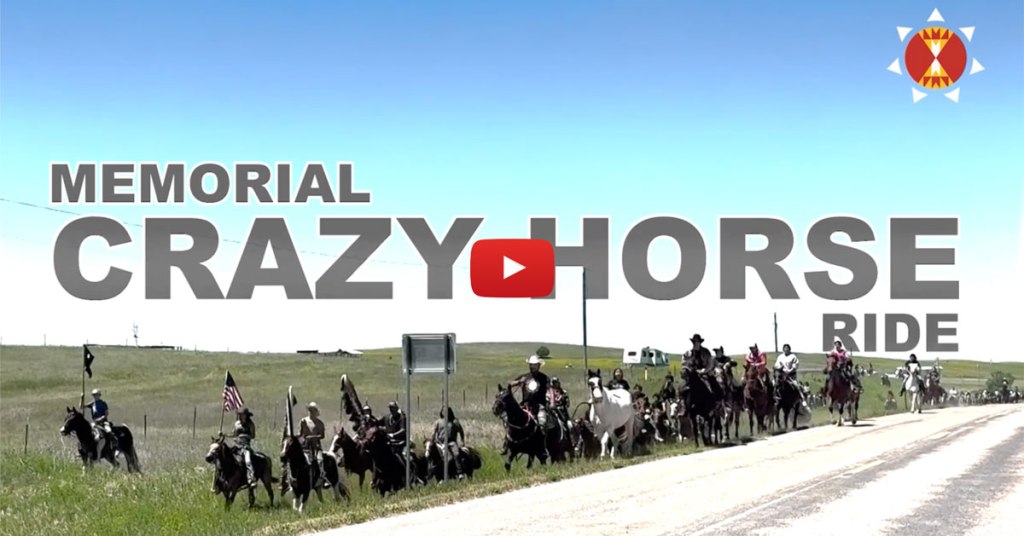
Watch: I interviewed organizer Kylie Red Willow about this year’s Memorial Crazy Horse Ride.
By now, you’re most likely aware of Crazy Horse and his enduring legacy. We recently wrote to you about the battles of the Rosebud and Greasy Grass (Little Big Horn), both of which were won in part thanks to this legendary Ogala Lakota war leader. The annual ride pays tribute to him, the role he played in those and many more confrontations with the U.S. Army, and also our other warriors, many of whom honorably served in the U.S. military over the decades.
Native People, of course, have a complicated and bloody history with the U.S. government, but that hasn’t stopped us from answering the call to serve in large numbers to protect this land, particularly when faced with existential threats like Hitler’s fascism during World War II. You may recall that, at that time, 29 Navajo code talkers in the Marine Corps provided a key to victory in the Pacific.
Today, of course, we still face fascist threats — some right here in our own homelands. Whether it’s the architects of Project 2025 seeking to reinstall Donald Trump as their presidential puppet, or S.D. Gov. Kristi Noem, who recently, offensively invoked the Sun Dance to falsely connect Native communities with Mexican drug cartels, we still have plenty of terrible people to fight.
As you know, we’ll take on those battles, and we won’t stop in the pursuit of justice and equality. When we pray to and ride for our ancestors, who fought so hard so we could be here today, we’re always reminded they expect nothing less.
Wopila tanka — my gratitude, always, for your friendship!
Tokata Iron Eyes
Spokesperson & Organizer
Lakota People’s Law Project


 Water is Life