
This week, the Federal Indian Boarding School Initiative released the second volume of its investigative report. Its conservative estimate that at least 973 children died in federally operated Indian boarding schools sadly confirms what we in Native communities have known for decades. The legacy of these prison camps for children is generational trauma that may never fully heal. I know this is a difficult subject, but I invite you to read a recent article from USA Today, in which I offer more thoughts on this dark chapter of our shared history.
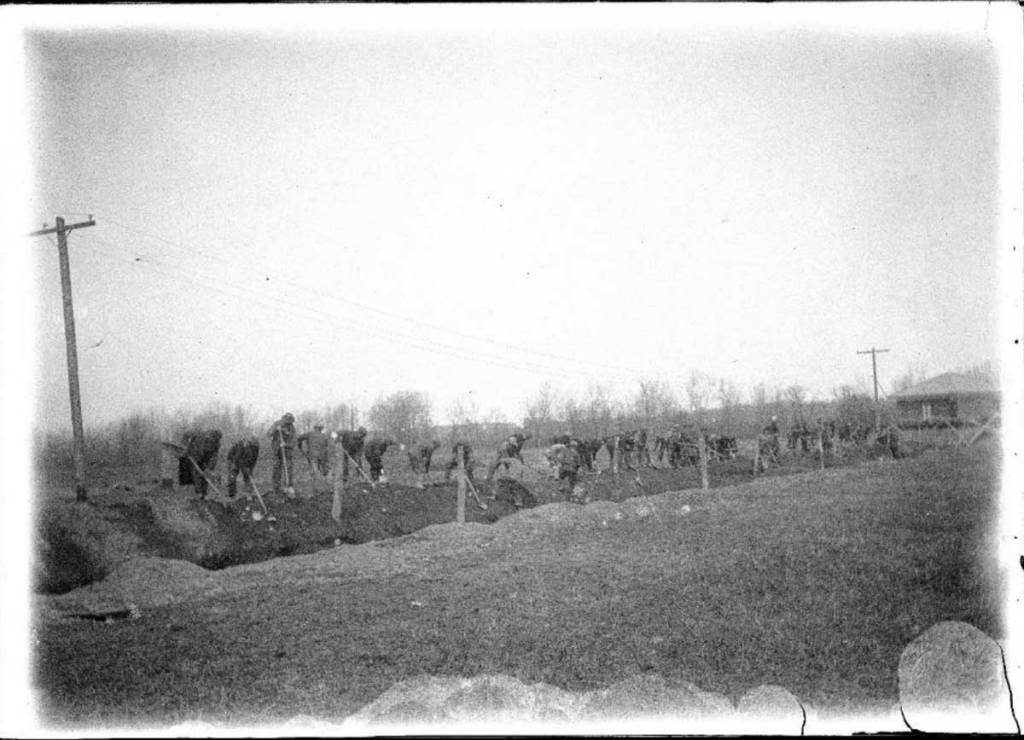
Students working outside [Photograph]. (ca. 1900-1930). Thomas Indian School glass plate negatives, Box 5; National Museum of the American Indian, Smithsonian Institution (Catalog Number N49089). From the Federal Indian Boarding School Initiative Investigative Report, Vol. II.
As a Lakota Law supporter, you’re likely well aware that Indian boarding and residential schools were noxious and dangerous places, designed to strip Native and First Nations children of their Indigenous identities, force them to work long hours, and assimilate them as good Christian subjects. (The report unfortunately does not include full statistics from the roughly 50 percent of domestic boarding schools formerly operated by religious institutions.)
Many of the young ones fortunate enough to make it home after their incarceration bore permanent scars — mental and/or physical — which often later manifested in a variety of ways, not least a common difficulty raising the next generations in traditional and loving homes. Anyone who grew up Indigenous on Turtle Island can tell you stories of the danger, abuse, and dehumanization either they or family members experienced in these “schools.”
That’s why, in 2021, on the heels of the revelation that 215 unmarked children’s graves had been discovered at the former Kamloops Indian Residential school located on Tk’emlúps te Secwépemc land in so-called British Columbia, Lakota Law advocated for a reckoning in the U.S. Secretary of the Interior Deb Haaland (a member of the Pueblo of Laguna and the nation’s first Native Cabinet secretary) quickly lept into action, launching the Federal Indian Boarding School Initiative to investigate, make public its findings, and provide recommendations for next steps.
Now the world knows what really happened. As I told USA Today, truth and reconciliation are not beyond our reach — and I’m grateful to see the United States begin to assist in providing paths to recovery. While we can’t go back in time and save the children who endured the terrors of the boarding school experience, we can move forward in a good way. Your solidarity, empathy, and generosity of spirit are always welcomed and valued as we forge ahead.
Wopila tanka — my gratitude for your support of our children.
Chase Iron Eyes
Director and Lead Counsel
Lakota People’s Law Project
Sacred Defense Fund
 Water is Life