Truthsgiving

Happy Truthsgiving to you and yours! If that term is new to you, I refer you here, to a “debate” I had with Sean Sherman, known as the Lakota Chef, last year at this time, published in The Nation Magazine. I put “debate” in quotes, because — truthfully — Sean and I agree on many things. For instance, we both talk about how traditional Thanksgiving mythology fails to recognize the steep price paid by our people after colonizers came to our shores, the land that was stolen from us, and the variety of indispensable foods contributed by Indigenous cultures now enjoyed around Thanksgiving tables.

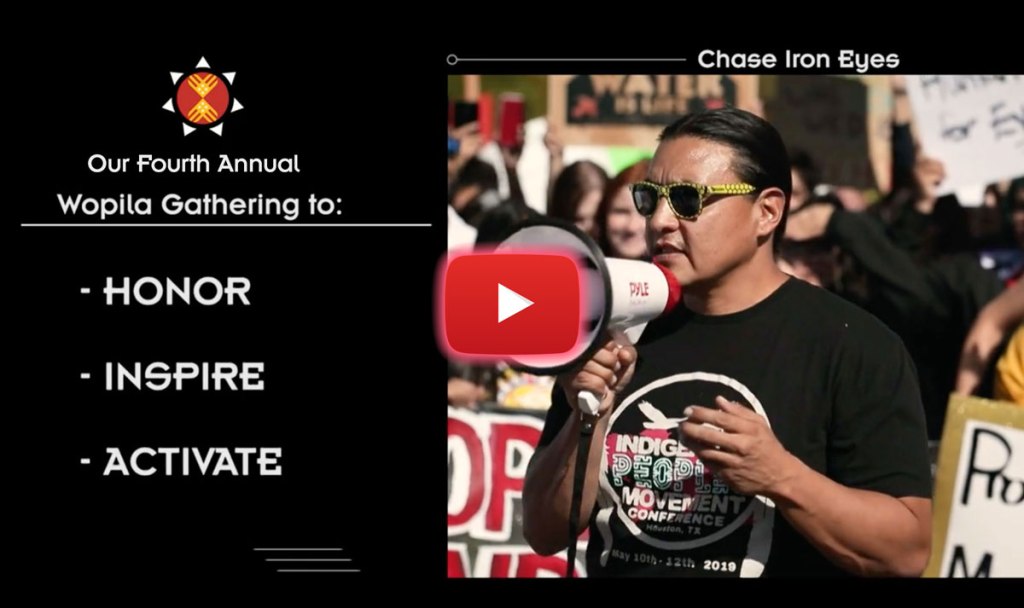
In my section, I expand on those thoughts by suggesting a rebrand of this deeply problematic holiday. Some in my community have called it “Thankstaking,” highlighting the many unwilling sacrifices Indigenous peoples have made over the centuries. Personally, I prefer Truthsgiving — which, while keeping with the traditional holiday spirit of sharing and gratitude, also calls for a necessary truthtelling component. And as a reminder to you: I invite you to stay in a space of gratitude and openness next week, when you’re invited to RSVP and join us online for our fourth annual Wopila Gathering, beginning at 4 p.m. PST on Giving Tuesday, Dec. 3.
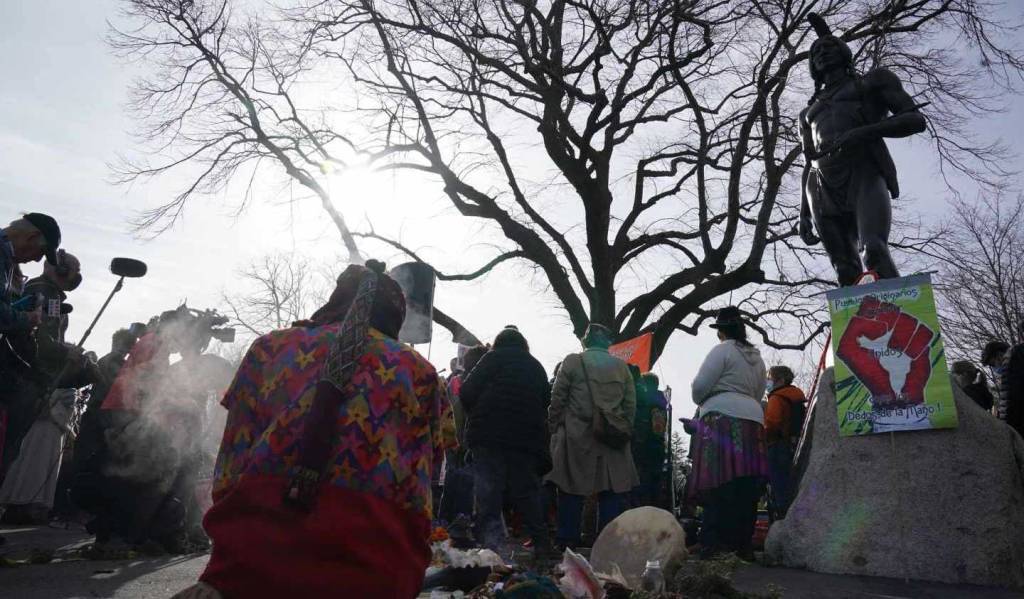
Lakota LawPeople engage in a National Day of Mourning ceremony in front of a statue of Chief Massasoit, leader of the Wampanoag tribe, in Plymouth, Mass. on Thanksgiving Day in 2021. (Bryan R. Smith / Getty Images)

Between Truthsgiving and our Wopila Gathering, on Friday the U.S. also celebrates Native American Heritage Day, at the conclusion of National Native American Heritage Month. I’m grateful that each November is designated as a time to celebrate the history, culture, and achievements of Turtle Island’s Indigenous nations. If you’re Native, I hope you’re able to take some extra time to commune with your relatives and acknowledge your ancestors this weekend. And if you’re non-Native, I hope you’ll make room to appreciate all we have given.

And then, everyone, please attend the Wopila Gathering on Giving Tuesday. This annual event provides an excellent opportunity for us to gather around an even larger table to share stories, priorities, music, and all we have to give to one another. It’s going to be a wonderful couple hours of togetherness, generosity, and joy, so I hope you’ll bookmark this page, RSVP, and Zoom in with us for the festivities!

Wopila tanka — thank you for hearing us, and I hope to see you on Tuesday.
Chase Iron Eyes
Director and Lead Counsel
Lakota People’s Law Project
Sacred Defense Fund

Lakota People’s Law Project

Lakota People’s Law Project
547 South 7th Street #149
Bismarck, ND 58504-5859

Wopila Gathering 2024 – December 3rd

Lakota Law

Today, I’m excited to announce that our fourth annual online Wopila Gathering is coming right up on Giving Tuesday, Dec. 3. It’s going to be a super incredible event this year — and you’re invited! Not only that, I hope you’ll extend the invitation to your friends for this special annual celebration of gratitude and Indigenous culture.

I’ll be hosting this year, and I urge you to come and spend some time online with me, Lakota Law leaders Darren Thompson and Chase and Tokata Iron Eyes, young leaders from the Native American Youth Organization (NAYO), and an incredible lineup of Indigenous performers and special guests. Please RSVP here, mark your calendar for Giving Tuesday, Dec. 3 from 4-6 p.m. PDT (7-9 p.m. EDT), then bookmark this page and return to it for the event in a couple weeks.

RSVP for Wopila Gathering

Watch: our short introductory video for more details on the big event — and RSVP to save the date!

I’m very much looking forward to seeing you at this yearly Giving Tuesday celebration, designed to share the spirit of wopila (deep gratitude), so we can honor, inspire, and activate as one in this movement for Indigenous and environmental justice. In addition to updates on our program priorities from Chase, Tokata, and NAYO, you’ll hear incredible music from talented Indigenous artists like Sage Bond and AntoineX and Miracle Spotted Bear of ALLSZN.

The Wopila Gathering is one of the highlights of our year at Lakota Law. Rather than simply ask for donations on Giving Tuesday like nonprofits across Turtle Island (though every donation is huge, and our allies at Nomadics Tipi Makers are generously matching the first $10,000 we receive this year), we want to use this day to give back to you and all our supporters. 

We love to feel the energy when thousands of our friends gather with us throughout the day to share space, stories, and culture. So I encourage you to be there, take it in, and use the opportunity to interact with us! Join the chat during the event, and we’ll post and read comments over the course of the livestream.

Again, please RSVP to let us know you’re coming, extend the invite to those you love by clicking the social share icons on our Wopila Page, then join the celebration on that same page on Dec. 3. I very much look forward to seeing you there! It promises to be a memorable and inspiring day of conversation, music, and celebration.

Wopila tanka — thank you for being a part of our circle!
Henry “Ozuya” Crow
Director of Community Empowerment & Cultural Health
The Lakota People’s Law Project
Sacred Defense Fund

An Apology is Not Enough

Lakota Law

In case you missed it, President Joe Biden traveled to the Gila River Indian Community in Arizona today, where he made a landmark formal apology on behalf of the U.S. government for the federal Indian boarding school era. “It’s a sin on our soul,” he said, before asking for a moment of silence “for what was lost and the generations who have lived with that trauma.”

In his speech, Biden earnestly described some of the atrocities perpetrated on generations of young children, separated from their families at these “schools.” He also used the occasion to list his administration’s accomplishments on behalf of Native People, including hiring Deb Haaland of the Pueblo of Laguna as the nation’s first Indigenous Cabinet secretary and protecting the Indian Child Welfare Act (ICWA) in the Supreme Court. 

As a Lakota Law supporter, you know those were team efforts, and I’ll always remain grateful to you for helping us participate in making them both happen. I am also thankful to the president for his long-overdue apology. But the truth is — as I said in a statement picked up widely by the press — it is not enough.

Watch: President Biden’s full speech here.

Let’s be clear: an apology is an acknowledgment of wrongdoing, but it is not any form of redress. An apology is just the beginning of a necessary truth-telling. It is a nice start, but it is not a true reckoning, nor is it a sufficient remedy for the long history of colonial violence. The president’s apology calls for a deeper examination. I ask him to work with those knowledge holders within Indigenous communities to tell the entire, historical truth and look at proper redress.

We need more real action on a path toward reconciliation. As you know, we have many ideas for what truly addressing the history of genocide in the U.S. should look like. From rescinding medals of honor given to those who massacred our people at Wounded Knee to codifying ICWA at the state level, there are many tangible steps that can be taken to help and honor Native families, children, and communities. 

Lakota Law

Let’s remember that the separation of Native children from their families did not end with boarding schools. Lakota Law came into being because our grandmothers sought help with the ongoing epidemic of South Dakota’s Department of Social Services (DSS) removing our children at alarming rates. While Native people make up around a tenth of the state’s population, Native children comprise about half of the children in foster care here. And a report we produced a few years back showed that more than 60 percent of children who aged out of DSS custody in South Dakota wound up dead, addicted, imprisoned, or houseless.

So yes, I’m grateful that Biden has acknowledged some historic wrongs and begun to prioritize Native representation and funding for our communities in the present day. I’m also clear-eyed that we have much more to do together moving forward, so let’s keep working! I thank you for your heart and your activism in helping us realize a better world for the generations to come.

Wopila tanka — my gratitude for your friendship in this journey.
Chase Iron Eyes
Director and Lead Counsel
Lakota People’s Law Project
Sacred Defense Fund

Indigenous Peoples’ Day 2024 Action

Lakota Law

Happy Indigenous Peoples’ Day! I hope you take time today to enjoy life and celebrate your Indigenous relatives. Perhaps you can also take a moment to take action. Because, unfortunately — despite 29 states (plus Washington, D.C.) recognizing the real history wrought by the arrival of Christopher Columbus to our shores 532 years ago, the federal government still recognizes today’s holiday as Columbus Day. 

We hope you’ll help us change that. The U.S. government should do right by the original peoples of this land. Please tell your state’s federal lawmakers to actively support the Indigenous Peoples’ Day Act, which would replace the Columbus Day federal holiday with Indigenous Peoples’ Day nationwide.


As a friend of Lakota Law, you’re fully aware that the mythology taught in schools about Columbus and the pilgrims routinely ignores the brutal details of colonization. His arrival on our shores began a chain of events that decimated Native peoples throughout the western hemisphere. In his journal, Columbus joyfully celebrated his ability to easily enslave Native peoples who had no idea people could be so evil. Obviously, this is not heroic behavior to be celebrated each year. It’s long past time to stop honoring Columbus and his legacy of genocide.

Replacing Columbus Day with Indigenous Peoples’ Day nationwide would be a symbolic but serious gesture. While not a solution to heal the generational trauma begun when Europeans invaded our homelands, it would, at least, be a recognition of our sacrifice. Native communities deserve to be seen, and non-Native communities should also be given the space to consider their impacts, both historically and in the present day. In this way, we can increase understanding, build compassion, and create a better world moving forward.

Wopila tanka — my deep gratitude for your solidarity!
Tokata Iron Eyes
Spokesperson and Organizer
Lakota People’s Law Project

P.S. Tell your senators and House rep: it’s long past time to stop celebrating Christopher Columbus and his legacy of pain. Instead, let’s acknowledge the original peoples of this land by replacing the federal holiday of Columbus Day with Indigenous People’s Day!