Action: Save the He Sapa (Black Hills)/Protect Spearfish Canyon

Lakota Law

It’s time, once again, to protect a sensitive ecosystem in the He Sapa (Black Hills) from mining. A few days ago, the U.S. Forest Service (USFS) opened its 30-day public comment period for the Ponderosa gold mining project. If completed, this abomination will create 43 drill pads, each with the potential to wreak havoc 24 hours a day in Spearfish Canyon, a peaceful creekside and scenic byway right in our backyard.

We can’t let this happen. Please help us defend our homelands by sending your message to the USFS today. The proposed drilling project, just about a mile from a tribally-controlled area frequently used for ceremony, threatens to disrupt our way of life. Ponderosa should never endanger this beautiful area, which is also a haven for outdoor recreational activities and home to thousands of animal and plant species. 

Watch our video, then please take action to stop the Poderosa gold mining project!

I can’t thank you enough for helping to protect our homelands and sacred sites. More than a thousand Lakota Law supporters like you responded to my last call to stop drilling near Pe’ Sla. I’m hoping for an even bigger response this time!

As always when sending to the Forest Service, please make sure to include your name, clearly register your objection, and state your reasons (environmental harm, preservation of peaceful recreational activities, and respect for Native ceremonial practice are good ones). In addition, on this one, please make sure you tell the USFS to conduct a thorough environmental review and create an Environmental Impact Statement (EIS).

We’ve only got a few weeks to weigh in and protect Spearfish Canyon! Please send your comment today. Thank you in advance on behalf of everyone who values our natural surroundings and all of us who call this beautiful region our home.

Wopila tanka — my gratitude to you for protecting our homelands!
Tokata Iron Eyes
Spokesperson & Organizer
Lakota People’s Law Project
Sacred Defense Fund

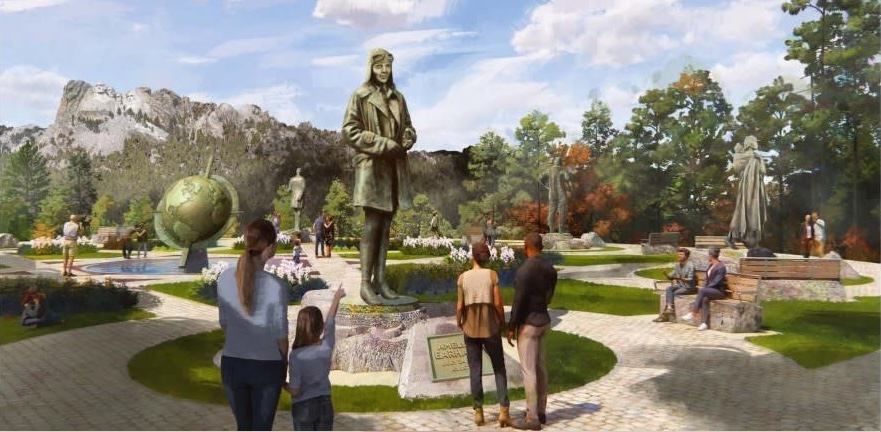
The Black Hills: Garden of Heroes?

Lakota Law

Happy Juneteenth to all! Speaking of American racism, the domestic news cycle this past week largely focused on protests by millions nationwide against the attacks on migrant communities by U.S. Immigration and Customs Enforcement (as well as President Donald Trump’s costly, sparsely attended military parade). Those are important issues, and we hope you stand with us in the ongoing fights for equity and justice — and against fascistic policies and displays.

Meanwhile, it’s also important not to overlook the myriad implications of the administration’s proposed legislative agenda, including for Native communities. Those include massive budget cuts to eliminate funding for key programs and services, and now — as I report to you on our sister site, the Last Real Indians (LRI) Native News Desk — South Dakota elected officials want to put Trump’s proposed “Garden of Heroes” on Lakota homelands in the Black Hills, without consent from Native People. 

Read on LRI: Do Native People want Trump’s Garden of Heroes in our homelands? Did anyone think to ask us?

In the story, you’ll get the gist of the proposal, and you’ll notice a vast difference in approaches toward it from South Dakota’s (white) elected officials and from Indigenous leaders. Because the Lakota have never ceded the sacred He Sapa (Black Hills) to the U.S., and because the area was stolen in violation of treaty law, one might think the elected officials would make it a priority to get thoughts — permission, even — from the land’s original inhabitants. Unfortunately, they continue to operate from a place of entitlement.

As you’re likely aware, the U.S. Supreme Court ruled 45 years ago in favor of the tribes, but the Lakota have never accepted the (now more than $1 billion in) settlement money. The Black Hills are not, and never have been, for sale. As Lakota Law and Sacred Defense Fund executive director Chase Iron Eyes mentions in our story, if the federal government wants to place its garden on Lakota lands, it should return them first.

On a positive note, the garden is slated to include Indigenous representation. That, at least, is something. But, on this monumental day commemorating the end of U.S. slavery, let’s be clear that respecting the perspectives and agency of marginalized groups must also be part of the process. Now more than ever, we must keep fighting — not just for recognition, but for an inclusive and healthy path forward for all who call this place their home.

Miigwech — thank you for fighting for equity and justice!
Darren Thompson
Director of Media Relations, Lakota People’s Law Project
Editor-In-Chief, LRI Native News Desk