
Happy Juneteenth to all! Speaking of American racism, the domestic news cycle this past week largely focused on protests by millions nationwide against the attacks on migrant communities by U.S. Immigration and Customs Enforcement (as well as President Donald Trump’s costly, sparsely attended military parade). Those are important issues, and we hope you stand with us in the ongoing fights for equity and justice — and against fascistic policies and displays.
Meanwhile, it’s also important not to overlook the myriad implications of the administration’s proposed legislative agenda, including for Native communities. Those include massive budget cuts to eliminate funding for key programs and services, and now — as I report to you on our sister site, the Last Real Indians (LRI) Native News Desk — South Dakota elected officials want to put Trump’s proposed “Garden of Heroes” on Lakota homelands in the Black Hills, without consent from Native People.
Read on LRI: Do Native People want Trump’s Garden of Heroes in our homelands? Did anyone think to ask us?
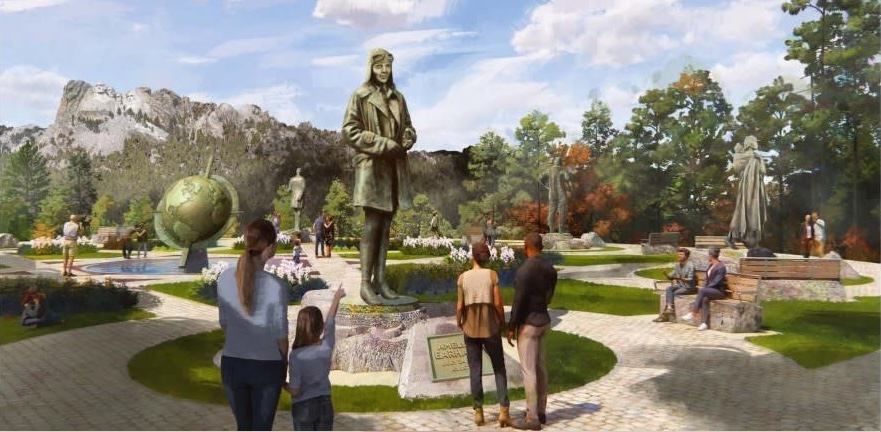
In the story, you’ll get the gist of the proposal, and you’ll notice a vast difference in approaches toward it from South Dakota’s (white) elected officials and from Indigenous leaders. Because the Lakota have never ceded the sacred He Sapa (Black Hills) to the U.S., and because the area was stolen in violation of treaty law, one might think the elected officials would make it a priority to get thoughts — permission, even — from the land’s original inhabitants. Unfortunately, they continue to operate from a place of entitlement.
As you’re likely aware, the U.S. Supreme Court ruled 45 years ago in favor of the tribes, but the Lakota have never accepted the (now more than $1 billion in) settlement money. The Black Hills are not, and never have been, for sale. As Lakota Law and Sacred Defense Fund executive director Chase Iron Eyes mentions in our story, if the federal government wants to place its garden on Lakota lands, it should return them first.
On a positive note, the garden is slated to include Indigenous representation. That, at least, is something. But, on this monumental day commemorating the end of U.S. slavery, let’s be clear that respecting the perspectives and agency of marginalized groups must also be part of the process. Now more than ever, we must keep fighting — not just for recognition, but for an inclusive and healthy path forward for all who call this place their home.
Miigwech — thank you for fighting for equity and justice!
Darren Thompson
Director of Media Relations, Lakota People’s Law Project
Editor-In-Chief, LRI Native News Desk
 Water is Life