February Anniversaries: Calendar of Events

Lakota Law

As my colleague, Chase Iron Eyes, wrote to you earlier this week, February is a month of significant anniversaries here in Lakota Country. He told you about the 47th anniversary of the arrest of American Indian Movement (AIM) activist Leonard Peltier. Next comes a four-day celebration centered on the 50th anniversary of our AIM occupation of Wounded Knee in 1973 — an historic event that occurred a few years prior to Leonard’s unjust arrest. 

Here’s what happened: 50 years ago, the American Indian Movement was called to action by the communities of the Oglala Lakota territory on the Pine Ridge Reservation of South Dakota. That call resulted in a 71-day occupation of the town of Wounded Knee by AIM — and I was there, every step of the way. The resulting conflict with government agents, well chronicled in print and other media like the documentary “From Wounded Knee to Standing Rock,” is the stuff of legend. The occupation wasn’t without significant cost, but it also brought massive attention to our struggles as Native people.

Our gratitude to the Warrior Women Project, which is helping to organize and hosting a full calendar of events on their site.

From my perspective, it’s critical that we use part of the event to highlight the matriarchs who reached out to AIM in 1973. Fortunately, the Warrior Women Project has archival interviews of many of us, and we’ll take time during the four days to celebrate and honor the Wounded Knee veterans who are still here. The full event agenda also includes art and cultural celebrations, ceremonies, and a myriad of learning opportunities about the people and history of this movement.

We celebrate this moment in history with an eye toward our future. It’s important that we AIM elders take this opportunity to pass on our legacy to the younger generations. The standoff happened on the Pine Ridge Reservation, right down the road from where I live now at Cheyenne River. We must tell this story so it resonates with the communities and families on tribal nations in South Dakota today. As Chase mentioned, our Lakota Law staff is helping to organize numerous aspects of the event, including planned livestreams. We’ll let you know more about when and how to view those as we get a little closer, so please stay tuned! 

Wopila tanka — my gratitude, always, for your solidarity.
Madonna Thunder Hawk
Cheyenne River Organizer
The Lakota People’s Law Project
Return the Land

Lakota Law

As you may know, I’ve been involved in the landback movement for quite some time. Several years ago, I began helping lead the effort to return the Black Hills to the Lakota People. Protecting our water and returning our most sacred lands to Native stewardship — and defending them from degradation at the hands of mining and pipelines — is of paramount importance to me. I hope the same holds true for anyone who cares about the future of Unci Maka, our Grandmother Earth.

This movement extends far beyond the boundaries of Lakota Country. Recently, a friend of mine shared an important opportunity to return land to Native care in what we now call California. Because it’s critical that we act in solidarity with one another whenever possible, today I share this effort with you. I’ll describe things below, and I also hope you’ll visit the Owens Valley Indian Water Commission (OVIWC) website to learn more.

Click the pic to watch OVIWC’s video about Three Creeks.

Located just east of the Sierra Nevada mountain range in Central California, Payahuunadü — known in English as Owen’s Valley and translated as “land of the flowing water” — is part of the traditional homelands of the Nüümü (Paiute) and Newe (Shoshone) Native nations. They have now joined forces under OVIWC, a three-tribe consortium with an opportunity to acquire Three Creeks, a lush and beautiful five-acre property within Payahuunadü

The tribes intend to utilize this oasis as a haven for cultural resurgence involving food sovereignty initiatives, ceremonial healing, revitalization of kinship, and art and education to address traumas caused by displacement. Those goals also go hand in hand with a desire to preserve and protect this sacred space amid aggressive attempts by the Los Angeles Department of Water and Power (DWP) to control the area’s water. 

Over the past five years, 50 percent of Los Angeles’s water supply has come from Payahuunadü. The DWP has been taking and exporting its water since 1913 and owns 95 percent of the valley floor — while tribes share ownership of one third of one percent. This injustice must be addressed, and with an additional foothold in the area, the Nüümü and Newe Peoples will be better equipped to defend their homelands as a whole. 

My dad, Chase, is also on his way to Nüümü and Newe lands in present-day Nevada to meet this week with the Reno-Sparks Indian Colony and other Native leaders involved in the battle to protect PeeHee Mu’Huh (Thacker Pass) from lithium mining. You’ll hear more about that soon! Our family thanks you for joining us in showing solidarity with all Indigenous nations seeking to defend and return sacred lands.

Wopila tanka — thank you for your solidarity!
Tokata Iron Eyes
Organizer and Spokesperson
The Lakota People’s Law Project

Free Leonard Peltier

Lakota Law

Today marks a shameful anniversary. It’s now been 47 years since our Lakota and Ojibwe relative, Leonard Peltier, was arrested after taking part in the 1975 American Indian Movement (AIM) standoff at the Pine Ridge Reservation in South Dakota. Wrongly convicted on false testimony for killing FBI agents, Leonard is now 78 years old and suffering with various health ailments in a federal penitentiary in Florida.

The good news is, the world has never forgotten Leonard, who during his lengthy incarceration has run for both President and Vice President of the United States. Today, “Rise Up for Peltier” events are happening in cities across the globe — including Paris, Rome, and Berlin. As part of this day of solidarity, our friends at the Red Nation Movement are also asking people to assist Leonard through their social media channels by sharing content and raising awareness.

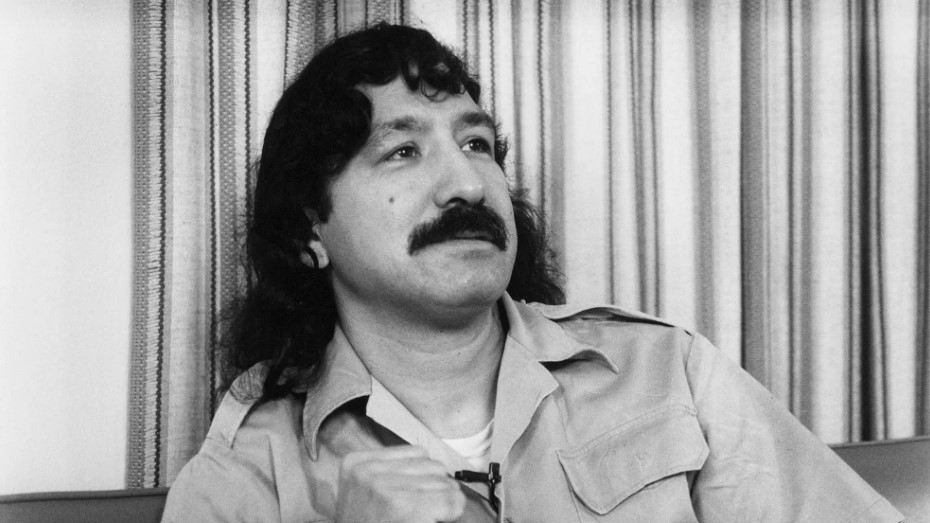
Turtle Mountain’s Leonard Peltier, imprisoned in Florida, 1993. (Photo credit: Kevin McKiernan)

As Carol Gokee, co-director of the Leonard Peltier Defense Committee, wrote to you via our Lakota Law platform a year ago, the list of people who have supported clemency for Leonard is long and impressive. It includes Nobel Peace Prize winners Bishop Desmond Tutu, Nelson Mandela, and Rigoberta Menchú; former Chief Judge of Tennessee’s U.S. District Court, Kevin Sharp; Sens. Brian Schatz (D-HI) and Patrick Leahy (D-VT); Rep. Raúl Grijalva (D-AZ); and James Reynolds, the chief prosecutor who originally put Leonard behind bars. 

As we approach the anniversary of AIM’s Wounded Knee stand later this month, we’ll have much more to share with you. Lakota Law organizers Madonna Thunder Hawk and DeCora Hawk are on the ground helping to prepare a big event, and you’ll hear more from them this week. In addition, our video team is working on setting up live video feeds and our communications staff is working on an action you’ll be able to take to demand clemency for Leonard. 

You can find more info and other ways to assist right here. Please stay tuned and stand ready. We must do everything we can to right a grievous wrong. After nearly a half-century, It’s long past time to free Leonard Peltier.

Wopila tanka — thank you for your solidarity!
Chase Iron Eyes
Co-Director and Lead Counsel
The Lakota People’s Law Project

Treaty Law

https://wordpress.com/post/clean-water-is-life.com/60 If you scroll back to the early posts of this blog, you will find some of the histories of Standing Rock that I researched. It is always important to study the past, to fully understand the present.

Lakota Law

Greetings, and I hope your year is off to a great start! We’ve got a good video for you to watch today. It’s the twelfth chapter of our Dakota Water Wars video series, produced, as always, by us in partnership with the Standing Rock Nation and Great Plains Water Alliance. In this episode, we detail some new threats to the Mni Sose — the Missouri River — and highlight the importance of respecting both our water and treaty rights.

Watch: Lakota Law Standing Rock Organizer Phyllis Young shares her studied perspective on treaty law and passion to protect our water rights and environment.

Here’s the bottom line: the 1868 Treaty of Fort Laramie granted the Lakota people stewardship of the Mni Sose. When the Dakota Access pipeline (DAPL) appeared in our homelands, it threatened both our sole source of fresh water and our way of life. Now, to make things worse, other entities have made plans to take water from the Missouri and pipe it to places far away, like Colorado, and nearby, like Rapid City and the Black Hills. 

That last part is particularly troublesome. Mining interests in the Black Hills will use even more water than a municipality, and those mines threaten to despoil an area filled with many of our most sacred sites. Plus, sending our water away for use by extractive industries is the exact opposite of what we should be doing in the midst of a climate emergency. Right now, we have to mitigate carbon emissions, halt the warming of our planet, and responsibly allocate our water. 

As you know, Indigenous cultures traditionally live in harmony with our surroundings, with care for all our relatives (not just the human ones). As we said during the heyday of our NoDAPL stand, and as we continue to say today: mni wiconi — water is life! When the 1868 treaty granted us the ability to protect the Mni Sose, the state of South Dakota didn’t even exist yet. So we won’t back down on this. We’re not going to let the state, or any other man-made entity, threaten or take our water without a fight.

Wopila tanka — thank you for standing with us!
Chase Iron Eyes
Co-Director and Lead Counsel
The Lakota People’s Law Project

Where is Justice in 2023?

With all of the talk about diversity, inclusion, and equity – I really don´t listen to the talk. I look at the actions. From where I am standing it does not appear that those words really mean anything in 2023 U.S.A. Those are just slogans, cliches: words to shout out to make one feel part of the pseudo-virtuous.

Now here is a 14-year-old girl in South Dakota who gets run over in a hit-and-run. Mark your calendar for February 17th. Demand justice. In the meantime, take time and examine the U.S. justice system. You will not like what you will find.

Lakota Law

Han, Mitakuyepi. Today I write to you with some sad news — but it’s something we absolutely need to talk about. On October 14, 2022 in Rapid City, South Dakota, Nevaeh Rose Brave Heart, a fourteen-year-old Lakota youth, was tragically killed in a hit-and-run incident. Jordan Hare, a 27-year-old white man, has now been arrested in connection with the crime. 

According to the Pennington County State’s Attorney’s Office, Hare fled the scene, leaving Nevaeh to die in the street of her injuries before medical help could arrive. He then allegedly washed his vehicle and painted his rims to hide the evidence. Now, he faces a maximum penalty of two years and/or a $4,000 fine for felony hit and run resulting in injury or death, and he’s free on $10,000 bail as the case proceeds.  

Click the pic to watch: In October, Nevaeh Brave Heart’s community gathered for a candlelight vigil and to call for justice.

If those penalties don’t sound commensurate with the crime to you, you’re not alone. Nevaeh Brave Heart’s death, which occurred just as her life was beginning, is emblematic of the kind of tragedy we see far too often in the Deep North, as we sometimes call it here. Too often, our health, wellbeing, and existence are not valued, protected, or respected. That has a cumulative effect on our Native communities and families. Meanwhile, someone like Jordan Hare is able to walk free on a measly $10,000 bail? If Nevaeh wasn’t Native, might Hare be in a lot more trouble — such as an additional manslaughter charge, a higher bail amount, or both?

There have been far too many instances of blatant racism — taking many forms — in and around Rapid City for us to ignore the lack of justice for Nevaeh. You may recall that, just last year, a hotel in town instituted a policy prohibiting Native guests, prompting us to ask you to write to the Department of Justice and demand an investigation. The pattern is so bad that, among the BIPOC community here, Rapid City has earned itself the name “Racist City.”

So, what’s next? Hare is scheduled to appear in court for a status hearing on Friday, Feb. 17 at 3 p.m. I’m happy to say that because of public interest in the case — our community wants justice for Nevaeh! — the judge has moved this hearing to a larger courtroom. I’ll be there, and I’ll keep you informed. We must watch closely and be ready to act if Hare — who has pled not guilty — isn’t held accountable. In the meantime, please join me in honoring Nevaeh’s memory by saying her name and praying for her family. 

Wopila tanka — thank you for your friendship with our community.
DeCora Hawk
Field Organizer
The Lakota People’s Law Project

Chief Big Foot Memorial Ride

Lakota Law

A very Happy New Year from me and my family to you and yours! In December, I wrote to you and asked you to help spread the word about passing the Remove the Stain Act. By rescinding 20 Medals of Honor awarded to soldiers who murdered nearly 300 Lakota women, men, and children at the Wounded Knee Massacre in December of 1890, we can more deeply recognize our ancestors. In this way, we honor the sacrifices they made so that we can be here today.

In that same email, I referenced the annual Chief Big Foot Memorial Ride, in which many of my relatives take to horseback to retrace the path our ancestors traveled before that horrific day. Today, I encourage you to watch our new video, in which I talk more about the annual tradition of this ride, the history behind it, and its deep meaning to our people. 

My relatives honor our ancestors at the Chief Big Foot Memorial Ride.

Undertaking this journey and reminding ourselves of the reality of what our ancestors went through on that hard winter’s trail helps to ground and more fully connect us. It takes many days and resources to replicate on horseback the original journey from Standing Rock through my home nation of Cheyenne River to Wounded Knee Creek on the Pine Ridge Reservation. How hard it must have been for those families who did it on foot in 1890 — and directly on the heels of the murder of Sitting Bull. 

Eagle Hunter, my brother-in-law, put it eloquently and succinctly: “Wasigla.” This is something that you don’t forget. We Lakota are a visual people, and the modern-day visual of following the trail to Wounded Knee is powerfully symbolic for us. We who are Indigenous to this land engage in ceremonial memorials because it’s part of who we are. We don’t usually write it down, we just do what’s in our ancestral memory. But today, I write to share this memory with you.

Wopila tanka — thank you for riding with us in spirit!
Madonna Thunder Hawk
Cheyenne River Organizer
The Lakota People’s Law Project
Wounded Knee Massacre: Remove the Medals Call to Action

Lakota Law

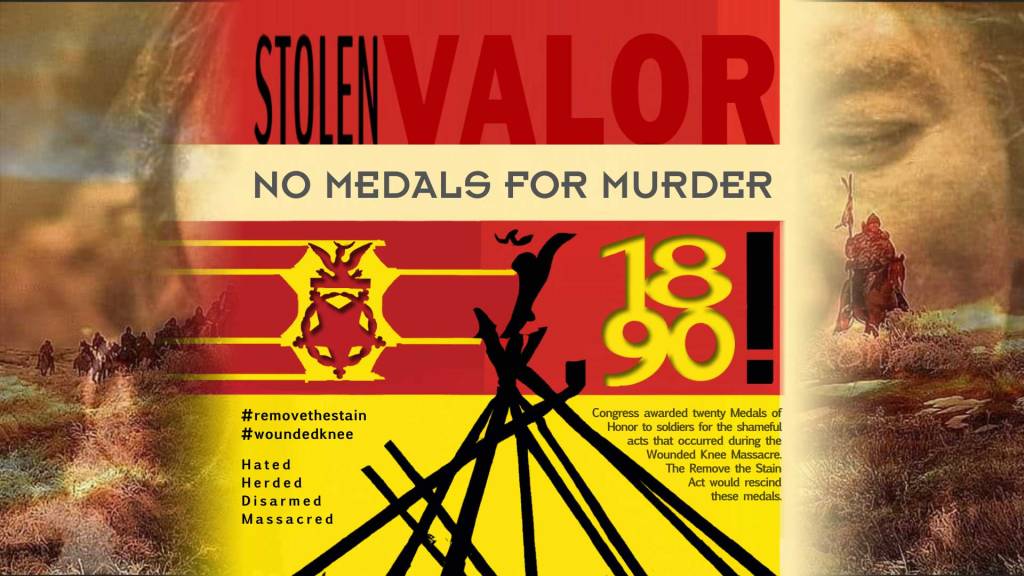
On December 29, 1890, the 7th Cavalry of the United States committed an unconscionable act of genocide, killing nearly 300 Lakota women, children, and men at Cankpe’ Opi Wakpa, or Wounded Knee Creek. That number included 38 Hunkpapa and a larger number led by Lakota Chief Spotted Elk of the Mnicoujou band. Most of our people murdered that day were unarmed. Then, for taking part in the Wounded Knee Massacre, 20 U.S. soldiers were awarded the Medal of Honor.

Medals of Honor are meant to signify gallantry beyond the call of duty, clearly distinguishable from lesser forms of bravery. The soldiers at Wounded Knee did not live up to this standard. Rather, they slaughtered innocent Native families in cold blood, and it’s long past time to rescind their awards. Please take decisive action today. Tell your Senators and Congressperson to pass the Remove the Stain Act and rescind all Medals of Honor awarded for the Wounded Knee Massacre.

Click the pic and tell your reps to pass the Remove the Stain Act today.

Native People and the U.S. government both understand — to very different degrees — the gravity of what happened at Wounded Knee. In 1990, on the centennial of the massacre, both houses of the U.S. Congress passed a resolution expressing their “deep regret.” That gesture, of course, is far from adequate. In 2001, the National Congress of American Indians passed two resolutions demanding that the federal government rescind all Medals of Honor awarded for Wounded Knee. That same year, the Cheyenne River Nation, where I make my home, passed Tribal Council Resolution No. 132–01, asking for the same. Other organizations, such as Four Directions, have also taken up and amplified this call.

This is not ancient history in Lakota Country. The massacre’s memorial stands in stark relief against the plains and low hills of Pine Ridge — the location of Wounded Knee — every day. And each year in December, we honor our ancestors’ trek to Wounded Knee with a ride on horseback through the bitter cold, retracing the trail they left in their final moments on this earth. It’s our way of remembering and honoring the sacrifice they never should have had to make. Many people carry on this tradition and keep it alive, riding all the way from the homelands of Sitting Bull (Standing Rock) through Cheyenne River to the site of the massacre. Several organizations — such as my friends at the Horse Spirit Society — come together to provide horses, tack, feed, and other essentials for participants. 

Our people dedicate their limited resources for this cause, asking nothing in return but that we remember those who were lost. So today, as we approach the anniversary of the Wounded Knee Massacre, I ask you to learn more about how we keep our ancestors’ memories alive. And please, tell your senators and House rep to pass the Remove the Stain Act. While nothing we can do will bring them back, in this way we can properly honor our relatives.

Wopila tanka — thank you for taking action!
Madonna Thunder Hawk
Cheyenne River Organizer
The Lakota People’s Law Project

Note: I no longer participate in virtual worlds. I did create a virtual memorial and here is the link to an interview I had done about it. https://virtualoutworlding.blogspot.com/2018/02/2018-edu-massacre-at-wounded-knee.html

Dakota Water Wars

Lakota Law

Greetings from Lakota Country, where two blizzards just dumped several feet of snow and knocked out power for many of our people. Here’s hoping you’re staying warm wherever you are! Of course, no matter the weather, we keep doing all we can to look out for our relatives — including our ongoing fight to end the Dakota Access pipeline (DAPL).

Winning this battle is critical. Just last week, we received news of yet another pipeline disaster. One month after the Keystone pipeline increased the amount of oil it’s carrying, it ruptured and dumped 14,000 barrels — or nearly 600,000 gallons — of toxic tar sands crude in Kansas. So today, we bring you the eleventh chapter of our Dakota Water Wars video series, co-produced by the Lakota People’s Law Project, the Standing Rock Sioux Tribe, and the Great Plains Water Alliance. Give it a watch, and you’ll see how hard we fought to keep the Dakota Access pipeline (DAPL) from doubling its flow rate, and just how far the oil company went to downplay the potential consequences.

Watch: Standing Rock member Winona Gayton addresses the North Dakota Public Service Commission during a hearing on DAPL nearly doubling its capacity.

This latest Keystone spill — its third major leak in the past five years — is the second largest domestic pipeline incident ever recorded. It’s going to be nearly impossible to properly clean up, And, because Keystone is now carrying more oil, the problem is exacerbated. In our video (at the top of the blog, which also contains all the other Dakota Water Wars chapters), you’ll hear a lot about “worst case discharge.” That sounds bad because it is. The math says that when a pipeline inevitably leaks, it’s going to be worse the more oil it’s carrying. 

If DAPL spills where it crosses the Mni Sose — the Missouri River — just upstream from the Standing Rock Nation, it will threaten everything we hold dear: our drinking water, our pristine landscape, plants and animals, our way of life. That’s why we gathered by the thousands in 2016 and 2017 to prevent DAPL. And given the danger from increasing the oil flow, it should be easy to understand why we rallied again in 2019 to stop the doubling of its capacity to more than 1 million barrels per day. 

We cannot accept this illegal and dangerous pipeline (the Army Corps of Engineers still has yet to produce a valid Environmental Impact Statement for DAPL, as mandated by the courts). We won’t stop raising awareness about how it imperils both people and planet, and we’ll continue — with your help — to fight using every available method until the Black Snake is defeated once and for all.

Wopila tanka — my deep appreciation for your solidarity!
Chase Iron Eyes
Co-Director and Lead Counsel
The Lakota People’s Law Project

A Win for Civil Rights

Lakota Law

Are you ready for some good news? A few days back, on Dec. 9, the U.S. 9th Circuit Court of Appeals issued a big decision in favor of Native students who take pride in their communities. Its ruling ensures that Larissa Waln, member of Sisseton Wahpeton Tribe in South Dakota, can now pursue a civil rights suit against her former school district in Arizona.

In 2019, Larissa was forbidden to participate in her graduation ceremony for wearing a beaded graduation cap adorned with a sacred eagle feather and medicine wheel. Her school district had previously issued a rule prohibiting students from decorating or altering their commencement caps. But that very day, a different school in the same district permitted another graduating student to wear a commencement cap featuring a breast cancer awareness sticker. 

Larissa Waln with her deadly graduation cap.

In April of 2020, Waln and her family sued the school district in federal district court for violating their rights to freedom of religion and speech and denying her equal protection under various state and federal laws. Notably, the Waln v. Dysart School District lawsuit cited a 2019 report published by the Lakota People’s Law Project, which provided crucial context regarding the importance of regalia to Native peoples’ cultural expression.

Last week’s Circuit Court ruling overturns a 2021 dismissal by a district court, mandating that the lower court now hear Larissa’s case. When ruling in her favor, the 9th Circuit referenced Lakota Law’s report on the second page of its opinion, highlighting the report’s summary of the boarding school era and the longstanding U.S. assimilation policy of “kill the Indian, and save the man.” While one decision can never make up for the long and damaging history of Native erasure in America, we’re elated that Larissa will be able to pursue justice.

Through her lawsuit, Larissa is addressing Native self-determination from a different angle than the advocates defending the Indian Child Welfare Act in Brackeen v. Haaland, the case recently heard by the Supreme Court. Both cases are important. Thanks at least in part to her bravery and the activism of people standing in solidarity with Native students, Arizona changed its state law in 2021. The passage of AZ House Bill 2705 makes it illegal for state public and charter schools to prohibit Native students from wearing regalia at graduation ceremonies. So, today, I’m grateful to Larissa for taking a stand, to the 9th Circuit for making the right decision, and to you for standing by our side in the fight for justice.

Wopila tanka — thank you, as always, for your friendship.
Chase Iron Eyes
Co-Director and Lead Counsel
The Lakota People’s Law Project
Tribal Nations Summit in D.C.

Lakota Law

It’s been a big couple days for Indian Country in Washington, D.C. For the first time in six years, tribal representatives from across Turtle Island gathered together with U.S. leaders for the White House Tribal Nations Summit. After a four-year hiatus during the Trump presidency, President Joe Biden revived the event last year, but that was held virtually because of the pandemic. This year, a delegation from the Standing Rock Sioux Tribe joined many other tribal citizens, making the trip to the nation’s capital to discuss the Biden administration’s promising agenda for Native America.

The administration made historic pledges of money and resources to tackle issues like infrastructure and climate. It also committed to protecting Spirit Mountain — a site sacred to several Native nations in and around so-called Nevada — and promised a new “respect for Indigenous knowledge and tribal consultations.”

Click the pic to watch: U.S. Secretary of the Interior Deb Haaland (Pueblo of Laguna) introduces President Biden at this year’s White House Tribal Nations Summit, and Biden gives his opening remarks.

In his opening remarks, Biden said monetary allocations to tribal nations will include a mandatory $9.1 billion for the Indian Health Service (IHS) and $135 million to help relocate 11 at-risk tribal communities. Specifically, the Department of the Interior, led by Secretary Deb Haaland of the Pueblo of Laguna, will provide $25 million each to three tribes on the frontlines of the climate crisis in Alaska and Washington State.

Of course, you know as I do that Indigenous populations — and other communities of color — suffer the effects of the climate emergency disproportionately. That’s not acceptable, whether it’s a majority-Black or Latinx neighborhood adjacent to a poisonous chemical plant, Standing Rock dealing with the existential threat of the Dakota Access pipeline, or the Quinault Indian Nation endangered by rising sea levels.

The money will help, as will enhanced agency cooperation and assistance. Still, to really solidify Native sovereignty, the government will need to make good on its promise to listen to tribal nations and gain consensus. While I would prefer to see the U.S. firmly adopt the standard of Free, Prior, and Informed Consent (FPIC) set forth in the United Nations Declaration on the Rights of Indigenous Peoples, I’m optimistic that we’re a step closer toward governmental recognition of the self-determination we deserve when it comes to our people and our homelands.

Wopila tanka — thank you for standing with us!
Chase Iron Eyes
Co-Director and Lead Counsel
The Lakota People’s Law Project