Last week, we introduced you to Ruby Montoya, a schoolteacher and NoDAPL resistor being prosecuted as a terrorist by the U.S. government. She’s accused of putting four tiny holes into DAPL pipes before it was carrying oil — and for this, she’s facing the prospect of up to 20 years in federal prison. That’s far from acceptable, and it’s why we’re aiding her defense. Last week, Daphne Silverman, Ruby’s new attorney, submitted a motion to change Ruby’s prior guilty plea to not guilty based on crucial new discoveries. Read on for the details.
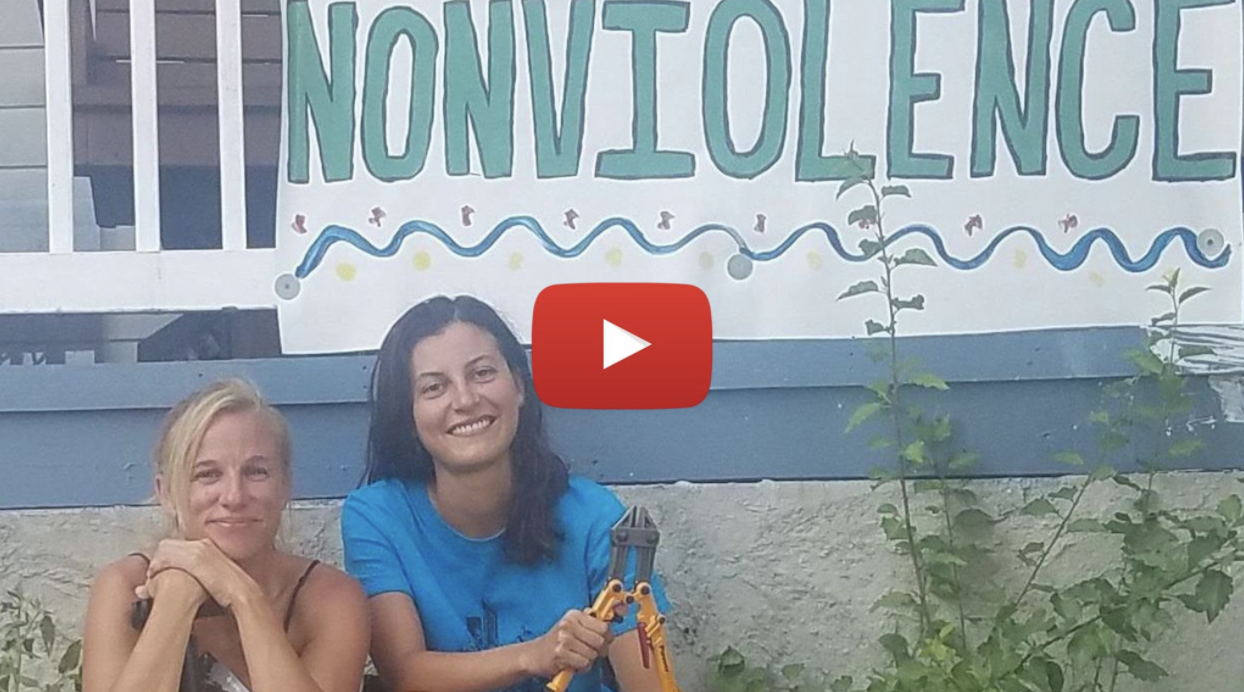
Ruby (right) and co-defendant Jessica Reznicek prior to their arrest. In our new video, Ruby and I talk about water protectors being labeled and prosecuted as terrorists.
After initial review of the case, our side has identified a number of major issues that should disqualify Ruby’s original plea. For one thing, the prosecutor and the pipeline company allege that millions of damage was done, but an expert hired by Daphne says it’s less than $50,000. In addition, some charges filed by the prosecutor require the pipeline to have been in use at the time it was allegedly damaged. It was not.
Those distinctions make a world of difference. Without damage over $100,000 to an operational pipe, these charges don’t qualify for federal court — and outside of federal court, there can be no terrorism enhancement. As I mention in our new video, this is eerily reminiscent of how I was treated during my own resistance to DAPL in 2016 and 2017. The government and law enforcement are demonstrating a pattern of deception designed to criminalize constitutionally protected protest, elevate charges, and label citizens who dare to care about the future of Planet Earth as terrorists. It’s infuriating.
If the court labels Ruby a terrorist, she’ll be punished like a career criminal — but Ruby has no criminal history at all. We expect a court decision on the plea change in the next couple months. Meanwhile, Daphne will be investigating, researching, and conducting additional review of the discovery. We hope that, with her expert legal assistance and support from folks like you, the justice system will ultimately treat Ruby with far more fairness than water protectors have come to expect. Stay tuned.
Wopila tanka — thank you for your solidarity with water protectors! Chase Iron Eyes Co-Director and Lead Counsel The Lakota People’s Law Project
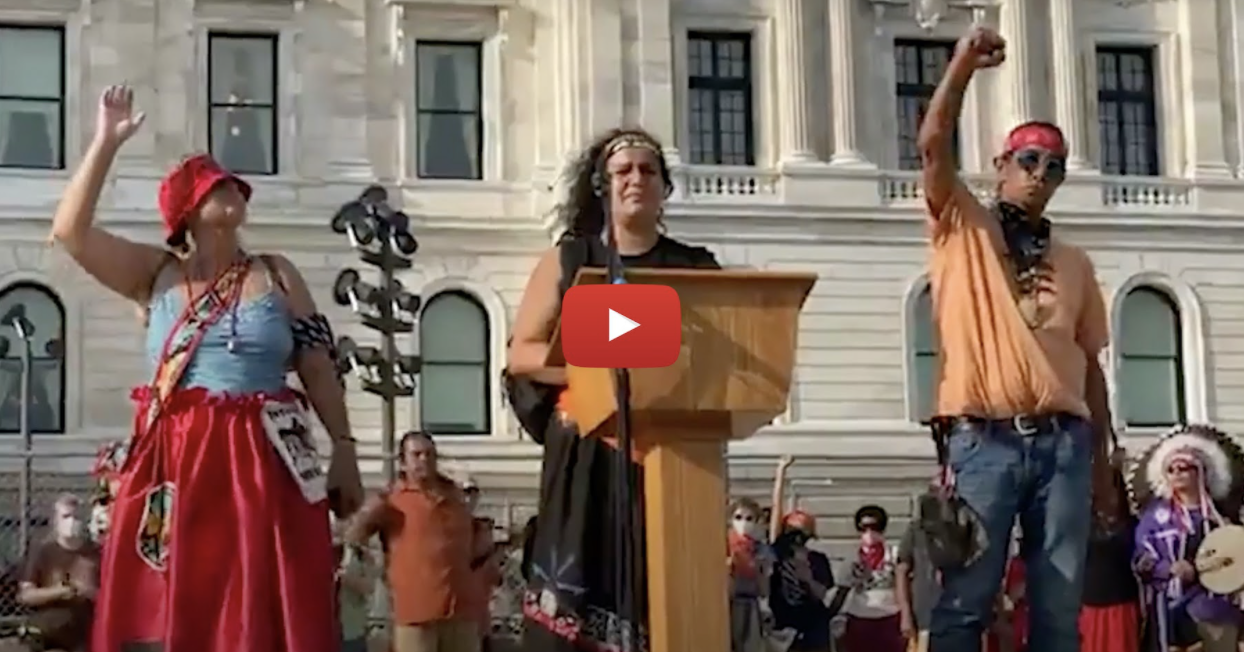
Yesterday, led by our grandmothers, we took the Line 3 pipeline resistance directly to the Minnesota State Capitol in St. Paul. Emblematic of the deepening solidarity among tribal nations, a caravan of 20 Standing Rock citizens, assisted by the Lakota People’s Law Project, joined us for our “Treaties not Tar Sands” rally.
An impressive lineup of BIPOC speakers and Minnesota state officials, headlined by White Earth Nation’s Winona LaDuke, addressed more than 2,000 people who showed up to call out Enbridge’s toxic tar sands oil pipeline. Toward the end of the day, we at Camp Migizi took our turn at the microphone. Five Lakota People came onstage with us to acknowledge the importance of resisting pipelines together — and they should know, since they were all at Standing Rock in 2016 and ‘17 during the NoDAPL movement.
Among the more heartfelt and timely messages imparted by our Lakota relatives was a call for unity from elder Sonny Wonase. I invite you to watch highlights from both my talk and his.
Police presence was as strong as ever, including a fence meant to wall state officials off from our prayerful ceremony and pleas for justice. As you can probably guess, that didn’t deter water protectors. At the end of the rally, my fellow organizers read a statement of demands criticizing Governor Tim Walz’s support of the pipeline and militarized response. We also continued to call on President Joe Biden to intervene.
Until we’re heard and acknowledged, we will not be silent. We will not stop taking direct action to end this invasion of our sacred lands and protect our water and manoomin (wild rice). We are carrying forward the tradition of Indigenous activism begun by the American Indian Movement in the 1960s and renewed at Standing Rock five years ago. I express my gratitude to Standing Rock for standing with us now — and to you for holding space with us and Mother Earth. If we come together across our traditional boundaries, if we act with a unified voice and spirit, we can win this fight.
Miigwech — thank you for your support! Taysha Martinaeu Camp Migizi Via the Lakota People’s Law Project
At Standing Rock in 2016, water protectors were labeled as domestic terrorists. I created this short video to counter that claim. We are just the common people out here defending our rights and our lives. The government is supposed to work FOR US. The corporations are business entities that are supposed to be producing things FOR US.
Today, water protectors from Standing Rock are still being prosecuted, and — in the troubling cases of Ruby Montoya and Jessica Reznicek — they’re still being labeled as terrorists. Because we cannot allow this dangerous precedent to be used against more people who care for our Grandmother Earth, we’re going to help defend Ruby. Our struggle against the Dakota Access pipeline (DAPL) didn’t end at Standing Rock in 2017, and it won’t be over until every water protector in the crosshairs of the criminal justice system is liberated.
In 2017, Ruby and Jessica engaged in a direct action that damaged an empty section of DAPL’s pipe. Jessica was recently found guilty, given a “terrorism enhancement,” and sentenced to eight years in prison. Ruby’s fate now hangs in the balance as her trial approaches. With litigation support from Lakota Law and the National Lawyers Guild, Ruby is going to fight. Her next hearing is scheduled for Wednesday, Sept. 1.
As Ruby says in this new video produced by our team, humanity is going through a reckoning. In the future, no one will fondly remember the names of corporations that represented the status quo; instead, many people will only wish they had fought harder to protect life on this planet. Nobody who takes a stand to stop extractive destruction should ever be charged with a felony, much less be labeled a terrorist.
Ruby told me that Jessica has never even held a weapon in her hands, and at one point she was considering entering a monastery. And Ruby is a Waldorf School teacher, who vividly remembers kids in her classes crying and losing sleep because Australia and the Amazon were on fire. Ruby’s resistance, like my own back in 2017 that earned me a felony charge, has been motivated only by a desire to give the next generations a destiny they can believe in.
Nothing any of us did comes close to a level of governmental coercion necessary to justify a terrorism enhancement. It’s fallacious to suggest we have that type of power. If the government is being coerced by anyone, it’s the fossil fuel barons who buy politicians to protect their profits. Ruby was invited by an Indigenous community to protect water and help safeguard sacred lands. She showed up. Now, we will have her back, just like she had ours. Please stay tuned as we continue to fight to prevent a grave miscarriage of justice.
Wopila tanka — thank you for standing for justice! Chase iron Eyes Co-Director and Lead Counsel via the Lakota People’s Law Project
It’s all about strategy and timing in Indian Country, especially in the legal system.
Shortly after a groundbreaking lawsuit was filed in the White Earth Nation’s tribal court defending the rights of wild rice to fight the construction of Enbridge’s Line 3 pipeline, the United Nations released its 6th Assessment on Climate Change.
The UN report includes an entire chapter dedicated to the powerful role that Indigenous knowledge can play in global development of adaptation and mitigation strategies aimed at addressing climate change.
According to the report, recognition of Indigenous rights, governance systems and laws are central to creating effective adaptation and sustainable development strategies that can save humanity from the impacts of climate change. In this first of three climate change reports, the working group focused primarily on physical science, providing evidence that a climate crisis caused mostly by human activities is upon us.
Boom. The report’s release created the perfect public moment to exert tribal sovereignty and advance the legal theory that nature itself, in this case wild rice, has the right to exist and flourish even in the face of the construction of a massive infrastructure transporting fossil fuel.
The so-called “rights of nature” argument recognizes that nature has rights just as human beings have rights; rather than treating nature as property under the law, rights of nature cases contend that nature, rivers, forests and ecosystems have the right to exist, flourish, maintain and regenerate their life cycles. Further, humans have a legal responsibility to enforce those rights.
According to the Global Alliance for the Rights of Nature, Indigenous cultures recognize the rights of nature as part of their traditions of living in harmony and recognition that all life is connected.
For Ojibwe, wild rice or manoomin, “good berry” in the Ojibwe language, is like a member of the family, a relative. Manoomin is more than food, it is a conveyor of culture, spirituality and tradition. Therefore, legally designating manoomin as a person in the White Earth Nation’s lawsuit against the Minnesota Department of Natural Resources aligns with the Ojibwe world view.
Manoomin is considered an indicator species; it is sensitive to changes in water levels and flow reflecting changes in the local climate. The Minnesota Department of Natural Resources reports that the 2021 wild rice harvest in the state’s waterways should be average this year but that low water levels caused by drought will make access difficult. Rice is harvested from a canoe.
Frank Bibeau, attorney for and citizen of the White Earth Nation, blames the Enbridge pipeline construction for exacerbating the lower water levels in neighboring rivers.
Frank Bibeau, citizen of and attorney for the White Earth Nation discusses his legal strategy at gathering at the Shell City campground in Wadena County, Minnesota, June 2021. (Photo by Mary Annette Pember)
“We are seeing rivers along Line 3 that are now essentially dry bottoms with rice growing out of the mud. We can’t get our canoes in to harvest,” he said.
On Aug. 6, manoomin was named as a plaintiff, along with several White Earth tribal citizens and Native and non-Native water protectors who have demonstrated against Line 3, in a complaint filed in White Earth Nation Tribal Court against the Minnesota Department of Natural Resources.
It is only the second “rights of nature” case to be filed in the U.S. and the first to be filed in tribal court. Several tribes, however, have incorporated rights of nature into their laws.
The lawsuit accuses the department of failing to protect the state’s fresh water by allowing Enbridge to pump up to 5 billion gallons of groundwater from construction trenches during a drought that itself is tied to climate change, which increases the pace of extreme weather swings and contributes to lags in the jet stream that keep heat waves, cold snaps and rain in an area for longer periods.
The suit also claims that the department has violated not only the rights of manoomin but also treaty rights for those who hunt, fish and gather wild rice off-reservations in ceded lands. The lawsuit seeks to establish the rights of manoomin, stop the extreme water pumping by Enbridge and stop arrests of water protectors opposing the pipeline at construction sites.
Juli Kellner, communications specialist for Enbridge, wrote an email responding to Indian Country Today’s request for the company’s reaction to the lawsuit.
“Line 3 construction permits include conditions that specifically protect wild rice waters. As a matter of fact, Enbridge pipelines have coexisted with Minnesota’s most sacred and productive wild rice stands for over seven decades,” she said.
“The current drought conditions in Minnesota are concerning to everyone. In response, the Minnesota Department of Natural Resources has suspended the use of some water sources due to low flow in specific watersheds. We are focused on protecting, conserving and reusing water on the Line 3 project. More than 50 percent of pipeline sections being tested on Line 3 by reusing water. We continue to work with agencies on next steps during these drought conditions.
“Enbridge has demonstrated ongoing respect for tribal sovereignty,” she wrote.
Department of Nature Resources spokesperson Gail Nosek said the agency is reviewing the lawsuit and had no comment.
‘Gaining traction’
Exerting tribal sovereignty by filing the lawsuit in tribal court rather than in state or federal court and advancing the legal theory of the rights of nature are unique, according to legal scholars.
“The rights of nature is quickly gaining traction in American legal law,” said Elizabeth Kronk Warner, dean of S.J. Quinney College of Law at the University of Utah. Warner is a citizen of the Sault Ste. Marie Tribe of Chippewa Indians.
“It’s already established in some other countries; the rights of nature is definitely a burgeoning area of law and I think we’ll continue to see it develop,” Warner said.
Courts in Bolivia, Columbia, Ecuador, India and New Zealand have litigated cases based on rights of nature.
The first “rights of nature” case filed in the U.S. came in April in Orange County, Florida, when the state’s waterways filed suit against a housing developer and the Florida Department of Environmental Protection. The suit says that a proposed residential development will destroy acres of wetlands.
But tribal courts have no authority to order the Minnesota Department of Natural Resources to rescind its water permit to Enbridge, according to Matthew Fletcher, a citizen of the Grand Traverse Band of Ottawa and Chippewa Indians and a law professor who is director of the Indigenous Law and Policy Center.
Fletcher agrees, however, that establishing the rights of manoomin as a legal entity in tribal court is a sound strategy.
“Those rights likely would not be recognized on their own in state or federal court; this suit may be a valuable exercise,” Fletcher said.
Attorneys chose to file the suit in White Earth’s tribal court as a means to quickly get the case heard in federal court. Tribal court civil cases involving non-Natives are permitted by consent of the defendant.
Legal scholars say that in this case, the state government would typically seek to have the case removed to the federal courts.
Bibeau said that the Minnesota Department of Natural Resources has already asked to file a motion to dismiss for lack of jurisdiction in the case. Although states and their agencies have their own sovereign immunity from lawsuits, Bibeau thinks that the department won’t be able to dodge the suit even if federal courts return the case to tribal court. The key is asking for a declaratory judgment and injunctive relief rather than monetary damages.
“I don’t think the state has immunity from declaratory judgment,” Bibeau said.
A declaratory judgment declares the rights of the plaintiff without any specific action or award for damages. Injunctive relief restrains a party from engaging in certain actions or requires them to do the actions in a certain way.
“I think that declaratory relief is within the boundaries of tribal court,” Bibeau said.
After the tribal court issues its order, regardless of the state’s participation, it will have created case law to which the federal court can refer when deciding to hear the case or return it to tribal court.
Manoomin or wild rice is more than food for Ojibwe; it conveys culture and tradition. 2020. (Photo by Mary Annette Pember)
“I don’t think anybody has tried to sue a state from a tribal court but I don’t think there’s any federal statute against it,” Bibeau said.
“They (the DNR) won’t be able to stop the tribal court order. When we go to federal court based on the simplicity of water and wild rice, we can go a long way because we already have those rights as a sovereign nation,” he said.
Either scenario, according to Bibeau, is a win for plaintiffs.
Looking ahead
Bibeau’s legal strategy, however, is not without pitfalls.
Treaties signed between the Ojibwe and the federal government in 1837 and 1854 guaranteed tribes the right to hunt, fish and gather on ceded lands. The 1855 treaty or Treaty of Washington, however, conspicuously lacks language spelling out this right. The bulk of the Line 3 pipeline runs through 1855 treaty lands.
In 2019, the Minnesota Court of Appeals ruled in favor of the state regarding 1855 treaty rights to hunt, fish and gather on ceded lands. Two Ojibwe men were cited by the state for illegally taking fish from Gull Lake located on off-reservation lands in the 1855 Treaty area. One judge, however, offered a dissenting opinion in the case saying that rights apply to treaties as the Indians at the time would have understood them.
Bibeau represented one of the defendants in this case. “There is nothing in the 1855 Treaty that relinquished rights to hunt, fish and gather on ceded lands,” Bibeau said.
This is known as the reserved rights doctrine; treaties describe the specific rights tribes gave up, not those they retain. In many cases, the federal court has interpreted treaties using the reserved rights doctrine.
The elements of White Earth’s lawsuit that depend on rights to hunt, fish and gather on ceded lands within the 1855 Treaty area are contingent on these rights being affirmed. For instance, plaintiffs claim that the state deprived them of their civil rights by charging them with trespass and other crimes as they protested Line 3 construction; they argue that they were lawfully engaged in exercising their treaty rights.
Minnesota treaty map. Courtesy Mitchell Hamline School of Law
Establishing that the 1855 treaty should be interpreted to include hunting, fishing and gathering rights on ceded lands could be a challenge, according to treaty scholars. At least one scholar, who preferred to be quoted anonymously, cautioned that each treaty is different.
Although Warner agreed that establishing treaty rights in this case might not be an easy argument, it would be consistent with existing Indian treaty law.
“Tribes have been having a lot of success in the current Supreme Court; all of the cases relying on treaty rights have been successful,” Warner said.
She pointed to the McGirt case in Oklahoma and the Boldt decision in Washington.
Most of these decisions have been led by Supreme Court Justice Neil Gorsuch. Although considered a conservative, Gorsuch has demonstrated a keen understanding and appreciation of tribal sovereignty and treaty rights expressing respect for the reserved rights doctrine. During his tenure, Gorsuch has ruled in favor of important treaty rights cases such as Herrera v. Wyoming, rejecting past theories of state sovereignty and Washington State Department of Licensing v. Cougar Den affirming the state’s obligations to tribes. Gorsuch served as federal judge on the 10th U.S. Circuit Court of Appeals where he gained extensive experience in Indian law.
“The interesting thing would be if White Earth’s right to nature claim could be incorporated into or run parallel to a treaty right,” Warner said.
The release of the UN’s climate report alongside White Earth’s lawsuit could be auspicious for both treaty rights claims and the rights of nature, according to Warner.
“The urgency of the UN findings make this litigation and advocacy work so much more important now because we literally have a window of time in which to make changes,” Warner said.
Our stories are worth telling. Our stories are worth sharing. Our stories are worth your support. Contribute $5 or $10 contribution today to help Indian Country Today carry out its critical mission. Sign up for ICT’s free newsletter.
Sending you best wishes from the Line 3 frontline in Minnesota. I’m encouraged to report that nearly 30 high-profile national lawmakers have responded to grassroots pressure and sent a joint letter to President Biden. It urges the White House to ensure a full environmental assessment of the Line 3 tar sands pipeline, which is damaging sensitive wetlands in the midst of the ever-worsening climate emergency. We on the frontlines are grateful we’re being heard. Our team is doing all we can to protect our sacred homelands — and your support is essential.
Please give to lift up our #StopLine3 resistance. We need food, fuel, equipment, and supplies to remain effective. We now have just a matter of weeks to convince the Biden administration to end the desecration of our lands and waterways. We won’t go away — but this pipeline must. Help us stay in its path every single day.
Lakota Law reached out to lawmakers it has relationships with to sign onto the Biden letter, and the progress in D.C. is partly a result of all the direct action occurring here in Minnesota. Just today, we at Camp Migizi led a march on the Army Corps of Engineers building in Duluth, Minnesota. Lakota Law co-director and lead counsel Chase Iron Eyes and more than 300 water protectors joined us in delivering a strong message of resistance.
Today’s direct action exemplifies the growing partnership between my Anishinaabe People and the Lakota who have come to stand with us. As expected, the police reacted aggressively, even detaining one Indigenous woman so forcefully that we felt it necessary to shut down a nearby bridge in response.
Next, on Saturday, we’re helping organize and publicize a direct action in D.C. In tandem with allied groups and influencers, Camp Migizi and Lakota Law will deliver more than 127,000 #StopLine3 petitions to Biden, hold a sacred ceremony, and engage with our fellow activists at the National Museum of the American Indian.
I want you to know that, even as we — and so many in the world — grapple with one existential crisis after another, there is much reason for hope. We must stay active and vigilant!
Miigwech — thank you for your solidarity with our Indigenous nations. Taysha Martineau Via the Lakota People’s Law Project
REGINA, Saskatchewan (AP) — A First Nation in southern Saskatchewan said Wednesday that it has discovered hundreds of unmarked graves at the site of another former residential school for Indigenous children.
A statement from the Cowessess First Nation and the Federation of Sovereign Indigenous First Nations, which represents Saskatchewan’s First Nations, said that “the number of unmarked graves will be the most significantly substantial to date in Canada.”
Last month the remains of 215 children, some as young as 3 years old, were found buried on the site of what was once Canada’s largest Indigenous residential school near Kamloops, British Columbia.
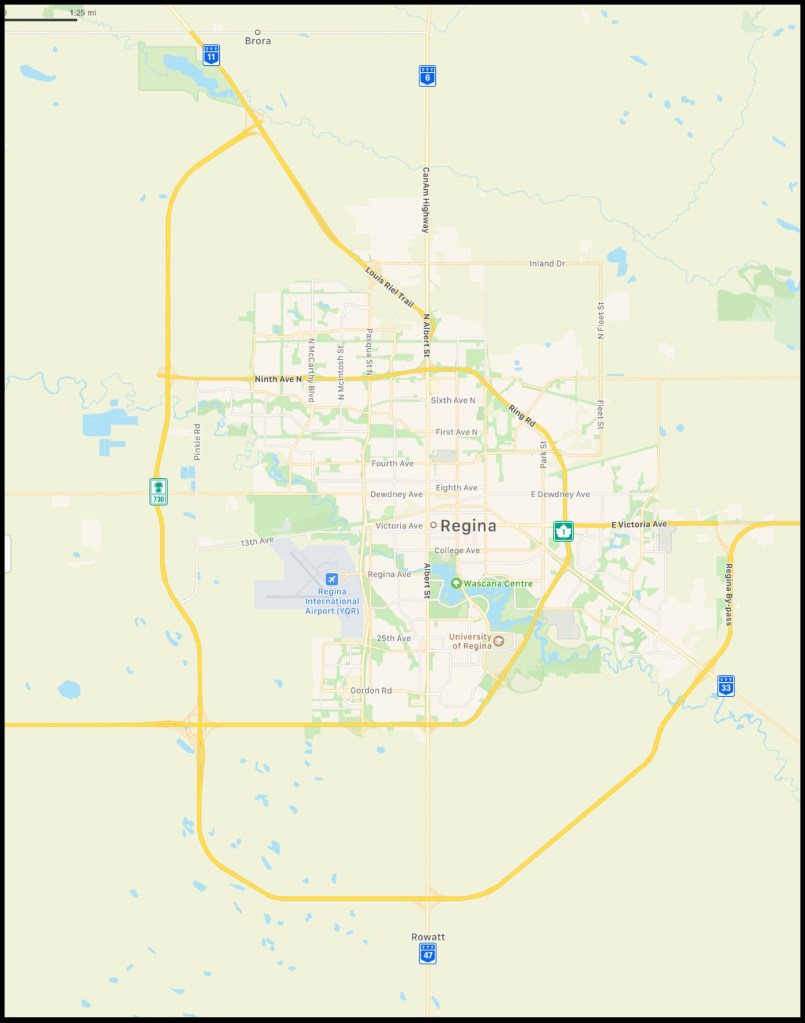
Cowessess Chief Cadmus Delorme and Chief Bobby Cameron of the federation planned to hold a news conference Thursday to provide more details about the new find at the Marieval Indian Residential School, which operated from 1899 to 1997 where Cowessess is now located, about 87 miles east of Regina, the capital of Saskatchewan.
From the 19th century until the 1970s, more than 150,000 First Nations children were required to attend state-funded Christian schools as part of a program to assimilate them into Canadian society. They were forced to convert to Christianity and not allowed to speak their native languages. Many were beaten and verbally abused, and up to 6,000 are said to have died.
The Canadian government apologized in Parliament in 2008 and admitted that physical and sexual abuse in the schools was rampant. Many students recall being beaten for speaking their native languages; they also lost touch with their parents and customs.
Indigenous leaders have cited that legacy of abuse and isolation as the root cause of epidemic rates of alcoholism and drug addiction on reservations.
As we enter the dog days of August, I think it’s fair to say that 2021 has become a year for recognition and reckoning. Of course, Native People grow up with a heightened understanding of the genocide on which the U.S. was founded. Today, I want to share a little more of that perspective with you.
As an ally integral to our movement for justice, your willingness to engage with hard truths is appreciated. You can help us spread the word and find a better way forward. Today, as part of this process, I ask you — if you can stomach it — to watch this special report about the Hiawatha Indian Insane Asylum from prominent South Dakota news organization KELO.
Hiawatha was a horrific place, located right here in South Dakota — something that should surprise nobody. Its reputation among Native People was so bad that the threat of being sent there was used as a deterrent for children who misbehaved at boarding schools. As some of the keepers of this story mention in their interviews with KELO, it housed people from many tribal nations, and once you went in, you were very unlikely to come out.
It’s hard to find an “insane asylum” with a good reputation. But of course, the conditions at the one that impounded Native folks were far worse than most. Most of those sent to Hiawatha were anything but “crazy.” As my colleague, Chase Iron Eyes, put it earlier today, many of these relatives were spiritually gifted. Others probably just had too much fighting spirit for their own good.
I know this is a heavy topic, and I thank you for reading. We are living in troubled times, and it’s only with your attention that we can avoid making the same mistakes again and leave a more equitable world to our future generations.
Wopila tanka — my gratitude for being on this difficult journey with us. You’re making things better! Madonna Thunder Hawk Cheyenne River Organizer The Lakota People’s Law Project
On July 1, 2021, the Supreme Court released its decision in a prominent voting rights case that Indigenous activists and attorneys say will make it harder for people of color — especially Indigenous populations — to vote.
In the case, Arizona Attorney General Mark Brnovich v. Democratic National Committee, the court looked at whether a pair of voting policies in Arizona violated Section 2 of the Voting Rights Act, a provision that prohibits voting laws or practices that discriminate on the basis of race, color or language. In a 6-3 vote split between its conservative and liberal judges, the court upheld Arizona’s policy disqualifying any ballot cast in the wrong precinct as well as a 2016 law that made it a felony for anyone but a family member, household member or caregiver to return another person’s mail ballot — a method known as ballot harvesting or collecting, often used by get-out-the-vote groups to increase turnout.
The latest case is one of the most potentially perilous decisions for Indigenous voters since Shelby County vs. Holder eight years ago, voting rights attorneys say. Shelby overturned a portion of the Voting Rights Act, allowing state legislatures to pass voter laws without federal oversight. That paved the way for more restrictive voter legislation, including the Arizona laws at the heart of Brnovich. The Supreme Court’s decision could not only make voting harder for rural Indigenous voters, Indigenous voting advocates and attorneys say, it will also make it harder to challenge new voting rules that disproportionately affect Indigenous populations and people of color.
“The (court) set goalposts that are really hard to meet and said that sometimes discriminatory effects can be small enough that they don’t matter,” Native American Rights Fund staff attorney Jacqueline De León (Isleta Pueblo) said. “And that is particularly disturbing to Native Americans, because in this instance they were saying some Native communities don’t matter.”
In Arizona, where 27 percent of the state land is tribal land and about 6 percent of the population is Indigenous, the nearest ballot box might be from 45 minutes to more than two hours away. “Because of that distance, it was common practice for neighbors, clan, relatives or extended family and otherwise people who are considered kin in terms of tribal relations to pick up your ballot and return it because they were making that two-hour drive,” Torey Dolan, a member of the Choctaw Nation of Oklahoma and Native Vote fellow at the Sandra Day O’Connor College of Law at Arizona State University, said.
Unmoved by this reality, the court ruled that Arizona’s ballot-collection law did not violate Section 2 of the Voting Rights Act, saying that having to identify one’s polling place and then travel there to vote does not exceed the “usual burdens of voting.”
FILE – In this Nov. 5, 2020, file photo the Supreme Court is seen in Washington. (AP Photo/J. Scott Applewhite, File)
Indigenous people first gained the right to vote in 1924 through the Indian Citizenship Act. But tribal communities’ ability to vote has long been hindered by intentional discrimination. Obstacles include a lack of polling stations on reservations, cumbersome traveling requirements and ballots that fail to adhere to the minority language requirement of the Voting Rights Act. Meanwhile, gerrymandered districts are deliberately designed to dilute the impact of tribal votes.
After the Voting Rights Act passed in 1965, civil rights attorneys and tribes were able to challenge these discriminatory voting practices in court — and win. One of the main weapons in their arsenal was Section 2 of the law. But in Brnovich v. DNC, the Supreme Court changed what Section 2 can do to protect voters.
Tribal members on the Navajo Nation and in other rural areas often possess non-standard addresses that make it difficult for counties to place them in the correct precinct. In addition, unreliable internet access makes it hard to find precinct information online. Until 2020, even tribal members with internet access lacked a publicly available tool online to verify precincts with non-standard addresses, Dolan said. As a result, the ballots of Indigenous voters were discarded at a rate higher than those of non-Native, particularly white, voters, in the 2016 election.
While the court acknowledged that Arizona’s out-of-precinct policy can burden Indigenous, Black and Latino communities more than non-minority voters, it dismissed the racial disparity as being “small in absolute terms.” “A policy that appears to work for 98 percent or more of voters to whom it applies — minority and non-minority alike — is unlikely to render a system unequally open,” Justice Samuel Alito wrote.
This particular ruling is very alarming, Dolan said. “When you consider the court’s emphasis on statistics and number of voters impacted, the Supreme Court (might say) 2,000 Native Americans are impacted, and out of this really sizable Native American population — that’s not enough to make a difference,” Dolan said. “But that number could be an entire tribe.”
The Democratic National Committee argued that both Arizona laws disproportionately affected Black, Latino and Indigenous voters and were enacted with “discriminatory intent.” Arizona Attorney General Mark Brnovich welcomed the ruling as a means to prevent voter fraud, despite the fact that there has never been a case of voter fraud associated with ballot collection in Arizona.
“One of the really disturbing things that this case did was it allowed this idea of fake voter fraud to serve as a justification for discrimination,” De León said. “It didn’t require states to prove that there was actually a risk or even a result of voter fraud in their states. They just allowed the lie to be accepted as a justification. And that really just unburdened states in a lot of ways from having to prove their justifications for laws and instead put that burden on litigants.”
Midterm elections are still more than a year away, but Indigenous voting rights and activists, such as OJ Semans, Rosebud Sioux Tribe, co-executive of the Indigenous voting rights advocacy nonprofit Four Directions, are already hard at work. “We’re already warning tribes, ‘This is coming now, we’re going to need to prepare,’” Semans said. Meanwhile, De León believes that Congress needs to act by reforming the Voting Rights Act or passing the Native American Voting Rights Act.
“At the end of the day, the margins on the most consequential elections are exceedingly small, and Native communities are the missing votes in a lot of those communities,” De León said. “That’s why all of this effort is going into stopping the Native vote. … They know that it would change the status quo, and that’s worth fighting for.”
Jessica Douglas is a staff writer at High Country News and a member of the Confederated Tribes of Siletz Indians. Email her at jessica.douglas@hcn.org or submit a letter to the editor.
A memorial for the 215 children whose remains were discovered on the site of the former Kamloops Indian Residential School in British Columbia. (Amber Bracken for The New York Times)
Ian AustenThu, June 24, 2021, 6:16 AM
CALGARY, Alberta — The remains of as many as 751 people, mainly Indigenous children, were discovered at the site of a former school in the province of Saskatchewan, a Canadian Indigenous group said Thursday, jolting a nation grappling with generations of widespread and systematic abuse of Indigenous people.
The discovery, the largest one to date, came weeks after the remains of 215 children were found in unmarked graves on the grounds of another former boarding school in British Columbia.
Both schools were part of a system that took Indigenous children in the country from their families over a period of about 113 years, sometimes by force, and housed them in church-run boarding schools, where they were prohibited from speaking their languages.
A National Truth and Reconciliation Commission, established in 2008 to investigate, expose and document the history and consequences of the residential schools, called the practice “cultural genocide.” Many children never returned home and their families were given only vague explanations of their fates, or none at all. Canada had about 150 residential schools and an estimated 150,000 Indigenous children passed through the schools between their opening, around 1883, and their closing in 1996.
“This was a crime against humanity, an assault on a First Nation people,” Chief Bobby Cameron, of the Federation of Sovereign Indigenous Nations, the provincial federation of Indigenous groups, said during a news conference Thursday. “The only crime we ever committed as children was being born Indigenous.”
It is unclear how the children died at the church-run schools, which were buffeted by disease outbreaks a century ago, and where children faced sexual, physical and emotional abuse and violence. Some former students of the schools have described the bodies of infants born to girls impregnated by priests and monks being incinerated.
The commission estimated that about 4,100 children went missing nationwide from the schools. But an Indigenous former judge who led the commission, Murray Sinclair, said in an email this month that he now believed the number was “well beyond 10,000.”
The discovery in Saskatchewan was made by the Cowessess First Nation at the Marieval Indian Residential School, about 87 miles from the provincial capital, Regina.
Local Indigenous leaders on Thursday demanded an inquiry into what they called a “genocide,” and called for the church and the government to turn over all records related to the administration of the schools.
Chief Cadmus Delorme, of the Cowessess First Nation, also called for Pope Francis to apologize, saying that the Roman Catholic Church needed to address its actions. Delorme said that his Indigenous community, spurred by the discovery at Kamloops and in conjunction with technical teams from Saskatchewan Polytechnic, began combing the area using ground penetrating radar on June 2, hitting as many as 751 unmarked graves. He said he expected more bodies would be discovered.
For Canada’s 1.7 million Indigenous citizens, who make up about 4.9% of the population, the discovery of yet another mass burial site is a visceral reminder of centuries of discrimination and abuse, which has led to intergenerational trauma among survivors of residential schools and their families.
It is also a powerful vindication of their testimonies. While the recent findings have intensified attention to the issue, Indigenous people had been suggesting for decades through their oral histories that thousands of children had disappeared from the schools, but had often been met with skepticism.
“There’s no denying this: All of the stories told by our survivors are true,” Cameron said.
The latest findings are likely to deepen the nation’s debate over its history of exploiting Indigenous people and refocus attention on the horrors of the schools, a stain in the history of Canada, a country which has often been perceived, fairly or not, as a bastion of progressivism and multiculturalism.
Florence Sparvier, 80, an elder of the Cowessess First Nation, said she attended two residential schools, including Marieval, the school where the unmarked remains were found.
“They were very condemning about our people,” she said of the nuns at the schools. “They told us our people, our parents, our grandparents didn’t have a way to be spiritual because we were all heathens.”
In September 2017, Prime Minister Justin Trudeau acknowledged the nation’s past “humiliation, neglect and abuse” of Indigenous people, and vowed in a speech at the U.N. General Assembly to improve the lives of the country’s Indigenous people. The latest discoveries will add pressure for him to accelerate those efforts, which many Indigenous people complain have fallen short.
When Trudeau took office in 2015, he made the national Truth and Reconciliation Commission’s 94 recommendations a top priority. But progress has been slow, in part because some of them are beyond the federal government’s control. The Indian Act, a collection of laws dating to the 19th century that govern the lives of Indigenous people, also remains in place despite Trudeau’s promises to move it into a new system under their control. Cameron and several other Indigenous leaders say that they hope the discovery of the children’s remains will accelerate the process.
“We are tired of being told what to do and how to do it,” Delorme said.
The remains of the 215 children were discovered at the Kamloops Indian Residential School in British Columbia last month through the use of ground-penetrating radar. Much like an MRI scan of the body, the technology produces images of anomalies in the soil.
The search at the Kamloops school is continuing and the First Nation leaders said that they expected the count to rise further.
When the commission tried to look into the question of missing Indigenous children, the Conservative government at the time turned down its request for money to finance searches. Since the Kamloops discovery at the end of May, several Canadian governments have offered to pay for searches.
On Tuesday, the federal government announced that it would provide just under 4.9 million Canadian dollars (about $3.9 million) to Indigenous communities in Saskatchewan to search for graves. The provincial government previously committed 2 million Canadian dollars ($1.6 million).
Like Kamloops, the Marieval school, which opened in 1899, was operated for most of its history by the Roman Catholic Church for the government of Canada. A marked cemetery still exists on the grounds of the school, which closed in 1997 and was subsequently demolished.
The commission called for a papal apology for the role of the church, which operated about 70% of the schools. (The rest were run by Protestant denominations.) But despite a personal appeal from Trudeau to the Vatican, Francis has still not taken that step. By contrast, the leadership of the United Church of Canada, the country’s largest Protestant denomination, apologized in 1986 for its role in running the schools.
Since the Kamloops announcement, Cameron said, he has been traveling around the province, where farming and mining are major industries, looking at former school sites.
“You can see with your plain eye the indent of the ground where these bodies are to be found,” he said in an interview Wednesday night. “These children are sitting there, waiting to be found.”
The U.S. Department of Interior will formally investigate the impact of federal Indian boarding schools, Interior Secretary Deb Haaland announced before tribal leaders on Tuesday.
The new “Federal Indian Boarding School Initiative” will result in a detailed report compiled by the Interior and will include historical records of boarding school locations, burial sites and enrollment logs of children’s names and tribal affiliations. Haaland made the announcement virtually at the 2021 National Congress of American Indians mid-year conference, a four-day gathering for tribal leaders, policymakers, and partners to discuss issues currently facing Indian Country.










 Water is Life