Author: aztec8888
COVID-19 in Indian Country
https://indiancountrytoday.com/news/indian-country-s-covid-19-syllabus-EiN-p5Q-XkW-smnaebJV6Q

As of June 10, 2020 11:45 am EDT in the Indian health system (spreadsheet).

Confirmed by tribes, tribal health clinics, urban Indian programs, the Indian Health Service, state public health agencies or the Centers for Disease Control and Prevention
Indian Country Today needs your help to gather positive COVID-19 cases and deaths related to COVID-19 in your tribal community.
Let us know if there are any confirmed positive COVID-19 cases or deaths related to COVID-19 in your tribal nation or announced by your tribal nation. Submit the case(s) in the Google Form above.


Total cases: 1,256,421
Total deaths: 110,925
As of June 10, 2020 at 12:45pm EDT

Total cases confirmed: 7,145,539
Deaths: 408,025
Countries: 216
As of June 10, 2020 at 12:45pm EDT by the World Health Organization
- See the live numbers for the Navajo Nation at the Navajo Epidemiology Center Coronavirus Response Hub
- Map of COVID-19 reports by Johns Hopkins University
- World Health Organization COVID-19 Situation Dashboard
- Another data set is available at WorldoMeter.info


Explanation stories

The power of data to predict where the coronavirus will hit next
Just like a massive evacuation can save lives in a Category 4 hurricane, social distancing and shuttered workplaces can slow the rate at which the virus spreads.
China or Italy? A stark contrast on the coronavirus front
Thursday was a day of contrasts on the front lines of the battle against the new coronavirus. In a sign of hope, the Chinese city of Wuhan reported no new homegrown infections, but in a stark warning for the world, Italy appeared set to surpass China’s death toll from the virus.
The two milestones were a dramatic illustration of how much the global outbreak has pivoted toward Europe and the United States. They also showed how the arc of contagion can vary in different nations, as Italy with 60 million people braces to see more carnage than China, a nation of 1.4 billion.
The science: How coronavirus spreads from person to person
Each infected person spreads to two or three others on average, researchers estimate. It spreads more easily than flu but less than measles, tuberculosis or some other respiratory diseases
Coronavirus Q&A: What is it? The symptoms. And how it spreads
An explainer of every frequently asked question in relation to COVID-19.

Are you a Native student whose college or university has been closed or switched to online classes? Visit this spreadsheet for resources involving technology in Native communities. It is updated by San Juan College’s Native American Center.
- Centers for Disease Control and Prevention. Basic information.
- Indian Health Service
- National Congress of American Indians
- National Indian Health Board
- COVID-19: Native advisories and event updates
Democrats propose sweeping police overhaul; Trump criticizes
The Associated Press
Associated Press
WASHINGTON (AP) — Democrats proposed a far-reaching overhaul of police procedures and accountability Monday, a sweeping legislative response to the mass protests denouncing the deaths of black Americans in the hands of law enforcement.
The political outlook is deeply uncertain for the legislation in a polarized election year. President Donald Trump is staking out a tough “law and order” approach in the face of the outpouring of demonstrations and demands to re-imagine policing in America.
“We cannot settle for anything less than transformative structural change,” said House Speaker Nancy Pelosi, drawing on the nation’s history of slavery.
Before unveiling the package, House and Senate Democrats held a moment of silence at the Capitol’s Emancipation Hall, reading the names of George Floyd and many others killed with police interactions. They knelt for 8 minutes and 46 seconds — now a symbol of police brutality and violence — the length of time prosecutors say Floyd was pinned under a white police officer’s knee before he died.
Trump, who met with law enforcement officials at the White House, characterized Democrats as having “gone CRAZY!”
As activists call for restructuring police departments and even to “ defund the police,” the president tweeted, “LAW & ORDER, NOT DEFUND AND ABOLISH THE POLICE.” He declared later, “We won’t be dismantling our police.”
Democratic leaders pushed back, saying their proposal would not eliminate police departments — a decision for cities and states — but establish new standards and oversight.
Joe Biden, the presumed Democratic presidential nominee, “does not believe that police should be defunded,” said spokesman Andrew Bates.
The Justice in Policing Act, the most ambitious law enforcement reforms from Congress in years, confronts several aspects of policing that have come under strong criticism, especially as more and more police violence is captured on cellphone video and shared widely across the nation and the world.
The package would limit legal protections for police, create a national database of excessive-force incidents and ban police choke holds, among other changes.
It would revise the federal criminal police misconduct statute to make it easier to prosecute officers who are involved in “reckless” misconduct and it would change “qualified immunity” protections to more broadly enable damage claims against police in lawsuits.
The legislation would ban racial profiling, boost requirements for police body cameras and limit the transfer of military equipment to local jurisdictions.
Overall, the bill seeks to provide greater transparency of police behavior in several ways. For one, it would grant subpoena power to the Justice Department to conduct “pattern and practice” investigations of potential misconduct and help states conduct independent investigations.
And it would create a “National Police Misconduct Registry,” a database to try to prevent officers from transferring from one department to another with past misconduct undetected, the draft says.
A long-sought federal anti-lynching bill that has stalled in Congress is included in the package.
House Judiciary Committee Chairman Jerrold Nadler, D-N.Y., a co-author with Rep. Karen Bass, D-Calif., and Democratic senators, will convene a hearing on the legislation Wednesday.“
The world is witnessing the birth of a new movement in this country,” said Rep. Bass, chairwoman of the Congressional Black Caucus, which is leading the House effort. She called the proposal “bold” and “transformative.”
While Democrats are expected to swiftly approve the legislation this month, it does not go as far as some activists want. The outlook for passage in the Republican-held Senate is slim.
Republican campaign officials followed Trump’s lead in bashing the effort as extreme.
“No industry is safe from the Democrats’ abolish culture,” said Michael McAdams, a spokesman for the House Republican campaign committee, in an email blast. “First they wanted to abolish private health insurance, then it was capitalism and now it’s the police.”
Democrats fought back.
“This isn’t about that,” Pelosi said. Congress is not calling for any wholesale defunding of law enforcement, leaving decisions to local cities and states, Democrats noted. Some cities are shifting police resources to other community services in response to the protests.It is unclear if law enforcement and the powerful police unions will back any of the proposed changes or if congressional Republicans will join the effort.
Senate Majority Leader Mitch McConnell, whose Louisville hometown faces unrest after the police shooting of Breonna Taylor in her home, said he would take a look at potential Senate legislation.Republicans are likely to stick with Trump, although McConnell was central to passage of a 2018 criminal justice sentencing overhaul the president signed into law, and some key GOP senators have similarly expressed interest in changes to policing practices and accountability.
Sen. Lindsey Graham, R-S.C.,chairman of the Senate Judiciary Committee, has said his panel intends to hold a hearing to review use of force and other issues. And Sen. Mike Lee, R-Utah, has said he’d like to review the package coming from Democrats.
Rep. Will Hurd, R-Texas, who marched in support of Floyd in Houston, penned an op-ed Monday about how his own black father instructed him as a teen driver to respond if he was pulled over by the police. Hurd offered his own proposals for changes in police practices.
What started with the Black Lives Matter movement after the death of Michael Brown in Ferguson, Mo., has transformed with the killings of other black Americans into a diverse and mainstream effort calling for changing the way America polices its population, advocates say.
“I can’t breathe” has become a rallying cry for protesters. Floyd pleaded with police that he couldn’t breathe, echoing the phrase Eric Garner said while in police custody in 2014 before his death in New York.“
All we’ve ever wanted is to be treated equally — not better, not worse,” said Rep. Hakeem Jeffries, D-N.Y.
Biden’s former presidential primary rivals, Sen. Cory Booker, D-N.Y., and Sen. Kamala Harris, D-Calif., are co-authors of the package in the Senate.

Associated Press writer Bill Barrow in Atlanta contributed to this report.
Mashpee Wampanoag ruling a ‘win for all of Indian Country’
Kolby KickingWoman
Support is pouring in for the Mashpee Wampanoag Tribe following a ruling in its favor in a lawsuit against the U.S. Interior Department.
On Friday evening, Judge Paul L. Friedman of the U.S. District Court in Washington, D.C., blocked the federal government from rescinding the Massachusetts tribe’s reservation status, ordering the department to reexamine a decision that took the tribe’s more than 300 acres out of trust.
Massachusetts’ two Democratic U.S. senators, Elizabeth Warren and Ed Markey, said in a joint statement that the ruling marks an important victory for the Mashpee Wampanoag Tribe. But they said the fight is not finished, and they will continue to hold the Trump administration accountable.
“The Mashpee Wampanoag have a right to their ancestral homeland,” the statement said. “We are glad that the Court acknowledged the importance of the arguments we made in the bicameral, bipartisan amicus brief we filed with our colleagues opposing the U.S. Department of the Interior’s cruel actions.”
The amicus brief submitted to the court was led by Rep. Deb Haaland, Laguna and Jemez Pueblo, and signed by more than 20 members of Congress from both sides of the aisle.
Haaland, a New Mexico Democrat, said the relationship between tribes and the federal government must be upheld and that the Interior Department had blatantly abused its power.
“Tribal sovereignty and the government-to-government relationship must be respected, but the Department of Interior clearly used a public health emergency to illegally move land out of trust,” said Haaland in a statement.

The Interior Department said in a brief statement Monday that it is examining Friedman’s ruling.
“The Department is reviewing the decision and our options to proceed, and remains committed to upholding our trust responsibilities to Indian Country,” the statement said.
The agency previously told The Associated Press that it was obligated by a recent federal court decision to remove a lands designation bestowed in 2015 under then-President Barack Obama.
Mashpee Wampanoag Chairman Cedric Cromwell told Indian Country Today on Friday it was a great day for Mashpee and that Friedman stood up for justice.

“Very happy justice reigned supreme but the battle is not over,” Cromwell said. “We’re praying the Trump administration will do the right thing and stand with Mashpee.”
(Previous story: Mashpee Wampanoag: US Court ‘stood up for justice’)
Also congratulating the Mashpee on its victory was the National Congress of American Indians. The organization’s president, Fawn Sharp, Quinault, said the organization will continue to stand with Mashpee as the process plays out.
“We consider this a win for all of Indian Country,” Sharp said. “The Mashpee Wampanoag relationship with the United States is one of political equality, derived from their inherent sovereignty, powers, and authority that long predates the United States. No federal agency or civil servant has the authority to diminish or in any way undermine that unique political relationship and standing.”
Per Judge Friedman’s ruling, the case has been remanded to the Interior Department, where Interior Secretary David Bernhardt must follow a 2014 “M-Opinion” to determine whether the Mashpee were “under federal jurisdiction before 1934.”

M-Opinions are opinions from the interior solicitor, the department’s head attorney, and are a source for the department’s interpretations of particular laws.
Robert Anderson, Bois Forte Band of Ojibwe, is a law professor at the University of Washington School of Law and said it seems the Interior Department and the current administration have put a lot of resources into this case, and are splitting hairs to prevent recent federally recognized tribes from receiving the same benefit as other tribes.
The Mashpee Wampanoag gained federal recognition in 2007.
“It’s another example of this administration sort of being, you know, going out of its way to chip away at Indian rights in a sort of a mean-spirited, nitpicky way,” Anderson said. “I think it’s really a bad thing.”
As the Interior Department reexamines its decision, the 321 acres of Mashpee Wampanoag land has been placed back into trust, and Cromwell said the tribe will work so that it remains that way.
“We will continue to work with the Department of the Interior — and fight them if necessary — to ensure our land remains in trust,” Cromwell said.

Kolby KickingWoman, Blackfeet/A’aniih is a reporter/producer for Indian Country Today. He is from the great state of Montana and currently reports and lives in Washington, D.C. Follow him on Twitter – @KDKW_406. Email – kkickingwoman@indiancountrytoday.com
Indian Country Today LLC is a nonprofit news organization owned by the nonprofit arm of the National Congress of American Indians. The Indian Country Today editorial team operates independently.
Removal of Christopher Columbus Statues
|
|
Black Lives Matter
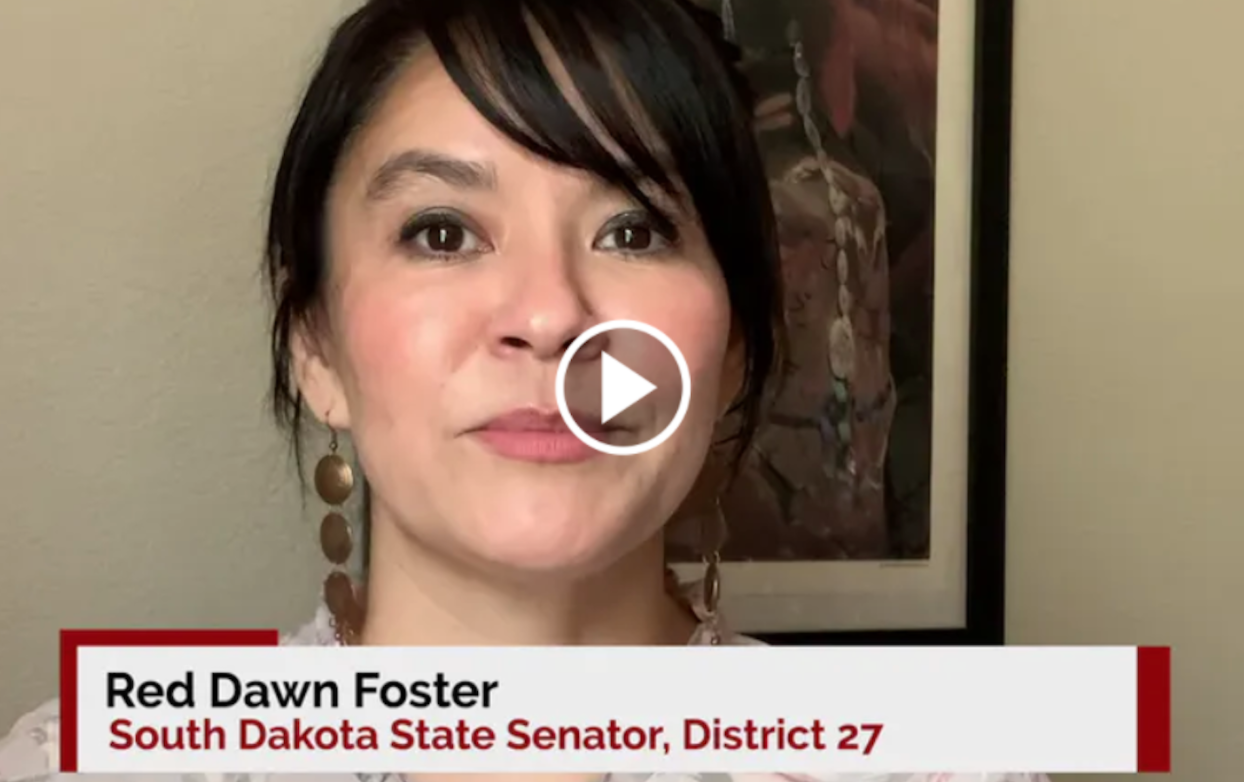
I trust that, as a supporter of Lakota sovereignty, you believe in justice and equity for all people. So I hope you’ll join me in standing with the #BlackLivesMatter movement. My experience as a lifelong activist gives me insight into what a moment that shifts society looks like. It can look messy, it can look dangerous — it can look just like this.

Lisa Skye and I stand with BLM at the Cheyenne River Reservation border. Photo courtesy of Warrior Women Project. Please click the play button above to watch this video message from me.
As you are no doubt aware, in the wake of George Floyd’s murder by police on a Minneapolis street, our nation is on fire. This follows the recent murders of Breonna Taylor by police in her home and Ahmaud Arbery by white vigilantes on a Georgia street.
Now, every day and every night, thousands march and kneel and vocalize to end police brutality and demand a new respect for Black bodies, lives, and communities. A few days back, Lakota Law’s Chase Iron Eyes and his daughter, Tokata, helped lead one such protest in Rapid City.
As a nation, many of us are listening to, and gaining further understanding of, the pain suffered by communities of color for centuries in this land. With that understanding, hopefully we will feel compelled to offer support and advocacy in whatever ways are most appropriate or asked of us. Whatever lane each of us occupies, we can find our role in the struggle.
I and many people of the Oceti Sakowin and other Indigenous nations can empathize with the pain wrought by institutional racism. Seeing the young people of today demonstrating and standing up for what is right takes me back to my own youthful days organizing for Red Power — once upon a time, right there in that same place, the Twin Cities. It reminds me of our American Indian Movement, born from Lakota, Dakota, and Ojibwe activism in that northern midwest metropolis.
And, of course, it reminds me of the #NoDAPL protests at Standing Rock. Anyone surprised to see the president unleash militarized police, security forces, and tear gas on peaceful protesters wasn’t paying attention in 2016 and ‘17. For decades, from Sitting Bull to MLK, from the American Indian Movement to Black Lives Matter, Black and Brown communities have taken turns leading the movement for understanding, equality, and justice.
The struggle is now being live-streamed, and it’s not easy to watch. We know that a few irresponsible people on our side and, more often, counter-protesters with hate-filled hearts are infiltrating, looting, and trying to paint legitimate civil disobedience with the brush of violence. But we know the difference. We know that we are not terrorists, and neither is anyone who truly seeks justice and calls out tyranny.
The world is changing, and it’s long overdue. I hardly need to remind you that Black and Native people die at the hands of police and are incarcerated at far higher rates than white folks. So yes, I empathize. And I offer you my deep gratitude for your compassion. Thank you for standing with us through our struggle. I hope we can all say we also stand arm-in-arm with Takomni Hesapa Wiconi Heĉha — #BlackLivesMatter.
Wopila tanka — Thank you for your friendship and your support,
In solidarity, always,
Madonna Thunder Hawk
Cheyenne River Organizer
The Lakota People’s Law Project
A Victory: Recommitment to Tribal Sovereignty
|
|
|
Siberian Fuel Leak
Joaqlin Estus
The spill took place Friday at a power plant in an outlying section of the city of Norilsk, 2900 kilometers (1800 miles) northeast of Moscow.
Booms were laid in the Ambarnaya River to block the fuel. The river feeds a lake from which springs another river that leads to the environmentally delicate Arctic Ocean. The area where the spill occurred is closer to the traditional homelands of the Nenets and northern Norway than Alaska. However, the fish and marine mammals of the Arctic Ocean and its interrelated coastal seas are an important source of food for Inuit and other Arctic Indigenous peoples.
Telemedicine

Joaqlin Estus
The COVID-19 pandemic has prompted countless changes. One that’s likely to stick is the more common use of telecommunications in the health field.
Both telemedicine, or the delivery of clinical care by telephone or the internet; and telehealth, which includes training, education and other communications; already play a bigger role than before the pandemic.
“In our practice, we never used telehealth before two months ago, and now I feel like I’m almost a mini expert in telehealth,” said Dr. Joseph Bell, Lummi, a pediatrician with the Spartanburg Regional Medical Center in South Carolina.
New Information:Dakota Access pipeline (DAPL).

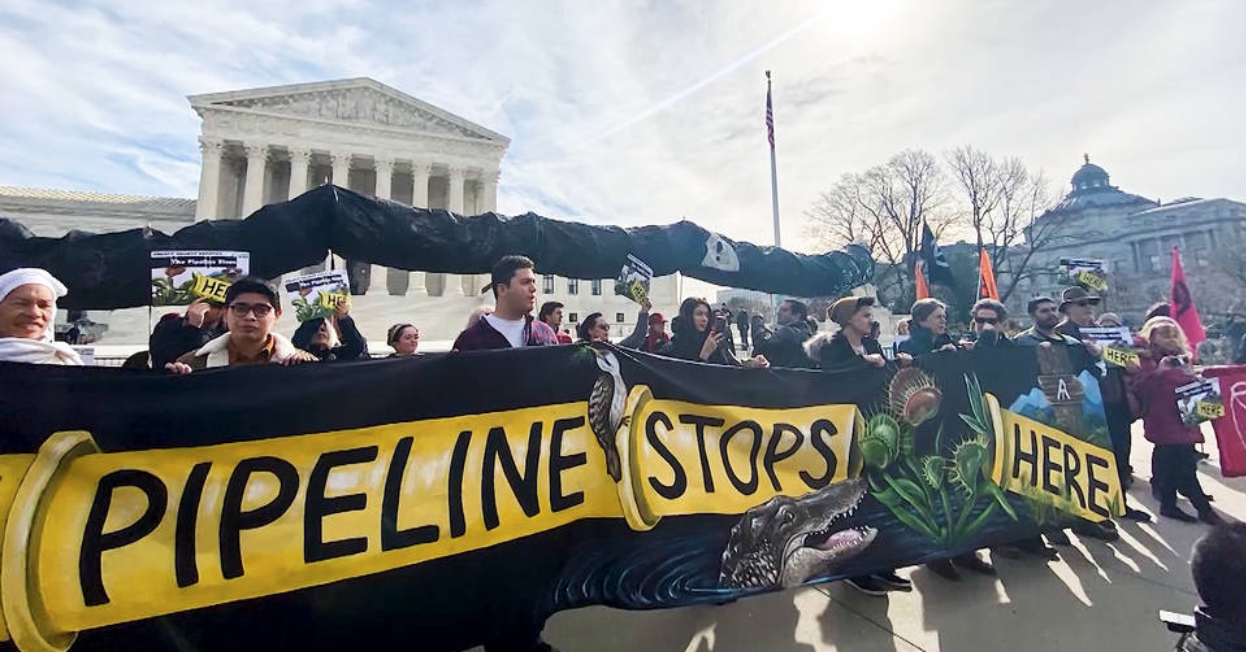
You may recall that, in late March, the Standing Rock, Oglala, Yankton, and Cheyenne River Sioux Tribes won a key round in their legal battle against the Dakota Access pipeline (DAPL). In a reversal of his prior decision, D.C. District Court Judge James Boasberg ruled that the pipeline hadn’t undergone proper environmental review. Though logic would dictate a subsequent cease to DAPL’s operations, Boasberg hasn’t taken that step. That’s why, last week, the Lakota Law team joined an Earthjustice-led effort and submitted an amicus curiae (friend of the court) brief to the judge, a strong legal argument that the oil flow must stop immediately.

For a comprehensive picture of the history of DAPL and current legal landscape, check out our in-depth blog, which also features our television ad targeted to the D.C. market in 2017 arguing for a full Environmental Impact Statement.
It’s not complicated. Because Boasberg’s latest decision voids the easement granted for DAPL, it should no longer be permitted to carry oil, at least until we’ve seen an Environmental Impact Statement (EIS) compliant with the National Environmental Policy Act. We’ve been arguing for a proper EIS since the beginning, recognizing that — given the oil company’s horrendous safety track record — it may be impossible to produce.
As you know, the Obama administration agreed that a comprehensive review was needed in late 2016, shutting down construction as thousands cheered at Standing Rock during the #NoDAPL protests. Sadly, everything changed when Trump took office. One of his first executive orders fast-tracked the pipeline without the EIS. Then, when Standing Rock took legal action, Judge Boasberg cited an exception in the law allowing construction despite known, potential hazards.
Boasberg’s latest ruling has changed the game again, this time in our favor. In our brief, LPLP Chief counsel Daniel Sheehan argues that if the oil flow doesn’t stop now, the Court will send a perilous message that litigation against the government is “meaningless and tantamount to a bait and switch designed to fool those naïve enough to believe that the rule of law still has efficacy.”
We’re not alone. Democrats on the House Natural Resources Committee have also joined U.S. senators including Kamala Harris and Elizabeth Warren to submit a powerful amicus brief. Their legal argument was prepared by Rep. Raúl M. Grijalva (D-AZ) and endorsed by Alexandria Ocasio Cortez, both of whom met face-to-face with our team in recent months.
We are aligned with powerful people, and the support you have shown to the Lakota means we can keep fighting nonstop to cancel pipelines and forward justice. The tide may be turning. I hope that if you stay with us, we can bring additional legal victories — and safety — back to our homelands.
Wopila tanka — Thank you for your friendship and your support,
Chase Iron Eyes
Lead Counsel
The Lakota People’s Law Project