Thank the Women of Cheyenne River for resisting KXL
Mon, Feb 17, 2020 11:30 am
Madonna Thunder Hawk, Lakota Law (info@lakotalaw.org)
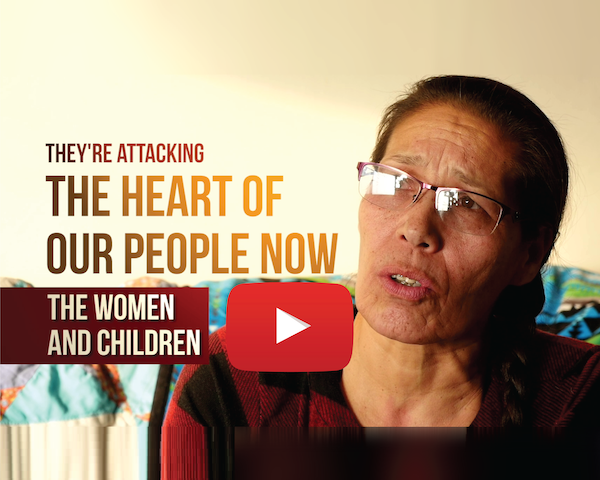
As the Keystone XL pipeline (KXL) invades our homelands at the Cheyenne River Reservation, we women are preparing for the struggle.
In December, my daughter, Marcy, helped to organize a talk about human trafficking and Missing and Murdered Indigenous Women and Children (MMIWC) happening on our reservation. At this important Women Gathering, community members and representatives of many concerned organizations initiated the Nazo Campaign — providing whistles to alert relatives to unfolding crime and violence on Cheyenne River — and a resolution asking our Tribal Council to declare a state of emergency. They then presented to the council, where our tribal nation made that declaration.
Our matriarchy must and will lead this fight. We even have two generations of grandmothers working together here! The Was’agiya Najin — “Grandmothers Standing Strong” — includes both older grandmothers (OGs) like me and younger grandmothers (YGs) like Marcy.
In addition to Was’agiya Najin, our Women Gatherings also include representation from Warrior Women Project, Women of All Red Nations, Simply Smiles, Indigenous Environmental Network, the Lakota People’s Law Project, veterans, water protectors, and more. These are powerful, alliance-building meetups, and now the tribe has heeded our warning.
That’s critical, because Big Oil is building two KXL man camps — temporary housing for pipeline workers — on either side of Cheyenne River. These dens of machismo inevitably bring with them increases in sex and drug trafficking, worsening our MMIWC epidemic locally.
Here’s how bad it is: by 2014, our state’s federal courts had handed out more life sentences for commercial sex trafficking than all other states’ combined. Because 40 percent of South Dakota’s victims are Native women, we pay the highest price.
As a girl, I was shipped off to boarding school. I experienced what it is like to have my culture stripped from me, so as a young woman I became a leader in the American Indian Movement and created the “We Will Remember” Survival School. There, I taught Marcy and other children about treaty rights, to prioritize Native sovereignty, and to preserve our traditions.
Now, together, we are helping to pass on lessons of leadership and direct action to the next generations. That starts with making sure they don’t fall prey to man camps, and it means demanding action from our tribe. As Indigenous women, we have always been on the front lines, and we know how to stay ready. Will you stand with us?
Wopila tanka — my deepest gratitude for your solidarity,
Madonna Thunder Hawk
Tribal Liaison
The Lakota People’s Law Project
Lakota People’s Law Project
547 South 7th Street #149
Bismarck, ND 58504-5859
The Lakota People’s Law Project is part of the Romero Institute, a nonprofit 501(c)(3) law and policy center. All donations are tax-deductible.
If you believe you received this message in error or wish to no longer receive email from us, please unsubscribe.
Elisa Martinez, Navajo Nation, is a candidate for an open U.S. Senate seat in New Mexico. She is one of 12 Native candidates running for the U.S. House and Senate in 2020. She faces Gavin Clarkson, Choctaw, in the GOP primary. (Candidate photo via Twitter)
There are 12 Native candidates running for United States Congress in the 2020 election cycle #NativeVote20 * This story has been updated
“If I get the opportunity to serve in Congress, it will be a great day,” Kaialiʻi “Kai” Kahele told Indian Country Today. “It won’t just be me standing up there. Behind me will be all of the people, ancestors and Native Hawaiians who came before me.”
Kahele is running to be the first. Since Hawaii became a state more than 60 years ago, there has never been a representative from the Big Island. Every national elected politician has come from Oahu.
That’s 15 in a row, if you are counting.
He also would be only the second Native Hawaiian to serve in office. Across the country a dozen Native candidates are running for the U.S. House and Senate. It’s already shaping up to be another record year, 2018 broke all sorts of barriers including the election of the first two Native women to ever serve in Congress. (With a possible third, Tricia Zunker, running in Wisconsin this week.)
A few tidbits: New Mexico is breaking all the rules. There is a Native candidate in every single district in the state. Both parties are represented. There’s even a primary where one Native candidate is running against another.
A comprehensive look at all of the #NativeVote20 candidates for the U.S. House and U.S. Senate.
There are at least nine of the candidates running for House seats and three are in Senate campaigns. Eight of the candidates are women and five are men. Seven are democrats and six are republicans.
The list of Native candidates and their platforms are below:
Karen Bedonie(Photo by Karen Bedonie, campaign website)
Karen Bedonie
Navajo
U.S. House of Representatives, New Mexico, District 3
Republican
Karen Bedonie, Navajo, is running for an open congressional seat in New Mexico’s 3rd district. Bedonie owns four small businesses. She is also a certified welder, framer, construction coordinator, construction manager, kitchen interior designer and a sous chef.
Bedonie, a republican candidate, cites her policy positions clearly on her campaign website. Bedonie is anti-abortion, supports the second amendment, aims to support small businesses and believes immigration should be conducted in a “legal organized manner.”
“I am a Conservative and those same values miraculously align with Navajo culture,” Bedonie’s campaign website states. “Therefore I stand as a Republican.”
Bedonie’s campaign has generated more than $15,000, according to data from the Federal Election Commission. Bedonie is currently running against five other candidates for the Republican party’s nomination. The primary election for this seat will happen on June 2, 2020.
Dineh Benally(Photo courtesy Dineh Benally, via Facebook)
Dineh Benally
Navajo
U.S. House of Representatives, New Mexico, District 3
Democrat
Dineh Benally, Navajo, is running as a Democrat for New Mexico’s 3rd congressional district (note: this is the same seat Bedonie is running for). Benally has previous campaign experience running for Navajo Nation president, vice president, and New Mexico state senate. He did not win any of these previous elections.
Benally is the current president of the Navajo Nation San Juan River Farm Board, an organization that focuses on water rights and bettering local economies.
The list of issues on Benally’s agenda are improving healthcare, increased access to medical and industrial agriculture, boosting home ownership and increased funding for education.
Benally told Indian Country Today that his end goal is to collaborate with various policymakers to improve the “livelihood of Navajo people, Native Americans, and the general public at large.”
“I will also continue to work towards becoming the next President of the Navajo Nation in 2022,” says Benally’s website.
There is no current data on Benally’s campaign earnings listed on the Federal Election Commission’s website. The primary election for this congressional seat will happen on June 2, 2020.
Gavin Clarkson
Choctaw Nation
U.S. Senate, New Mexico
Republican
Gavin Clarkson, Choctaw, is running for an open U.S. Senate seat in New Mexico. Clarkson recently served in the Department of the Interior under the Trump Administration where he managed the Office of Indian Energy and Economic Development and the Office of Self-Governance.
“My story is quite different from most people who spend their lives climbing the political stepladder aspiring to be another career politician,” Clarkson said in a press release announcing his campaign in August.
“I’m a tribal member whose orphaned father went from living out of trash cans to being the first Native American to fly a jet. I have a law degree, an MBA, and a Doctorate in Business Administration,” he said. “I’ve taught for two decades as a conservative in higher education and been illegally fired for it, and I’ve served as an economic development official in the Trump administration in the heart of the swamp.”
Clarkson has been named an expert in tribal finance by The Financial Times and has taught federal Indian law since 2003 at a variety of law schools across the country. In his free time, Clarkson says he enjoys country western dancing. He won a national championship hosted by the American Country Dance Association in 2012.
Clarkson has raised more than $583,000 so far in his Senate campaign, according to the Federal Elections Committee. The primary election for his party’s nomination will happen on June 2, 2020. To win the Republican nomination, Clarkson will need to receive more votes than the five other Republican candidates running for the open seat.
Rep. Tom Cole (Photo by U.S. House Office of Photography)
Tom Cole
Chickasaw Nation
U.S. House of Representatives, Oklahoma, District 4
Republican
Tom Cole, Chickasaw, will run for reelection to continue representing Oklahoma’s fourth district. His office told Indian Country Today that every indication is that Rep. Cole will seek reelection and an official announcement will be made before the filing deadline in April.
Cole has served in the U.S. House for the last 17 years and has held numerous leadership positions with the Republican National Committee and National Republican Congressional Committee.
Cole co-chairs the Congressional Native American Caucus with Rep. Deb Haaland. Together they called for the reauthorization of the Violence Against Women Act to include provisions for Native people that were altered in the Senate version. He and 77 lawmakers upheld the constitutionality of the Indian Child Welfare Act that the U.S. Court of Appeals for the Fifth District is reconsidering. Additionally, he helped introduce a bill to improve housing conditions in Indian Country and co-sponsored a bill to revitalize Native American languages.
Oklahoma’s primary election takes place on June 30.
Rep. Sharice Davids(Photo by U.S. House Office of Photography)
Sharice DavidsHo-Chunk Nation
U.S. House of Representatives, Kansas, District 3
Democrat
Sharice Davids, Ho-Chunk, is running for reelection as the congressional member for Kansas’s 3rd district. When she was first elected in 2018, she joined Rep. Haaland as the first two Native women to serve in U.S. Congress. She also became the first LGBTQ Native person to be elected into the U.S. Congress.
Deb Haaland
Laguna Pueblo
U.S. House of Representatives, New Mexico, District 1
Democrat
Deb Haaland, Laguna Pueblo, is running for reelection as the representative for New Mexico’s 1st district. Haaland was first elected to this position in 2018 when she and Rep. Davids became the first two Native women to serve in Congress.
Haaland told Indian Country Today that despite being an incumbent in this election cycle, her “enthusiasm and focus will be the same.”
Haaland has also used her time to travel to Indigenous communities outside of her home district in New Mexico. Earlier this month, Haaland visited the Meskwaki Indian Settlement on the night of the Iowa caucus to campaign for Senator Elizabeth Warren.
“I may not be the congresswoman for Iowa but I am the congresswoman for Indian Country,” Haaland said at the event. “My door is open for all of you.”
Haaland has raised more than $830,000 so far in her reelection campaign, according to the Federal Elections Committee. The primary election in New Mexico will happen on June 2, 2020. Haaland is currently facing one democrat opponent for the nomination.
Yvette Herrell (Campaign photo)
Yvette Herrell
Cherokee Nation
U.S. House of Representatives, New Mexico, District 2
Republican
Yvette Herrell, Cherokee, is running to represent the second district of New Mexico in the U.S. Congress. Previously Herrell served four terms in the New Mexico House of Representatives. She is also a former small business owner and entrepreneur.
“Born and raised in New Mexico, I understand firsthand what our families are going through,” Herrell said on her campaign website. “I will fight for our hardworking middle class, job creators, and traditions that make New Mexico great.”
Herrell also states her views on various policies. She says she wants to complete construction of the border wall, protect the second amendment, support President Trump, defeat the Green New Deal and expand New Mexico’s role in national security projects.
Herrell has received a number of endorsements from policymakers including Rep. Mark Meadows, R-NC, Rep. Andy Biggs, R-AZ and Governor Mike Huckabee. She also received endorsements from Cowboys for Trump, Citizens United and Gun Owners of America.
In 2018, Herrell ran for this congressional seat and lost in a close race. She lost in the general election by just 3,700 votes. This time around, Herrell is running against two other republicans for her party’s nomination. The primary election is held in New Mexico on June 2, 2020.
Paulette Jordan, Coeur d’Alene, is running for a U.S. Senate seat in Idaho. She previously held office for two terms in the Idaho House of Representatives. In 2018, she unsuccessfully ran for governor of Idaho.
“I’m excited to announce my candidacy to represent Idaho in the U.S. Senate. Over the past several years, I’ve had the opportunity to listen to thousands of Idahoans throughout this great state,” Jordan said on her campaign website announcing her campaign in early February. “Above all, I’ve learned that our state needs new leadership. We need leaders who value people over politics.”
Her stance on issues range from improving healthcare and education for Idahoans, addressing cyber security, social security, LGBTQ rights and legalizing marijuana. Jordan founded two nonprofit organizations, Idaho Voice and Save the American Salmon.
Jordan was the youngest member on her tribal council and has worked in the energy sector as a business development strategist. She also served as the finance chair and secretary of the executive board for the National Indian Gaming Association.
There is currently no data on Jordan’s campaign donations, according to the Federal Election Committee. Currently Jordan faces three opponents for the democratic party’s nomination. The primary election will choose their party’s candidate on May 19, 2020.
Kai Kahele
Native Hawaiian
U.S. House of Representatives, Hawaii, District 2
Democrat
Kaialiʻi “Kai” Kahele is running for an open congressional seat in Hawaii’s second district. Kahele has been a Hawaii state senator for four years and is a trained pilot in the U.S. Air Force. He has flown in the Air Force for more than 18 years.
Kahele lists 18 different policy platforms on his campaign website. They include protecting the environment, creating opportunities for indigenous voices, and combating issues such as homelessness, substance abuse and food insecurity.
On the topic of Native Hawaiian and Indigenous rights, Kahele says he will “champion” the Hawaiian Homes Commission Act and would support the Self Determination Act to fund the Department of Hawaiian Homelands. He also supports the U.S. ratification of the United Nations Declaration of Rights on Indigenous Peoples.
Most recently Kahele has been endorsed by former Governors of Hawaii John David Waiheʻe, Ben Cayetano and Neil Abercrombie. He has also been endorsed by Rep. Seth Moulton, D-MA, Rep. Brad Sherman, D-CA, and former Hawaii state representative Kaniela Ing.
Kahele has raised more than $719,000 for his congressional campaign, according to the Federal Elections Committee. Currently, Kahele faces one opponent in the primary election. Voters will head to the polls for Hawaii’s primary election on August 8, 2020.
Elisa Martinez(Photo from Elisa Martinez campaign via Twitter)
Elisa Martinez
Navajo
U.S. Senate, New Mexico
Republican
Elisa Martinez, Navajo, is running for U.S. Senate in New Mexico in the the same race as Gavin Clarkson.
She is the founder of the New Mexico Alliance for Life and worked with the Congressional Select Panel on Infant Lives.
“Let’s take back New Mexico’s future,” Martinez writes on her campaign website. “Together we’ll make history electing New Mexico’s first female Senator and the first Native American woman in the U.S. Senate.”
Martinez says she is concerned about border security, the second amendment, non-universal healthcare, veterans’ rights and reducing the federal government’s role in education.
She wrote an op-ed for Fox News, calling out Elizabeth Warren’s heritage as a Native woman contradictory to the Native American policies she advocates for, and Martinez’s personal experience with the government’s relationship with the reservation.
Martinez has raised more than $154,000 for her campaign, data from the Federal Elections Committee shows. She is running against five other candidates for the republican nomination. The primary election will be held on June 2, 2020 in New Mexico.
Rep. Markwayne Mullin(Photo from U.S. House of Photography)
Markwayne Mullin
Cherokee Nation of Oklahoma
U.S. House of Representatives, Oklahoma, District, 2
Republican
Markwayne Mullin, Cherokee, is running for reelection as the congressman for Oklahoma’s second district. He was first elected in 2012 and served for three years on the Energy and Commerce Committee since 2015. He also owns Mullin Plumbing, a business owned previously by his father.
Mullin has raised more than $766,000 for his reelection campaign since January 2019, data from the Federal Elections Committee shows. Oklahoma’s primary election will happen on June 30, 2020.
Rudy Soto (Photo courtesy of Rudy Soto)
Rudy Soto
Shoshone-Bannock
U.S. House of Representatives, Idaho, District 1
Democrat
Rudy Soto, Shoshone-Bannock, is running to represent Idaho’s first congressional district. Previously Soto was the legislative director of the National Indian Gaming Association. He is also a veteran of the U.S. Army National Guard.
“I’m really passionate about growing Native American representation on all levels of government,” Soto told Indian Country Today. “If I’m elected, I will always strive to represent my family, community, tribe, state and Indian Country in a good way.”
Some of Soto’s priorities include creating affordable housing, providing universal health care, supporting Idaho’s Native communities, and reforming immigration and education.
Previously, Soto was also the legislative assistant for Congresswoman Norma Torres of California, and a legislative fellow for Congressman Kurt Schrader of Oregon.
Soto has raised more than $18,000 for his congressional campaign, data from the Federal Election Commissions show. Idaho will have its primary election on May 19, 2020.
Indian Country Today is maintaining databases of Native candidates for offices across the country. If you know of any Native candidates running for U.S. Congress that are not included here, please contact Aliyah Chavez.
Aliyah Chavez, Kewa Pueblo, is a reporter-producer at Indian Country Today’s Phoenix Bureau. Follow her on Twitter: @aliyahjchavez or email her at achavez@indiancountrytoday.com
The demonstrations you’re thinking of – such as this one seen on Feb. 8, 2020 – were in solidarity with Wet’suwet’en hereditary chiefs, who oppose the $6-billion, 670-kilometre pipeline across northern B.C. It’s
Dirk Meissner/The Canadian Press
There have been no major demonstrations this week in solidarity with the First Nations people along the Coastal GasLink route who are waiting for change to come to their communities.
There have been no blockades disrupting VIA Rail trains; nothing in midtown Toronto; no one outside the B.C. Legislature; no disruptions on the Reconciliation Bridge in Calgary; no stopping of traffic in downtown Ottawa; and no protests along busy Vancouver intersections.
The demonstrations you’re thinking of were in solidarity with Wet’suwet’en hereditary chiefs, who oppose the $6-billion, 670-kilometre pipeline across northern B.C. It’s their slogans that have been broadly adopted, their opinions that are being mirrored in protest and their case that has been taken up so fervently by supporters all across Canada.
The voices of band members from 20 First Nations along the Coastal GasLink project route who want it to continue – those who have indicated, through elections or other means, that they want construction on the natural gas pipeline to move ahead – have been eclipsed by the views of a small group of Wet’suwet’en hereditary chiefs, who hold jurisdiction over just a portion of the land the pipeline will cover.
That’s to say nothing of the importance of the Unist’ot’en Healing Center in decolonizing Wet’suwet’en people by reconnecting them to the land.
Here’s another inconvenient truth: there’s probably never been a pipeline project in Canada that the vast majority of Postmedia columnists haven’t adored.
In 1970, musician Gil Scott-Heron recorded “The Revolution Will Not Be Televised”—and the slogan’s origins date back to the Black Power movement of the 1960s.
In a similar manner, those rebelling against the fossil-fuel industry shouldn’t expect to see sympathetic treatment from media outlets in these rebellious times.
That’s because the root causes of this climate and Indigenous revolution will not be televised. To borrow a phrase from Scott-Heron, this revolution will be live
We are writing to pass along some urgent updates from our Wet’suwet’en relatives whose unceded territories are currently being invaded by Canada’s national police, known as the RCMP. Over the past four days the RCMP has been laying siege upon indigenous land defenders and acting as a military escort for TC Energy (which is TransCanada’s new name) as they attempt to build their Coastal Gas Link pipeline. The information below comes directly from the front lines and we strongly encourage everyone to take action and stand in solidarity with the land defenders of the Unist’ot’en camp. Please follow the links below.
EXCERPT FROM UNIST’OT’EN PRESS RELEASE
Unist’ot’en demands the RCMP will not evict the Unist’ot’en Healing Centre. The RCMP has no jurisdiction to enter the Healing Centre without our Free, Prior, and Informed Consent. Even under colonial law, the RCMP cannot enter or search our Healing Centre without a warrant.
International public support is called for to ensure the safety of the Healing Centre. People living and receiving treatment there are not in violation of CGL’s injunction, nor is the Healing Centre itself in violation of the injunction. The Healing Centre exists to support the self-determination and healing of our people and is unrelated to CGL’s work and the injunction.
Unist’ot’en is outraged over the use of excessive force by the RCMP, including the unnecessary use of heavily armed tactical teams deployed by helicopters to surround Gidimt’en camp at 44 km, use of snipers, and deployment of K9 units. We know that in January 2019, RCMP were authorized to use genocidal lethal force, arrest children and grandparents, and apprehend Wet’suwet’en children in response to our peaceful presence on our lands.
Throughout the enforcement of CGL’s injunction, media and legal observers were illegally corralled and threatened with detention and arrest for doing their jobs. Freedom of the press is protected under Canadian law but journalists were prevented from documenting the RCMP militarized raids on Gidimt’en territories. The RCMP attempted to evict residents from Chief Woos’s cabin. The RCMP and Coastal GasLink also partially dismantled Gidimt’en camp infrastructure and property. This property belongs to the Gidimt’en Clan and the RCMP has no legal authority to destroy it.
On February 8, the exclusion zone was illegally expanded from the 27 KM to the 4 KM mark, and now encompasses the majority of Gidimt’en territory. As a result, eleven people including legal observers were illegally arrested from the 27 km cabin. The exclusion zone has been created by the RCMP to force Wet’suwet’en land defenders off ourland. It is a colonial and criminalizing tool to illegally and arbitrarily extend RCMP authority onto our lands. The massive exclusion zone, completely under RCMP authoritarian discretion, falls outside the injunction area. Chiefs and Wet’suwet’en people are illegally being denied access to their own territories.
We urge Canada to adhere to the UN Committee for the Elimination of Racial Discrimination (UN CERD) directives and to halt the Coastal Gaslink project, seek Free, Prior, and Informed Consent from the Wet’suwet’en Hereditary Chiefs, withdraw RCMP from our territories and ensure that no lethal weapons or force be used to forcibly evict Wet’suwet’en people from our lands.
TODAYS UPDATES FROM THE FRONT LINES:8:40 am – RCMP on megaphone at #Unistoten bridge: “This is the RCMP. This airspace is now restricted. Do not operate any drone in this area. This restriction is approved by transport Canada.” Freda Huson: “This is not Canada! You are invaders! LEAVE!”
8:39 am – RCMP officers climbing snowbank
8:35 am – RCMP approaching bridge at 66km. 3 SUVs, one large van, line of trucks behind. Matriarchs are drumming and singing on the bridge, walking through the red dresses of their stolen sisters.
8:22 am – Unist’ot’en matriarchs drumming on bridge, as RCMP convoy advances.
8:16 am – RCMP and CGL convoy is now passing the 44 km mark on the way to Unist’ot’en (66km)
7:21 am – RCMP convoy is rolling up towards 66km now from 4km mark.
7:01 am – Convoy of 16 RCMP vehicles, mostly tactical stopped at 3km. 4 snowmobiles. Headed to Unist’ot’en.
6:50 am – Convoy of RCMP tactical vehicles just left the community hall in town and are headed down Hwy 16.
________________
Even if FB and Twitter feeds go down, this page on the website will still be updated: http://unistoten.camp/feb10
Thank you for your support of indigenous resistance. Please continue to follow live updates as they come and please do what you can to organize an action in solidarity with the Unist’ot’en camp.
Hope to see you on the front lines,
Cherri Foytlin
International day of solidarity with the Wet’suwet’en Monday February 10
News Release
Indigenous Environmental Network
Early this morning, the Royal Canadian Mounted Police (RCMP) raided Wet’suwet’en territories to push forward the unwanted Coastal GasLink pipeline. Six Indigenous peoples and their allies were arrested.
The Wet’suwet’en have been very clear that they do not want the C$6.6 billion, 416 mile long CGL pipeline going through their unceded and sovereign lands. Coastal GasLink/TC Energy (formerly TransCanada) is pushing through a 670-kilometer fracked gas pipeline that would carry fracked gas from Dawson Creek, B.C. to the coastal town of Kitimat, where LNG Canada’s processing plant would be located. LNG Canada is the single largest private oil and gas investment in Canadian history.
Royal Canadian Mounted Police officers with night vision and automatic weapons raided the camp in the dead of night. Much like at Standing Rock — the raid was highly militarized — dogs were used, media was banned from filming arrests, Royal Canadian Mounted Police smashed the windows of the camp’s communications van.
Sacred Native American site in Arizona blasted for border wall construction
Rafael Carranza, Arizona Republic
TUCSON, Ariz. – The contractor that is building President Donald Trump’s border wall in southwestern Arizona began blasting this week through a site that the Native American O’odham people consider sacred to make way for newer, taller barriers.
U.S. Customs and Border Protection confirmed the contractor started blasting through the site called Monument Hill at Organ Pipe Cactus National Monument west of Lukeville “in preparation for new border wall system construction within the Roosevelt Reservation.”
The Roosevelt Reservation is a 60-foot-wide swath of federally owned land along the border in Arizona.
Since construction began in August, crews have been clearing that 60-foot swath – relocating certain plants, including the state’s iconic saguaros, to other parts of the national park.
Border wall construction in Organ Pipe Cactus National Monument at the Arizona-Mexico line.
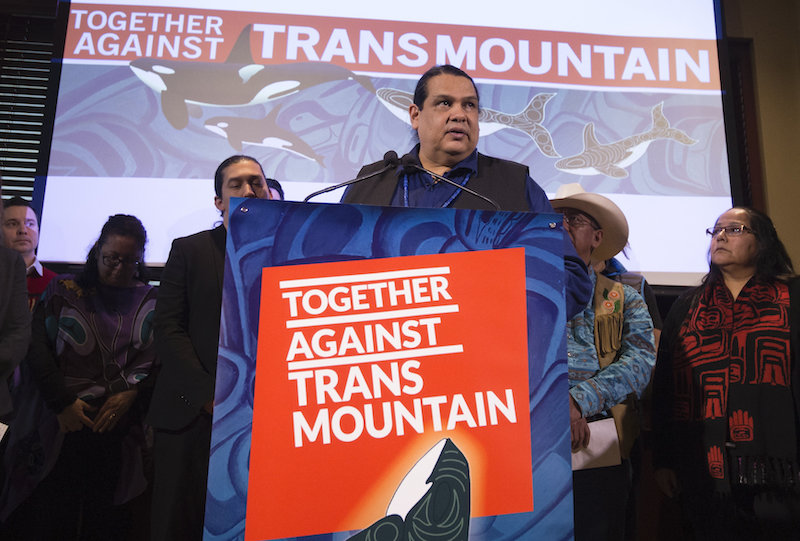
Federal Court’s Trans Mountain Ruling Betrays Principles of Reconciliation
The decision found Trudeau government met the minimum legal requirements. For Indigenous peoples, that’s not enough.
Judith Sayers5 Feb 2020 | TheTyee.ca Judith Sayers (Kekinusuqs) is from the Hupacasath First Nation in Port Alberni, B.C. She President of the Nuu-chah-nulth Tribal Council and is an adjunct professor at the University of Victoria in Business and Environmental Studies.
The Federal Court of Appeal’s decision to uphold federal government approval for the Trans Mountain pipeline expansion project is devastating for the First Nations that launched the legal challenge.
The nine nations argued they had not been consulted properly before Prime Minister Justin Trudeau’s cabinet approved the pipeline. The second attempt at consultation was the result of an earlier court decision rejecting a first round of consultations as flawed.
Rueben George of the Tsleil-Waututh First Nation summed up the impact.
When B.C. premier John Horgan said “the rule of law applies” in reference to the Coastal GasLink pipeline conflict, he meant that he would abide by an injunction granted by a provincial court to allow the company to enter and operate on Wet’suwet’en territory.
In doing so, he discounted a number of legal elements — and even an entire system of law — that arguably supercede the B.C. courts.
When it comes to injunctions, the deck is stacked. The Yellowhead Institute reviewed over 100 injunction cases late last year. They found that corporations succeeded in 76 per cent of injunctions filed against Indigenous nations, whereas requests for injunctions filed by Indigenous nations against governments and corporations were denied in over 80 per cent of cases.
And thus he also unwittingly raised larger questions about the legal aspects of the conflict.
Whose laws apply? And which laws?
The rule of law is far more complicated in this case than simply following an injunction. A pre-existing system of Indigenous governance, Supreme Court of Canada decisions, and a United Nations declaration all bring into question the legal validity of the injunction granted to Coastal GasLink.
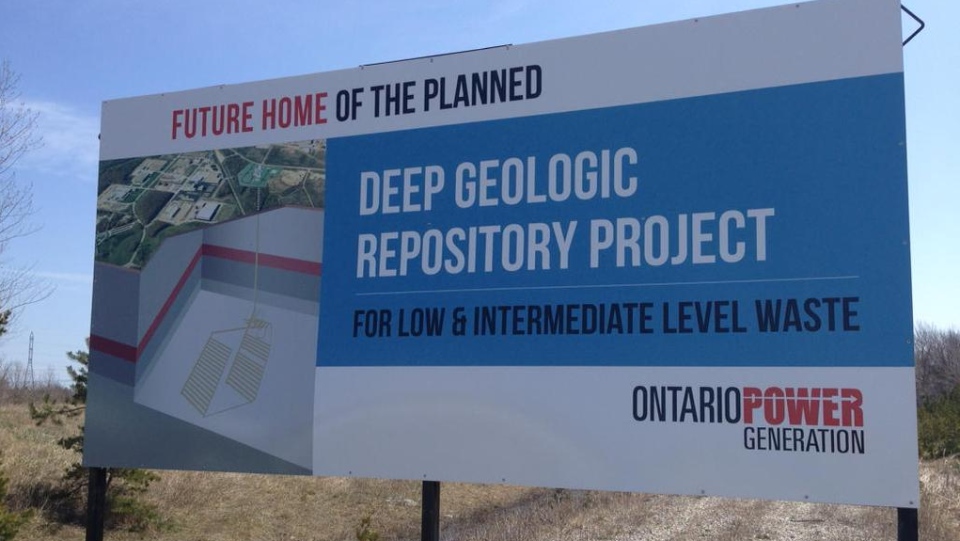
First Nation votes ‘no’ on nuclear waste storage in Bruce County, Ont.
Members of the Saugeen Ojibway Nation (SON) have voted down plans to bury Ontario’s low- and intermediate-level nuclear waste within 1.2 kilometres of Lake Huron.
In 2013, Ontario Power Generation (OPG) said they wouldn’t build the $2.4 billion underground facility under the Bruce Power site without the SON’s approval.
On Friday, 1,232 members of the First Nation band voted. The vote results saw 1,058 ‘no’ votes, with 170 ‘yes’ and 4 spoiled ballots.
It means Canada’s first permanent nuclear waste facility will need to be built somewhere else in Ontario.
OPG will now have to start searching for a new host community to house over 200,000 cubic metres of low- and intermediate- level nuclear waste.
OPG says finding a new site may set the project back 20 to 30 years.
Concerns over the project’s proximity to Lake Huron ultimately doomed the nuclear waste plan.
Support for the project was strong in Bruce County, but largely panned around the Great Lakes, where over 200 municipal resolutions opposed the project.
Ontario Power Generation say while they are disapointed with the outcome of the vote, they respect S.O.N.’s decision and will not proceed with plans to build the storage facility in Saugeen Territory.
RELATED IMAGES
An illustration shows the plan for a nuclear waste burial project on the Bruce Power site.
A sign is visible at the site proposed to bury nuclear waste near Lake Huron, Ont., Wednesday, May 6, 2015. (Scott Miller / CTV London)
Wet’suwet’en hereditary chiefs from left, Rob Alfred, John Ridsdale and Antoinette Austin, who oppose the Coastal Gaslink pipeline, take part in a rally in Smithers, B.C., on Jan. 10. (Jason Franson/Canadian Press)
The conflict over a natural gas pipeline in northwestern British Columbia is the latest flashpoint between resource development and Indigenous rights and title in a province where large swaths of territory are not covered by any treaty.
At the centre of the conflict is a multi-billion dollar natural gas project — touted as the largest private sector investment in Canadian history — and an assertion by Wet’suwet’en hereditary chiefs that no pipelines can be built through their traditional territory without their consent.



/arc-anglerfish-tgam-prod-tgam.s3.amazonaws.com/public/JQPQC25JN5ENNNTKBW4N2PRMVQ.jpg)