Today, I share with you some great news and a big wopila! A couple weeks back, we asked for your support in helping us to transfer the title of Standing Rock’s teen center to our nonprofit allies and the people of the Standing Rock Nation. Today, I am proud and happy to announce that, with your assistance, this has been accomplished! Thank you so much for your friendship, which has helped make our long-term goal of providing a safe and productive space for teens and young adults on Standing Rock a reality.
The Iyuha Icu Youth Services Center is now open every weekday afternoon and evening, offering a space for simple leisure and a mix of spiritual and cultural learning activities. We take pride in having purchased the building and formed the right partnerships — most critically with our friend, Hoksila White Mountain — to incubate the idea from concept to completion.
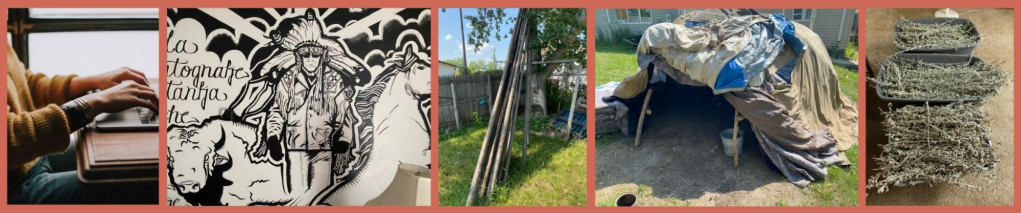
Among other amenities and activities, the youth center features art depicting the core Lakota values (second from left above). Also pictured are the property’s tipi poles, sweat lodge, and sage harvested at Standing Rock.
You may remember learning of Hoksila in past Lakota Law newsletters. We helped raise consciousness around his unjustly contested candidacy for mayor, and we helped him push through obstacles to serving on the City Council in McLaughlin, South Dakota (Standing Rock’s Bear Soldier District). He’s been a driving force behind the youth center from the very beginning.
I’m delighted to say that, today, this invaluable resource for Standing Rock’s youth stands as a concrete example of what we can achieve when we work together for a common cause, across organizational lines. We’re grateful to Hoksila for his cooperation and for sharing his vision.
The cultural focus and activities the youth center empowers go beyond its walls. Recently, Hoksila took 29 youths and chaperones on a trip to visit cultural heritage sites in Oregon and Northern California. That’s rare, world-expanding exposure for a group of vulnerable young people.
In a world filled with inequity, and in a place where young people could use a lot more opportunity, your friendship with Lakota Law makes a real difference. Today, please know how much that means to me and to our youth on the Standing Rock Nation. Aho.
Wopila tanka — our deep thanks for creating access and improving lives. Chase Iron Eyes Co-Director and Lead Counsel The Lakota People’s Law Project
After a protracted series of delays, we continue to await the long-promised draft Environmental Impact Statement (DEIS) for the Dakota Access pipeline (DAPL). In today’s Water Wars video — produced as always by us in partnership with the Standing Rock Nation and Great Plains Tribal Water Alliance — we take you inside a May meeting between tribal leaders and the U.S. Army Corps of Engineers. You’ll see our frustration: none of Standing Rock’s serious concerns about DAPL have yet been addressed, and both the tribe and public must soon be given the ability to review and provide input on the environmental impacts of the dangerous and illegal pipeline.
Watch The Army Corps doesn’t have any answers for us. It’s time for them to face the music!
You probably know the history. Late in 2016, President Obama heard the call of thousands and halted construction on DAPL, citing the requirement of the National Environmental Policy Act that a full environmental assessment be done. But Trump greenlit the project in violation of federal law as soon as he took office. Now DAPL crosses the Missouri River and our treaty lands with no effective plan, as far as we’ve seen, for handling a spill.
And we know the current DEIS process is a sham. Environmental Resources Management (ERM), the company tapped by the Army Corps of Engineers to prepare the study, is a member of the American Petroleum Institute. And that body filed a legal brief in support of DAPL in Standing Rock’s lawsuit against the Army Corps. That’s an obvious conflict of interest.
The Army Corps has routinely ignored Standing Rock’s many critical concerns, and that’s why we’re counting on you when the public comment period finally opens. That could be any week now. No matter what, please stay ready to demand that the Army Corps procure a new EIS prepared by an impartial party — and shut this pipeline down.
Wopila tanka — thank you, as ever, for standing with Standing Rock. Chase Iron Eyes Co-Director and Lead Counsel The Lakota People’s Law Project
A few months back, I wrote to you about the digital release of “Oyate” on iTunes. This award-winning documentary (rated 100% fresh on Rotten Tomatoes!) about our Dakota Access pipeline (DAPL) resistance and movement for Native justice was produced by Films with a Purpose in association with the Lakota People’s Law Project. Now, we continue to assist with word-of-mouth distribution — we hope to get as many eyes as possible on this special movie — and we’re setting up a screening in partnership with the American Indian Resource Center at the University of California, Santa Cruz.
That screening will happen this winter at Santa Cruz’s historic Del Mar Theater, and we’ll keep you informed once the date is firmed up. Meanwhile, we’re hoping you’ll participate by hosting a local screening and then joining afterward for a question and answer session to be broadcast live online. I plan to be there for that, as will the filmmakers and other subjects including my Lakota Law colleague, Standing Rock organizer Phyllis Young. To set up a screening with your friends at your home, we encourage you to take the first step: purchase or rent the movie on iTunes and give it a watch.
Phyllis and I stare down the White House in a still from “Oyate.”
And if you represent a theater or educational group such as a university, you’re also encouraged to participate — either that night or independently at another time. To inquire about setting up a public or educational screening event, please contact the filmmakers directly using the handy “screening inquiries” form on their homepage.
I’ll finish by noting that this film remains interesting and timely. Its narrative incorporates unexpected elements, and it tells the story of Indigenous resistance from some very personal perspectives — making it both intimate and ambitious in scope. And it’s of this moment because we expect the public review period for DAPL’s draft Environmental Impact Statement any week now. The days of our resistance camps may be in the rearview, but soon we can stand with Standing Rock once again to shut the pipeline down.
Wopila tanka — thank you for supporting Native media and resistance! Chase Iron Eyes Co-Director and Lead Counsel The Lakota People’s Law Project
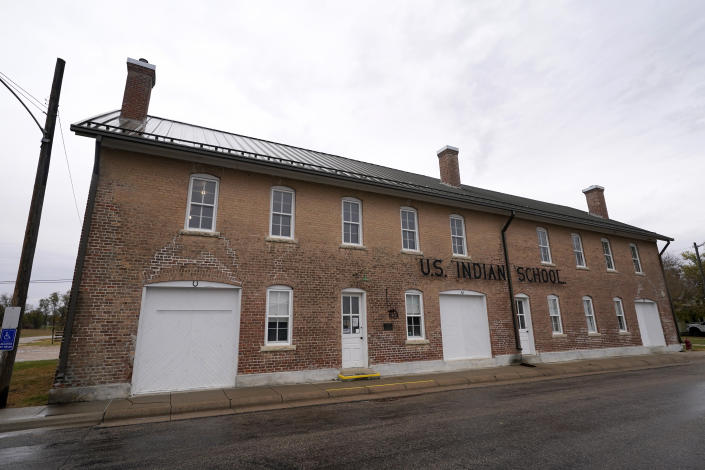
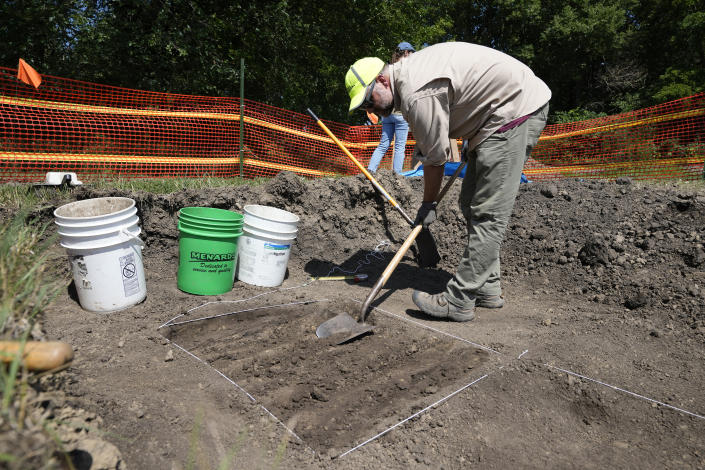
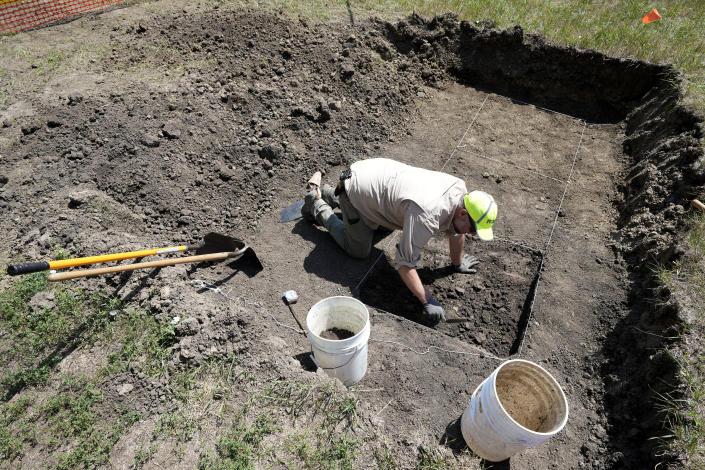
GENOA, Neb. (AP) — In a remote patch of a long-closed Native American boarding school, near a canal and some railroad tracks, Nebraska’s state archeologist and two teammates filled buckets with dirt and sifted through it as if they were searching for gold.
They’re trying to find the bodies of children who died at the school and have been lost for decades, a mystery that archeologists aim to unravel as they dig in a central Nebraska field that was part of the sprawling campus a century ago.
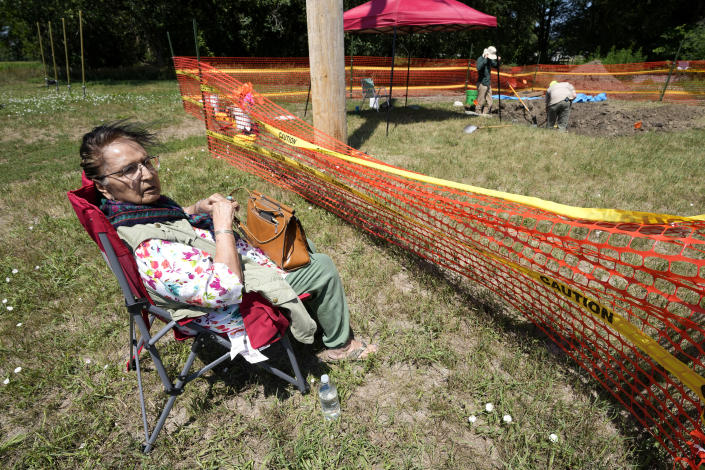
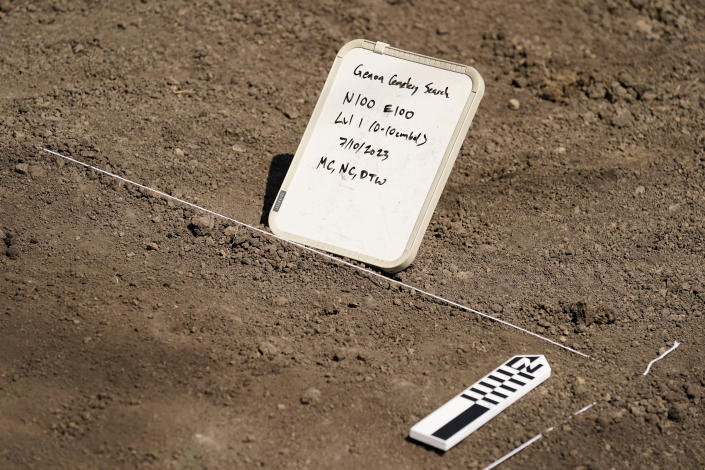
People toting shovels, trowels and even smaller tools are searching the unmarked site where ground-penetrating radar suggested a possible location for the cemetery of the Genoa Indian Industrial School.
Genoa was part of a national system of more than 400 Native American boarding schools that attempted to assimilate Indigenous people into white culture by separating children from their families and cutting them off from their heritage. And the discovery of more than 200 children’s remains buried at the site of what was once Canada’s largest Indigenous residential school has magnified interest in the troubling legacy both in Canada and the U.S. since 2021.
“For all those families with students who died here in Genoa and weren’t returned home — and that information being lost for over 90 years now — it creates this perpetual cycle of trauma,” Dave Williams, the state archeologist, said Monday.
Williams added, “Finding the location of the cemetery, and the burials contained within, will be a small step towards bringing some peace and comfort” to tribes after a long period of uncertainty where children were sent to boarding schools and never came home.
The school, about 90 miles (145 kilometers) west of Omaha, opened in 1884 and at its height was home to nearly 600 students from more than 40 tribes across the country. It closed in 1931 and most buildings were long ago demolished.
For decades, residents of the tiny community of Genoa, with help from Native Americans, researchers and state officials, have sought the location of a forgotten cemetery where the bodies of students are believed to be buried.
Judi Gaiashkibos, the executive director of the Nebraska Commission on Indian Affairs, whose mother attended the school in the late 1920s, has been involved in the cemetery effort for years and planned to travel to Genoa on Monday. She said it’s difficult to spend time in the community where many Native Americans suffered, but the vital search can help with healing and bringing the children’s voices to the surface.
“It’s an honor to go on behalf of my ancestors and those who lost their lives there and I feel entrusted with a huge responsibility,” Gaiashkibos said.
Newspaper clippings, records and a student’s letter indicate at least 86 students died at the school, usually due to diseases such as tuberculosis and typhoid, but at least one death was blamed on an accidental shooting.
Researchers identified 49 of the children killed but have not been able to find names for 37 students. The bodies of some of those children were returned to their homes but others are believed to have been buried on the school grounds at a location long ago forgotten.
As part of an effort to find the cemetery, last summer dogs trained to detect the faint odor of decaying remains searched the area and signaled they had found a burial site in a narrow piece of land bordered by a farm field, railroad tracks and a canal.
A team using ground-penetrating radar last November also showed an area that was consistent with graves, but there will be no guarantees until researchers can dig into the ground, said Williams, the archeologist.
The process is expected to take several days.
“We’re going to take the soil down and first see if what’s showing up in the ground-penetrating radar are in fact grave-like features,” Williams said. “And once we get that figured out, taking the feature down and determining if there are any human remains still contained within that area.”
If the dig reveals human remains, the State Archeology Office will continue to work with the Nebraska Commission on Indian Affairs in deciding what’s next. They could rebury the remains in the field and create a memorial or exhume and return the bodies to tribes, Williams said.
DNA could indicate the region of the country each child was from but narrowing that to individual tribes would be challenging, Williams said.
The federal government is taking a closer examination of the boarding school system. The U.S. Interior Department, led by Secretary Deb Haaland, a member of Laguna Pueblo in New Mexico and the first Native American Cabinet secretary, released an initial report in 2022 and is working on a second report with additional details.
___
Ahmed reported from Minneapolis. Scott McFetridge contributed from Des Moines, Iowa.
___
This story has been corrected throughout to note that researchers determined more than 80 children died at the school, not that there are more than 80 bodies buried there.
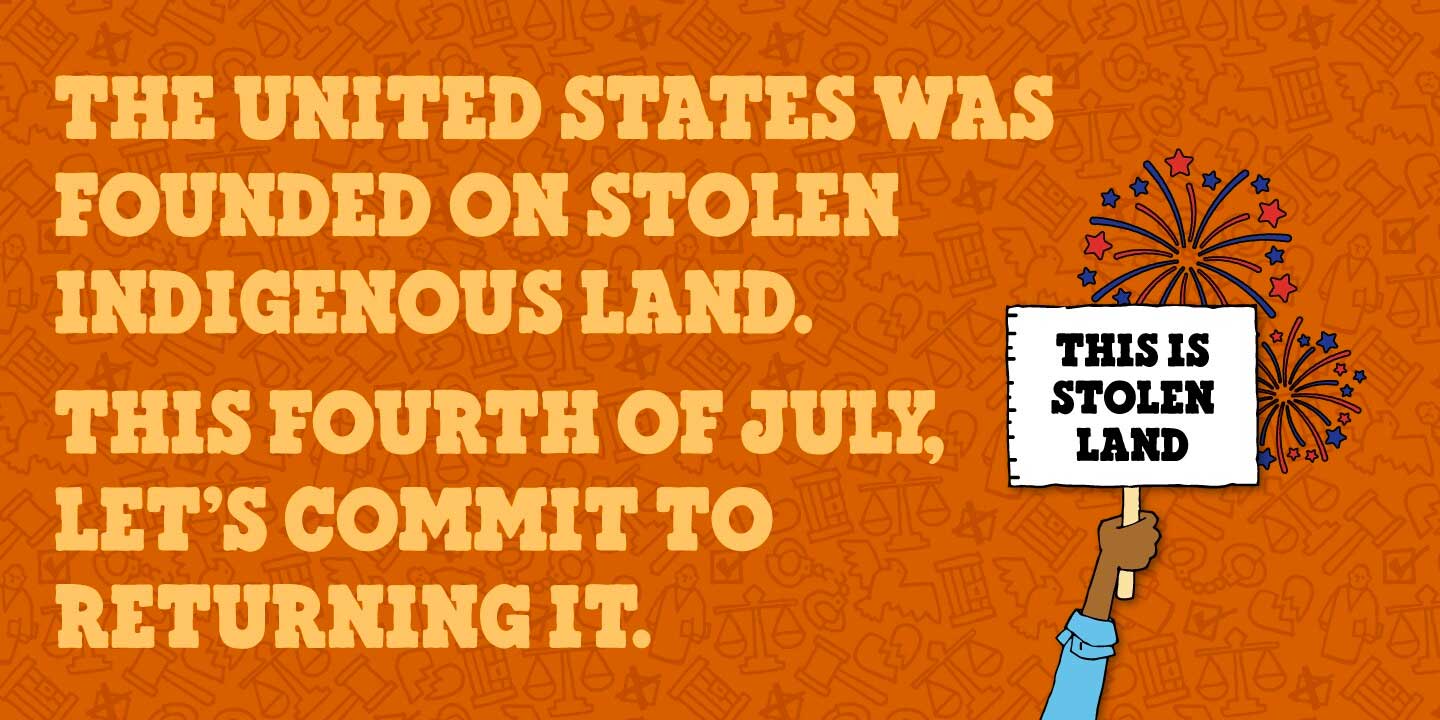
In 2023, Ben & Jerry’s received criticism for posting a tweet on Independence Day claiming that the United States was founded on “stolen Indigenous land” and that Mount Rushmore should be returned to the Lakota people.[117][118] In reply, the Nulhegan Band of the Coosuk Abenaki Nation expressed interest in acquiring the Ben & Jerry’s headquarters in Vermont which is located on historical Abenaki territory.
In July 2023, the Ukrainian National Agency on Corruption Prevention included Unilever in the list of “war sponsors” for not ceasing operations in Russia, but continuing to profit from this market.
The common thread of both: appearing to be progressive and helping the environment, but doing only the actions that keep their profits.
When I got together with some friends a few years back to help amplify the landback movement, I could never have foreseen this week’s war of words between South Dakota Governor Kristi Noem and an ice cream company — and yet, here we are! I’m guessing you’re familiar with Ben & Jerry’s, who make delicious desserts; more importantly, they use their business platform to champion social justice issues. This year for the Fourth of July, they posted on their website asking people to sign our Lakota Law petition and commit to returning the Black Hills — and Noem’s beloved Mt. Rushmore — to the Lakota.
Thank you, Ben & Jerry’s!
Noem wasn’t the only one to pitch a fit in response. Just as they did when Anheuser-Busch dared to feature a trans person in a Bud Light social media campaign during this year’s Pride Month, conservative activists immediately began calling for a boycott. Outrageously, publicly hating on trans and Indigenous people — saying the quiet part out loud — has become all the rage for the far right in the summer of 2023.
At least there’s a silver lining to all the idiocy. The more anti-woke rabble rousers embrace the idea of canceling things they disagree with, the more their hypocrisy shows. The more they put their bigotry on display, the more they drive reasonable people into the progressive camp. And by coming after Ben & Jerry’s, Noem and her ilk actually amplified our very important message about Native justice and sovereignty, ensuring it showed up in another national news cycle.
So today we send our deep appreciation to Ben & Jerry’s and to you for helping us make a difference in the world. Let’s keep the discussion going and the pressure on. I pray that, one fine day, the Black Hills will be back where they belong: in Indigenous care!
Wopila tanka — thank you for helping to return the sacred. Tokata Iron Eyes Organizer The Lakota People’s Law Project
If you’ve been with us for more than a year, you know we’ve been incubating a teen center at Standing Rock. A separate nonprofit managing this effort uses the building we own in McLaughlin, South Dakota (Bear Soldier District) to run operations. Many of you sent us positive feedback about the teen center when it launched, so I’m happy to report that the project’s doing well! It’s now a reliable space for the reservation’s youth to learn, play, and enjoy — so much so that we’ve decided to donate our building to our nonprofit allies, providing a stable foundation for their ongoing work to lift up the next generations.
Because we’re assuming substantial administrative, logistical, and legal costs as we transfer the title to the building, today we ask for your financial support. Help gift this important building to the people by donating today! Your contribution to Lakota Law will also help offset other housing-related costs we accrue each month. These include operating our kinship care home (also in McLaughlin) and paying for lodging while we’re traveling to Thacker Pass in Nevada to fight the lithium mine that endangers frontline Native communities, a sacred massacre site, and a delicate ecosystem. As you know, we do whatever it takes and go wherever we’re needed to provide for the people and win Native justice — and your generosity makes it possible!
Photos of Standing Rock’s teen center. We’re gifting it to the people of Standing Rock!
At Lakota Law, we straddle universes: while we recognize that radical social justice work can’t happen if institutional concerns become too dominant, we also know that without structure — buildings, equipment, and regular travel to the frontlines — progressive intentions often won’t hit their targets. So we strive to strike the right balance, doing our very best to put your resources to ideal uses. Thank you from the center of our hearts for all your assistance!
Once the transfer of title for the teen center is complete, we’ll be in touch again with more updates about the ongoing work to serve children at Standing Rock.
Wopila tanka — thank you, always, for your support! Chase Iron Eyes Co-Director and Lead Counsel The Lakota People’s Law Project
P.S. Please give to help transfer Standing Rock’s teen center to our nonprofit allies and the youth of Standing Rock. Your gift today will help solidify the present and provide a future for Standing Rock’s next generations!
The U.S. Supreme Court said the United States is not required “to take affirmative steps to secure water for the Tribe” because that provision is not explicitly stated in the Navajo Treaty of 1868, according to its ruling in a 5-4 vote in Arizona v. Navajo Nation, released Thursday.
The case was the third and final federal Indian law case this term.
Thursday’s decision reverses a ruling by the U.S. Court of Appeals for the 9th Circuit. The tribe cannot proceed with a claim against the Department of the Interior to “develop a plan to meet the Navajo Nation’s water needs and manage the main stream of the Colorado River in the Lower Basin.”
The court also ruled that the tribe cannot present a cognizable claim of breach of trust.
Justice Brett Kavanaugh wrote the opinion and was joined by Chief Justice John Roberts and Justices Clarence Thomas, Samuel Alito and Amy Coney Barrett.
“And it is not the Judiciary’s role to rewrite and update this 155-year-old treaty,” Kavanaugh wrote. “Rather, Congress and the President may enact—and often have enacted—laws to assist the citizens of the western United States, including the Navajos, with their water needs.
Kavanaugh went on to write that the United States has no similar duty with respect to land on the reservation and it would be “anomalous to conclude that the United States must take affirmative steps to secure water.”
“For example, under the treaty, the United States has no duty to farm the land, mine the minerals, or harvest the timber on the reservation—or, for that matter, to build roads and bridges on the reservation,” Kavanaugh writes. “Just as there is no such duty with respect to the land, there likewise is no such duty with respect to the water.”
The Navajo Nation argued that securing water rights to the Colorado River for the tribe fell under the federal government’s trust obligations that were being unfulfilled.
Critics immediately reacted to the decision saying it is a virtual theft of water from the Navajo Nation.
Navajo Nation President Buu Nygren and Speaker of the 25th Navajo Nation Council Crystalyne Curley shared their disappointment in the decision in a joint press release.
As president, Nygren said it is his job to protect the people, land and future and that he remains “undeterred in obtaining quantified water rights for the Navajo Nation in Arizona.”
“The only way to do that is with secure, quantified water rights to the Lower Basin of the Colorado River,” Nygren said in the statement. “I am confident that we will be able to achieve a settlement promptly and ensure the health and safety of my people.”
“Today’s ruling will not deter the Navajo Nation from securing the water that our ancestors sacrificed and fought for — our right to life and the livelihood of future generations,” Curley added.
As he has done in the past, Justice Neil Gorsuch laid out the history of the tribe and the surrounding circumstances that led to this point in his dissenting opinion. He writes that it is known that the United States holds some of the tribe’s water rights in trust and the government owes the Navajo Nation “a duty to manage the water it holds for the Tribe in a legally responsible manner.”
In his concluding paragraphs, Gorsuch writes that the tribe has tried nearly everything and poses the question, “Where do the Navajo go from here?”
“The Navajo have waited patiently for someone, anyone, to help them, only to be told (repeatedly) that they have been standing in the wrong line and must try another. To this day, the United States has never denied that the Navajo may have water rights in the mainstream of the Colorado River (and perhaps elsewhere) that it holds in trust for the Tribe,” Gorsuch writes. “Instead, the government’s constant refrain is that the Navajo can have all they ask for; they just need to go somewhere else and do something else first.”
Derrick Beetso, Navajo, is an attorney and director of Indian Gaming and Self-Governance at Arizona State University Sandra Day O’Connor College of Law. He also is a board member of IndiJ Public Media, the non-profit that owns ICT.
He said the opinion acknowledges that the tribe does have water rights, although they are unquantified.
“The tribe itself is pretty much in the same position they were in before this litigation and in some respects has to go back to the drawing board to figure out how they can get the administration to move forward on assessing their water needs,” Beetso told ICT.
He added that the Supreme Court is just one branch of the government and the Navajo Nation may switch focus to the Biden Administration and Congress in the future.
“The administration can do all the things that the tribe’s asking them to do without a court telling them to do it,” he said. “And so I think the Navajo Nation can shift gears and put a lot of pressure on the Biden administration and see what can get done under this administration.”
Native American Rights Fund executive director John Echohawk, Pawnee, said in a joining statement with the National Congress of American Indians that the decision condones a lack of accountability by the U.S. government.
“Despite today’s ruling, Tribal Nations will continue to assert their water rights and NARF remains committed to that fight,” Echohawk said.
Fawn Sharp, Quinault, called the decision a setback but added tribes and Native organizations will continue to fight for and defend tribal sovereignty and the preservation of Indigenous ways of life.
“Water is necessary for all life, and when our ancestors negotiated agreements with the United States to secure our lands and our protection, water was understood and still is understood to be inseparable from the land and from our peoples,” Sharp said in the statement. “Today, the Supreme Court has once again assisted in the United States’ centuries-long attempts to try to get out of the promises they have made to Tribal Nations by stating that treaties only secure access to water, but do not require the United States to take any steps to protect or provide that water to our people.”
The court ruled in mid-June on the other two federal Indian law cases. The high court affirmed the Indian Child Welfare Act in a major win that was celebrated across Indian Country. The same day the ICWA opinion was released, the court also ruled on Lac du Flambeau Band of Lake Superior Chippewa Indians v. Coughlin.
In that ruling, the court stated that tribes cannot use sovereign immunity in Bankruptcy Court.
This is a monumental day for Indigenous and human rights. The Supreme Court’s decision is a huge win not just for Native children, families, and cultures, but also for tribal sovereignty. This ruling properly recognizes tribes as sovereign political nations with a right to self-determination and affirms our inherent right to care for our own. The impacts of this decision — which, had it gone another direction, could have created a domino effect threatening Native sovereignty far more broadly — will be felt in a positive way for the next seven generations and beyond.
The Supreme Court ruled in our favor, agreeing that Native children should remain in kinship care with their relatives.
Justice Amy Coney Barrett, of all people, wrote the majority opinion detailing the High Court’s 7-2 decision (justices Clarence Thomas and Samuel Alito dissented). On the key issue of whether the law is somehow discriminatory against white people, the justices declined to rule, rightly pointing out that the petitioners have suffered no harm. “The bottom line is that we reject all of petitioners’ challenges to the statute, some on the merits and others for lack of standing,” Barrett wrote.
If you’ve been following our communications for some time, you likely know that Lakota Law published a widely read blog, gathered more than 166,000 signatures on various pro-IWCA actions, and submitted an amicus brief to the High Court, all to defend this absolutely critical, life-saving law. In the past we also drafted enforcement guidelines for ICWA, and its author, the late, great Sen. James Abourezk, chaired our advisory board.
Suffice to say, this is a day to acknowledge that all the hard work and long hours have been well spent. It’s a moment for us to look at one another with gratitude and appreciation and celebrate. On that note, if you took the time to write to the president, petition the Department of Justice, and/or ask your state to codify ICWA’s key provisions, I cannot thank you enough.
Let’s also remember this: despite its excellent decision today, this Court remains likely to continue rolling back the rights and freedoms of other groups with fewer protections under current law. So let’s not rest on our laurels. We must remain vigilant defenders not just of our Indigenous relatives, but of all vulnerable populations. As we say in Lakota, mitakuye oyasin — we are all related.
Wopila tanka — thank you for all you do to protect our children and sovereignty! Chase Iron Eyes Co-Director and Lead Counsel The Lakota People’s Law Project
Lakota People’s Law Project 547 South 7th Street #149 Bismarck, ND 58504-5859
The Lakota People’s Law Project is part of the Romero Institute, a nonprofit 501(c)(3) law and policy center. All donations are tax-deductible.
Arizona’s governor and attorney general announce crackdown on Medicaid fraud
May 16, 2023
PHOENIX (AP) — Arizona Gov. Katie Hobbs and other top state officials announced a crackdown Tuesday on Medicaid fraud, particularly honing in on illegitimate group homes.
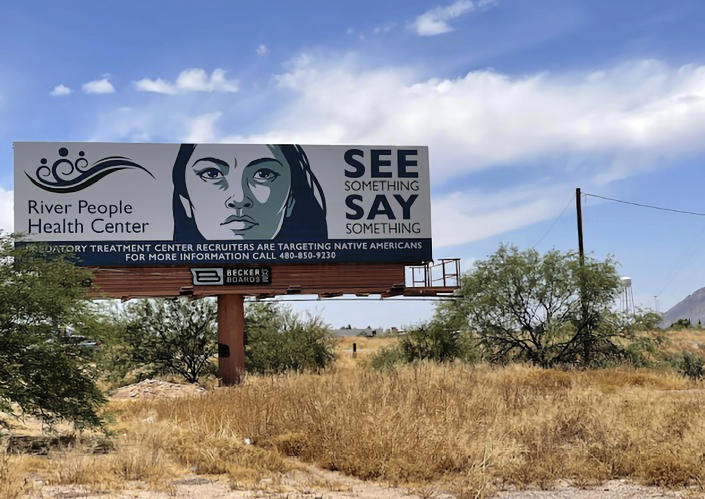
The Hobbs administration said many of those homes target tribal community members and have defrauded the state out of hundreds of millions of dollars.
An investigation that involved the FBI and the U.S. Attorney’s Office has resulted in at least 45 indictments by the office of Arizona Attorney General Kris Mayes.
Mayes said $75 million has been seized or recovered related to the schemes.
Authorities said the money was paid out by the state’s Medicaid program — the Arizona Health Care Cost Containment System — and the illegal activity involved billing for mental health treatment and addiction rehabilitation that never was provided.
They also said illegal activity also involved billing for mental health treatment and addiction rehabilitation that was never provided.
AHCCCS has since suspended payments to more than 100 providers and the agency expects more in the coming months.
New actions announced include a third-party forensic audit examining mental health and addiction provider claims since 2019, new processes for concerning or unusual claims and an overhaul of the fraud detection methods used.
“Prior to my administration, AHCCCS had taken a piecemeal approach to targeting these fraudulent providers,” Hobbs said. “Under my administration this will change… Together, we are going to bring about the systemic reforms we need to root out this problem and deliver true accountability.”
Daniel Scarpinato, who served as chief of staff for Hobbs’ predecessor, Republican Gov. Doug Ducey, was critical of the announcement of the crackdown.
“The investigation revealed today has been underway for several years, well before the current occupants took office,” Scarpinato said.
Hobbs and Mayes appeared at a news conference that also included representatives of 13 tribes from around the state.
Hundreds of tribal members, mostly Navajo, living on Phoenix streets amid fake sober home crackdown
1 / 2
Medicaid Fraud Indigenous Arizona
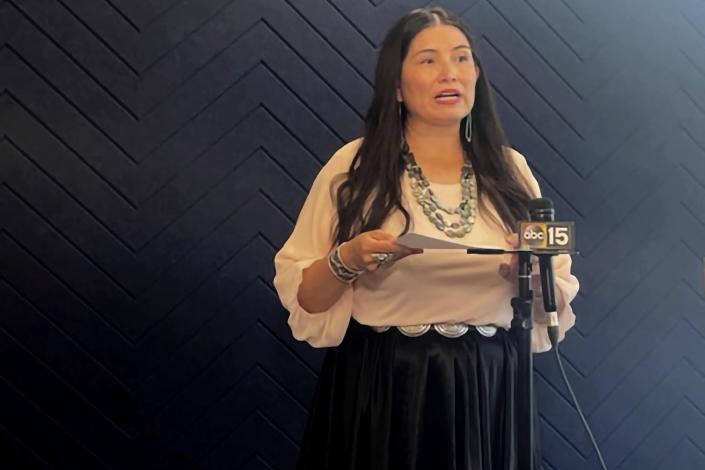
Navajo Nation Attorney General Ethel Branch speaks at a news conference on Monday, June 23, 2023, in Phoenix to offer an update on Operation Rainbow Bridge, a plan that aims to help tribal members who have been affected by a massive Medicaid fraud scheme. (AP Photo/Anita Snow)
ASSOCIATED PRESS
ANITA SNOW
Mon, June 12, 2023 at 6:27 PM CST
PHOENIX (AP) — Navajo law enforcement teams made contact with several hundred Native Americans from various tribes who are living on the streets in the metro Phoenix area, after the state cracked down on Medicaid fraud and suspended unlicensed sober living homes, Navajo Nation Attorney General Ethel Branch said Monday.
Teams that included Navajo police officers reported making contact with more than 270 Native Americans, the majority of them Navajo, Branch said.
Many tribal members accepted offers to stay in motel rooms or other temporary housing for a few days before moving to legitimate facilities, while others agreed to return home to their reservations, Branch said. The teams worked with local police agencies and Community Bridges, Inc., a nonprofit that provides services for people with addictions.
“Unfortunately, many of our relatives when they came out of these facilities didn’t have cell phones,” Branch said, adding that Navajo police officers allowed the people they found to use their own cell phones to call their families.
While the Navajo law enforcement teams have returned to the reservation for now, the tribe will maintain its presence in Phoenix through an operations center.
In response to Arizona’s announcement last month it was cutting off Medicaid funding to more than 100 unlicensed and fraudulent sober living homes, most of them in metro Phoenix, the Navajo Nation launched its Operation Rainbow Bridge. The targeted homes are closing, leaving many people who had sought professional help to overcome their addictions with nowhere to live.
The Operation Rainbow Bridge toolbox includes a Facebook page and a TikTok account now under construction. There’s also a 211 hotline that the tribe is advertising among its members that allows those affected to find a place to stay and get the services they need.
Navajo officials say that in some cases, people who ended up in the homes were picked up in unmarked vans and driven to the Phoenix area from faraway places on the sprawling Navajo Nation that stretches across northern Arizona, and parts of New Mexico and Utah. It’s unclear who paid to transport the people to homes.
The Arizona Health Care Cost Containment System, which oversees the state’s Medicaid programs, had been paying out money for addiction and other mental health services that state officials say the homes billed for, but never delivered, under the American Indian Health Program.
State officials believe the fake homes have defrauded Arizona out of hundreds of millions of its share of federal Medicaid dollars. Arizona authorities so far have seized $75 million and have issued 45 indictments in the investigation that also includes the FBI and the U.S. Attorney General’s Office.
Arizona officials have said hundreds of fake sober living homes are believed to be currently operating in the Phoenix area and other parts of the state.
I remain on the sacred grounds at Peehee Mu’huh, where the resistance to protect Thacker Pass from a massive lithium mine suffered a major blow last week. On Wednesday, police raided the two prayer camps set up by our Paiute and Shoshone relatives, extinguishing the sacred fire lit since May 11 when the grandmother-led action began, destroying the two ceremonial tipi lodges, mishandling and confiscating ceremonial instruments, and arresting an Indigenous land protector. Ox Sam Camp shared a video they captured with us. Please watch how it went down on our Facebook page.
Watch and share on Facebook: footage of the arrest at Thacker Pass captured live last week.
During breakfast, law enforcement arrived. Almost immediately and without warning, a young Diné (Navajo) water protector was singled out by Lithium Nevada security and arrested. Even as two non-Natives were allowed to “move” in order to avoid arrest, the Diné woman was quickly handcuffed and subsequently loaded into a sheriff’s SUV for transport to Winnemucca for processing.
While on the highway, she says — again without warning or explanation — she was transferred into a windowless, pitch-black holding box in the back of a pickup truck. “I was really scared for my life,” she told Ox Sam Camp. “I didn’t know where I was or where I was going. I know that [the epidemic of missing and murdered Indigenous women] is a real thing, and I didn’t want to be the next one.” She was eventually transported to Humboldt County Jail, where she was charged with criminal trespass and resisting arrest, then released on bail. Again, I urge you to watch the video. Resisting arrest? I don’t think so.
Just hours before the raid, Ox Sam camp’s water protectors bravely stood in the way of large excavation equipment, shutting down construction at the base of Sentinel Rock for the second time that week. To many Paiute and Shoshone People, Sentinel Rock is a “center of the universe.” It’s been a site to gather traditional medicines, tools, and food supply for thousands of years, integral to many Nevada tribes’ way of life.
On Wednesday, at least five Sheriff’s vehicles, several Lithium Nevada work vehicles, and two security trucks arrived at the original tipi site containing the ceremonial fire. After the arrest and once the main camp was secured, law enforcement moved to dismantle the tipi site at Sentinel Rock, a mile away. There is a proper way to take down a tipi and ceremonial camp, and then there’s the way Humboldt County Sheriffs proceeded on behalf of Lithium Nevada Corporation. They knocked down tipis, snapped tipi poles, and rummaged through, mishandled, and impounded ceremonial objects and instruments. They approached and secured tents in classic SWAT-raid fashion.
As we mentioned to you previously, Peehee Mu-huh is the site of two massacres of Paiute and Shoshone people. The remains of the massacred ancestors have remained unidentified and unburied since 1865. They are now being bulldozed and crushed by Lithium Nevada without consent or permission from the area’s Indigenous Peoples.
It’s clear that Lithium Nevada and law enforcement are now doing all they can to stifle this resistance before it can grow. Our videographer, Chuck, was one of several people served with restraining orders over the past several weeks, and we’re hearing threats of further legal action designed to stop continued media coverage of the events now unfolding. Ox Sam Camp has put out a call for legal defense assistance. If you can help, contact them through their website. And please stay tuned for further developments and potential action opportunities.
Wopila tanka — thank you for standing with water and land protectors! Chase Iron Eyes Co-Director and Lead Counsel The Lakota People’s Law Project















 Water is Life