New Title: The Mahkato Reconciliation and Healing Ride

Lakota Law

From acknowledging the winter solstice to celebrating mainstream society’s holiday season, this time of year has always brought together gatherings of family and friends throughout Turtle Island.  And every December, reminders of our history add to the difficulties faced by many families, and tribes, as some of their people’s most tragic memories all occurred during this month — the assassination of Chief Sitting Bull, Wounded Knee Massacre, and the Dakota 38 Hanging.

The day after Christmas is more widely known as “Boxing Day,” especially outside of Indian Country, but in the last several years there has been growing momentum for mainstream society to acknowledge the day after Christmas as the day when 38 Dakota “Sioux” men were hanged in Mankato, Minnesota in 1862. The hanging, the largest mass execution in United States history, was carried out in front of an estimated 4,000 people in downtown Mankato and remains largely hidden from classrooms and public knowledge.

As the year ends, and millions gather to celebrate and acknowledge the holiday season, some Indigenous communities acknowledge its tragic past through memorial ceremonies aimed at teaching and healing while building community. 

The hangings were approved by former President Abraham Lincoln as a result of conflict between Dakota people and settlers in southwestern Minnesota. Dakota people were promised food and safety in exchange for ceding their lands, but they received neither, leading to attacks on white settlements in August 1862. The resulting widespread war in Minnesota lasted for five weeks, culminating in the hanging of 38 Dakota men in Mankato on Dec. 26, 1862.

Some say the Dakota War officially ended after the hanging, but the U.S. government’s oppression of the Dakota people, as well as other Indigenous groups, did not end with that atrocity. After the mass hanging, Dakota people were exiled and forcibly removed from Minnesota. Many sought refuge in Canada, South Dakota, Nebraska, and other communities willing to take them in. Memorializing such a painful history involves more than riding on horseback through blizzard-like conditions. While it remains a painful and tragic past, many have undertaken healing and positive efforts to repair relations with those in the places where history unfolded, hoping that such history will not repeat itself.

The movement to pay tribute to tragic times past is active healing in Indian Country. While memorials take time and tremendous effort, the initial memorial horse ride has caused great positive ripple. Today there are additional horse rides and a memorial run that begins at Ft. Snelling, the military fort where thousands of Dakota people were imprisoned during the Dakota War, and all convene at Reconciliation Park in Mankato, MN on Dec. 26. Many other Indigenous communities have begun to host memorial rides, runs, or walks, to pay their respects to their past, as well as to the land in hopes we continue to heal beyond times past.

Beginning in 2008, an annual memorial horse ride was organized to begin on the Lower Brule Reservation in central South Dakota and ride for 16 consecutive days, convening in Mankato, MN on Dec. 26. Their ride and ceremonial arrival to memorialize the Dakota 38 continues to this day — now under a new name — Mahkato Reconciliation and Healing Ride

Forever riding forward, while sometimes looking back, is magic we all have to embrace in this work. We’re grateful and gain strength as we join together to honor the pain and sacrifices of the past by celebrating and supporting these ongoing healing movements.

Miigwech — thank you, always, for remembering with us!
Darren Thompson
Director of Media Relations
Lakota People’s Law Project
Sacred Defense Fund

Your support makes jsutice possible - Donate Today

Lakota People’s Law Project
P.O. Box 27
Santa Fe, NM 87504

Lakota Law

Apologies for the incorrect subject on this message a few minutes ago. I hope that won’t detract from this important content.

I wish you a happy holiday season! When most people think of December, what comes to mind might be the holidays we celebrate, gathering with family, and the turning of the page to a new year at month’s end. In Lakota Country, unfortunately, the end of the Gregorian calendar year is also inextricably linked with a pair of troubling anniversaries. In solidarity with us, I hope you’ll make a little room to remember them with me today.

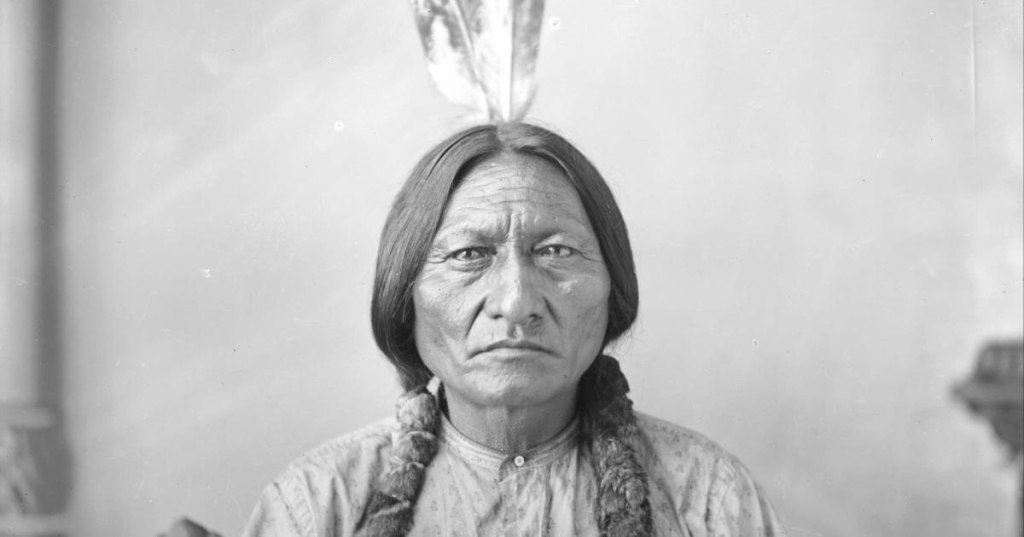
First, Dec. 15 was the 134th anniversary of the assassination of the great Hunkpapa Lakota Chief, Thatanka Iyotake, or Sitting Bull. I, too, am Hunkpapa Lakota, and I’ll say that Sitting Bull is one of our most celebrated ancestors for good reason. To learn more, I urge you to read (or reread) this blog, which I penned last year to give you more about Sitting Bull’s life, the context of his death, and an action you can take and share to rescind Medals of Honor granted to U.S. soldiers responsible for the second anniversary I referenced: the massacre of hundreds of Natives at Wounded Knee just days later, on Dec. 29, 1890. 


Photograph of Sitting Bull by David Francis Barry, circa 1883.

Tied to both of those anniversaries, I’ve been doing research and thinking a lot about the unique, historic nature of policing in Indian Country. In general, cops have never been especially friendly to us — even when they are from our communities. They have always been in direct correspondence with and there to enforce rules made by American governmental officials and corporate institutions that we all face together, even today. In turn, those entities have frequently displayed genocidal intentions and undertaken endeavors, from the Wounded Knee Massacre and the murder of Sitting Bull to railroading pipelines through our sacred lands, meant to degrade or eliminate tribal nations (or, potentially, anyone demonstrating the will to defend American lands and waters).

In our last message to you, my father thanked U.S. Secretary of the Interior Deb Haaland (Pueblo of Laguna) for her service over the past four years. Let it not be lost on anyone the importance of a Native woman occupying that seat, because for many years, her department was (and sometimes still is) a great nemesis to our communities. 

And that brings us back to Sitting Bull. In 1890, the Indian agent James McLaughlin, overseen by the U.S. military and the Secretary of the Interior, ordered him taken into custody. As 43 policemen and volunteers arrived that sad morning at the chief’s house and announced his arrest, a crowd of community members gathered at the commotion and began to protest. 150 Lakota arrived to protect him, and his son then led a group who attempted to free Sitting Bull from police custody. 

Bureau of Indian Affairs police lieutenant Henry Bullhead and police sergeant Charles Shavehead, who bracketed Sitting Bull to prevent his escape, were shot. Mortally wounded, Bullhead then murdered Sitting Bull, shooting him in the ribs. Indian agent Red Tomahawk, who’d been behind Sitting Bull, then assumed command of the police. The ensuing fight resulted in the deaths of six police and eight Lakota protectors. After Thatanka Iyotake’s assassination, his people fled to join Spotted Elk (the brother of Iron Eyes, from whom my family takes its name). Then the band fled toward Red Cloud and the Oglala at the Pine Ridge Agency — and soon thereafter came the massacre at Wounded Knee.

These events live on with us — not just, unfortunately, as histories. As an Oglala who lives on Pine Ridge, I have witnessed police abuse in the modern day. And I have heard direct testimony and firsthand accounts of abuse of power and undue violence by Indian police over the past few decades. One example, and this is something I plan to expand on for you in subsequent messages, was the Reign of Terror on Pine Ridge in the early 1970s, which ultimately laid the foundation for the American Indian Movement’s occupation of Wounded Knee in 1973.

There is much more to say about that, and there’s so much more we can do moving forward. I promise you’ll hear more from me again soon. In the meantime, please hold us close, as you would all your loved ones at this time of year. I’m so grateful to be able to share with you, and I know that, together, we can continue to make progress. We can and we must use the often harsh lessons of the past to understand the present and create a future we can be proud of for all human beings.

Wopila tanka — thank you for your friendship!
Tokata Iron Eyes
Spokesperson & Organizer
Lakota People’s Law Project
Sacred Defense Fund

Good Thinking: Return it All

California land to be returned to Yurok Tribe

Rosie Clayburn is a descendant of the Yurok Tribe, which had its territory — called ‘O Rew in the Yurok language — ripped from them nearly two centuries ago.

“As the natural world became completely decimated, so did the Yurok people,” she said.

That decimation started when miners rushed in for gold, killing and displacing tens of thousands of Native Americans in California and ravaging the redwood trees for lumber.

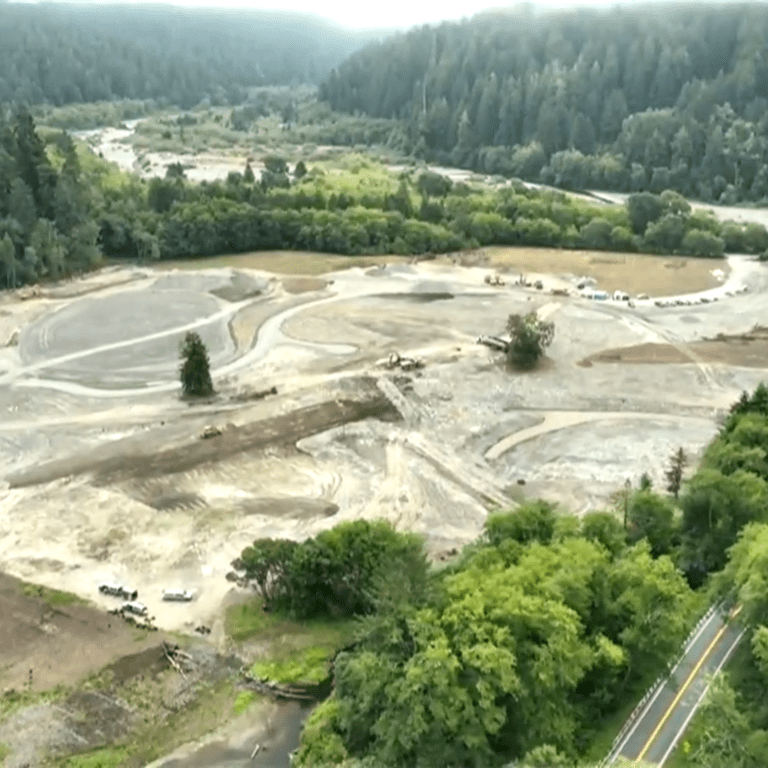
1734393805389.png© Credit: CBSNews

“Everything was extracted that was marketable,” Clayburn said. “We’ve always had this really intricate relationship with the landscape. We’ve hunted, we’ve fished, we’ve gathered. And those are all management tools. Everything that we do has been in balance with the natural world.”

Now, generations later, 125 acres bordering Redwood National and State Parks will be handed back to the Yuroks.

The nonprofit Save the Redwoods League purchased the land in 2013 from an old timber mill, with the original goal of giving it to the National Park Service.

“As we continued conversations about the transfer of this land to the National Park Service, we began to realize that perhaps a better alternative would be to transfer the land back to the Yurok Tribe,” said Save the Redwoods League’s Paul Ringgold. “No one knows this land better. They’ve been stewarding this land since time and memorial”

Ringgold said that stewardship includes controlled burns to clear dead vegetation — a native practice once outlawed, but now recognized as essential in preventing catastrophic wildfires.

“Indigenous populations have been using fire as a management tool,” he said. “We’d like to see that kind of practice return.”

Redwoods serve as some of the largest stores of carbon on the planet. A single tree can capture up to 250 tons in its lifetime, the equivalent of removing nearly 200 cars from the road for an entire year. 

But between logging and fires, 95% of California’s redwoods have been destroyed. Over the past decade, the Yurok have been helping restore the land.

Another forgotten jewel of the ecosystem is salmon. The fish were once so plentiful, they were eaten with most meals. The Yurok word for salmon even translates to “that which we eat.” But the salmon population has dwindled to about one-quarter of what it was 20 years ago, according to a coalition of state and federal agencies.

The tribe is working to bolster the fish’s population by building a stream channel, two connected ponds and about 20 acres of floodplain.

“You have salmon who provide for humans, but they also provide for other animals,” Clayburn said. “And then when they spawn and die, they put nutrients back in the ground. And so, everything just has this, this balance and this reciprocal way.”

That balance is returning. There’s been a rebound in the salmon population and the Yuroks also recently reintroduced the California condor — a scavenger that’s important to the ecosystem — back into the wild for the first time this century.

“It tells us that our land’s healing and that our people are gonna heal,” Clayburn said.

The Yuroks will take full control of ‘O Rew in 2026 and, in a first-of-its-kind partnership, receive help managing it from the Save the Redwoods League, California State Parks and The National Park Service.

“We understand some of the mistakes we made as a federal government, and it’s a chance to begin that healing with the native tribes all across the United States,” said National Park Service Director Chuck Sams.

For Sams, the first Native American to lead the agency, the partnership is personal. 

“We’ve been writing our histories separately. There’s been the native history and then the American history. This is a chance when we’re doing co-stewardship and co-management to write history together,” he said.

Of the 431 parks managed by the National Park Service, 109 of them now have formal co-stewardship agreements with indigenous tribes, with 43 more on the way.

In addition to restoration work, plans for ‘O Rew include the creation of new trails, the construction of a traditional Yurok village and a state-of-the-art visitor center. The visitor center will display Yurok artifacts and highlight the tribe’s history and culture, with the goal of educating new visitors on the land’s history and significance from the perspective of those who have lived on it the longest.

“I really hope ‘O Rew symbolizes a coming home of the Yurok people and reconnecting with our landscape,” said Clayburn.

Action: Deadline Approaching for a Journalism Fellowship December 9th

December 4, 2024
Deadline: Montana Free Press/ICT fellowship Applications are being accepted through Dec. 9, 2024, for a full-time, paid fellowship position with ICT and the Montana Free Press to cover Indigenous issues in the upcoming 2025 Montana legislative session.  The internship will be based in Helena, Montana, and will run from January through May 2025. A salary and housing allowance will be provided. The Montana Free Press, Montana’s premier independent nonprofit news organization, in partnership with ICT (formerly Indian Country Today), has an immediate opening for an Indigenous Montana Legislative Fellowship in our Helena, Montana, newsroom. The paid fellowship is open to undergraduate or graduate college students and early career journalists who want to develop statehouse and political reporting skills in service of impactful community coverage. Knowledge of Indigenous communities, issues and policies will be considered a plus. The fellowship is an opportunity to deepen and broaden reporting skills while learning from and collaborating with experienced statehouse journalists and news industry professionals.

FIND DETAILS HERE [Eliza Wiley/Montana Free Press] Read the work of JoVonne Wagner, the 2023 fellow, from her time in Helena!

Email Dianna Hunt at dianna@ictnews.org for any questions. SUPPORT INDIGENOUS JOURNALISM Donate now To sponsor ICT, please contact Heather Donovan at (315) 447-6145 or hdonovan@ictnews.org

Take Action: Free Leonard Peltier

ACTION ALERT: Calling all supporters of Leonard Peltier to sign this petition to urge President Joe Biden to grant Leonard Peltier executive clemency. #FreeLeonardPeltier

Background

“The fight has not ended for me” – Leonard Peltier

Leonard Peltier, a member of the Turtle Mountain Band of Chippewa Indians, is in his 50th year of imprisonment. Leonard is 80 years old and his health is rapidly declining. He stands as a symbol of the ongoing racism and oppression against Native Americans in the United States criminal justice system, issues that Leonard fought against in the 1970’s and throughout his incarceration.

On July 2nd, millions of people across Indian Country were devastated to learn that Leonard Peltier, an activist and member of the American Indian Movement, had been denied parole by the United States Parole Commission. The Commission issued the decision after a parole hearing on June 10th at the United States Penitentiary Coleman I in Florida, where Mr. Peltier is currently incarcerated.

“They denied parole to a survivor of genocidal Indian boarding schools as he struggles to survive this unjust incarceration, they insist on holding him for a crime for which they have no physical evidence against him. Clearly, the Parole Commission – which is supposed to be an independent body – was influenced by the FBI. The FBI continues to abuse its power, promote false narratives, and engage in counterintelligence activities. The FBI has no regard for the Constitution or the laws they have sworn an oath to protect.” – Nick Tilsen, President and CEO, NDN Collective

The FBI director at the time J. Edgar Hoover was waging a war against anyone he perceived as a threat. His violent and illegal tactics under COINTELPRO — the FBI’s Counterintelligence Program (1956 to 1971) — were a direct assault on the American Indian Movement, the Black Panther Party, and the Women’s Liberation Movement. “Hoover’s FBI did everything it could to consciously and deliberately derail the Civil Rights Movement,” said Stevie Van Zandt

While Leonard’s attorneys file an appeal of this decision, we call on President Joe Biden to grant executive clemency to #BringLeonardHome. President Biden promised to be a friend and ally of Indigenous Peoples.

Will Biden release the oldest living Indigenous political prisoner in American history, or will he simply allow Peltier to die in prison?

President Biden, you have the power to do what’s right we are demanding that you #FreeLeonardPeltier NOW via Executive Clemency. The whole world is watching.

Sign the petition today to let President Biden know we will not stop fighting for Leonard’s freedom. We are all not free until Leonard is free.

Sponsored by

NDN

To: President Joe Biden
From: [Your Name]

I write to you today to urge you to grant Leonard Peltier executive clemency.

Leonard Peltier, a member of the Turtle Mountain Band of Chippewa Indians, is in his 49th year of imprisonment. Leonard is 79 years old and his health is rapidly declining. He stands as a symbol of the ongoing racism and oppression against Native Americans in the United States criminal justice system, issues that Leonard fought against in the 1970s and throughout his incarceration.

The FBI has taken every measure to prevent Leonard from being released including ignoring the Constitution and violating Peltier’s civil rights. Peltier has served nearly 50 years on evidence that decades’ worth of observers have called into question. Witnesses were coerced and advocates say evidence was falsified. Two of the other men charged with the same crime were acquitted. In addition, a witness whose information was key to Peltier’s extradition from Canada to stand trial for the murders later said she made up her story under pressure from the FBI.

President Biden, you have the power to release the oldest living Indigenous political prisoner in American history, will you take swift action or simply allow Peltier to die in prison?

The whole world is watching. #FreeLeonardPeltier