News from Canada: Action Now!

https://newsmaven.io/indiancountrytoday/the-press-pool/royal-canadian-mounted-police-raid-unceded-wet-suwet-en-land-six-arrested-POEHsecli0W1zx2fo8p8XA?utm_source=maven-coalition&utm_medium=salish&utm_campaign=email&utm_term=notification&utm_content=unread-notification


Royal Canadian Mounted Police raid unceded Wet’suwet’en land, six arrested


edited

International day of solidarity with the Wet’suwet’en Monday February 10

News Release

Indigenous Environmental Network

Early this morning, the Royal Canadian Mounted Police (RCMP) raided Wet’suwet’en territories to push forward the unwanted Coastal GasLink pipeline. Six Indigenous peoples and their allies were arrested.

The Wet’suwet’en have been very clear that they do not want the C$6.6 billion, 416 mile long CGL pipeline going through their unceded and sovereign lands. Coastal GasLink/TC Energy (formerly TransCanada) is pushing through a 670-kilometer fracked gas pipeline that would carry fracked gas from Dawson Creek, B.C. to the coastal town of Kitimat, where LNG Canada’s processing plant would be located. LNG Canada is the single largest private oil and gas investment in Canadian history.

Royal Canadian Mounted Police officers with night vision and automatic weapons raided the camp in the dead of night. Much like at Standing Rock — the raid was highly militarized — dogs were used, media was banned from filming arrests, Royal Canadian Mounted Police smashed the windows of the camp’s communications van.

You can support camp by donating here:
https://actionnetwork.org/fundraising/unistoten2020legalfund

Download the Wet’suwet’en Supporter Toolkit 2020 here
http://unistoten.camp/supportertoolkit2020/

Hold a solidarity action:

Pictured: "International days of solidarity with the Wet’suwet’en" flyer.
Pictured: “International days of solidarity with the Wet’suwet’en” flyer.(Image: Indigenous Environmental Network)

Find A Solidarity Action Near You:
https://www.facebook.com/events/186688865753897/

Disgusting Action

https://www.yahoo.com/news/sacred-native-american-arizona-blasted-043614389.html

Sacred Native American site in Arizona blasted for border wall construction

Rafael Carranza, Arizona Republic

TUCSON, Ariz. – The contractor that is building President Donald Trump’s border wall in southwestern Arizona began blasting this week through a site that the Native American O’odham people consider sacred to make way for newer, taller barriers.

U.S. Customs and Border Protection confirmed the contractor started blasting through the site called Monument Hill at Organ Pipe Cactus National Monument west of Lukeville “in preparation for new border wall system construction within the Roosevelt Reservation.”

The Roosevelt Reservation is a 60-foot-wide swath of federally owned land along the border in Arizona.

Since construction began in August, crews have been clearing that 60-foot swath – relocating certain plants, including the state’s iconic saguaros, to other parts of the national park.

Border wall construction in Organ Pipe Cactus National Monument at the Arizona-Mexico line.

Border wall construction in Organ Pipe Cactus National Monument at the Arizona-Mexico line.

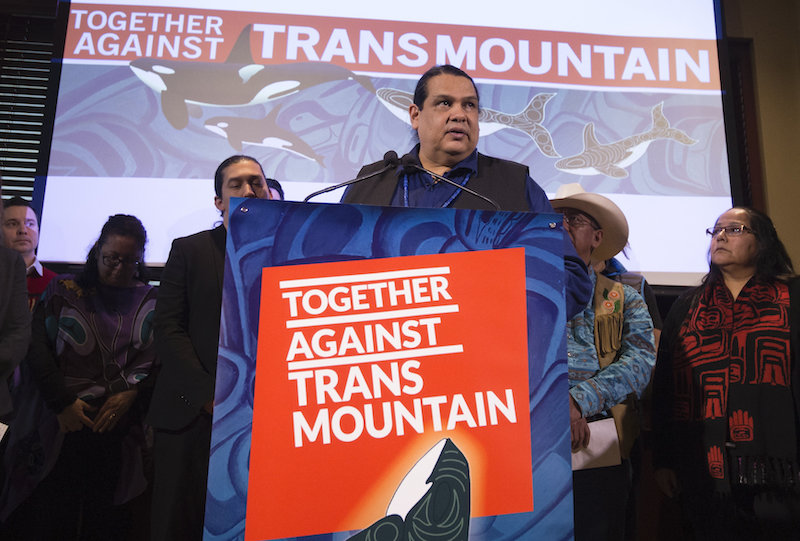
COVER.Trans-Mountain-Reconciliation.jpg

https://thetyee.ca/Opinion/2020/02/05/Federal-Court-Trans-Mountain-Ruling-Betrays-Reconciliation/

Federal Court’s Trans Mountain Ruling Betrays Principles of Reconciliation

The decision found Trudeau government met the minimum legal requirements. For Indigenous peoples, that’s not enough.

Judith Sayers 5 Feb 2020 | TheTyee.ca Judith Sayers (Kekinusuqs) is from the Hupacasath First Nation in Port Alberni, B.C. She President of the Nuu-chah-nulth Tribal Council and is an adjunct professor at the University of Victoria in Business and Environmental Studies.


The Federal Court of Appeal’s decision to uphold federal government approval for the Trans Mountain pipeline expansion project is devastating for the First Nations that launched the legal challenge.

The nine nations argued they had not been consulted properly before Prime Minister Justin Trudeau’s cabinet approved the pipeline. The second attempt at consultation was the result of an earlier court decision rejecting a first round of consultations as flawed.

Rueben George of the Tsleil-Waututh First Nation summed up the impact.

“Reconciliation stopped today,” he said.


The “Rule of Law”?

https://ricochet.media/en/2904/untangling-the-rule-of-law-in-the-coastal-gaslink-pipeline-standoff

When B.C. premier John Horgan said “the rule of law applies” in reference to the Coastal GasLink pipeline conflict, he meant that he would abide by an injunction granted by a provincial court to allow the company to enter and operate on Wet’suwet’en territory.

In doing so, he discounted a number of legal elements — and even an entire system of law — that arguably supercede the B.C. courts.

When it comes to injunctions, the deck is stacked. The Yellowhead Institute reviewed over 100 injunction cases late last year. They found that corporations succeeded in 76 per cent of injunctions filed against Indigenous nations, whereas requests for injunctions filed by Indigenous nations against governments and corporations were denied in over 80 per cent of cases.

And thus he also unwittingly raised larger questions about the legal aspects of the conflict.

Whose laws apply? And which laws?

The rule of law is far more complicated in this case than simply following an injunction. A pre-existing system of Indigenous governance, Supreme Court of Canada decisions, and a United Nations declaration all bring into question the legal validity of the injunction granted to Coastal GasLink.


from: Ricochet

                                                                           Copyright 2020. All rights reserved.

Regarding Nuclear Waste Storage

First Nation votes ‘no’ on nuclear waste storage in Bruce County, Ont.

Published Friday, January 31, 2020 12:07PM EST Last Updated Saturday, February 1, 2020 11:06AM EST

SOUTHAMPTON, ONT. —

First Nation votes ‘no’ on nuclear waste storage in Bruce County, Ont.

Members of the Saugeen Ojibway Nation (SON) have voted down plans to bury Ontario’s low- and intermediate-level nuclear waste within 1.2 kilometres of Lake Huron.

In 2013, Ontario Power Generation (OPG) said they wouldn’t build the $2.4 billion underground facility under the Bruce Power site without the SON’s approval.

On Friday,  1,232 members of the First Nation band voted. The vote results saw 1,058 ‘no’ votes, with 170 ‘yes’ and 4 spoiled ballots.

It means Canada’s first permanent nuclear waste facility will need to be built somewhere else in Ontario.

OPG will now have to start searching for a new host community to house over 200,000 cubic metres of low- and intermediate- level nuclear waste.

OPG says finding a new site may set the project back 20 to 30 years.

Concerns over the project’s proximity to Lake Huron ultimately doomed the nuclear waste plan.

Support for the project was strong in Bruce County, but largely panned around the Great Lakes, where over 200 municipal resolutions opposed the project.

Ontario Power Generation say while they are disapointed with the outcome of the vote, they respect S.O.N.’s decision and will not proceed with plans to build the storage facility in Saugeen Territory.

RELATED IMAGES


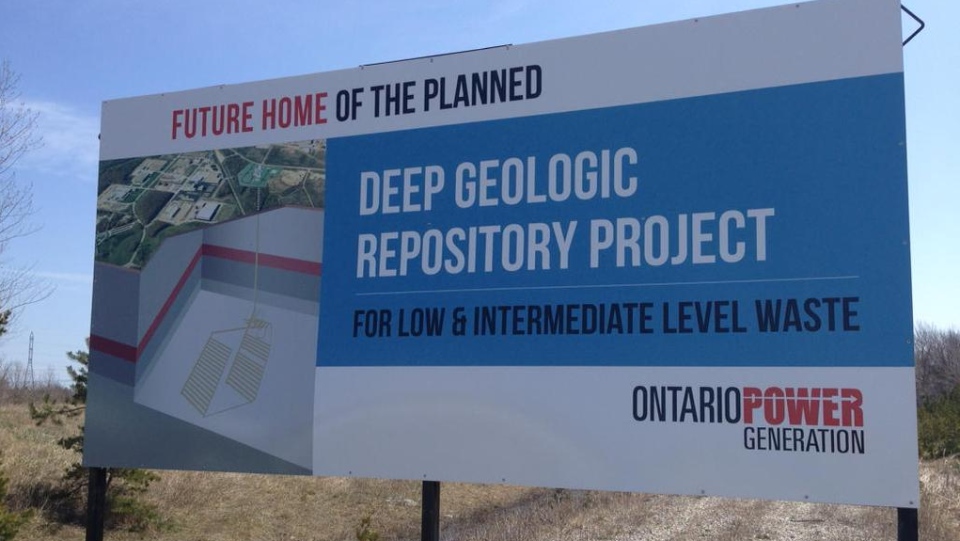
  • Nuclear waste DGRAn illustration shows the plan for a nuclear waste burial project on the Bruce Power site.

  • Nuclear waste burialA sign is visible at the site proposed to bury nuclear waste near Lake Huron, Ont., Wednesday, May 6, 2015. (Scott Miller / CTV London)

Indigenous Rights Challenged

What you need to know about the Coastal GasLink pipeline conflict

Dispute in Wet’suwet’en territory over natural gas line has high economic and political stakes

Wet’suwet’en hereditary chiefs from left, Rob Alfred, John Ridsdale and Antoinette Austin, who oppose the Coastal Gaslink pipeline, take part in a rally in Smithers, B.C., on Jan. 10. (Jason Franson/Canadian Press)

The conflict over a natural gas pipeline in northwestern British Columbia is the latest flashpoint between resource development and Indigenous rights and title in a province where large swaths of territory are not covered by any treaty.

At the centre of the conflict is a multi-billion dollar natural gas project — touted as the largest private sector investment in Canadian history — and an assertion by Wet’suwet’en hereditary chiefs that no pipelines can be built through their traditional territory without their consent.


Saving Lake Huron

https://www.counterpunch.org/2020/02/04/saugeen-ojibway-nation-has-saved-lake-huron-from-a-nuclear-waste-dump/

Photograph Source: Kevin M Klerks – CC BY 2.0Lake Huron

Saugeen Ojibway Nation Has Saved Lake Huron From a Nuclear Waste Dump

A major victory for Canada’s First Nations has just been won in Ontario. On January 31, the Saugeen Ojibway Nation (SON) overwhelmingly voted down the proposed deep geological repository (DGR) for storage of low- and intermediate-level radioactive nuclear waste next to Lake Huron. The DGR had long been proposed by Ontario Power Generation (OPG), but in 2013 OPG had committed to SON that it would not build the DGR without their support.

Canadian Pipeline

John Ivison: Pipeline dispute raises important question — who speaks for First Nations?

Reconciliation means making one system compatible with another, not Indigenous law trumping Canadian law at the behest of some self-anointed aristocrats

https://nationalpost.com/opinion/john-ivison-pipeline-issue-raises-important-question-who-speaks-for-first-nations

chiefs-1Wet’suwet’en hereditary chiefs opposed to the Coastal GasLink pipeline hold a press conference in Smithers, B.C., on Jan. 7, 2020.Amy Smart/The Canadian Press/File

The “territorial re-occupation” of land along the proposed Coastal GasLink pipeline in B.C. by hereditary chiefs of the Wet’suwet’en people has raised some thorny constitutional questions and some surprising interventions.

The $6.2 billion, 670 km pipeline route runs from Dawson Creek, near the Alberta border, to Kitimat in B.C.’s north coast region, crossing through traditional Wet’suwet’en territory.

Reconciliation?

https://thetyee.ca/Analysis/2019/01/10/Not-What-Reconciliation-Looks-Like/https://thetyee.ca/Analysis/2019/01/10/Not-What-Reconciliation-Looks-Like/

By Zoë Ducklow 10 Jan 2019 | TheTyee.ca

judy-wilson

Judy Wilson’s Message for Canadians: ‘The Land Defenders Are Doing This for Everybody’

RCMP raids in Wet’suwet’en territory can’t bring justice, reconciliation or a better future, Neskonlith chief says.

Chief Judy Wilson of the Neskonlith First Nation, east of Kamloops, is secretary treasurer of the Union of B.C. Indian Chiefs, a community leader, strong opponent of the Trans Mountain pipeline expansion and an advocate for clean energy.


Coal Plant Closing

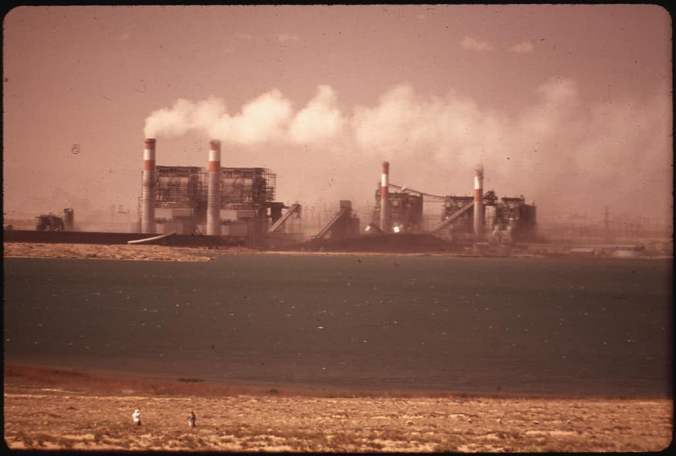
Navajo coal plant is the next to close; the end of an industry


https _images.saymedia-content.com_.image_MTY5OTY5OTY4MzE2Njg3OTQ1_four_corners_power_plant_-_nara_-_544328


https://newsmaven.io/indiancountrytoday/news/navajo-coal-plant-is-the-next-to-close-the-end-of-an-industry-TkJ5Gh9Em0-G3YlYAbHxbg

Historical photo via National Archives
The Associated Press

Navajo President Jonathan Nez: ‘We are moving forward with renewable energy as our top priority’

Felicia Fonseca

Associated Press

FLAGSTAFF, Ariz. (AP) — The closure of a coal-fired power plant on the Navajo Nation sooner than expected will be a major blow to a region where coal has been a mainstay of the economy for decades.

The Arizona Public Service Co. now plans to shutter the Four Corners Power Plant near Farmington, New Mexico, in 2031 when its coal contract expires rather than wait until 2038.