Action: Protect Pé Sla

Lakota Law

Warm greetings. Today, I share an urgent action. For many years, my family has helped lead the fight to protect Pe’ Sla, one of the most sacred places — located high in the Black Hills — to the Lakota People. In 2012, we helped make sure it returned to Indigenous care, but now it is threatened again by mining interests.

Fortunately, once again, we land defenders have the opportunity to stop the desecration of this ceremonial ground — but time is very short. May 16 — just days from now — is the deadline to tell the U.S. Forest Service it must not allow mining on this sacred ground! Please see below for the exact points to make, and I also invite you to watch my video and learn a little more about why I care so deeply about this special place.

Please watch my video, and then send your message to the Forest Service. Wopila!

Thankfully, the original May 9 deadline for comments was extended by one week — so let’s make our voices heard! We must not let the Rochford Mineral Exploratory Drilling Project tear up our sacred ground in its quest for graphite.

As our dear friends at the Black Hills Clean Water Alliance (BHCWA) have pointed out, this project is immediately adjacent to — and some proposed drill pads might encroach on — Pe’ Sla. Maps are vague, but, in their words, “by any definition, the project is too close!”

BHCWA’s research tells us that “the project would involve 18 drill pads. Exploration could contaminate water in the upper Rapid Creek watershed, with some proposed drill pads very close to streams. And there is also the potential for contamination or cross-contamination of underground water sources.”

BHCWA suggests that you include the following information when you submit your comment:

  • Your name and address
  • Why you care about this project and the Black Hills
  • The name of the project (Rochford Mineral Exploratory Drilling Project #67838)
  • Request for a 60-day extension of the “scoping” public comment period, so everyone has an opportunity to comment
  • A reason why you oppose the Rochford Mineral Exploratory Drilling Project. Use your own words, but two good ones are the potential negative environmental impacts and the disruption of traditional ceremonial practices for Lakotas
  • Tell the Forest Service to require an Environmental Impact Statement (EIS) for this project

This is an urgent request to protect sacred territory frequently used by many Lakota People for ceremonial practice. It is a pristine ecosystem and beautiful place. Please help us protect Pe’ Sla.

Wopila tanka — thank you, always, for your advocacy!
Tokata Iron Eyes
Spokesperson & Organizer
Lakota People’s Law Project
Sacred Defense Fund

Another Oil Spill: Why We Did Not Want It To Begin With

https://apnews.com/article/keystone-oil-pipeline-north-dakota-spill-36e86142566763a5464e1dd132eede56

Keystone oil pipeline shutdown could quickly lead to higher gasoline prices

By  JACK DURA and SARAH RAZA Updated 5:04 PM CST, April 8, 2025

BISMARCK, N.D. (AP) — The nearly 2,700-mile Keystone oil pipeline was shut down Tuesday morning after it ruptured in North Dakota, halting the flow of millions of gallons of crude oil from Canada to refineries in the U.S. and potentially leading to higher gasoline prices.

South Bow, a liquid pipeline business that manages the pipeline, said it shut down the pipeline after control center leak detection systems detected a pressure drop in the system. The company estimated that 3,500 barrels of oil were released and said the spill was confined to an agricultural field in a rural area, about 60 miles (97 kilometers) southwest of Fargo.

Upcoming Events: NCAI

May 29, 2024
We’re Less than a Week Away from the 2024 Mid Year Convention & Marketplace
The National Congress of American Indians 2024 Mid Year Convention & Marketplace is less than a week away, and we are thrilled to welcome you to Cherokee, North Carolina! If you haven’t registered yet, there’s still time to join us for this impactful event at Harrah’s Cherokee Hotel & Casino Resort.At this year’s convention, attendees will have the opportunity to engage in key discussions and strategy sessions between Tribal Nations, Native organizations, federal agencies, and the Administration that will shape the future of Indian Country. Additionally, attendees will hear from an exceptional lineup of speakers sharing their insights and experiences on critical topics facing Tribal Nations. Key speakers will feature: Tom Vilsack, Secretary, U.S. Department of AgricultureLynn Malerba, Treasurer, U.S. Department of the Treasury Bryan Newland, Assistant Secretary for Indian Affairs, U.S. Department of the InteriorElizabeth Carr, Tribal Advisor to the Director, Office of Management and BudgetRoselyn Tso, Director, Indian Health Service, U.S. Department of Health and Human ServicesHeidi Frechette, Deputy Assistant Secretary for Native American Programs, U.S. Department of Housing and Urban Development Dr. Sallie Ann Keller, Chief Scientist & Associate Director of Research and Methodology Directorate, U.S. Census BureauRose Petoskey, Senior Advisor and Tribal Affairs Director, White House Office of Intergovernmental AffairsMorgan Rodman, Senior Policy Advisor for Native Affairs, White House Domestic Policy Council
Register Now View the Agenda
Last Call to Register for the 2024 Mid Year Convention Golf Tournament
Join NCAI for the second annual Mid Year Convention Golf Tournament Fundraiser! Hosted at the Sequoyah National Golf Club, this exciting event will feature a 4-Person Team Scramble format with trophies and prizes up for grabs. Fuel up with breakfast, tee off with a shotgun start, and enjoy a boxed lunch before diving into a BBQ dinner. The course boasts 6,600 yards of championship play, offering immaculate greens, expansive practice areas, and a full-service golf shop overlooking the Great Smoky Mountains. Don’t miss out on an unforgettable day, and register now for an opportunity to connect at the Sequoyah National Golf Club.When: Sunday, June 2, 2024Where: Sequoyah National Golf ClubFormat: 4-Person Scramble
Register Now
Empowering Native Youth: View the Full Youth Agenda
The 2024 Mid Year Convention & Marketplace Youth Agenda is designed to empower Native youth with opportunities to connect, learn, and grow with like-minded leaders from across Indian Country. Through our curated agenda, Native Youth will engage in discussions, workshops, and activities focused on pivotal policy areas such as education, wellness, environmental stewardship, data sovereignty, civic participation, cultural knowledge, climate action, and much more. The Native Youth Agenda is intended for young adults ages 15-24.
Youth Agenda
ADDITIONAL INFORMATION:NCAI ResolutionsPress RegistrationSponsorships

Building a Clean Energy Future

Lakota Law

As you know, very few things matter to me — and to this organization and to the planet we all hope our future generations can continue to inhabit — as much as a just transition to clean energy. That’s why we support communities fighting on the frontlines against harmful extractive projects, like the Standing Rock Nation and the Reno-Sparks Indian Colony as they resist the Dakota Access pipeline (DAPL) and Thacker Pass lithium mine, respectively. It’s also why we continue to ally with Native-led groups promoting climate solutions which encompass Indigenous knowledge and respect tribal sovereignty.

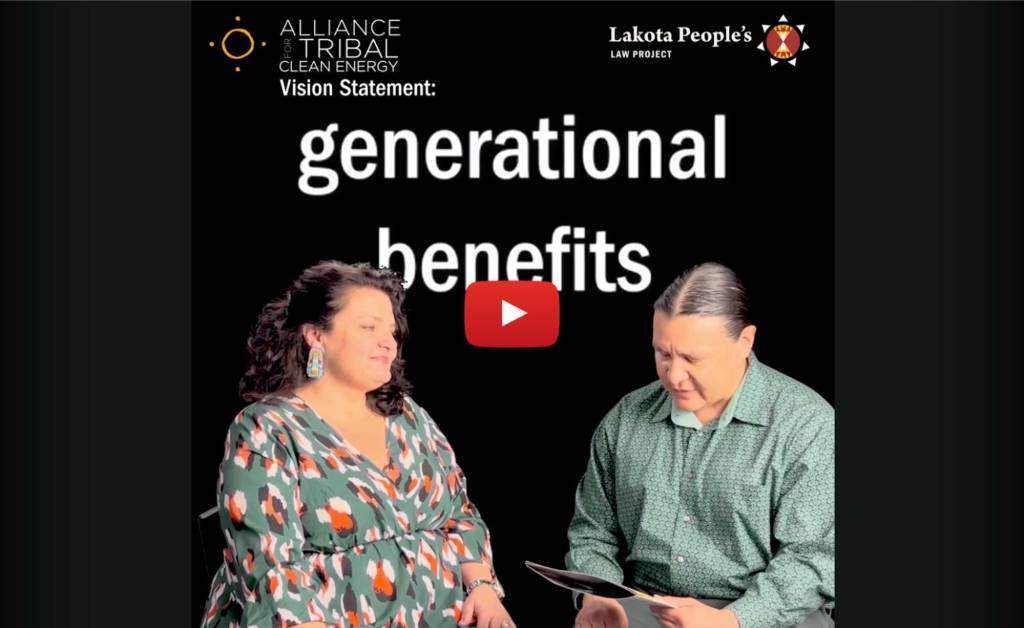
To that end, this week I traveled to the Muscogee Nation near Tulsa, OK, to attend the second annual Tribal Energy Equity Summit. I was honored to speak at this important gathering, hosted by the Alliance for Tribal Clean Energy. It brought leaders from tribes and organizations across Turtle Island together with representatives from the federal government to share our viewpoints and advance equitable clean energy solutions. As part of my attendance, I sat down with Chéri Smith, the alliance’s president and CEO, to talk about the importance of Indigenous agency in creating a clean energy future for tribes. Please watch our short video, meet Chéri, and learn more about her organization’s mission.

Watch: I sat down with Chéri Smith, President and CEO of the Alliance for Tribal Clean Energy, to talk about the importance of Indigenous agency in creating a clean energy future for tribes.

It’s been — if you’ll pardon the pun — an energizing week! The summit afforded me a great opportunity to network with like-minded people and organizations, meet new friends, and reconnect with old ones. I was especially happy to share space with Dennis “Bumpy” Pu‘uhonua Kanahele, head of the Nation of Hawai’i, which maintains its status as a sovereign government under international law, independent of the United States. 

As our presence at the same summit that also hosted a pair of representatives from the White House indicates, this was a diverse gathering which welcomed a multitude of perspectives on how we can solve tribal energy issues in a just way and begin to remediate the climate crisis. As you know — and as exemplified by DAPL’s violation of our treaty lands, which hold so much potential for renewable energy development — those two issues are inextricably linked. I’m excited to see where we’ll go from here! 

Speaking of DAPL: many of you have reached out to us after reading about my participation in the ongoing trial to determine whether the federal government should reimburse the State of North Dakota for exorbitant costs it alleges it incurred by over-policing our peaceful NoDAPL movement in 2016 and 2017. This article and this one can provide you a bit more of my perspective. I’ll also plan to report back to you with further thoughts once we hear of a judgment. 

Wopila tanka — as always, thank you for supporting environmental justice! 
Chase Iron Eyes
Director and Lead Counsel
The Lakota People’s Law Project

Coalition Building

Lakota Law

You’ve heard from me a few times already this year about the importance of coalition building to achieve a new level of effectiveness — not just in our own work, but in the work my Indigenous relatives are undertaking at tribal nations across Turtle Island. To that end, today I share with you about a trip I took to spend a few days earlier this month with people I greatly respect at the Wind River Reservation in so-called Wyoming.

The seventh largest reservation in the U.S., the Wind River Nation encompasses more than 2 million acres of incredible wildlands, and it’s home to people from both Northern Arapaho and Eastern Shoshone tribes. I went to visit a few friends there, including Wes Martel, who you may remember from his keynote speech at the Great Plains Water Alliance’s Winter Water and Climate Conference, featured in our 20th Dakota Water Wars chapter. I also spent time with Jason Baldes, a central figure helping to return American Buffalo to Wind River and other tribal nations. I encourage you to watch “Homecoming,” a short documentary on PBS, about his wonderful work.

Watch: Buffalo return to Wind River in “Homecoming,” a PBS short documentary featuring the voice and good work of Jason Baldes.

To you, the inextricable link between Native people and buffalo is likely no mystery. Jason speaks to this eloquently in the documentary.“To restore that animal to our communities means that we can begin to heal,” he says. “From atrocities of the past, from loss of land, from loss of culture, loss of language. It’s foundational to who we are.”

That’s just one example of good Indigenous storytelling emanating from Wind River. While there, I also discovered the great music of Christian Wallowing Bull, a talented Northern Arapaho singer-songwriter featured in the new documentary film “Lone Wolf,” which premiered in California a few days ago. I then spoke with Dave Herring, the film’s director. I hope that you’ll watch their film and be as inspired by Christian’s story as I was. 

As you can see, we’re taking extra time this year to build connections with people, organizations, and tribal nations. In order to create a better society, it’s critical to advance not just our own priorities as Lakota People, but also those of all our relatives with their own traditional knowledge systems, art, and dreams. Between us, we’ve got much more in store to share with you. Stay tuned!

Wopila tanka — My continued thanks for supporting all Indigenous people, art, and culture.
Chase Iron Eyes
Director and Lead Counsel
The Lakota People’s Law Project

Let's Green CA!

Lakota People’s Law Project
547 South 7th Street #149
Bismarck, ND 58504-5859

Climate Alteration: Words Are Important

Global Warming: a very passive title to address a very lethal problem.
Example: It is getting a little warm outside, nothing to worry about.

Climate Change: a perfect setup to generate perfect rebukes.
Example: The climate is always changing. climate is just doing what climate has always done and human activity has nothing to do with it.

Climate Crisis: a very selective term. It is only a crisis for the people immediately affected. Also falls into the maligned category of ¨alarmist¨

The term I adopted:
Climate Alteration: A very pointed terminology to address the impact human activity is having on the global climate. Our activities are altering climate systems on a global scale causing extreme weather events. Yes, temperatures on average across the globe are rising and this disturbance is causing extreme temperatures (hot and cold) extreme drought, extreme flooding, and extreme storms. The rise in global temperature has upset the balance. This alteration has been building up slowly as the oceans absorbed most of the extra heat. But now, plain to see for everyone paying attention to weather-related news or looking out their own windows, extreme weather is pushing organisms and plants to extinction. Our crops are being destroyed. The range of many insects, birds, and animals has shifted.
Here on this thread are the thousands of articles, references, and comments that illustrate Climate Alteration. We have documented how some are being innovative in developing mitigation strategies. Some are also being manipulative and stupid and we are intelligent enough to research and decide for our communities what we need to do if our governments do not act.

As animals and plants are forced to shift their range because of extremes in weather, so do people.

Lakota Law

By now, you’re likely well aware of the climate crisis and its significant dangers to Indigenous communities the world over. The problem is especially magnified on islands and in coastal regions, where sea level rise can wipe away traditional homelands and make climate refugees of those who have been displaced. That’s true even right here on Turtle Island, where hundreds of Native communities — in South Dakota, Alaska, Florida, Hawai’i, Washington, and Louisiana — face existential threats.

And now, the first community to supposedly be moved from harm’s way — the Jean Charles Choctaw Nation — is facing a new set of problems. Just before the new year, the tribe filed a landmark civil rights complaint with the U.S. Department of Housing and Urban Development (HUD) against the state of Louisiana. In 2016, HUD granted Louisiana $48 million in aid to resettle the tribe. But, its complaint asserts, Louisiana failed to properly implement the grant and has ethnically and racially discriminated, violated tribal sovereignty, excluded cultural components central to a proper relocation program, and provided poor replacement housing.

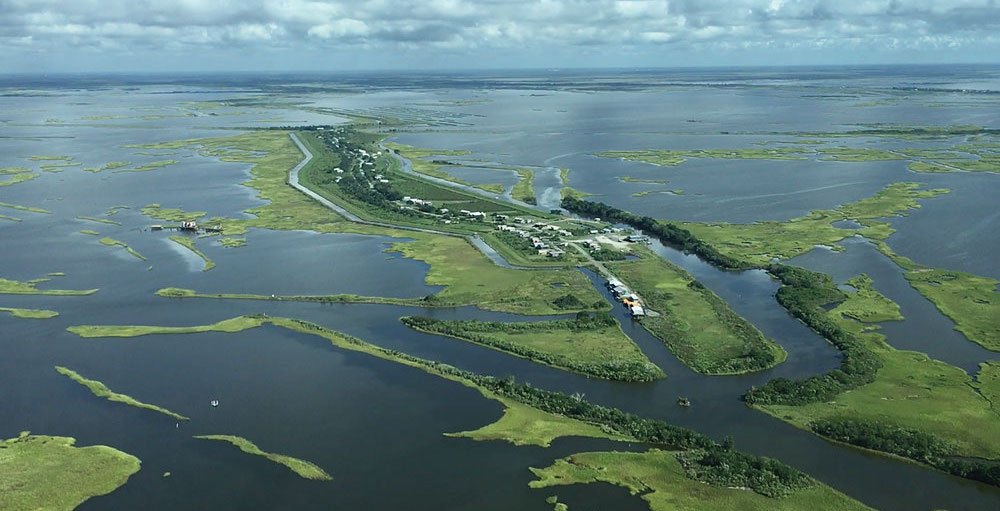
The Jean Charles Chactaw Nation has always lived here, on the Isle de Jean Charles. The climate crisis and resultant rising sea levels have endangered the tribe’s homeland and forced many members to move to inadequate replacement housing in a new location. Photo credit: Chantel Comerdelle.

The Jean Charles Choctaw Nation has resided on the Isle de Jean Charles for five generations, since the ancestors of its citizens escaped the Trail of Tears in the early 1830s amid President Andrew Jackson’s Indian Removal Act. Its homelands and burial grounds are located in a region facing perpetual devastation and erosion by storms and sea level rise. Since 1955, the Jean Charles Choctaw Nation has lost over 98 percent of its lands to the encroaching ocean.

It’s also worth noting that the tribe is located in Terrebonne Parish, a region notorious for oil extraction, high pollution rates, and environmental justice violations. The Parish and over 90 percent of its property are largely controlled by non-local fossil fuel and chemical companies. The infamous “Cancer Alley” is just upstream.

Watch this short documentary detailing the tribe’s relocation.

By filing its complaint with HUD, the Jean Charles Choctaw Nation is looking to the federal agency to investigate the grant-funded resettlement program, currently run by Louisiana’s Office of Community Development (OCD). The tribe hopes HUD will order OCD to respect tribal needs and authority as the program’s implementation proceeds. 

The lawsuit is also significant in that, while the tribe has state recognition from Louisiana, it does not have federal recognition, which would extend access to more grants, disaster assistance, and various legal powers — including constitutional protections and self-governance recognized by the United States. Lakota Law will keep an eye on this case and report back to you. As always, we’re grateful to you for standing in solidarity with every community of color on the frontlines of environmental justice.

Wopila tanka — thank you for your unwavering dedication!
Chase Iron Eyes
Director and Lead Counsel
The Lakota People’s Law Project

Why the Current Paradigm Does Not Work

“A lot of people from American society don’t understand our connection, our intergenerational connection, and how deep it runs within us to the land and the Earth,” Logan said.

Logan described a thanksgiving speech, or Ganö:nyök, that the Seneca recite to recognize the natural world around them.

“We start at the Earth and we go all the way up to the sky, to the creator, and it covers everything from the water, the plants, food, medicine, trees, birds, animals, everything in the natural environment,” Logan said. “If any one of those things goes away, eventually we will perish.”

https://insideclimatenews.org/news/22112023/new-york-clean-hydrogen-indigenous-nation-sees-threat/

Creating sustainable energy does not mitigate the problem.
I used to get into these tremendous arguments with my father about progress.
To summarize my stance: I used to take the bus because I did not have a car. I suffered through strange men groping me, people smoking, waiting in the rain for late busses, limiting my shopping because I could not carry a lot of stuff. It was sometimes unbearable.
I was able to buy a car and at first, it was incredible. I had freedom! I had safety! It was convenient and I could go shopping in many places and load everything in the trunk!

But then one rainy day I drove by a crowded bus stop and realized all I had done was trade some problems for other problems. I now had a vehicle in which I had a traffic accident: someone ran into me and the car had to be repaired. I could get parking tickets so I always had to hunt around for parking space, and in some places, I had to pay for parking. I had insurance to pay, and I had to spend my Sundays washing the car. I had maintenance and car repairs. Instead of a monthly bus pass, I now had a car loan to pay off. I had a driver’s license to renew at the DMV. I had a yearly car registration to renew. I had to have a car inspection to get the registration renewed. I worried about someone trying to steal the car, so I bought an expensive car alarm system. Instead of being able to dose off when riding in the bus, I had to stay alert at all times when driving the car. I now got stuck in traffic jams on the freeway and ended up taking a longer time to get home from work than if I had taken the bus!
When I added it up, I actually had more problems than when I rode the bus.

Energy is not created or destroyed – it just changes form.

https://energyeducation.ca/encyclopedia/Law_of_conservation_of_energy

IMHO

I think this law applies to everything we do. There is no such thing as progress. We just change out one set of actions for another, one set of problems for another. We are not getting anywhere from where we started. We are making things worse.

We used to know how to make the things we needed, but now we are dependent on people and systems for everything.

We used to be able to drink water from the rivers and fish/hunt for our food.
Now we use self-checkout at stores that sell us contaminated and processed unnutritious food.

We used to work in our fields growing the food from sun up to sundown.
Now we sit in cars in traffic for hours to get to work and then back home so we can afford a gym membership to try and stay fit.

We used to sit on our front porches on hot summer evenings because we had no air conditioning and would talk to our neighbors to get the daily gossip.
Now we are isolated in air-conditioned homes with security systems behind locked doors.

So, back to the article I cited. Little has changed in relation to the land and indigenous people. They have a pristine forest with old-growth trees. How are they able to still live there and the land has not been destroyed? – that is the big question.

We are clearly missing some knowledge.
We come along and want to build a potentially polluting ¨Green¨ plant right next to their land because, you know, progress.

We live an unsustainable, nonregenerative lifestyle. That is why their forest is beautiful and all the other land is polluted, exploited, and dead.

Energy Solutions

Lakota Law

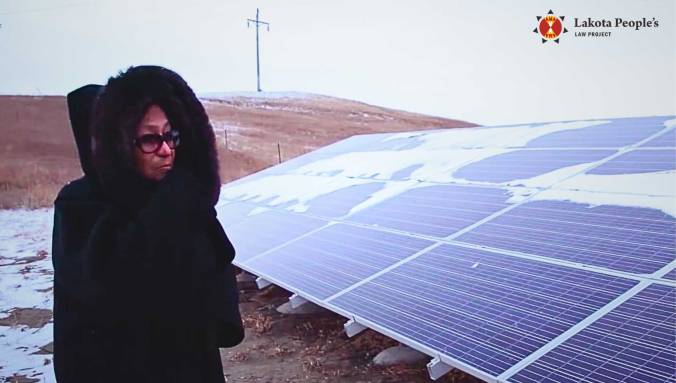
Since 2017, Lakota Law’s team has worked with leadership at the Standing Rock Nation to help bring clean energy to my homelands. We’ve now assessed solar potential on a dozen tribal government buildings, and for the past few months we’ve worked overtime to help my tribe prepare to apply for historic sums of grant money. President Biden’s Inflation Reduction Act has earmarked as much as $100 million for individual low income communities — including tribal nations — to transition to low-carbon technologies.

Like most good things, finding the right way to take advantage of the massive solar and wind potential in the Dakotas has taken a significant investment of time and money — but we’re getting there! As they say, it takes money to make money, and that’s one reason I’m reaching out to you today. Please help us push through the homestretch of this grant and assessment process. Every dollar you can give now will help us save the tribe and its members so much more down the line. This could be a once-in-a-lifetime opportunity for tribes to take a leadership role in the transition to cleaner, greener energy.

I’ve been working for years to increase solar and wind production on the Standing Rock Nation. High energy costs from our utility can leave our people without power during the Dakotas’ harsh winters. That’s not acceptable.

As part of the Inflation Reduction Act, a $7 billion solar grant called “Solar for All” will make up to five $25-100 million grants available to different tribes or tribal consortia. The Lakota People’s Law Project aims to ensure that Standing Rock and several other South Dakota tribes can make their best case to collect and use a portion of these funds to install solar panels that will help the people pay less and stay safe.

That last part is important. In yet another example of injustice toward Native communities, tribal members at Standing Rock pay 33 percent more for electricity than people living just an hour away in Bismarck, North Dakota. That’s money most can’t afford to pay, which can result in life-endangering power shut-offs during winter months when midwestern temperatures can dip well below zero.

By collecting and storing energy from the abundant sun above the plains, tribal governments and communities can save — and even earn by sending power back to the grid. And by building out a cohesive clean energy system, Standing Rock and other South Dakota tribes can demonstrate a sustainable model for other tribal nations and communities to follow. I consider this to be one of the most important things I’ve ever worked on, and I deeply value your continued solidarity as we pursue this plan.

Wopila tanka — my gratitude for all of your care and support,
Phyllis Young
Standing Rock Organizer
The Lakota People’s Law Project

Protecting Our Land

Lakota Law

Today, I share with you our new blog and video delving into the long, disturbing history of mining on Indigenous lands on Turtle Island. As we’ve written to you previously, the sacred lands of our Paiute and Shoshone relatives at Peehee Mu’huh (or Thacker Pass) in Nevada are under imminent threat from a massive new lithium mine. They did not give their consent for this project, and now it could despoil sacred ceremonial grounds, historic massacre sites, and sensitive habitat home to several protected species.

In our new, short video — which you can find near the top of my blog — Paiute elder Dean Barlese discusses the importance of protecting our shared world.

Thacker Pass isn’t the only mining project currently endangering Native homelands. The Yaqui people are struggling to effectively resist another massive lithium mine in Sonora, Mexico, and according to the Associated Press, our southern neighboring nation has become the world’s deadliest location for environmental activists. And in our sacred Black Hills right here in the Dakotas, lithium is joining gold, uranium, and other precious elements on the list of mining interests we’ve been confronted by for 150 years.

I encourage you to read my blog to learn more, and watch the accompanying video to get additional perspective from Dean Barlese, a respected Paiute elder. Our thoughts today are also with all those on Maui in the Kingdom of Hawaii. We are praying for the safety of all living things in that beautiful place as they confront deadly fires powered by fast winds fueled by yet another hurricane.

This is, of course, all related. Storm frequency and intensity rise in conjunction with the out-of-balance relationship we have with Unci Maka, our Grandmother Earth. Our society’s failure to listen to Indigenous knowledge and plan ahead accordingly exacerbates the climate crisis and puts the future in peril for my generation and those to come. The youth say it. The elders are saying it. It’s time to make big changes before it’s too late. That’s why your advocacy with our cause is so important. It’s up to us — working together — to change the game.

Wopila tanka — thank you, always, for your care and attention.
Tokata Iron Eyes
Spokesperson
The Lakota People’s Law Project

The Power of Indigenous Knowledge

Lakota Law

Greetings from Pine Ridge. I’ll keep this email short and sweet — but only because I want you to spend your reading time on today’s blog! I’ve also recorded a short video, which you’ll see near the top of the blog page. What’s my topic? I’m highlighting the importance of Indigenous knowledge in tackling the climate crisis in the wake of the latest Intergovernmental Panel on Climate Change report and convening of the United Nations Permanent Forum on Indigenous Issues.

Click above to watch a short video and read my blog about the importance of Indigenous knowledge when it comes to solving the climate crisis.

Please do read the blog, but here’s one of my key points. The climate crisis is real, it’s serious, and it’s existential — but that’s not a reason for pessimism. In order to win this fight, we must listen to one another, celebrate the good work being done, and tap into our resilience as human beings. We should recognize the victories we’re achieving now and incorporate both science and the understanding Indigenous communities have had for Unci Maka — our grandmother Earth — for thousands of years. 

We know about resilience, and we aren’t scared of the apocalypse. In the era of colonization, we’ve already been living through it for generations. We haven’t lost our faith or our capacity for optimism, and we’re not going to give those up now. I invite you to hear my perspective and take on this challenge with me so the generations to come can tell an inspiring story of reconnection and recovery.

Wopila tanka — thank you for caring for Unci Maka!
Tokata Iron Eyes
Organizer
The Lakota People’s Law Project