Child Welfare Department at Cheyenne River

Lakota Law

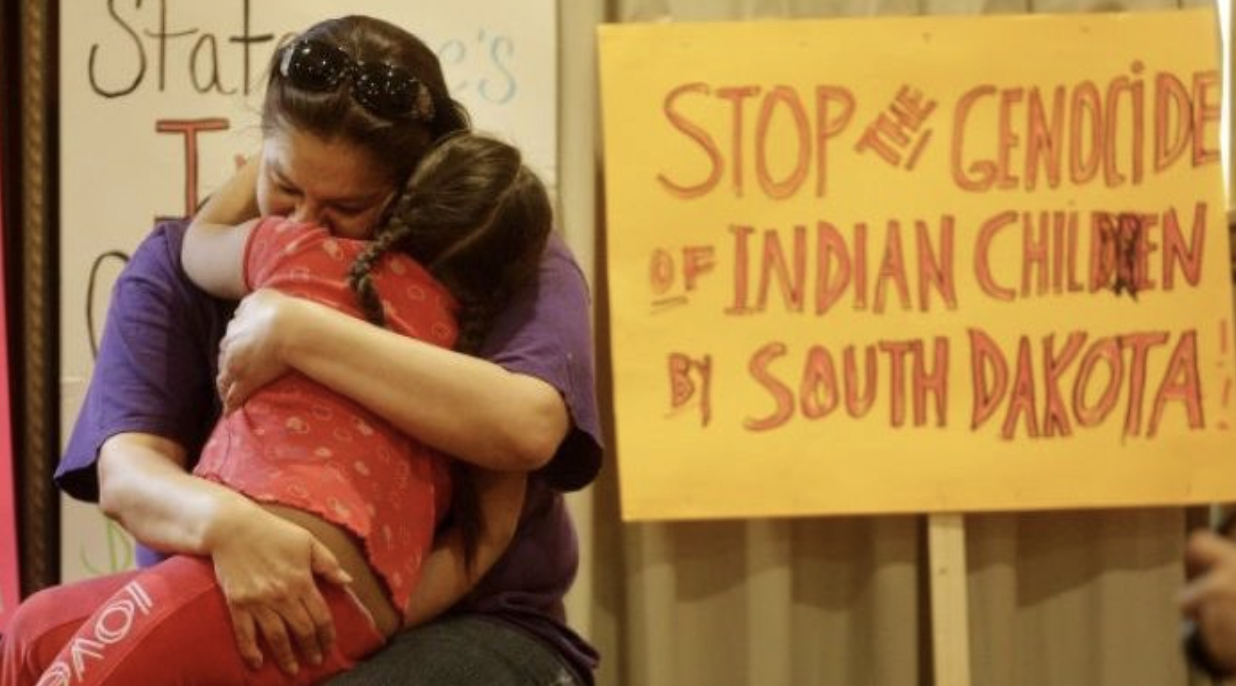
Good news! Here at the Cheyenne River Nation, things are on track toward our goal of creating a tribally-run Child Welfare Department. Just last week, we held our second hearing in Eagle Butte, our reservation’s largest community. We recorded powerful testimony from several families, which we will ultimately present to the Cheyenne River Tribal Council. 

I encourage you to watch our new video, in which Virginia White Feather — one of my fellow grandmothers in Wasagiya Najin, our Standing Strong grandmothers’ group — and I talk about the importance of our efforts to keep Native children in Native care.

Watch: My grandmothers’ group, Wasagiya Najin, is standing strong to create a tribally-run Child Welfare Department at Cheyenne River — and we’re making good progress!

We grandmas lead this charge because we’re the best ones to do it. We have deep respect from our communities, and in a culture that greatly values and relies upon kinship connections, we’re often the ones who step in to caretake for our grandchildren. Our connections run deep. That’s extra important when trust can be hard to come by, given that our children and families have been let down time and again. 

As you likely know by now, South Dakota’s child welfare system doesn’t hold proper respect for our kinship ties, and our children are routinely taken from us. Our people, therefore, tend to be skeptical of anyone offering solutions, but they know that we grandmothers — who spend every day organizing within our communities and caring for the next generations — mean business.

We want wrap-around services for our children and caretakers. We intend to make sure they can remain together, here in a safe place, and that our families have what they need. We won’t stop organizing, and we’ll have even more to report soon. Our next target is editing video from our various hearings to present at Tribal Council and motivate them to act. It’s exciting, because we have a golden opportunity to create a far better system that recognizes the old ways in service of our next generations. 

Meanwhile, Lakota Law’s legal team just submitted our draft amicus brief for review by sister organizations in the Supreme Court case about the Indian Child Welfare Act. The Court will hear the case in October, and the stakes couldn’t be higher. We’ll have much more to report on that project soon, as well. Please stay tuned!

Wopila tanka — thank you for standing strong for our children.
Madonna Thunder Hawk
Cheyenne River Organizer
The Lakota People’s Law Project
Standing Rock: Action

Lakota Law

As many of you know, the Lakota People’s Law Project is a proud ally of Standing Rock. We provide media, fundraising, organizing, and lobbying support to the tribal chairwoman’s team, especially on environmental causes like the Dakota Access Pipeline (DAPL). In this capacity, we’re traveling next week to Washington D.C. to support Chairwoman Janet Alkire as she meets with key decision-makers about the ongoing injustice of DAPL.

More on that soon — but for now, we’d like to share our new video with you, made in collaboration with Chairwoman Alkire’s team, the Oceti Ŝakowiŋ, and the Great Plains Tribal Water Alliance. It brings tribal leaders together from all over South Dakota to speak about the necessity to protect Unci Maka (Grandmother Earth) from Big Extraction’s misdeeds, like Dakota Access.

Watch: Janet Alkire and Oceti Ŝakowiŋ camp leaders reflect on the importance of the #NoDAPL movement to protecting Unci Maka (Grandmother Earth).

The stakes of our environmental movement remain as high as ever for all humans, plants, and animals. The year 2022 is on track to be one of the hottest on record. To make a difference we must act locally while thinking globally. Local for me means the Dakotas, where Standing Rock’s water supply (and that of 17 million others) is still in jeopardy from an illegal oil pipeline without a permit.

Why is it operating without a permit? Because the company hired by the federal government to do the environmental impact statement (EIS) was among those who joined a lawsuit against Standing Rock early in the NoDAPL movement. Of course, Standing Rock’s leaders won’t accept this, so there is a standoff at the moment with the feds. The Army Corps of Engineers has now postponed the release of their flawed EIS until next year, and that gives the tribe more time to fight back and demand that a decent company conduct a new assessment.

As you’re aware, Big Oil has a stranglehold on American politics. Wind power is the cheapest energy source available today — there’s enough wind in just the Dakotas and Texas to power the entire United States. But instead of shifting aggressively to clean technologies, this nation is allowing the fossil fuel industry to bully us into greater investments in our own destruction. Indigenous voices must remain strong to counteract forces of greed and narrow self-interest that plague our nation and world at this time. We will continue doing what we can, with your support!

Wopila tanka — thank you for your ongoing determined support
Chase Iron Eyes
Co-Director and Lead Counsel
The Lakota People’s Law Project

Action: Cherokee Representative to Congress

Lakota Law header

Our partnerships make us strong, so I’m excited to announce a new collaboration between the Lakota People’s Law Project and the Cherokee Nation of Oklahoma. We’ve been invited by Cherokee Chief Charles Hoskin to work with his tribe to push Congress to honor a promise made in treaties to the Cherokees, first in 1785 and then repeatedly afterwards. The pledge was to appoint a non-voting Cherokee Nation delegate to the House of Representatives. 

Please add your voice by sending a message to your representatives demanding a Cherokee delegate in Congress. The Cherokee representative would be identical to those for American Samoa, the District of Columbia, Guam, the Northern Mariana Islands, Puerto Rico, and the U.S. Virgin Islands. While the delegate would not have a right to vote on proposed legislation, s/he would have floor privileges and be able to vote in a committee of which s/he is a member and thereby introduce legislation.

Watch the video featuring Chief Hoskin Jr. on the long standing quest of the Cherokee Nation to hold Congress to its promise to seat a delegate; above is Kimberly Teehee, the Cherokee Nation’s chosen representative.

The Cherokee Nation is a federally recognized Indian tribe with more than 385,000 citizens across the country that spans almost 7,000 square miles in northeastern Oklahoma.

The Cherokee Nation’s right to a congressional delegate is affirmed by all three of the tribe’s federal treaties: the 1785 Treaty of Hopewell, the 1835 Treaty of New Echota, and the Treaty of 1866. The Treaty of New Echota states that:

“The Cherokee Nation, having already made great progress in civilization… shall be entitled to a delegate in the House of Representatives of the United States…”

The only thing needed for the delegate to be appointed is for the House Appropriations Committee to pass the measure and for the full House of Representatives to then vote yes.

In 2019, Chief Hoskin selected Kimberly Teehee as the congressional delegate for his tribe. She earned a JD from the University of Iowa College of Law, and she served as senior policy advisor for Native American affairs in the administration of President Barack Obama. In February of 2020, she was named by Time Magazine as one of sixteen leading activists fighting for a “More Equal America.” She also served as the first deputy director of Native American Outreach for the Democratic National Committee and director of Native American outreach for President Bill Clinton’s 1997 inauguration. 

Change comes one step at a time. We here at the Lakota People’s Law Project will always push for the sovereignty and empowerment of Native citizens. If you haven’t already, please send a letter to your federal representatives backing the inclusion of a Cherokee Nation delegate in Congress!

Wopila tanka — thank you for your friendship and active support.
Shaun Little Horn
Social Media and Marketing Specialist
The Lakota People’s Law Project

Keep Informed and Active!

Lakota Law

This week, the Supreme Court issued an odious trifecta of decisions limiting three precious things: a woman’s right to choose, the Environmental Protection Agency’s ability to combat the climate crisis, and tribal sovereignty in Oklahoma. I’m here to tell you, we must battle back. Here on the frontlines of environmental racism, we know exactly how far the colonizers will go to preserve their own power and profit. Breaking or changing laws is nothing new, and neither is marginalizing Native tribes. But we can and we must restore justice.

That’s the subject of the fifth chapter in our “Dakota Water Wars” series, Ignoring Tribes and Ignoring Laws, co-produced by us in conjunction with Standing Rock, the Oceti Sakowin, and the Great Plains Water Alliance. Please give it a watch.

Watch: Cheyenne River Sioux Tribe Chairman Harold Frazier joins other leaders from the Oceti Sakowin to talk about how DAPL ignores both tribes and laws.

Over the past five centuries, since European settlers first invaded the shores of Turtle Island, our Indigenous voices have routinely been silenced. Treaties have always been broken. Despite promise after promise, we’ve been further marginalized, year by year. State and federal governments alike seemingly couldn’t care less about the dire consequences for our People when projects like the Dakota Access pipeline (DAPL) are railroaded through our homelands. And conservative politicians, like South Dakota Governor Kristi Noem, are especially eager to reduce our influence and make us invisible.

Whenever we’re the ones most affected, industry and government seem to have no qualms ignoring their own laws, too — as has happened with DAPL. During Standing Rock’s lawsuit to stop the pipeline, the presiding judge had to tell the Department of Justice it was flouting the National Environmental Policy Act with its argument that tribal input doesn’t matter.

The fact is, we do matter, and your solidarity with us ensures that our voices increasingly become part of the conversation. As Lakota Law Standing Rock organizer Phyllis Young says in the video, it’s up to us to make sure government agencies take a new approach that prioritizes “mutual respect, mutual participation, and mutual benefit.” Please continue to stand with Standing Rock and the Lakota People’s Law Project. As our rights and protections are rolled back, it’s more important than ever that we unite and fight — hard.

Wopila tanka — thank you, always, for your friendship and solidarity.
Chase Iron Eyes
Co-Director and Lead Counsel
The Lakota People’s Law Project

Action Needed: Boarding Schools

Lakota Law

Today, it happened. The Supreme Court overturned Roe v. Wade. This horrifying decision eliminating our right to choose what we do with our own bodies is an affront to birthing people everywhere, and it will needlessly create a healthcare crisis with an outsized impact on women of color. It’s also sadly symbolic of this nation’s long history of disregarding our rights and our lives.

On that note, you may recall that, just over a year ago, we published a hard-hitting blog discussing the horrifying discovery of 215 unmarked graves of First Nations children on the grounds of former Canadian residential schools. Then, a few months back, my Unci Madonna shared with you our own family’s harrowing journey through U.S. boarding schools set up to convert Native children to the ways of the colonizer. 

Now, under the direction of U.S. Secretary of the Interior Deb Haaland — a tribal member of the Pueblo of Laguna who understands the real history — the federal government has released a comprehensive report outlining the scope of its own 150-year culpability in genocidal policy toward us as Native Peoples.

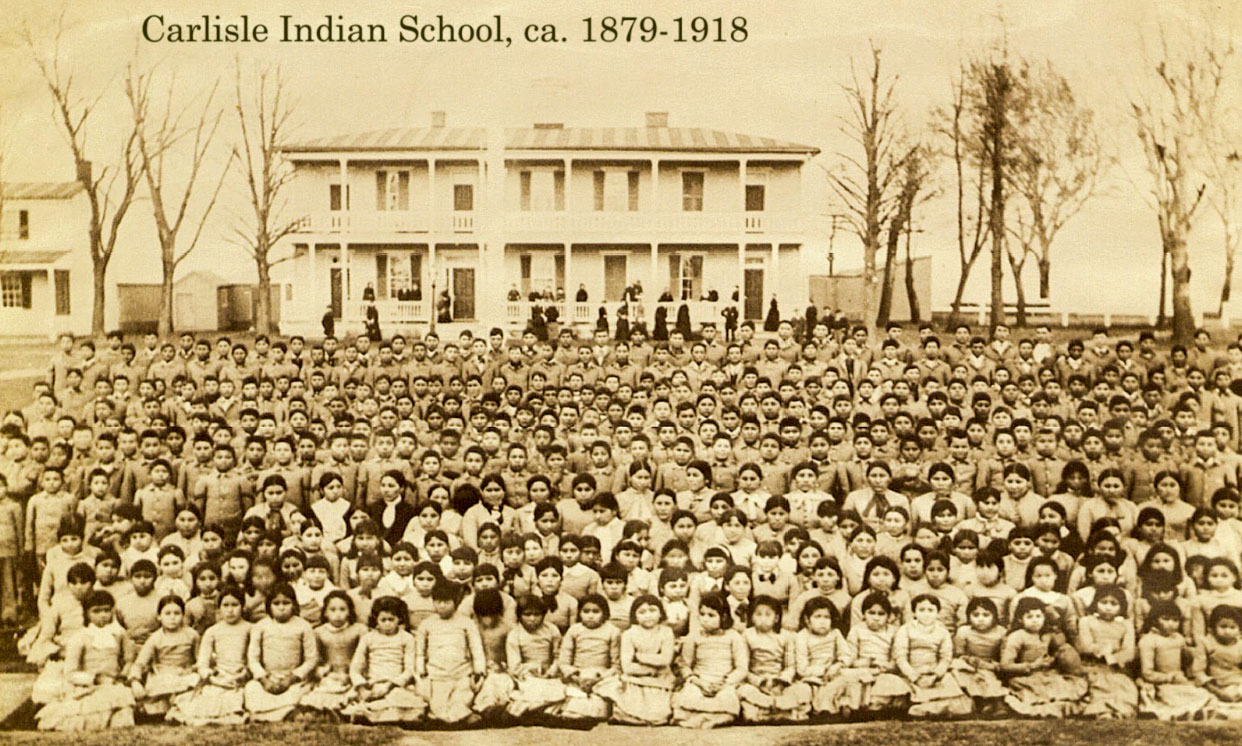
Lakota LawAccording to the Federal Indian Boarding School Initiative Investigative Report, the Carlisle Indian Industrial School in Pennsylvania was just one of 408 institutions designed to “kill the Indian and save the man” run or supported by the United States between 1819 and 1969.

If you can set aside the time and are willing to sit with difficult material, I encourage you to read the entire 105-page Federal Indian Boarding School Initiative Investigative Report. It pulls no punches in its descriptions of the horrifying conditions the children faced in these institutions — even the “hunting” of them if they dared to run away back to their family homes.

The schools were, of course, there to help accomplish what the report describes as a twin policy of “Indian territorial dispossession and Indian assimilation, including through education.” Here’s how the U.S. Senate put it, as quoted in the report: “Beginning with President Washington, the stated policy of the Federal Government was to replace the Indian’s culture with our own. This was considered ‘advisable’ as the cheapest and safest way of subduing the Indians, of providing a safe habitat for the country’s white inhabitants, of helping the whites acquire desirable land, and of changing the Indian’s economy so that he would be content with less land. Education was a weapon by which these goals were to be accomplished.”

The report also states that at least 500 children are known to have died in these halls of “education,” a count that will no doubt rise significantly with further research. The investigation has “identified marked or unmarked burial sites at approximately 53” of the 408 schools across the Federal Indian boarding school system. The specific locations have not been released.

It’s important to remember that this report focuses only on federal Indian boarding schools. But there were many more of these institutions — where children were forced to perform manual labor, perform military drills, speak only English, undergo corporal punishment, and discipline younger students. We are still only scratching the surface of how widespread the government’s attempt was to wipe out our Native cultures.

Given the scope of the violations, and the lasting generational trauma inflicted on our communities, it’s critical that we find a path that helps us move forward in a good way. Right now, to help begin that process, Congress is considering passing truth and healing legislation. Your solidarity can make a difference, so if you have not already done so, I ask you to email your reps, tell them to pass the bills before both the Senate and the House, and share this action with your loved ones. 

Wopila tanka — thank you, always, for being in our corner!
DeCora Hawk
Field Organizer
The Lakota People’s Law Project
Indian Child Welfare Act (ICWA)

Lakota Law

Greetings! If you’ve been with us for some time, you already know I helped found this organization to make sure our Lakota children thrive. Since 2004, we have never stopped working to keep Native kids in Native care, where they can learn our cultural heritage from their elders and kinship circles. 

At our Standing Rock kinship care home, we provide at-risk children a safe space to learn and grow. Here at the Cheyenne River Nation, I’m leading a community-wide effort to create a tribally-run Child Welfare Department. And nationally, our legal team is preparing an amicus brief to protect the Indian Child Welfare Act (ICWA) in the Supreme Court. All of these things will create a brighter future for our young ones — and we couldn’t do any of it without you. So today, I ask you to fund this important mission and empower us to continue tackling this issue at levels ranging from a single child to the highest court in the land.

Lakota Law

Allow me to share a little more with you about these efforts. First, as we near the deadline to submit our ICWA amicus brief to the Supreme Court, our legal team has been interfacing with other organizations who are also writing briefs for the Brackeen v. Haaland case. By coordinating, we’ll ensure all important arguments are made in the best possible way, and our participation is key because we’re writing in conjunction with former S.D. Sen. James Abouresk, the primary author of the original bill. Our brief will be complete soon, and our public relations team is planning some novel methods to spread the word and put pressure on people in D.C. Powerful lawyers aligned with Big Oil have attacked the constitutionality of ICWA with all they have, and this means the stakes couldn’t be higher for Native kids and tribal sovereignty.
 
Meanwhile, my own organizing focuses right here in my community at Cheyenne River. As a tangible contribution to defend the spirit of ICWA, our team is moving forward to create a tribal child welfare department. Last week, we hosted more than a dozen tribal members at an official hearing where family members testified about losing children to the system in South Dakota. With no tribally-administered Child Protective Services program on our rez, foster care and adoption is administered by the state, which has an abysmal track record of abiding by ICWA. Right now, 90 percent of Native children taken from their families in South Dakota still end up in non-Native foster care. That’s completely unacceptable, and it’s why we’re working directly with tribal officials to establish an entity that will keep them safe with those who love them.
 
Finally, some great news from our kinship care home at Standing Rock. It now has a name — Chantewašte House (chon-tay-wash-tay, meaning to be happy, content, cheerful, or joyful) — and it is currently sheltering three children. We had a 1-year-old stay for a while earlier this year, and our foster parent, Vanessa Defender, continues to do wonderful work providing a safe haven for the little ones.

Please stay tuned for more updates on all of the above. Once again, I thank you for being there with us through this journey. It’s incredible stuff we’re accomplishing. Together we’re aiding the renewal of our next generation and those who will follow.

Wopila tanka — my gratitude for all you do!
Madonna Thunder Hawk
Cheyenne River Organizer
The Lakota People’s Law Project
 

P.S. Please give what you can today. You’ll make sure we can continue providing housing and care, critical support services, and legal expertise to make a tremendous difference in the lives of our Lakota children in the months and years to come.

#4 of The Water War Series

Lakota Law

Today, we give you the fourth video from our “Water Wars” series, co-produced with Standing Rock, the Great Plains Water Alliance, and the Oceti Sakowin, highlighting why we resist the Dakota Access pipeline (DAPL). When the oil company forced DAPL through our homelands, it claimed that we, the Native People on the frontlines, had been consulted. But that term has come to mean less than nothing to us. What’s required under international law and what should be standard operating procedure with projects like DAPL is something much more substantial than “consultation” — and that’s our Free, Prior, and Informed Consent.

Watch: “Consultation” isn’t an adequate standard. We never gave our consent for DAPL to threaten our water and homelands.

No matter what they think over at the oil company headquarters, this isn’t the wild wild west anymore. There are rules. This pipeline is operating illegally, without a federal permit. Here in the modern era, I think most of us will also agree that no means no, and gaining consent from those affected before taking action is critical. The concept of Free, Prior, and Informed Consent (or FPIC) is, in fact, codified in the United Nations Declaration on the Rights of Indigenous Peoples. And Under President Obama, the United States promised to recognize the right we hold as the Nation’s first inhabitants to have a definitive say in what happens to our homelands. 

“Consultation” is a sham. Sending us emails notifying us that a pipeline is about to be drilled under our sole source of fresh drinking water is inadequate, and expecting us to stand aside and let that happen is just plain foolish. I’m grateful that, as our partner in this movement, you’re resisting with us. Please continue to stand with the Oceti Sakowin, and together, let’s defeat DAPL once and for all.

Wopila tanka — Thank you for supporting Indigenous justice!
Chase Iron Eyes
Co-Director and Lead Counsel
The Lakota People’s Law Project

A Win for Voting Rights

Lakota Law

Today I write to share some really wonderful news with you. In a huge win for voting rights and Native justice, on May 26, a federal judge in South Dakota ruled in Lakota Law’s favor that the state has repeatedly violated the National Voter Registration Act (NVRA). This judgment is a giant step forward in the battle to make sure Native voices are properly heard at the ballot box — especially in a state where we make up a whopping nine percent of the total population!

https://ecp.yusercontent.com/mail?url=https%3A%2F%2Fprod.cdn.everyaction.com%2Fimages%2Fvan%2FEA%2FEA001%2F1%2F58070%2Fimages%2FLP2206-VOT-SDLJ.jpg&t=1654968716&ymreqid=a2a5bf58-c670-6e9d-2f2c-5a003701d900&sig=l9dwfh8XxQ1bu2fZelpXDg–~D

With this judgment, we expect to hear a lot less of this from Native voters in South Dakota. Photo credit: Daniel Logo from Flickr Creative Commons.

If you’ve been following our work for some time, you may remember that Lakota Law joined the suit last year as a plaintiff alongside our friend, Standing Rock Sioux tribal member Hoksila White Mountain. Together with the Oglala and Rosebud Sioux Tribes and Rosebud Sioux tribal member Kimberly Dillon, we sued South Dakota Secretary of State Steve Barnett and a trio of agency heads after an investigation uncovered the state’s pattern of noncompliance with the NVRA. Of course, this lack of compliance has had an outsized effect on Indigenous communities.

The court agreed with our group’s contention that, too often, potential South Dakota voters — especially Natives — encountered systemic problems when trying to register to vote at state-run public assistance offices and the Department of Transportation. The state has effectively disenfranchised us by failing to adequately provide legally required training, forms, and services.

We thank our partners from the Native American Rights Fund and Demos for their dedication and excellence in litigating this case. It exemplifies just how much we can accomplish when we work together to create positive change, and it will set a precedent that other tribal governments, Indigenous voters, and voters of color can use to defend the guarantees of the National Voter Registration Act long into the future.

Wopila tanka — thank you for supporting our mission for justice!
DeCora Hawk
Field Organizer
Lakota People’s Law Project

Prayer Permits Needed?

Lakota Law

For time immemorial, we have lived along and revered our sacred relative, the Mni Sose, the Missouri River. These days, as you know, the Dakota Access pipeline (DAPL) crosses under the Missouri — just upstream from the Standing Rock Nation — without a federal permit. And yet, unlike the oil company, we are required to have a permit just to pray in our traditional sweat ceremonies in certain, sacred spots along the river’s banks.

This bit of disturbing cognitive dissonance is the subject of our third video in the “Water Wars” series we’re producing in partnership with Standing Rock and other tribes of the Oceti Sakowin. I hope you’ll take a few minutes to watch and share Dakota Water Wars, Chapter 3: Money Against a Prayer.

Watch: Tribal leaders discuss the sheer preposterousness of DAPL crossing under our sacred river without a permit, while we’re required to get a permit to pray in some areas along its banks.

Can we all agree that when Standing Rock’s tribal water resources administrator, Doug Crow Ghost, wants to pray at the river, it should be automatically allowed? Doug cares as much as anyone about our water, and he deeply respects our natural surroundings. In contrast, the oil company, Energy Transfer Partners, tries every means at its disposal to avoid environmental oversight. The colonizing governments occupying this land seem to be more comfortable with the potential of oil spills than prayer on sacred land.

The historical facts back all of this up. It wasn’t until 1978 that the American Indian Religious Freedom Act was passed, permitting Native Peoples to engage in acts such as burning sage or sweat ceremony. Meanwhile, DAPL continues to operate without a valid Environmental Impact Statement (EIS), despite a court ruling that this violates the National Environmental Policy Act. Still, we remain hopeful that we can win this fight in the end. 

Earlier this year, a majority conservative Supreme Court rejected the oil company’s latest attempt to avoid environmental oversight, and now we await the (much delayed) release of the EIS, which was overseen by an oil-friendly firm hired by the U.S. Army Corps of Engineers. Naturally, we expect the statement to be deeply flawed when we finally see it. I hope you’ll be ready to join with Lakota Law, Standing Rock, and the united tribes of the Oceti Sakowin to, once again, stand up to Big Oil and say no to the Dakota Access pipeline when the EIS is finally released. We’ll keep you posted!

Wopila tanka — thank you, always, for your friendship and solidarity.
Chase Iron Eyes
Co-Director and Lead Counsel
The Lakota People’s Law Project

Archive: DAPL

*Note: scroll back through this blog for events that happened from 2016 and historic background regarding pipelines in North Dakota.

Lakota Law

I write today about an exciting project our team has taken on: the creation of an unparalleled online archive of DAPL-related media such as this that will make the water protector movement accessible to students, journalists, and activists all over the world. When we’re finished, anyone will be able to dig into an enormous amount of raw source material about the historic events that transpired at Standing Rock several years ago.

In coordination with various academic partners, we’re well down the road to building the infrastructure needed to launch this engine. We’re also conducting outreach to tribal community colleges to build more partnerships. The human family — for time immemorial — needs to know what happened. We’re doing our part to make that happen.

Water protectors gather on the shores of the Missouri River in 2016.

As many of you know, back in 2017, my colleague Chase Iron Eyes — an attorney and a former candidate for Congress from North Dakota — faced the potential of 6 years in prison for posting on Facebook. Chase used social media to help organize the last effective protest of the NoDAPL effort, at a place called “Last Child’s Camp.” For this, North Dakota tried to put him in prison and strip his law license. But they failed, in part because our lawyer team defended him vigorously in court.

Meanwhile, in the process of defending Chase, our attorneys gathered an enormous amount of media — everything from videos to documents, which, taken together, tell the remarkable story of a tribal nation defending itself against the world’s most powerful industry: Big Extraction.
 
The only way that history ever reflects the view of underdogs like Standing Rock is when people like you — like all of us — work together to document events from the perspective of those normally ignored. Our online DAPL archive will tell the story of the many water protectors who put their bodies on the line to protect air, water, and the sovereignty of tribal nations. Mni Wiconi (“water is life”)!
 
Wopila tanka
— thank you for standing with us as we move forward on many fronts! 
DeCora Hawk
Field Organizer
The Lakota People’s Law Project
Lakota People's Law Project

Lakota People’s Law Project
547 South 7th Street #149
Bismarck, ND 58504-5859