When you heard from me last week, Standing Rock was about to host tribal representatives and the Assistant Secretary of the Army Civil Works (Michael Connor) for a meeting about the Dakota Access pipeline (DAPL). Today, I’m happy to report that things went about as well as could be expected. I attended the meeting in my capacity as an advisor to Standing Rock Chairwoman Janet Alkire, and I can report that Connor paid close attention as leaders from nine nations of the Oceti Sakowin expressed a unity of purpose in our fight to end DAPL once and for all.
Yankton Sioux Tribal Councilman Kip Spotted Eagle addresses the Army, flanked (left to right) by Spirit Lake Chairman Doug Yankton, Cheyenne River Chairman Harold Frazier, and Standing Rock Chairwoman Janet Alkire.
As you know, this toxic pipeline, which crosses the Mni Sose — the Missouri River — on Standing Rock’s doorstep, is an existential threat to our homelands and our water. I almost went to prison for peacefully protesting against it in 2017. As Connor sits atop the Army Corps of Engineers — tasked by the courts with creating DAPL’s Environmental Impact Statement — this meeting was critical. Connor listened for many hours, eventually postponing a subsequent meeting with North Dakota Governor Doug Burgum so all our people could speak.
The fact that Chairwoman Alkire was joined by representatives from the Oglala, Cheyenne River, Flandreau, Rosebud, Crow Creek, Yankton, Lower Brule, and Spirit Lake Sioux Nations was an important show of tribal solidarity. And while getting federal officials to take action on our behalf will be an uphill climb at a time when gas prices are rising on account of the Ukraine invasion, this was an important step.
Left: Standing Rock Chairwoman Janet Alkire with Michael Connor. Center: The color guard presents the flags. Right: Cheyenne River Chairman Harold Frazier, Connor, and Spirit Lake Chairman Doug Yankton.
Renewable energy is now cheaper than fossil fuel throughout the nation, so regardless of what’s happening to oil markets, there is no excuse for failing to go green immediately. And tribal communities should never be forced to bear the risk of noxious infrastructure.
This resistance united us in 2016, and it’s still uniting us today. Now we are being heard by the U.S. Army instead of being shot with water cannons and rubber bullets by TigerSwan, a contracted private army. The fight goes on in a new way — but we still have a long way to go before we can say the Black Snake is defeated. So please stay with us. We’re in this together, and your spirit is always valued in this struggle.
Wopila tanka — thank you for your solidarity! Chase Iron Eyes Co-Director and Lead Counsel The Lakota People’s Law Project
The moment has come to rally together for our children. The United States Supreme Court has announced that, this autumn, it will hear the case of Brackeen v. Haaland — which could redefine the constitutionality of the Indian Child Welfare Act (ICWA) and threaten tribal sovereignty. Because legal arguments will soon be due, we’re already in high gear. Our attorneys are now preparing an amicus brief for the justices, and it’s up to all of us to raise awareness about the importance of protecting this law and keeping Native kids in Native care. I ask you today, with all my heart, please stand with us in this fight.
The Supreme Court could strike down the Indian Child Welfare Act this year, which could also jeopardize Native sovereignty as we know it. We must not 👏 let 👏 that 👏 happen! 👏
Protecting our youth and keeping them in Native care — or kinship care, as we call it — is a huge deal for all of us in Indian Country, especially with the ongoing discovery of mass graves at boarding schools. In fact, safeguarding our children is what motivated me to co-found the Lakota People’s Law Project.
Over the years, with help from friends like you and conscientious reporters like Laura Sullivan at NPR (who won a Peabody Award for her coverage of South Dakota’s foster care crisis), we have made massive inroads. Today, Lakota Law has a Native-run kinship care home at Standing Rock, and I’m helping to oversee the creation of similar facilities and lobby for a tribally-run Child Welfare Department here at the Cheyenne River Nation.
Importantly, too, this Supreme Court case isn’t just about our young ones. As we detailed in our blog a few months back (if you haven’t yet, please read that!), it’s also potentially an attack on tribal mineral rights and, ultimately, our sovereignty. It’s no coincidence that the white family who initiated the case in Texas after adopting Native children is backed, pro bono, by Big Oil lawyers — including a hideous firm called Gibson-Dunn — who normally have no interest in these matters.
If ICWA falls, it could become the first domino in a series of Native rights rollbacks. The colonists want our children because our youth are our future. The chair of our board of advisors, Senator James Abourezk, was the principal author of ICWA back in the late 1970s, and our president and chief counsel, Danny Sheehan, consulted with the Department of Justice to draft the enforcement guidelines that are the subject of this Supreme Court case.
That’s why we’ll work night and day to stop this legal attack. In the coming weeks, we’ll help the Supreme Court justices understand the legal arguments behind this critical law. We’ll also continue to ensure the case gets maximum media coverage. This must be a full team effort. So, stay with us over the year to come, and please do everything you can to help us amplify this issue.
Wopila tanka — thank you for helping us protect our children and our culture. Madonna Thunder Hawk Cheyenne River Organizer The Lakota People’s Law Project
P.S. With ICWA headed to the Supreme Court, it’s an all-hands-on-deck moment. Please donate today to ensure our skilled legal and media teams can protect Native children, kinship care, and sovereignty. The forces of modern colonialism, capitalism, and racism are aligned against us. Let’s unite, stand strong, and show them what we’re made of.
Lakota People’s Law Project 547 South 7th Street #149 Bismarck, ND 58504-5859
I hope you’re safe and remaining hopeful despite the horrific world events taking place. The Russian invasion of Ukraine highlights once again how important it is for people everywhere to remain sovereign and free of tyranny. My heart goes out to all who are now suffering through another needless, bloody war.
Perhaps it will lend you some comfort to know that there is good news this week from Standing Rock. This Wednesday, tribal leaders from across the Great Sioux Nation will have an opportunity to sit down with the U.S. Army Civil Works and relay our concerns about the Dakota Access pipeline (DAPL). After years of our #NoDAPL resistance falling on deaf ears — as highlighted by Standing Rock Chairwoman Janet Alkire in our new video, co-produced with the tribe — the Army finally reached out to Standing Rock. This is a potential turning point, though we are keeping our expectations modest.
Watch: In our new video, Standing Rock Sioux Tribe Chairwoman Janet Alkire discusses the importance of tribal input and gaining our consent for projects like DAPL.
We originally expected the Army Corps of Engineers to release its DAPL Environmental Impact Statement (EIS) earlier this month. But that’s now on hold, pending our coming conversation about this dangerous pipeline. This opportunity to have the appropriate government officials really listen to our concerns is long overdue.
Of course, given the long history of broken promises by the U.S. government to Native People, I take everything with a grain of salt and won’t celebrate prematurely. We must continue to stand ready to protest the EIS, should it eventually be released in any form that doesn’t fully address our concerns.
Right now, I’m happy to say we have some additional leverage. The meeting with Civil Works will happen against the backdrop of a huge win for Standing Rock in the Supreme Court this past week. Justices shut down DAPL’s attempt to make an end-run around the environmental oversight process.
Solidarity remains paramount if we are to achieve our goal of ending DAPL once and for all. As people from many nations gathered for our original NoDAPL stand in 2016 and ‘17, Wednesday’s meeting will bring together leaders from throughout the Oceti Sakowin — our Great Sioux Nation. We will, of course, report on the results of that conversation to you. So, please continue to stay with us. We must remain vigilant, united, and ready to act.
Wopila tanka — my deep gratitude to you for your friendship! Chase Iron Eyes Co-Director and Lead Counsel The Lakota People’s Law Project
Lakota People’s Law Project 547 South 7th Street #149 Bismarck, ND 58504-5859
The Lakota People’s Law Project is part of the Romero Institute, a nonprofit 501(c)(3) law and policy center. All donations are tax-deductible.
My greetings to you from the Standing Rock Nation. Today, I invite you to experience something wonderful: Next week, Big Sky Documentary Film Festival is hosting the online world premiere of “OYATE” — a brand new feature documentary film produced by Films with a Purpose and Irrelevant Media, in association with the Lakota People’s Law Project. Big Sky has graciously also made the movie available for viewing online at the same time, and you can purchase your ticket to watch today.
Look, it’s me and Phyllis Young in “OYATE!” Please click here to watch the trailer for this heartfelt and skillfully done documentary, and purchase your tickets for the premiere on the same page.
We wanted to make sure you have the opportunity to watch this special premiere with us! Please note that the film will be available through Big Sky for a limited time. I urge you to purchase your ticket right now, then mark your calendar to remind yourself the streaming window opens on Feb. 25 at 9 a.m. PST. After that, you’ll have about three days to start watching and another 24 hours to finish.
Now that you’ve got all those important details, let me tell you a little more about our involvement and what you’ll see. In the wake of the protests at Standing Rock in 2016 and ‘17, our Lakota Law team worked closely with producers Brandon Jackson, Emil Benjamin, Sandra Evers-Manly, and Jennifer Martel of the Cheyenne River and Standing Rock Sioux tribes, to tell this powerful story of resistance. You’ll spend time with Phyllis Young, me and my daughter Tokata, U.S. Secretary of the Interior Deb Haaland of the Laguna Pueblo People, and many more powerful Native voices.
Here’s a promotional still of Secretary Haaland and other sisters in the fight for Indigenous justice. This film is really beautifully shot.
As you know, our #NoDAPL struggle at Standing Rock became an inflection point for human rights and environmental justice, a rallying cry for Indigenous people everywhere to take a stand against centuries of land theft, imposed poverty, and cultural erasure. “OYATE” successfully communicates our thoughts, as Indigenous activists, organizers, and politicians, on that complicated history.
Lakota Law aided the filmmakers by providing exclusive interviews, archival footage, and perspective. The directors did a fantastic job of using a blend of storytelling tools to weave all elements harmoniously and to fully immerse you in our worldviews. The end result is a thing of beauty, ambitious in scope and, at the same time, personal and intimate. I think you’ll very much enjoy watching, and I hope you’ll find it illuminating. You may gain new understanding of our struggles for sovereignty and justice — and you’ll even meet some rez dogs! So, please watch the trailer, and then join us for this exciting premiere. I can’t wait to hear your feedback.
Wopila tanka — thank you, and happy watching. Chase Iron Eyes Co-Director & Lead Counsel The Lakota People’s Law Project
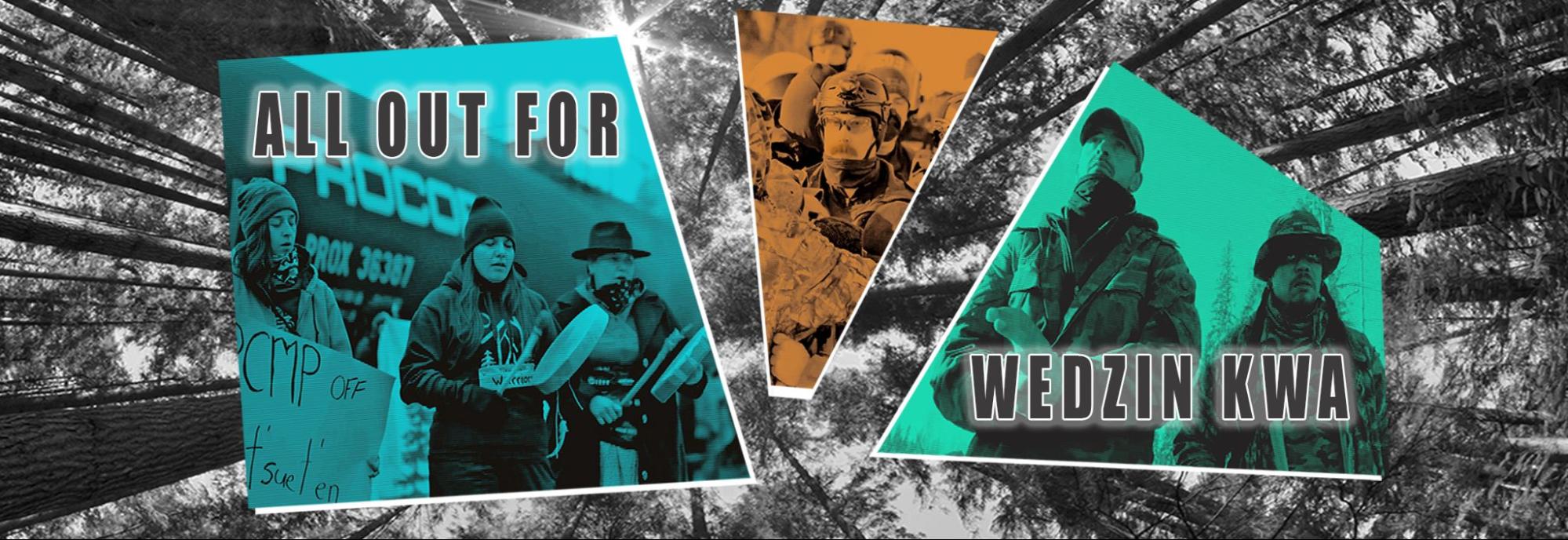
Toward the end of last year, I told you about Gidimt’en Checkpoint — which has rapidly become something akin to a Canadian Standing Rock. Right now, the Wet’suwet’en People are standing strong to protect their yintah, or homelands, and the planet we all share from the Coastal GasLink pipeline. But, just as happened with our own movement against the Dakota Access pipeline in 2016-’17, the fossil fuel industry — backed by big banks, the colonial government, and militarized law enforcement — is ignoring their sovereign rights and violently attempting to stamp out Indigenous-led resistance.
After setting up their Gidimt’en Checkpoint blockade, the Wet’suwet’en People have been subject to violent raids by the Royal Canadian Mounted Police, including the use of sniper rifles and police dogs. 30 people have been arrested, including two elders. In one incident, a chainsaw and axes were used to break into homes and arrest movement leaders, journalists, and legal observers. One CBC TV journalist was jailed for three days, and the home he was removed from was subsequently burned to the ground.
I’ve also authored a blog detailing some of the history of the Wet’suwet’en struggle for justice. Notably, this pipeline crosses unceded lands under the care of Wet’suwet’en hereditary chiefs for time immemorial. Their free and prior and informed consent should be the first requirement before any project threatening their sacred headwaters, Wedzin Kwa, can move forward. Their consent has not been given, and their title to the land has been upheld by Canada’s Supreme Court.
The violence against Wet’suwet’en land protectors must end and their yintah protected. It’s long past time to stop treating Indigenous People protecting their homelands and Unci Maka — our Grandmother Earth — like terrorists and start listening to our calls for environmental justice.
Wopila tanka — thank you for standing strong with the Wet’suwet’en! Chase Iron Eyes Co-Director and Lead Counsel The Lakota People’s Law Project
Two days ago, we lost a good man. I write to you today from the road, as I make my way northeast to celebrate the life of Clyde Bellecourt. I knew Clyde for decades. An Anishinaabe activist from the White Earth Nation, he was a co-founder of the American Indian Movement (AIM) in Minneapolis and, for years, focused on ending police brutality against Native People. He remained active throughout his long life, eventually becoming a strong advocate for eliminating offensive sports mascots.
Clyde Bellecourt leaves a legacy of activism and progress for our People. His was a life well lived.
I met Clyde in the late 1960s when AIM was young. My sister and I went to the twin cities and met up with Dennis Banks, who invited us to a protest action against the movie “Little Big Man” — and its Hollywood-style depiction of Native people and our Sun Dance.
We were all a bunch of young people fired up to get something done. Afterwards, we got invited to Red Power gatherings, which included some of the first AIM meetings. At that time, just a couple dozen of us attended. I met Clyde’s wife, Peggy, and the local women of the movement. Then I met Clyde. That’s where it all started.
AIM’s actions moved into South Dakota as a result of Dennis Banks and Clyde recruiting my first cousin, Russell Means, to be part of AIM in 1968. When Russ got involved, we expanded. Our first action was at Mount Rushmore. From a starting place of working on police brutality issues, we were able to help grow the movement until we had national awareness.
In our neighborhood and in our corner of the movement, our direction came from the reservations, the people. Unfortunately, in Minnesota, the reservations didn’t stand with AIM or back their actions. But I’m happy to say that trend changed when AIM came to South Dakota, where we found support on tribal nations such as Pine Ridge. For us as Lakotas and Dakotas, our focus was on our territory, and our actions became a family thing.
This movement has always been larger than any one individual, but there is no doubt that Clyde was a leader of his time. No matter the issues the organization confronted — in Minnesota and even internationally — he was involved. I had respect for him, and it took a lot of organizing and a lot of guts to do what he and others did in those early days. And, as the years went by, he showed up in solidarity. That set a strong example for our younger generations.
Clyde lived a long and good life. I’m in my 80s now, and for those of us who were there during the original AIM era, our ranks are getting thin. But I don’t look on death with sadness, not when we have lived this long and well. This is part of the cycle. It’s going to happen to all of us, and we should be ready. We are individuals, yes, but what we do together is a group effort. Clyde was an icon of our time for our People, and for that, I am grateful. Now it’s up to you and me to carry on his legacy of justice with whatever time we have left.
Wopila — Thank you for standing with our People, always. Madonna Thunder Hawk Cheyenne River Organizer The Lakota People’s Law Project
I’m writing to update you about the Indigenous-led fight against Line 3 here in Minnesota. First, thank you for the solidarity you’ve shown my community, Camp Migizi, as well as our ally, Lakota People’s Law Project. It has been a hard but rewarding year for us. Sadly, despite our best efforts, construction of Line 3 is now virtually complete — but we’re still resisting best we can. As COP26 unfolds in Scotland, we’re grateful we’ve been able to raise consciousness throughout the world about the need to fight hard against fossil fuel infrastructure.
Please watch and share this moving video that aired several days ago on ABC Nightline — you’ll hear from me and other Ojibwe women leading this struggle.
Watch: Nightline traveled to MN to interview me and others about the movement
As many of you know, Line 3 is a thousand-mile pipeline owned by Enbridge, a Canadian company. It stretches from Alberta to the U.S. Midwest and will carry some of the world’s dirtiest, most climate-warming fuel. Biden could shut it down, but he hasn’t. The 1 million petitions our coalition has submitted to the White House haven’t fallen on deaf ears: we’ve heard that some of Biden’s staff are lobbying the President to act, but those further up the food chain are balking. Over the next 3 years we must pressure the President to fulfill his promise to act aggressively against climate change.
Meanwhile, my team at Camp Migizi went to D.C. on Indigenous People’s Day last month to protest. We sat on the fence of the White House, and some of us joined the first take-over of the Bureau of Indian Affairs building since the American Indian Movement first did that in the 70s. 500 arrests were made. Overall, more than one thousand of us have been taken into custody as part of this struggle. And we’ve learned in recent days that Enbridge paid $4.25 million to local law enforcement to fight us. This collusion between private industry and state police reminds me of Standing Rock, where my friend Chase Iron Eyes faced prosecution in 2017.
At our camp near the Fon Du Lac reservation in Minnesota we’re erecting structures for prayer, as we shift from being only a protest space to also being a sacred ceremony grounds in the coming months. For one, we’ll invest more time searching for missing and murdered Indigenous persons. Our movement has many fronts, and we cannot forgo any of them. The work goes on. Please continue to stand with us!
Miigwech – my deep appreciation for your solidarity! Taysha Martineau Camp Migizi via Lakota Law
Many thanks to all of you who, over the past months, read our blog about the discoveries of mass graves of Indigenous children at Indian boarding school campuses. Thanks also to you who signed our petition to the president and Congress to form a Truth and Healing Commission. Today, I write to you with some good news and a follow-up action to take!
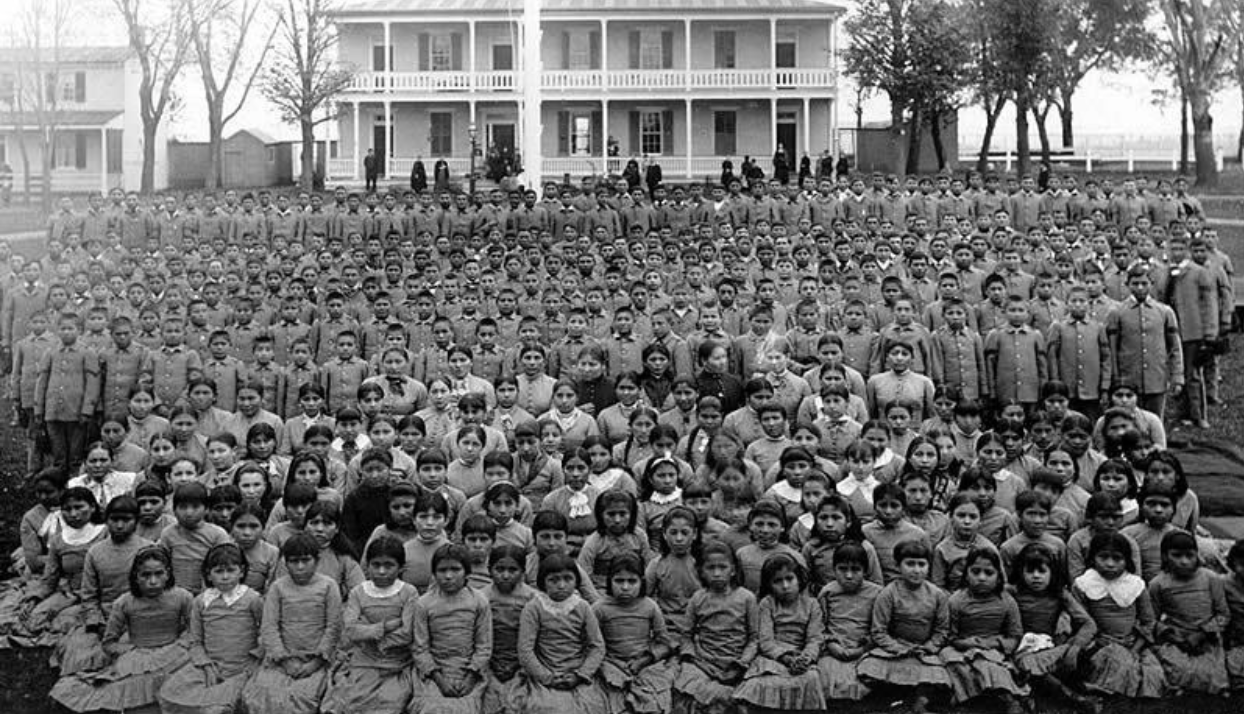
Stolen babies: Generations of Native children were forced to attend boarding schools like the Carlisle Indian Industrial School, which stripped them of their cultures and identities — and, too often, their lives.
I shared with you a couple months ago about my own familial experiences with boarding schools. I told you about the horrific practices that endangered and took the lives of Native children across Turtle Island. Now, against the backdrop of these mass grave discoveries, we must do all we can to ensure lawmakers take genocide seriously. It’s time to begin an official reckoning with America’s true history and a process that can aid in the healing of our tribal communities.
Please show your solidarity with me, my ancestors, and the generations to come. Your advocacy matters. Together, we can begin to make things better.
Wopila tanka — thank you for standing up for truth and healing! Madonna Thunder Hawk Cheyenne River Organizer The Lakota People’s Law Project
Today — Indigenous Peoples Day (IPD) — marks the highlight of the Indigenous year. I hope you will join us as we gather to celebrate, heal, and re-Indigenize. This long weekend represents a reprieve from trauma, sadness, and grief as we travel with good hearts to see close family and distant relatives, celebrate together, and share our cultures.
As you likely know, many places do not yet celebrate with us. They’re still celebrating Columbus Day, perpetuating the myth that Christopher Columbus discovered so-called America. Columbus arrived on October 12, 1492 on Taino homelands. This first voyage was a reconnaissance mission wherein he later established La Navidad in present-day Haiti — America’s first colony. The following fall, he returned with an invasion force of 17 ships and 1,500 soldiers. He found La Navidad destroyed by Taino People, who had retaliated against rapes and murders carried out by the Spaniards.
European weapons (like cannons and muskets), armor, horses, and dogs soon overwhelmed the Indigenous warriors, who were armed only with clubs and spears. Celebrating Columbus, therefore, condones genocide and colonization. Many think of these issues as only existing in the past. But these systems, set in motion hundreds of years ago by Columbus and other conquistadors, continue. All Taino homelands, from Puerto Rico to the Bahamas, remain colonized today — many by the United States.
To combat the Columbus-as-hero narrative, we’re working to replace Columbus Day with IPD everywhere. Our hope is that more people like you will come together with us, as Indigenous People focus throughout the long weekend on empowerment through solidarity and sharing pathways to action.
Watch Tara Houska’s Ted Talk. As our skilled Anishinaabe relative points out, many of these struggles are deeply rooted in trauma. But today is about sharing successes within our sustained resistance to colonization. We see ourselves in the faces of our relatives while they reflect on Indigenous sovereignty, land and water rights, education, economic development, language preservation and promotion, and religious freedom.
Our celebrations feature Indigenous poets, musicians, artists, singers, leaders, and performers from across Turtle Island, who offer their gifts. Everyone who attends an event can actively participate in round dancing and be uplifted by traditional prayers. The overwhelming feelings of celebration and open-heartedness are palpable. This is the chance for settlers and non-Natives to catch us in our most generous mindset. As we come together across nations to actively decolonize and re-Indigenize our communities and share our gifts, I hope you will join a celebration in your area.
Wado — thank you for your ongoing solidarity with our Indigenous nations. Sarah Rose Harper Social Media Coordinator The Lakota People’s Law Project
A controversial pipeline project in northern Minnesota is complete and oil is scheduled to start flowing this week.
Enbridge’s Line 3 pipeline project will carry oil as soon as Friday despite months-long protests against it. The Canadian-based company’s president and CEO, Al Monaco, said in a statement that the pipeline “will soon deliver the low-cost and reliable energy that people depend on every day.”
The project was completed despite stiff opposition from tribes, environmentalists and others who argued that the 1,097-mile pipeline — including the 337-mile segment across Minnesota — would violate treaty rights, worsen climate change and risk spills in waters where Native Americans harvest wild rice.
It will carry oil from Alberta’s tar sands, a heavier crude that consumes more energy and generates more carbon dioxide in the refining process than lighter oil.
In a statement, Camp Migizi promised to remain an open camp and to disrupt and stop pipeline work. More than 900 people have been arrested or ticketed at protests along the route since construction began in December.
“We ask that you remember us, as we will still be here, fighting to protect all that is sacred, even if they build line 3,” read the statement.. “Our community that we have built here will still remain, and we ask that you remember that just like all of the Indigenous communities we have come from we are still here, learning, fighting, and healing.”
The main remaining tasks are cleanup and restoration along the route, said Leo Golden, an Enbridge vice president in charge of the project. Some parts have already been restored with crops and native grasses growing on them, he said. But construction mats still need to be removed from wetlands and other cleanup work will continue through next summer.
Golden said officials do not expect to get the final sign-offs from landowners along the route until next summer.
Enbridge said the project was necessary to replace a deteriorating pipeline built in the 1960s, which could carry only half its original volume of oil, and to ensure the reliable delivery of crude to U.S. refineries. Enbridge expects to start running the pipeline at its full capacity of 760,000 barrels per day in mid-October.
Line 3 starts in Alberta, Canada, and clips a corner of North Dakota before crossing Minnesota en route to Enbridge’s terminal in Superior, Wisconsin. The Canadian, North Dakota and Wisconsin segments were finished earlier and the Canadian and Wisconsin legs are already in service.
Water protectors tour an Enbridge Line 3 construction site near Park Rapids, Minnesota, on June 6, 2021. (Photo by Mary Annette Pember/Indian Country Today)
The process of filling the line starts in North Dakota on Friday, Golden said. Enbridge puts the cost at $5.3 billion Canadian dollars for the Canadian section and $4 billion U.S. dollars for the work in the U.S.
Opponents have challenged the pipeline’s permits in court to no avail so far. They’ve also unsuccessfully sought to persuade Biden, who canceled a key permit for the Keystone XL pipeline soon after taking office, to intervene.
A challenge is still pending in federal court to a permit granted by the U.S. Army Corps of Engineers, but that case didn’t block construction. Opponents can still ask the state Supreme Court to review a clean water certification granted by the Minnesota Pollution Control Agency.
Also, a novel “rights of nature” lawsuit is pending in the White Earth Ojibwe tribal court. It names Manoomin, or wild rice, as one of the plaintiffs. The Minnesota Department of Natural Resources has asked a federal appeals court to block the case.






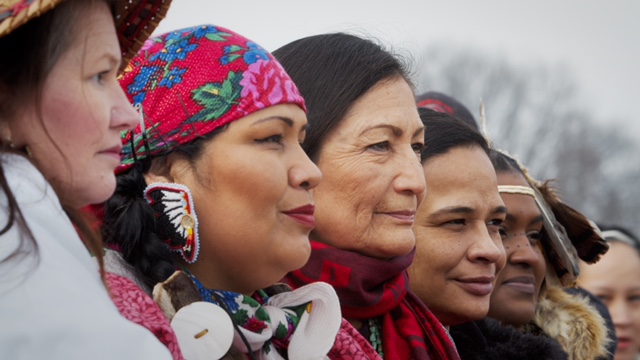 Here’s a promotional still of Secretary Haaland and other sisters in the fight for Indigenous justice. This film is really beautifully shot.









 Water is Life