New Title: The Mahkato Reconciliation and Healing Ride

Lakota Law

From acknowledging the winter solstice to celebrating mainstream society’s holiday season, this time of year has always brought together gatherings of family and friends throughout Turtle Island.  And every December, reminders of our history add to the difficulties faced by many families, and tribes, as some of their people’s most tragic memories all occurred during this month — the assassination of Chief Sitting Bull, Wounded Knee Massacre, and the Dakota 38 Hanging.

The day after Christmas is more widely known as “Boxing Day,” especially outside of Indian Country, but in the last several years there has been growing momentum for mainstream society to acknowledge the day after Christmas as the day when 38 Dakota “Sioux” men were hanged in Mankato, Minnesota in 1862. The hanging, the largest mass execution in United States history, was carried out in front of an estimated 4,000 people in downtown Mankato and remains largely hidden from classrooms and public knowledge.

As the year ends, and millions gather to celebrate and acknowledge the holiday season, some Indigenous communities acknowledge its tragic past through memorial ceremonies aimed at teaching and healing while building community. 

The hangings were approved by former President Abraham Lincoln as a result of conflict between Dakota people and settlers in southwestern Minnesota. Dakota people were promised food and safety in exchange for ceding their lands, but they received neither, leading to attacks on white settlements in August 1862. The resulting widespread war in Minnesota lasted for five weeks, culminating in the hanging of 38 Dakota men in Mankato on Dec. 26, 1862.

Some say the Dakota War officially ended after the hanging, but the U.S. government’s oppression of the Dakota people, as well as other Indigenous groups, did not end with that atrocity. After the mass hanging, Dakota people were exiled and forcibly removed from Minnesota. Many sought refuge in Canada, South Dakota, Nebraska, and other communities willing to take them in. Memorializing such a painful history involves more than riding on horseback through blizzard-like conditions. While it remains a painful and tragic past, many have undertaken healing and positive efforts to repair relations with those in the places where history unfolded, hoping that such history will not repeat itself.

The movement to pay tribute to tragic times past is active healing in Indian Country. While memorials take time and tremendous effort, the initial memorial horse ride has caused great positive ripple. Today there are additional horse rides and a memorial run that begins at Ft. Snelling, the military fort where thousands of Dakota people were imprisoned during the Dakota War, and all convene at Reconciliation Park in Mankato, MN on Dec. 26. Many other Indigenous communities have begun to host memorial rides, runs, or walks, to pay their respects to their past, as well as to the land in hopes we continue to heal beyond times past.

Beginning in 2008, an annual memorial horse ride was organized to begin on the Lower Brule Reservation in central South Dakota and ride for 16 consecutive days, convening in Mankato, MN on Dec. 26. Their ride and ceremonial arrival to memorialize the Dakota 38 continues to this day — now under a new name — Mahkato Reconciliation and Healing Ride

Forever riding forward, while sometimes looking back, is magic we all have to embrace in this work. We’re grateful and gain strength as we join together to honor the pain and sacrifices of the past by celebrating and supporting these ongoing healing movements.

Miigwech — thank you, always, for remembering with us!
Darren Thompson
Director of Media Relations
Lakota People’s Law Project
Sacred Defense Fund

Your support makes jsutice possible - Donate Today

Lakota People’s Law Project
P.O. Box 27
Santa Fe, NM 87504

29th Annual Fort Robinson Outbreak Spiritual Run

Lakota Law

Warm greetings to you from the sacred (and chilly) He Sapa (Black Hills)! I’m here to witness and celebrate many young, Native runners on route from Fort Robinson, Nebraska to Busby, Montana, where — in solidarity with our Northern Cheyenne relatives, and on behalf of Lakota Law, Sacred Defense Fund, and the Standing Rock and Oglala Tribal Nations — I’m bringing you along for this year’s 29th Annual Fort Robinson Outbreak Spiritual Run

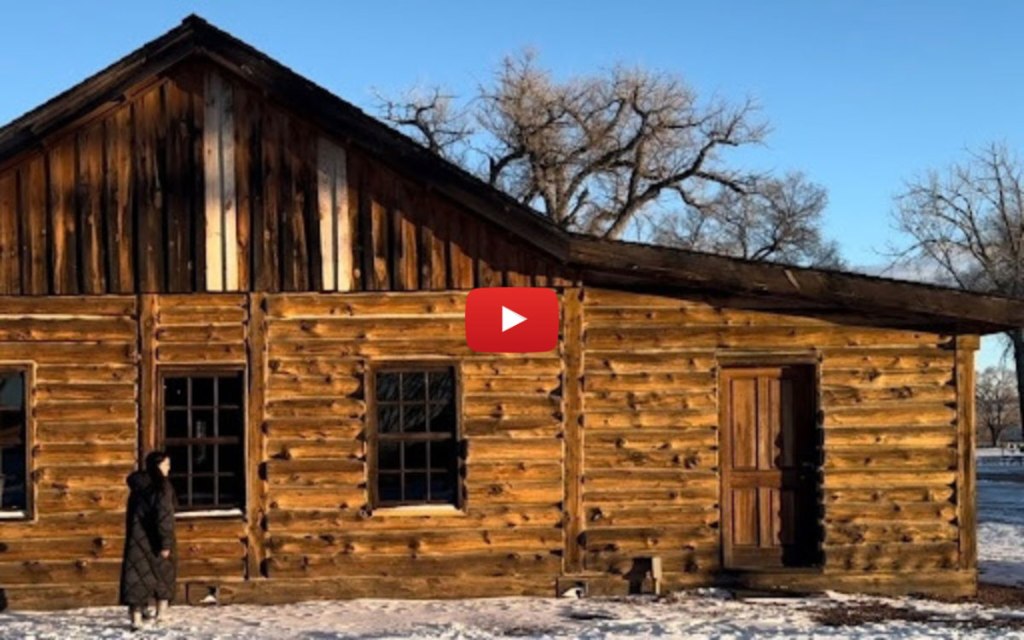
I encourage you to watch my short video introduction to this important and deeply meaningful yearly event. It honors — with a 400-mile run over six days through subzero temperatures and some of the most beautiful, wild, and sacred territory in all of Turtle Island — Northern Cheyenne ancestors who broke free from captivity in Fort Robinson on January 9th, 1879. The run retraces their steps and allows their descendants to complete the journey they were unable to finish to their homelands nearly a century and a half ago.


Watch: Here I am at the Fort Robinson barracks. In my new video, I discuss the history behind this run, which promotes healing through acknowledgment of generational trauma and taking healthful action.

I want to give recognition to the Two Bulls family and Yellow Bird Foundation for hosting this powerful event. The runners — mostly youth from many tribal nations — began with an orientation on Thursday before hitting the trail yesterday from Fort Robinson to Hot Springs, SD. After crossing though the He Sapa into Deadwood today, they’ll have three remaining legs before reaching their final destination in Busby.

Our participation here — and yours, through your support — is important, not least because it raises more awareness (both within our communities and without) of how colonization and imprisonment in “frontier” forts impacted our Northern Cheyenne relatives. In some ways, being present for and supporting this run embodies what our work is all about. It gives us a real opportunity to acknowledge the painful past while alchemizing generational trauma through healthy activity to empower the next generation.

Wopila tanka — my gratitude for your solidarity with our youth and ancestors!
Tokata Iron Eyes
Spokesperson & Organizer
Lakota People’s Law Project
Sacred Defense Fund

P.S. A second reminder: We remain deeply grateful to all of you who give of yourselves to make the ongoing work of Lakota People’s Law Project possible under our new home at Sacred Defense Fund. For those of you who donate through checks, please send them to our new mailing address, listed below, and kindly make out your checks to: Sacred Defense Fund. Thank you so much!

Note our new mailing address (and please make any checks payable to: “Sacred Defense Fund”)

Lakota People’s Law Project
c/o Sacred Defense Fund
PO Box 27
Santa Fe, NM 87504

Lakota Law

Apologies for the incorrect subject on this message a few minutes ago. I hope that won’t detract from this important content.

I wish you a happy holiday season! When most people think of December, what comes to mind might be the holidays we celebrate, gathering with family, and the turning of the page to a new year at month’s end. In Lakota Country, unfortunately, the end of the Gregorian calendar year is also inextricably linked with a pair of troubling anniversaries. In solidarity with us, I hope you’ll make a little room to remember them with me today.

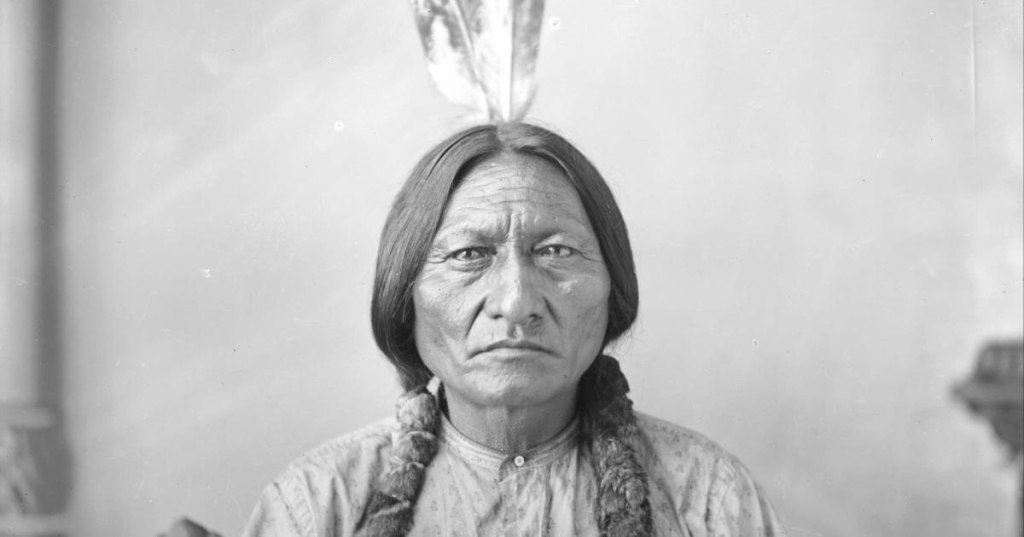
First, Dec. 15 was the 134th anniversary of the assassination of the great Hunkpapa Lakota Chief, Thatanka Iyotake, or Sitting Bull. I, too, am Hunkpapa Lakota, and I’ll say that Sitting Bull is one of our most celebrated ancestors for good reason. To learn more, I urge you to read (or reread) this blog, which I penned last year to give you more about Sitting Bull’s life, the context of his death, and an action you can take and share to rescind Medals of Honor granted to U.S. soldiers responsible for the second anniversary I referenced: the massacre of hundreds of Natives at Wounded Knee just days later, on Dec. 29, 1890. 


Photograph of Sitting Bull by David Francis Barry, circa 1883.

Tied to both of those anniversaries, I’ve been doing research and thinking a lot about the unique, historic nature of policing in Indian Country. In general, cops have never been especially friendly to us — even when they are from our communities. They have always been in direct correspondence with and there to enforce rules made by American governmental officials and corporate institutions that we all face together, even today. In turn, those entities have frequently displayed genocidal intentions and undertaken endeavors, from the Wounded Knee Massacre and the murder of Sitting Bull to railroading pipelines through our sacred lands, meant to degrade or eliminate tribal nations (or, potentially, anyone demonstrating the will to defend American lands and waters).

In our last message to you, my father thanked U.S. Secretary of the Interior Deb Haaland (Pueblo of Laguna) for her service over the past four years. Let it not be lost on anyone the importance of a Native woman occupying that seat, because for many years, her department was (and sometimes still is) a great nemesis to our communities. 

And that brings us back to Sitting Bull. In 1890, the Indian agent James McLaughlin, overseen by the U.S. military and the Secretary of the Interior, ordered him taken into custody. As 43 policemen and volunteers arrived that sad morning at the chief’s house and announced his arrest, a crowd of community members gathered at the commotion and began to protest. 150 Lakota arrived to protect him, and his son then led a group who attempted to free Sitting Bull from police custody. 

Bureau of Indian Affairs police lieutenant Henry Bullhead and police sergeant Charles Shavehead, who bracketed Sitting Bull to prevent his escape, were shot. Mortally wounded, Bullhead then murdered Sitting Bull, shooting him in the ribs. Indian agent Red Tomahawk, who’d been behind Sitting Bull, then assumed command of the police. The ensuing fight resulted in the deaths of six police and eight Lakota protectors. After Thatanka Iyotake’s assassination, his people fled to join Spotted Elk (the brother of Iron Eyes, from whom my family takes its name). Then the band fled toward Red Cloud and the Oglala at the Pine Ridge Agency — and soon thereafter came the massacre at Wounded Knee.

These events live on with us — not just, unfortunately, as histories. As an Oglala who lives on Pine Ridge, I have witnessed police abuse in the modern day. And I have heard direct testimony and firsthand accounts of abuse of power and undue violence by Indian police over the past few decades. One example, and this is something I plan to expand on for you in subsequent messages, was the Reign of Terror on Pine Ridge in the early 1970s, which ultimately laid the foundation for the American Indian Movement’s occupation of Wounded Knee in 1973.

There is much more to say about that, and there’s so much more we can do moving forward. I promise you’ll hear more from me again soon. In the meantime, please hold us close, as you would all your loved ones at this time of year. I’m so grateful to be able to share with you, and I know that, together, we can continue to make progress. We can and we must use the often harsh lessons of the past to understand the present and create a future we can be proud of for all human beings.

Wopila tanka — thank you for your friendship!
Tokata Iron Eyes
Spokesperson & Organizer
Lakota People’s Law Project
Sacred Defense Fund

Truthsgiving

Happy Truthsgiving to you and yours! If that term is new to you, I refer you here, to a “debate” I had with Sean Sherman, known as the Lakota Chef, last year at this time, published in The Nation Magazine. I put “debate” in quotes, because — truthfully — Sean and I agree on many things. For instance, we both talk about how traditional Thanksgiving mythology fails to recognize the steep price paid by our people after colonizers came to our shores, the land that was stolen from us, and the variety of indispensable foods contributed by Indigenous cultures now enjoyed around Thanksgiving tables.

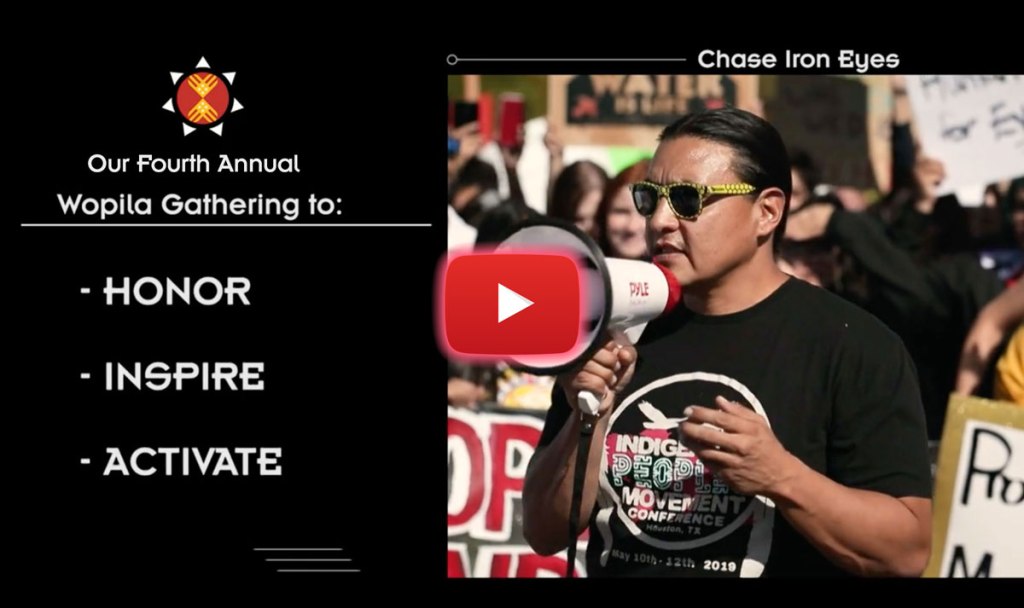
In my section, I expand on those thoughts by suggesting a rebrand of this deeply problematic holiday. Some in my community have called it “Thankstaking,” highlighting the many unwilling sacrifices Indigenous peoples have made over the centuries. Personally, I prefer Truthsgiving — which, while keeping with the traditional holiday spirit of sharing and gratitude, also calls for a necessary truthtelling component. And as a reminder to you: I invite you to stay in a space of gratitude and openness next week, when you’re invited to RSVP and join us online for our fourth annual Wopila Gathering, beginning at 4 p.m. PST on Giving Tuesday, Dec. 3.

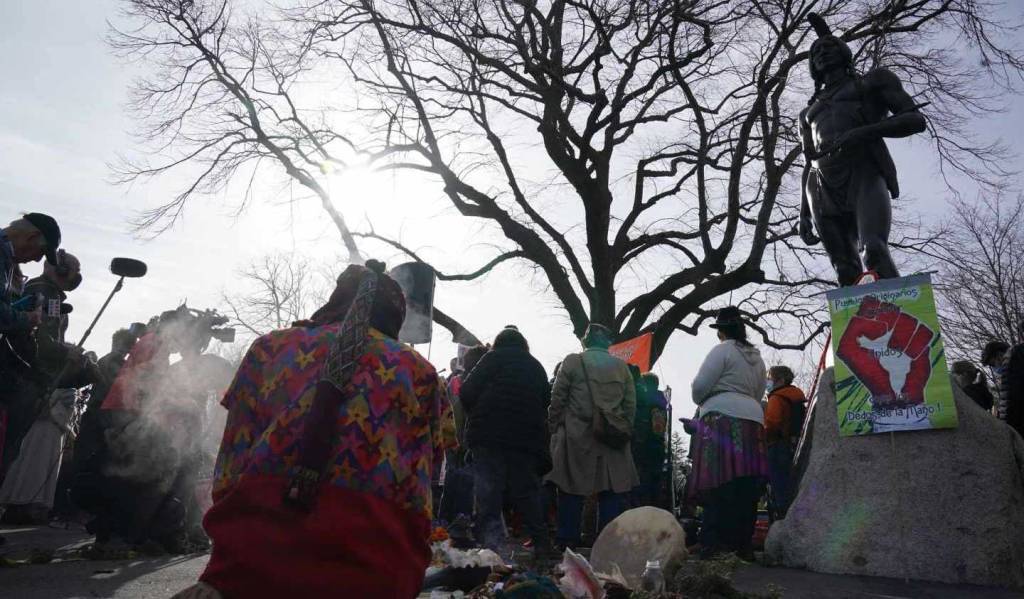
Lakota LawPeople engage in a National Day of Mourning ceremony in front of a statue of Chief Massasoit, leader of the Wampanoag tribe, in Plymouth, Mass. on Thanksgiving Day in 2021. (Bryan R. Smith / Getty Images)

Between Truthsgiving and our Wopila Gathering, on Friday the U.S. also celebrates Native American Heritage Day, at the conclusion of National Native American Heritage Month. I’m grateful that each November is designated as a time to celebrate the history, culture, and achievements of Turtle Island’s Indigenous nations. If you’re Native, I hope you’re able to take some extra time to commune with your relatives and acknowledge your ancestors this weekend. And if you’re non-Native, I hope you’ll make room to appreciate all we have given.

And then, everyone, please attend the Wopila Gathering on Giving Tuesday. This annual event provides an excellent opportunity for us to gather around an even larger table to share stories, priorities, music, and all we have to give to one another. It’s going to be a wonderful couple hours of togetherness, generosity, and joy, so I hope you’ll bookmark this page, RSVP, and Zoom in with us for the festivities!

Wopila tanka — thank you for hearing us, and I hope to see you on Tuesday.
Chase Iron Eyes
Director and Lead Counsel
Lakota People’s Law Project
Sacred Defense Fund

Lakota People’s Law Project

Lakota People’s Law Project
547 South 7th Street #149
Bismarck, ND 58504-5859

Wopila Gathering 2024 – December 3rd

Lakota Law

Today, I’m excited to announce that our fourth annual online Wopila Gathering is coming right up on Giving Tuesday, Dec. 3. It’s going to be a super incredible event this year — and you’re invited! Not only that, I hope you’ll extend the invitation to your friends for this special annual celebration of gratitude and Indigenous culture.

I’ll be hosting this year, and I urge you to come and spend some time online with me, Lakota Law leaders Darren Thompson and Chase and Tokata Iron Eyes, young leaders from the Native American Youth Organization (NAYO), and an incredible lineup of Indigenous performers and special guests. Please RSVP here, mark your calendar for Giving Tuesday, Dec. 3 from 4-6 p.m. PDT (7-9 p.m. EDT), then bookmark this page and return to it for the event in a couple weeks.

RSVP for Wopila Gathering

Watch: our short introductory video for more details on the big event — and RSVP to save the date!

I’m very much looking forward to seeing you at this yearly Giving Tuesday celebration, designed to share the spirit of wopila (deep gratitude), so we can honor, inspire, and activate as one in this movement for Indigenous and environmental justice. In addition to updates on our program priorities from Chase, Tokata, and NAYO, you’ll hear incredible music from talented Indigenous artists like Sage Bond and AntoineX and Miracle Spotted Bear of ALLSZN.

The Wopila Gathering is one of the highlights of our year at Lakota Law. Rather than simply ask for donations on Giving Tuesday like nonprofits across Turtle Island (though every donation is huge, and our allies at Nomadics Tipi Makers are generously matching the first $10,000 we receive this year), we want to use this day to give back to you and all our supporters. 

We love to feel the energy when thousands of our friends gather with us throughout the day to share space, stories, and culture. So I encourage you to be there, take it in, and use the opportunity to interact with us! Join the chat during the event, and we’ll post and read comments over the course of the livestream.

Again, please RSVP to let us know you’re coming, extend the invite to those you love by clicking the social share icons on our Wopila Page, then join the celebration on that same page on Dec. 3. I very much look forward to seeing you there! It promises to be a memorable and inspiring day of conversation, music, and celebration.

Wopila tanka — thank you for being a part of our circle!
Henry “Ozuya” Crow
Director of Community Empowerment & Cultural Health
The Lakota People’s Law Project
Sacred Defense Fund

An Apology is Not Enough

Lakota Law

In case you missed it, President Joe Biden traveled to the Gila River Indian Community in Arizona today, where he made a landmark formal apology on behalf of the U.S. government for the federal Indian boarding school era. “It’s a sin on our soul,” he said, before asking for a moment of silence “for what was lost and the generations who have lived with that trauma.”

In his speech, Biden earnestly described some of the atrocities perpetrated on generations of young children, separated from their families at these “schools.” He also used the occasion to list his administration’s accomplishments on behalf of Native People, including hiring Deb Haaland of the Pueblo of Laguna as the nation’s first Indigenous Cabinet secretary and protecting the Indian Child Welfare Act (ICWA) in the Supreme Court. 

As a Lakota Law supporter, you know those were team efforts, and I’ll always remain grateful to you for helping us participate in making them both happen. I am also thankful to the president for his long-overdue apology. But the truth is — as I said in a statement picked up widely by the press — it is not enough.

Watch: President Biden’s full speech here.

Let’s be clear: an apology is an acknowledgment of wrongdoing, but it is not any form of redress. An apology is just the beginning of a necessary truth-telling. It is a nice start, but it is not a true reckoning, nor is it a sufficient remedy for the long history of colonial violence. The president’s apology calls for a deeper examination. I ask him to work with those knowledge holders within Indigenous communities to tell the entire, historical truth and look at proper redress.

We need more real action on a path toward reconciliation. As you know, we have many ideas for what truly addressing the history of genocide in the U.S. should look like. From rescinding medals of honor given to those who massacred our people at Wounded Knee to codifying ICWA at the state level, there are many tangible steps that can be taken to help and honor Native families, children, and communities. 

Lakota Law

Let’s remember that the separation of Native children from their families did not end with boarding schools. Lakota Law came into being because our grandmothers sought help with the ongoing epidemic of South Dakota’s Department of Social Services (DSS) removing our children at alarming rates. While Native people make up around a tenth of the state’s population, Native children comprise about half of the children in foster care here. And a report we produced a few years back showed that more than 60 percent of children who aged out of DSS custody in South Dakota wound up dead, addicted, imprisoned, or houseless.

So yes, I’m grateful that Biden has acknowledged some historic wrongs and begun to prioritize Native representation and funding for our communities in the present day. I’m also clear-eyed that we have much more to do together moving forward, so let’s keep working! I thank you for your heart and your activism in helping us realize a better world for the generations to come.

Wopila tanka — my gratitude for your friendship in this journey.
Chase Iron Eyes
Director and Lead Counsel
Lakota People’s Law Project
Sacred Defense Fund

Indigenous Peoples’ Day 2024 Action

Lakota Law

Happy Indigenous Peoples’ Day! I hope you take time today to enjoy life and celebrate your Indigenous relatives. Perhaps you can also take a moment to take action. Because, unfortunately — despite 29 states (plus Washington, D.C.) recognizing the real history wrought by the arrival of Christopher Columbus to our shores 532 years ago, the federal government still recognizes today’s holiday as Columbus Day. 

We hope you’ll help us change that. The U.S. government should do right by the original peoples of this land. Please tell your state’s federal lawmakers to actively support the Indigenous Peoples’ Day Act, which would replace the Columbus Day federal holiday with Indigenous Peoples’ Day nationwide.


As a friend of Lakota Law, you’re fully aware that the mythology taught in schools about Columbus and the pilgrims routinely ignores the brutal details of colonization. His arrival on our shores began a chain of events that decimated Native peoples throughout the western hemisphere. In his journal, Columbus joyfully celebrated his ability to easily enslave Native peoples who had no idea people could be so evil. Obviously, this is not heroic behavior to be celebrated each year. It’s long past time to stop honoring Columbus and his legacy of genocide.

Replacing Columbus Day with Indigenous Peoples’ Day nationwide would be a symbolic but serious gesture. While not a solution to heal the generational trauma begun when Europeans invaded our homelands, it would, at least, be a recognition of our sacrifice. Native communities deserve to be seen, and non-Native communities should also be given the space to consider their impacts, both historically and in the present day. In this way, we can increase understanding, build compassion, and create a better world moving forward.

Wopila tanka — my deep gratitude for your solidarity!
Tokata Iron Eyes
Spokesperson and Organizer
Lakota People’s Law Project

P.S. Tell your senators and House rep: it’s long past time to stop celebrating Christopher Columbus and his legacy of pain. Instead, let’s acknowledge the original peoples of this land by replacing the federal holiday of Columbus Day with Indigenous People’s Day!

Take Action: Muwekma Recognition

Lakota Law

Over the past couple weeks, you may have seen stories or social media posts detailing the terrible treatment of the Muwekma Ohlone People by federal agents on the National Mall in Washington, D.C. It pains me just to write this, but government officials threatened to kill their horses and arrested tribal members at the tail end of the Muwekma’s cross-country “Trail of Truth” journey, in which tribal members sought government-to-government consultation with the U.S. Department of the Interior to restore their rightful federal recognition. 

I have more to say on that below, but first I ask you to take action now. Tell your reps: End the cycle of colonial violence and respect the sovereignty of the Muwekma Ohlone People. Congress must restore federal recognition to the original inhabitants of California’s San Francisco Bay Area by writing, sponsoring, and passing the “Restore Muwekma Bill.”

Lakota Law

The San Francisco Bay region has been the homeland of the Muwekma Ohlone People for more than 10,000 years, and congressional censuses acknowledged them throughout the early 20th century. And yet, today they’re landless and unrecognized by the federal government. This egregious oversight negatively impacts tribal members, who lose out on a myriad of important benefits when their sovereignty is ignored. The Muwekma Ohlone People have spent 40 years presenting valid evidence and struggling to reinstate their federal status, and the Department of Interior’s continued indifference amounts to a perpetuation of the cultural genocide of the Muwekma Ohlone.

With high hopes that an Interior Department now led by Deb Haaland of the Pueblo of Laguna would be more receptive to their message, the tribe, led by Chairwoman Charlene Nijmeh, set out on horseback from San Francisco in August on their Trail of Truth. Sadly, they — including women, children, and elders — were violently assaulted by the National Parks Police upon arrival in D.C. 

On Oct. 15 — the day after Indigenous Peoples’ Day — National Parks Police officers immediately moved to take the horses, which were provided by Lakota allies, specifically Percy White Plume (a direct descendant of Red Cloud) at the Horse Nation on the Pine Ridge Reservation. The police then arrested tribal members who tried to prevent the horses’ capture. Those actions were inconsistent with the law and far out of line, and these are some of the reasons why, in partnership with Muwekma, I plan to share more about various aspects of their story with you soon. In the meantime, please assist by taking action and telling your reps to restore federal recognition to the Muwekma Ohlone Tribe today.

Wopila tanka — thank you for supporting tribal sovereignty of the Muwekma Ohlone People!
Chase Iron Eyes
Director and Lead Counsel
Lakota People’s Law Project
Sacred Defense Fund

Run Crazy Horse Marathon

Lakota Law

Today, I share with you an uplifting new video detailing our participation at this year’s Run Crazy Horse marathon. I have been attending this event for 12 years; in fact, it was my first marathon ever! I have deep respect for those who put themselves through the training, the discipline, and the process of a marathon, half marathon, or any form of distance running. And I’m happy to say that, throughout the years, we’ve seen a significant increase in the number of Indigenous runners participating in this annual tradition. Because promoting healthy living is extra important in tribal communities, we’re extremely proud to support Run Crazy Horse.

Watch: I’m proud of our team’s performance — but the best part is sharing this healthy and challenging pursuit with everyone participating, including those who helped us set up and run our hydration station. After all, water is life!

At this year’s run, Sacred Defense Fund and Lakota Law were honored to host a hydration station. My mother and leaders of the Native American Youth Organization personally served over 1,000 runners with much needed water! I give a big thank you to Wally Little Moon for the Mni Wiconi/Water is Life sign, which all the runners saw as they passed by our teepee on the Mickelson Trail in the Black Hills. 

Because of what I’ll term controversial dynamics, Native People have undergone a process of attrition with respect to food and medicine — or lack of food and the need for good medicine — from western society. This scarcity of healthy food and adequate medicine for our people goes back centuries, to the time when we were originally confined to prison camps during the Indian Wars. These days, the Native body still often has trouble adapting to the sugars, the flours, and the processed poisons pushed on the American public.  

One way to stand up against that attrition is to move your body. Every runner has a story of how they came to give of themselves and their bodies in the search for healing, their own meaning, their own purpose, and their own medicine. What we all have in common is that, when we run, we are engaging in a healthy movement that provides the ability to find ourselves.

Sacred Defense Fund wants to promote physical, mental, emotional, and spiritual wellness for each and every runner in the Crazy Horse marathon. More broadly, we want all people who engage in communion with the outdoors to experience a heightened consciousness during mind-body practice. We want those who seek recreation or any meaningful engagement with the natural world to understand that we need help in defending it — the sacred sites, lands, waters, and ecosystems constantly under threat from corporate extraction.

So I want to say a genuine thank you to everybody who organizes events such as these. Sacred Defense Fund looks forward to facilitating more participation, more interaction, and more empowerment of the mind, body, and soul with our friends and relatives.

Wopila tanka — my gratitude to you for supporting tribal health and safety!
Chase Iron Eyes
Director and Lead Counsel
Lakota People’s Law Project
Sacred Defense Fund

Terrorists? From the Same Government Participating in Genocide.

Lakota Law

Do you remember the hideous tactics used by law enforcement and private militarized security during the Dakota Access pipeline resistance? For instance, Lakota Law director Chase Iron Eyes was accused of domestic terrorism just for standing in a prayer circle to protect his homelands. Though this ridiculous charge was later dropped, it’s significant that such terminology was used in the first place. It’s a classic — and deeply harmful — racist trope to label non-white people as “terrorists” simply for exercising our First Amendment rights. 

While that dangerous rhetoric hasn’t gone away, I’m happy to say that, these days, tribes aren’t taking it lying down. A few weeks back, the Lac du Flambeau Band of Lake Superior Chippewa — my tribe — banished Wisconsin State Senator Mary Felzkowski from our lands after she equated tribal leadership to “terrorists.” She made the remark on Aug. 23 at a town hall meeting in Woodruff, Wisconsin, a bordertown of the reservation. This, of course, follows all nine of South Dakota’s Lakota nations banishing S.D. Gov. Kristi Noem earlier this year for her use of similarly abusive language.

Photo of the 37th Annual Bear River Pow Wow on the beautiful homelands of the Lac du Flambeau Band of Lake Superior Chippewa. From the tribe’s Facebook page.

The dispute in my homelands centers around residents of the town of Lac du Flambeau — situated on the reservation but home to many non-Natives — and their unauthorized use of roadways on tribal lands. Last year, the federal government sued the town on behalf of the tribe and asked for relief, asserting that non-Native residents had been trespassing on the tribe’s lands. The tribe set up barricades, later removed once the town agreed to pay fees to the tribe. 

Here’s a little more history on how we got here. When the Dawes Act was passed in 1887, lands opened to non-tribal members on many reservations. Now, in my home region, non-tribal members own land within every reservation but one. As a result, tribal governments govern tribal lands and members, while townships govern non-tribal lands and non-tribal members. In places like Lac du Flambeau — or the town of McLaughlin on the Standing Rock Reservation in South Dakota — the two entities often clash over competing priorities, and Natives and non-Natives must share space while at odds with each other.

By 1901 at Lac du Flambeau, 578 allotments had been distributed, and approximately 45,000 acres had passed into ownership by non-Natives. The problems associated with this reality can be hard to solve, but one thing I can be sure of is that it’s important to respect both the sovereignty and humanity of tribal peoples every step of the way. Felzkowski, who serves as co-chair for Wisconsin’s Special Committee on State-Tribal Relations, should know this.

Instead, in addition to spreading harmful stereotypes, her comments undermine the Lac du Flambeau Band’s sovereign right to govern itself, its lands, and its citizens. Like Gov. Noem, Sen. Felzkowski just found out what happens, even to powerful government actors, when you mess around with that. 

Wopila tanka — thank you for supporting sovereignty!
Darren Thompson
Director of Media Relations
Lakota People’s Law Project