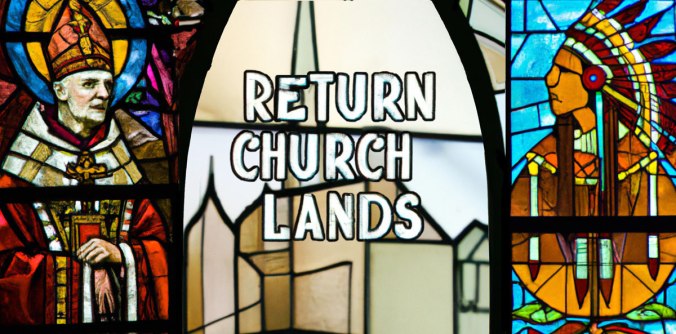
Petition the Pope: Call to Action

Lakota Law

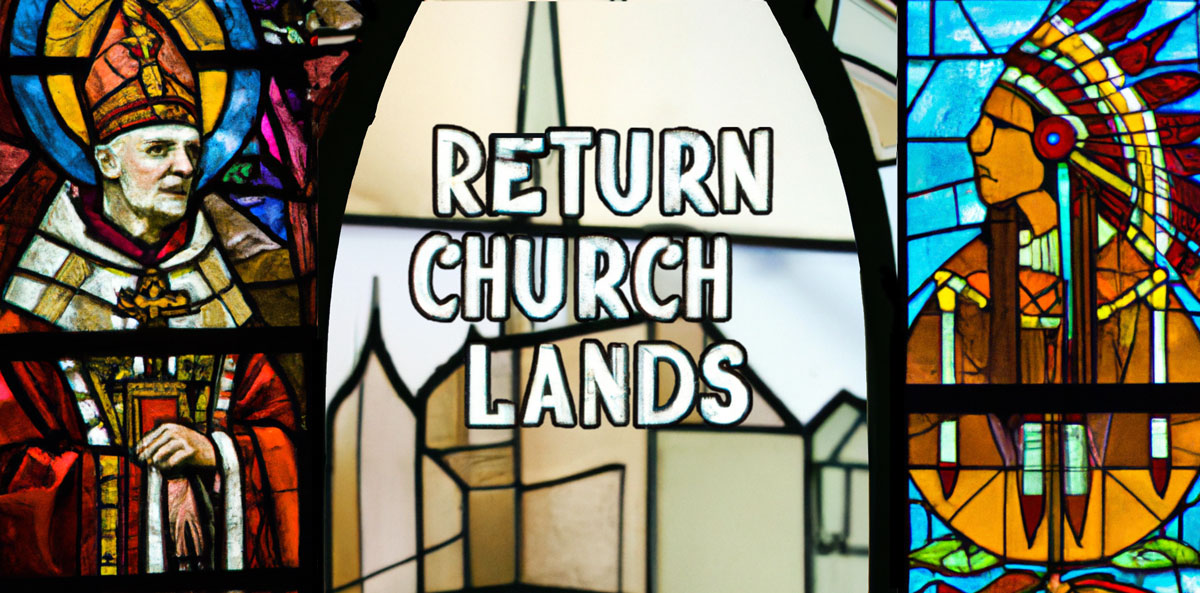
In 2015, Pope Francis published Laudato Si’, his encyclical acknowledging the climate crisis and extolling his flock to consciously act in accordance with Unci Maka, our Grandmother Earth. Then, in 2022, he visited Canada and apologized for the genocide of First Nations peoples in residential schools at the hands of the Catholic Church. Finally, in 2023, the pope denounced the Doctrine of Discovery, 15th century papal bulls responsible for underpinning centuries of colonization of Indigenous lands under European banners in the name of the Christian God.

What, you may ask, do all of those things have in common? First, they show a willingness by the Church’s most progressive pope to rectify the Catholic Church’s sins of the past and work to create a more livable and just future. Second, they’re words that demand further action. That’s why we hope you’ll join us in asking the pope to take the next step and return sacred lands to Indigenous hands. Please sign and share our petition to Pope Francis today.
Lakota Law

The pope’s apparent desires to make recompense for the Church’s historic role in the genocide of Indigenous People and have his flock live with more respect for the Earth go hand in hand. As you well know, we have always known how to live in harmony with our natural surroundings, with a deep understanding of our own relationship to all living things. My ancestors fought the colonizers, and with respect for their sacrifice, I have stood up to Big Oil and all who disrupt the natural balance or threaten our communities. I also take the stance that we must build alliances — even unlikely ones — to create the future we want for our next generations.

Therefore it makes perfect sense for us to take the lead in encouraging the pope to work with Native nations to return sacred lands to Indigenous stewardship — and also with state governments who have benefitted through the centuries from their affiliation with the Church. Let me be clear about those benefits: it is no overstatement to say that the Doctrine of Discovery underpins both Federal Indian Law and property law here in the United States. Virtually every aspect of the legal system we encounter as Native People has been set up to keep us down — from day one into the foreseeable future.

But we won’t be kept down. Let us be united, creative, and diligent in seeking remedies that can benefit not just Indigenous communities, but everyone who shares space with us in this world. 

Wopila tanka — thank you for your care and advocacy!
Chase Iron Eyes
Director and Lead Counsel
The Lakota People’s Law Project

P.S. Tell the pope: direct the Church to work with Indigenous communities and state governments to return sacred lands to Indigenous hands and stewardship. The world we want for our children’s future depends on all of us working together right now.

Let's Green CA!

Lakota People’s Law Project
547 South 7th Street #149
Bismarck, ND 58504-5859
Building a Clean Energy Future

Lakota Law

As you know, very few things matter to me — and to this organization and to the planet we all hope our future generations can continue to inhabit — as much as a just transition to clean energy. That’s why we support communities fighting on the frontlines against harmful extractive projects, like the Standing Rock Nation and the Reno-Sparks Indian Colony as they resist the Dakota Access pipeline (DAPL) and Thacker Pass lithium mine, respectively. It’s also why we continue to ally with Native-led groups promoting climate solutions which encompass Indigenous knowledge and respect tribal sovereignty.

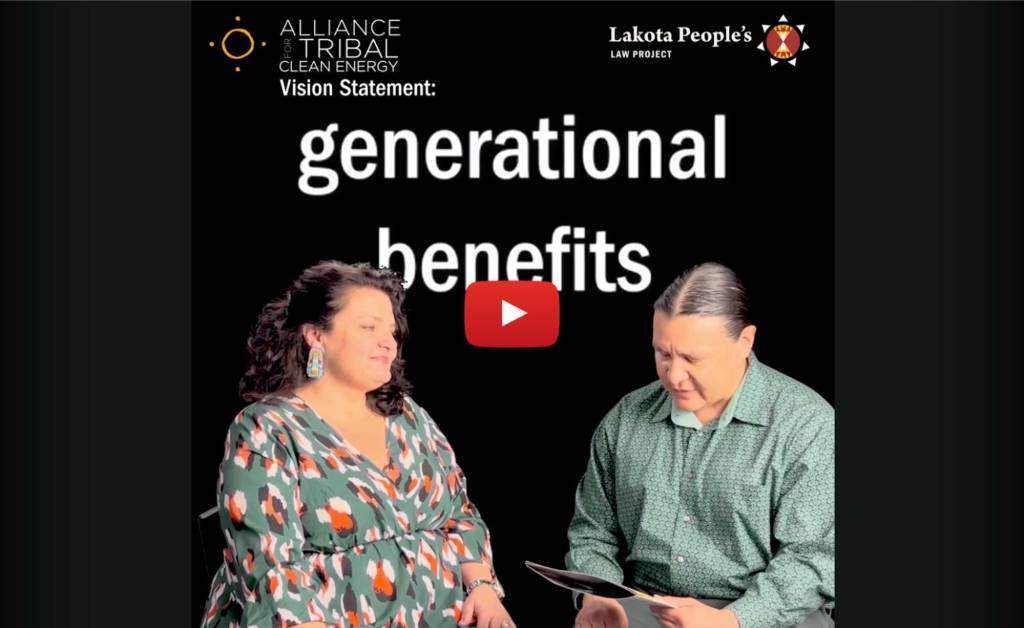
To that end, this week I traveled to the Muscogee Nation near Tulsa, OK, to attend the second annual Tribal Energy Equity Summit. I was honored to speak at this important gathering, hosted by the Alliance for Tribal Clean Energy. It brought leaders from tribes and organizations across Turtle Island together with representatives from the federal government to share our viewpoints and advance equitable clean energy solutions. As part of my attendance, I sat down with Chéri Smith, the alliance’s president and CEO, to talk about the importance of Indigenous agency in creating a clean energy future for tribes. Please watch our short video, meet Chéri, and learn more about her organization’s mission.

Watch: I sat down with Chéri Smith, President and CEO of the Alliance for Tribal Clean Energy, to talk about the importance of Indigenous agency in creating a clean energy future for tribes.

It’s been — if you’ll pardon the pun — an energizing week! The summit afforded me a great opportunity to network with like-minded people and organizations, meet new friends, and reconnect with old ones. I was especially happy to share space with Dennis “Bumpy” Pu‘uhonua Kanahele, head of the Nation of Hawai’i, which maintains its status as a sovereign government under international law, independent of the United States. 

As our presence at the same summit that also hosted a pair of representatives from the White House indicates, this was a diverse gathering which welcomed a multitude of perspectives on how we can solve tribal energy issues in a just way and begin to remediate the climate crisis. As you know — and as exemplified by DAPL’s violation of our treaty lands, which hold so much potential for renewable energy development — those two issues are inextricably linked. I’m excited to see where we’ll go from here! 

Speaking of DAPL: many of you have reached out to us after reading about my participation in the ongoing trial to determine whether the federal government should reimburse the State of North Dakota for exorbitant costs it alleges it incurred by over-policing our peaceful NoDAPL movement in 2016 and 2017. This article and this one can provide you a bit more of my perspective. I’ll also plan to report back to you with further thoughts once we hear of a judgment. 

Wopila tanka — as always, thank you for supporting environmental justice! 
Chase Iron Eyes
Director and Lead Counsel
The Lakota People’s Law Project

Wounded Knee

Lakota Law

Dear Renee,

51 years ago last week, my relatives powerfully announced themselves on the world stage. In response to the ongoing subjugation of our people, more than 200 Oglala Lakota and American Indian Movement (AIM) activists occupied the town of Wounded Knee, right down the road from me, here on the Pine Ridge Indian Reservation. You probably know some of what happened next. The armed standoff with federal government agents lasted more than two months, garnering regular coverage on the nightly news and waking people across the planet to our struggle in a new way.

Today, I encourage you to become more familiar with what this occupation meant at the time and explore its lasting legacy. Please read my article on Last Real Indians from a few years back and watch this video from my daughter, Lakota Law spokesperson and organizer Tokata Iron Eyes, who was on the ground (and horseback) for the anniversary last week.

Watch: Tokata talks Wounded Knee liberation.

More than 50 years after the fact, I still have questions — some similar to those my relatives must have asked at the time they rose up in 1973. How could the U.S. government expect traditional people to live under the conditions colonialism forced upon us? How could such treatment escape the accountability of the law, and how could we be expected to forgive it? And, now, as we continue to fight for basic things like clean water and meaningful input — and as we continue, too often, to question one another — what will be the legacy of AIM, and of our resistance decades later against the Dakota Access pipeline? 

Those are hard questions to answer, but I do know one thing. Without a doubt, the United States is responsible for all of it. This is how colonization works. An occupying force gains by instigating, arming, funding, and providing legal cover for murder. It gains by dividing and conquering. It gains land, minerals, and wealth. Our continued subjugation and our infighting are good for the colony. 

About two years after the occupation ended, on the very day that FBI agents Ronald Williams and Jack Coler were killed on the Jumping Bull compound (for which AIM activist Leonard Peltier was later falsely convicted), the Oglala Sioux Tribe signed over a huge chunk of land containing mineral deposits to the United States. Consider that colonizers often use diversionary tactics and counterinsurgency measures to lower the cost of extracting whatever minerals the corporations want — and to eliminate opposition.

In the 1970s, that opposition was coming domestically from hippies, Black nationalists, the Brown Berets, the Student Nonviolent Coordinating Committee, the Weathermen, AIM, the National Indian Youth Council, and so forth. America was still openly racist, people were dying, and BIPOC (Black/Indigenous/People of Color) had no choice but to take public stands to shed light and call attention to the conditions we faced, regularly enforced by a government that either didn’t care or wanted us gone.

Thus, in our lexicon, we say that AIM liberated Wounded Knee. We celebrate Feb. 27 as “Liberation Day.” To this day, we remember the liberators with pride — and we remember that we are always susceptible to manipulation by outside forces. That’s exactly why we rose up once again at Standing Rock in 2016. And while it’s troubling that we continue to have to make such stands, I also see reason for hope.

More and more Americans are beginning to understand that most of their elected leaders have little interest in defending our country from extractive and/or war-profiteering corporations. Many Americans find themselves on our side now; they see corporate encroachment invading every aspect of their lives. I’m grateful that you recognize we must celebrate liberation, celebrate a patriotism which defends sacred lands and waters — and, by extension, ourselves, our birthrights, and our constitutional rights.   

Wopila tanka — thank you for supporting Indigenous sovereignty!
Chase Iron Eyes
Director and Lead Counsel

Coalition Building

Lakota Law

You’ve heard from me a few times already this year about the importance of coalition building to achieve a new level of effectiveness — not just in our own work, but in the work my Indigenous relatives are undertaking at tribal nations across Turtle Island. To that end, today I share with you about a trip I took to spend a few days earlier this month with people I greatly respect at the Wind River Reservation in so-called Wyoming.

The seventh largest reservation in the U.S., the Wind River Nation encompasses more than 2 million acres of incredible wildlands, and it’s home to people from both Northern Arapaho and Eastern Shoshone tribes. I went to visit a few friends there, including Wes Martel, who you may remember from his keynote speech at the Great Plains Water Alliance’s Winter Water and Climate Conference, featured in our 20th Dakota Water Wars chapter. I also spent time with Jason Baldes, a central figure helping to return American Buffalo to Wind River and other tribal nations. I encourage you to watch “Homecoming,” a short documentary on PBS, about his wonderful work.

Watch: Buffalo return to Wind River in “Homecoming,” a PBS short documentary featuring the voice and good work of Jason Baldes.

To you, the inextricable link between Native people and buffalo is likely no mystery. Jason speaks to this eloquently in the documentary.“To restore that animal to our communities means that we can begin to heal,” he says. “From atrocities of the past, from loss of land, from loss of culture, loss of language. It’s foundational to who we are.”

That’s just one example of good Indigenous storytelling emanating from Wind River. While there, I also discovered the great music of Christian Wallowing Bull, a talented Northern Arapaho singer-songwriter featured in the new documentary film “Lone Wolf,” which premiered in California a few days ago. I then spoke with Dave Herring, the film’s director. I hope that you’ll watch their film and be as inspired by Christian’s story as I was. 

As you can see, we’re taking extra time this year to build connections with people, organizations, and tribal nations. In order to create a better society, it’s critical to advance not just our own priorities as Lakota People, but also those of all our relatives with their own traditional knowledge systems, art, and dreams. Between us, we’ve got much more in store to share with you. Stay tuned!

Wopila tanka — My continued thanks for supporting all Indigenous people, art, and culture.
Chase Iron Eyes
Director and Lead Counsel
The Lakota People’s Law Project

Let's Green CA!

Lakota People’s Law Project
547 South 7th Street #149
Bismarck, ND 58504-5859
Return of Land

Lakota Law

Greetings from Las Vegas, where I stopped to observe the mayhem of Super Bowl week. As my dad wrote to you a few days ago, we remain committed to changing the Kansas City Chiefs team name — and all racist characterizations of our people in the sports world. Also, I want to take a moment to say that because we are all human, and no matter how big our differences, I offer my sincere condolences to the Kansas City community in the wake of yet another instance of senseless gun violence. I pray for the day when we find better ways to listen to one another, discover common ground and understanding, and stop killing each other.

On a happier note, on my way to Vegas, I journeyed through some spectacular, sacred places. These included some of the Trail of the Ancients and traditional homelands of the Diné (Navajo) and Ute Peoples, including Monument Valley and Bears Ears National Monument — where something wonderful has occurred. I encourage you to watch my short video, recorded onsite, to hear about the recent gift of land back to Indigenous stewardship in Cottonwood Canyon.

Watch: I visited the sacred lands of the Ute and Diné Peoples to see Cottonwood Canyon and share with you about the importance of Landback efforts like the one in Cottonwood Canyon.

In many ways, the process undertaken with Cottonwood Canyon can serve as a model elsewhere across Turtle Island. A nonprofit organization bought available land and synched with a consortium of Native Peoples to preserve a beautiful place featuring rare views of spectacular rock formations and ancient dwelling sites. That’s something I dearly hope we can eventually replicate on a much larger scale with the Black Hills — but I’m also happy anytime we see the return of sacred lands to Indigenous care.

I’ll also say that the model isn’t perfect. Such transfers shouldn’t come with conditions. Isn’t the point of Native stewardship to respect our traditional knowledge systems regarding the land? So, while I appreciate the intent behind a condition of the transfer that will limit access to the site, I would also suggest that it shouldn’t be about eliminating human contact. Human beings should, in fact, have the opportunity to visit sacred places and relearn how to live in harmony with them, just as my relatives and ancestors have done for time immemorial. Even our allies can learn something here: please stop holding us to rules designed by colonizers.

In any case, a win is a win! Ultimately this gift will ensure that a special place displaying the ingenuity of our relatives’ ancestors and the vistas they loved will remain unspoiled for generations to come. And for that, I am truly grateful.

Wopila tanka — thank you for supporting landback efforts!
Tokata Iron Eyes
Spokesperson & Organizer
The Lakota People’s Law Project

Let's Green CA!

Lakota People’s Law Project
547 South 7th Street #149
Bismarck, ND 58504-5859
The Lakota People’s Law Project is part of the Romero Institute, a nonprofit 501(c)(3) law and policy center. All donations are tax-deductible.

Climate Alteration: Words Are Important

Global Warming: a very passive title to address a very lethal problem.
Example: It is getting a little warm outside, nothing to worry about.

Climate Change: a perfect setup to generate perfect rebukes.
Example: The climate is always changing. climate is just doing what climate has always done and human activity has nothing to do with it.

Climate Crisis: a very selective term. It is only a crisis for the people immediately affected. Also falls into the maligned category of ¨alarmist¨

The term I adopted:
Climate Alteration: A very pointed terminology to address the impact human activity is having on the global climate. Our activities are altering climate systems on a global scale causing extreme weather events. Yes, temperatures on average across the globe are rising and this disturbance is causing extreme temperatures (hot and cold) extreme drought, extreme flooding, and extreme storms. The rise in global temperature has upset the balance. This alteration has been building up slowly as the oceans absorbed most of the extra heat. But now, plain to see for everyone paying attention to weather-related news or looking out their own windows, extreme weather is pushing organisms and plants to extinction. Our crops are being destroyed. The range of many insects, birds, and animals has shifted.
Here on this thread are the thousands of articles, references, and comments that illustrate Climate Alteration. We have documented how some are being innovative in developing mitigation strategies. Some are also being manipulative and stupid and we are intelligent enough to research and decide for our communities what we need to do if our governments do not act.

As animals and plants are forced to shift their range because of extremes in weather, so do people.

Lakota Law

By now, you’re likely well aware of the climate crisis and its significant dangers to Indigenous communities the world over. The problem is especially magnified on islands and in coastal regions, where sea level rise can wipe away traditional homelands and make climate refugees of those who have been displaced. That’s true even right here on Turtle Island, where hundreds of Native communities — in South Dakota, Alaska, Florida, Hawai’i, Washington, and Louisiana — face existential threats.

And now, the first community to supposedly be moved from harm’s way — the Jean Charles Choctaw Nation — is facing a new set of problems. Just before the new year, the tribe filed a landmark civil rights complaint with the U.S. Department of Housing and Urban Development (HUD) against the state of Louisiana. In 2016, HUD granted Louisiana $48 million in aid to resettle the tribe. But, its complaint asserts, Louisiana failed to properly implement the grant and has ethnically and racially discriminated, violated tribal sovereignty, excluded cultural components central to a proper relocation program, and provided poor replacement housing.

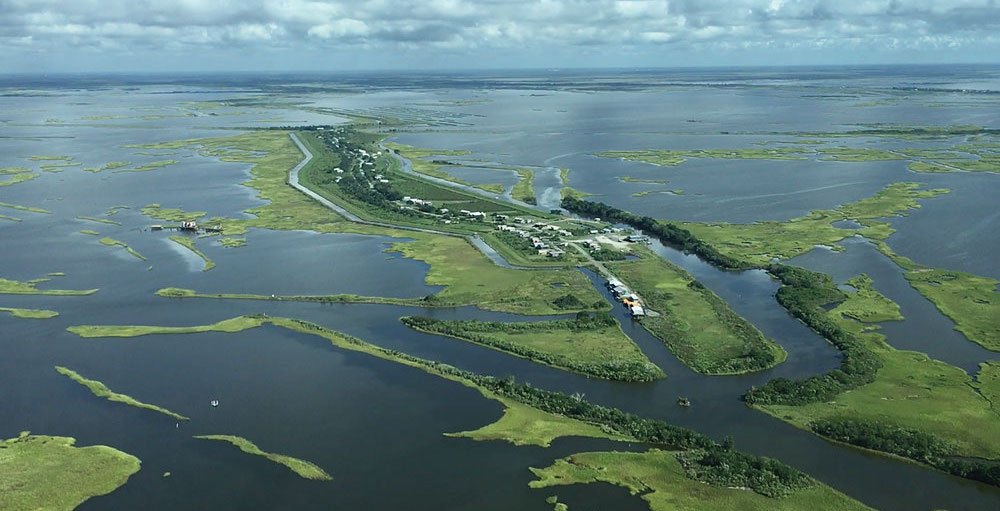
The Jean Charles Chactaw Nation has always lived here, on the Isle de Jean Charles. The climate crisis and resultant rising sea levels have endangered the tribe’s homeland and forced many members to move to inadequate replacement housing in a new location. Photo credit: Chantel Comerdelle.

The Jean Charles Choctaw Nation has resided on the Isle de Jean Charles for five generations, since the ancestors of its citizens escaped the Trail of Tears in the early 1830s amid President Andrew Jackson’s Indian Removal Act. Its homelands and burial grounds are located in a region facing perpetual devastation and erosion by storms and sea level rise. Since 1955, the Jean Charles Choctaw Nation has lost over 98 percent of its lands to the encroaching ocean.

It’s also worth noting that the tribe is located in Terrebonne Parish, a region notorious for oil extraction, high pollution rates, and environmental justice violations. The Parish and over 90 percent of its property are largely controlled by non-local fossil fuel and chemical companies. The infamous “Cancer Alley” is just upstream.

Watch this short documentary detailing the tribe’s relocation.

By filing its complaint with HUD, the Jean Charles Choctaw Nation is looking to the federal agency to investigate the grant-funded resettlement program, currently run by Louisiana’s Office of Community Development (OCD). The tribe hopes HUD will order OCD to respect tribal needs and authority as the program’s implementation proceeds. 

The lawsuit is also significant in that, while the tribe has state recognition from Louisiana, it does not have federal recognition, which would extend access to more grants, disaster assistance, and various legal powers — including constitutional protections and self-governance recognized by the United States. Lakota Law will keep an eye on this case and report back to you. As always, we’re grateful to you for standing in solidarity with every community of color on the frontlines of environmental justice.

Wopila tanka — thank you for your unwavering dedication!
Chase Iron Eyes
Director and Lead Counsel
The Lakota People’s Law Project

Today: Special Screening

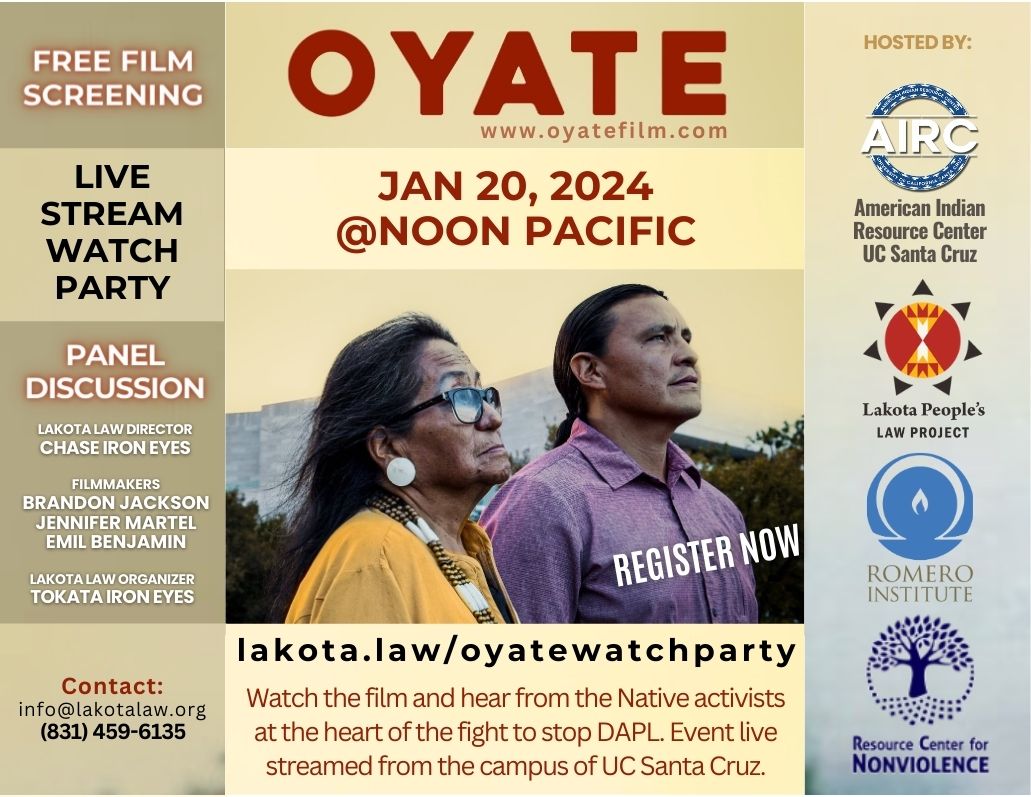
Oyate watch party at Noon Pacific Time on January 20th

Lakota Law

I’m looking forward to a new year working together for Native sovereignty and justice with you. It’s appropriate that our first 2024 event is gathering to watch a crucial film contextualizing the movement to stop the Dakota Access pipeline. You may have heard that we’ve joined with local Santa Cruz groups and the filmmakers of “Oyate” to host our in-person screening at UC Santa Cruz on Jan. 20 at noon PST, which will also be streamed online in real time!

To quickly update you, my daughter Tokata and I will present at the event, joined by the film’s producer/director and the two other producers. Please note that the event’s venue has been moved to the Merrill Center on the UC Santa Cruz campus, and we’ll stream all the festivities from there.

RSVP to join our worldwide watch party of “Oyate,” streaming online on Jan. 20.

Lakota Law

We’ll send you reminders with the link for your party to join our livestream. Look out for those the day before and on the morning of this very special event, Jan. 20!

“Oyate” elevates the voices of Indigenous activists, organizers, and politicians, offering our perspectives on our complicated history and present-day circumstances and illuminating the interconnectivity among the issues facing Indigenous People today. It features excellent music, tells some of our personal stories, and delves deeply into our movement for Native and environmental justice.

In the ongoing spirit of wopila — a meaningful acknowledgment of our gratitude and a desire to share the best of ourselves with you — we offer this opportunity to come together, watch, learn, and move forward with purpose. We thank UCSC, the American Indian Resource Center, and the Resource Center for Nonviolence for making this event possible, and we hope you’ll join us on Jan. 20!

Wopila tanka — thank you for your support and attention!
Chase Iron Eyes
Director and Lead Counsel
The Lakota People’s Law Project

Star People: Action for Information

Lakota Law

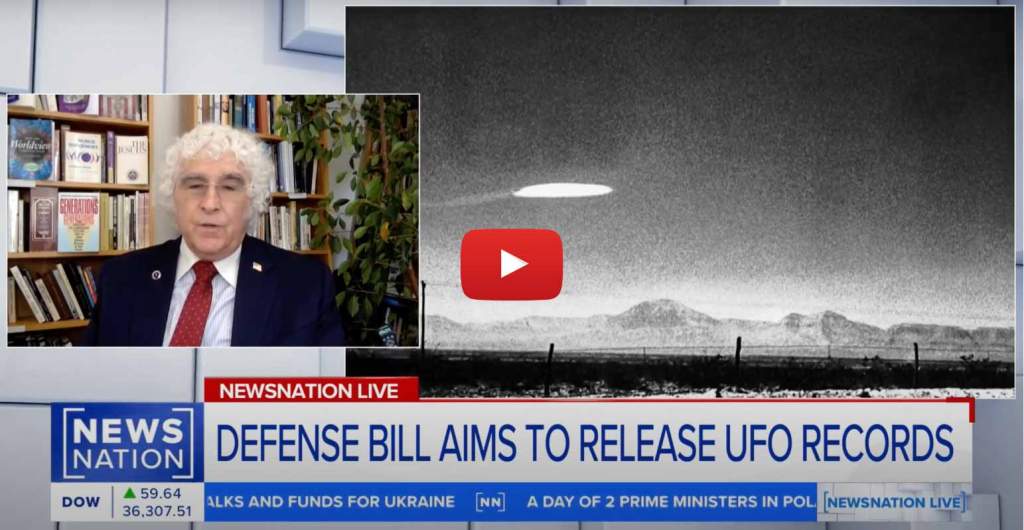
Aliens. Extraterrestrials. Little green men and women. Call them what you want, and question if you will. In many Native cosmological traditions, we call them Star People — and many of us have been questioning for a long time. As it turns out, the U.S. government, too, has been looking into things, setting up what began as a secret program to study Unidentified Anomalous Phenomenon (UAP) in 2007. In 2017, The New York Times published articles exposing the program’s existence, but some of those who worked inside it say there’s far more the public should know.

For many years, Daniel Sheehan, who co-founded the Romero Institute and the Lakota People’s Law Project, has been working to achieve government transparency around UAP. Now, at a time when misinformation runs rampant, the health of our democracy depends on trust in institutions more than ever — and yet the federal government continues to hide much of what it knows. That’s why the Romero Institute has founded the New Paradigm Institute (NPI), a project dedicated to exposing UAP truth. If you care about this issue, I urge you to take the New Paradigm Institute’s call to action and contact Congress today to demand full disclosure regarding UAP. You can also opt in to continue hearing from NPI going forward.

Watch: Romero Institute and NPI president Danny Sheehan discusses UAP disclosure.

I acknowledge that this message may seem tangential to our usual work to achieve Indigenous and environmental justice. But Uncle Sam has let Native nations down many times, and we Lakota understand better than most the importance of holding the federal government accountable. If we are ever to build trust, establishing proper governmental oversight and full transparency is important.

I’ll also say that Lakota Law exists in part to preserve our cultural heritage and share our traditional ways of understanding the universe. So in that spirit, I’ll tell you that many of our stories contain references to the Star People and interactions with the cosmos. One of our teachings says that we come to this plane of existence through the Big Dipper (or as we call it, Matȟó Thípila — Bear Lodge), and if we live well and honorably, our souls earn the right to return through that same portal at the end of our lives.

Another tells of when Matȟó, the bear, gave chase to a group of our people who had become lost. This particular bear was enormous, and there was no way the group could outrun its massive strides. They fell to their knees to pray for divine intervention. Hearing their desperate call, Tunkasila (Creator) came to their aid! He lifted the ground beneath the people higher and higher, rising them up on a precipice nearly a thousand feet in the air, just beyond even Matȟó’s impressive reach. 

Before finally giving up, the great bear clawed at every edge in search of his human meal, creating vertical ridges along the sides of the newly formed mesa. And that’s how the earthbound Matȟó Thípila (known by colonizers as Devil’s Tower in Wyoming — the setting of Spielberg’s classic “Close Encounters of the Third Kind”) came to be. And the lost ones? They couldn’t get down, so some say Tunkasila rescued them a second time, sending them to the heavens to live among the ancestors — and the Star People — as the Pleiades.

We look forward to sharing more of our traditional knowledge systems in the coming seasons. Meanwhile, my gratitude to you for reading, for considering our sister program’s effort to achieve government transparency, and especially for being an active participant in our mission to win justice.

Pilámayaye — thank you!
Chase Iron Eyes
Director and Lead Counsel
The Lakota People’s Law Project

P.S. To hear more from the New Paradigm Institute as it demands full disclosure around UAP, send your message to your reps asking for the creation of a governing body to achieve full transparency from the federal government.

Let's Green CA!

Lakota People’s Law Project
547 South 7th Street #149
Bismarck, ND 58504-5859

Truthsgiving

Lakota Law

It’s that time of year again. Thanksgiving is upon us. I encourage you to read a piece I wrote for The Nation magazine and watch my segment on CNN arguing that we should scrap this holiday and replace it with “Truthsgiving.” (Note that the CNN segment starts after the ads about four minutes and ten seconds in.) This is not, perhaps, an entirely novel idea. We’ve tried it before — a popular rebranding of Thanksgiving as “Thankstaking,” communicating that there should be no pride in genocide. But this year I am committing to the concept of Truthsgiving, which I feel better embodies the right spirit of generous sharing and listening.

Watch: I appeared on CNN to discuss changing the Thanksgiving holiday to Truthsgiving.

Here’s some truth: gathered around our tables, we still eat turkey, corn, beans, squash, cranberries, and mashed potatoes. All these are Indigenous foods. In fact, 60 percent of all the food consumed by the human species has been created by Indigenous nations. Please understand that (despite the headline in The Nation), I am not trying to cancel Thanksgiving — for we give thanks every day!

Our celebrations, however, should also honor real history. We must tell the truth. The truth is a fire that burns all lies in its way. It is no secret that colonial project countries (e.g. the USA, Canada, Australia, and New Zealand) have hidden important truths from us. It’s no surprise settlers like governor Kristi Noem fight so hard to hide historical facts from students taught in South Dakota schools. How fragile the American settler identity is that it cannot abide teaching the truth. But until the truth is shared, there can be no justice. And if there is no justice, then peace is beyond our reach. 

We have to tell the hard truths, painful as they may sometimes be. We must recognize that genocide is not a “dark chapter in our nation’s history,” but that it’s still imposed on tribal nations in the present. The first Americans are still denied real nationhood. In all ways “legal,” political, and economic, Indigenous nations across Turtle Island and around the globe remain captive to outdated institutional systems carrying out the centuries old Doctrine of Christian “Discovery.” 

Let us, then, meet each other where we stand today. We don’t have to turn back the clock, but we must be truthful with each other in the here and now. It’s our mandate — as Native and allied activists — to reinvigorate the quest for truth. We have to show up and reorganize the very symbols of our culture and our shared identity. Like Columbus Day, Thanksgiving is one of these symbols, one of those rituals, a place where worldviews collide. That’s not a bad thing. Let us use these collisions to move forward, knowing in our hearts that we are all in a conscious evolution together. 

Wopila tanka — my gratitude for your investment in truth!
Chase Iron Eyes
Director and Lead Counsel
The Lakota People’s Law Project

P.S. Our desire to share both the giving of thanks and the telling of truth is one reason we initiated our live-streamed Wopila (Gratitude) Gathering every year around Truthsgiving. Please RSVP now to join us online on Giving Tuesday, Nov. 28, and spread the word about this annual event to honor, inspire, and activate. The citizens of the Lakota Nation conduct wopila ceremonies to give back as a practice of gratitude, and this is our way of bringing you into the circle. 

Let's Green CA!

Lakota People’s Law Project
547 South 7th Street #149
Bismarck, ND 58504-5859
The Lakota People’s Law Project is part of the Romero Institute, a nonprofit 501(c)(3) law and policy center. All donations are tax-deductible.

Third Annual Wopila Gathering

Lakota Law

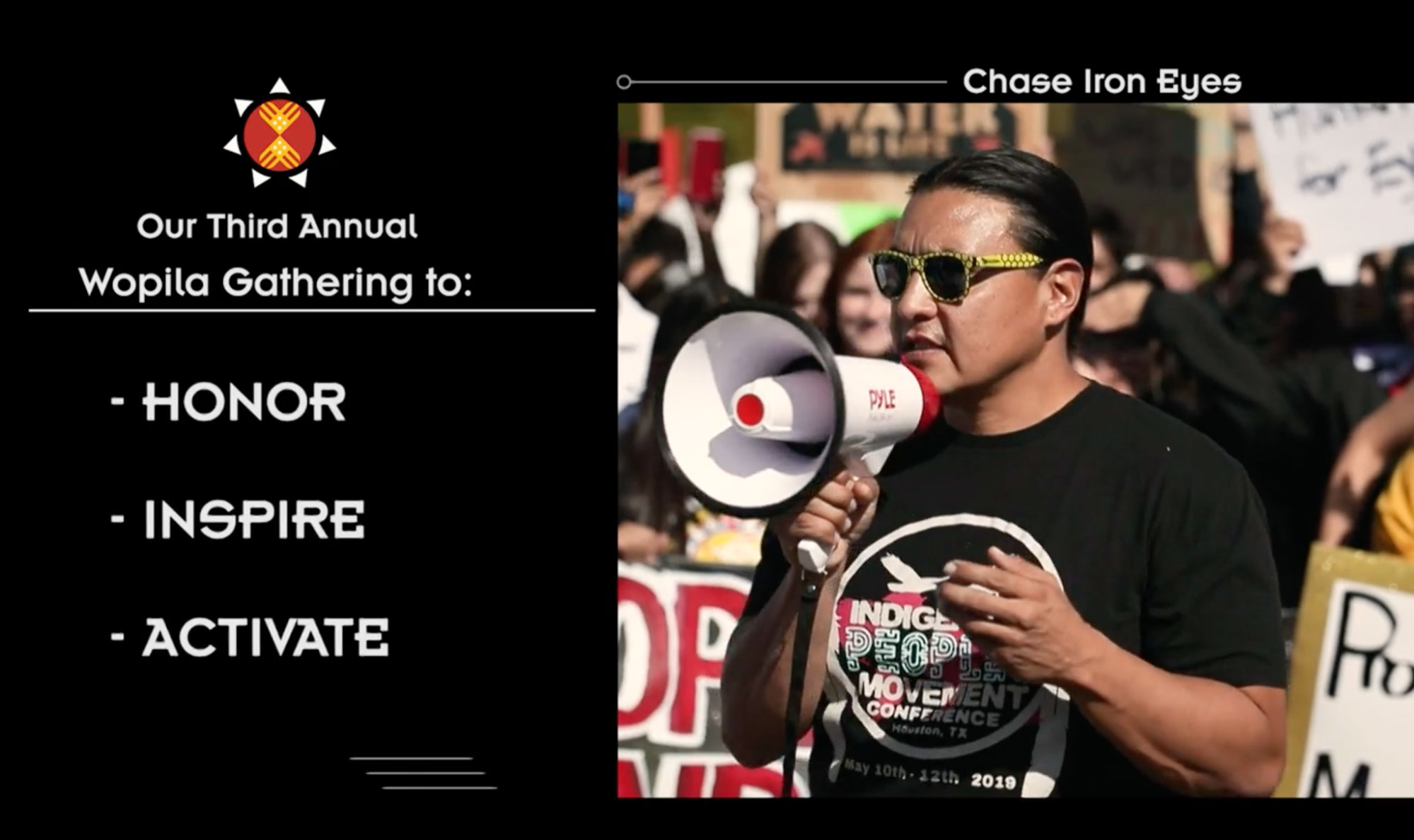
I’m excited to announce that our third annual Wopila Gathering is almost here — and you’re invited! Please come spend time with me, other Lakota Law leaders, and special guests at the live-streamed event on Giving Tuesday, Nov. 28 from 3-6 p.m. PDT (6-9 p.m. EDT).

RSVP for Wopila Gathering

I’m very much looking forward to hosting you for this annual online celebration. In addition to entertainment and insights from artists and influencers, I will be joined by three powerful activists — Tokata Iron Eyes, Lily Joy Winder from People, Not Mascots, and Lakota Law Standing Rock organizer Phyllis Young — for candid conversations on topics important to Indian Country. This year’s topics are Resistance, Representation, and Resurgence.

Lakota Law

Watch our promo video for more details on the big event — and RSVP to save the date!

The Wopila Gathering is one of the highlights of my work with Lakota Law. I get energized when thousands of supporters like you gather with us throughout the day to honor, inspire, and activate around curated content and conversations that build the movement for Native justice. And I encourage you to interact! You can join the chat during the event, and we’ll post and read comments over the course of the livestream.

I hope to see you there! RSVP to let us know you’re coming, and please extend this invite to those you love by clicking the social share icons — to Facebook, Twitter, and email — on our Wopila Page. Let’s continue to grow the circle of support and come together to make a difference for Indigenous justice! Stay tuned for more info soon.

Wopila tanka — thank you, always, for your friendship!
Chase Iron Eyes
Director and Lead Counsel
The Lakota People’s Law Project

Let's Green CA!

Lakota People’s Law Project
547 South 7th Street #149
Bismarck, ND 58504-5859