Keep Attention on the Law

Lakota Law

The U.S. Supreme Court just keeps getting things wrong. In late March, it declined to review attorney Steven Donziger’s appeal of his criminal conviction for contempt of court. If Donziger’s name sounds familiar to you, that’s perhaps because he’s a good man who helped win a landmark $9.5 billion judgment against Chevron on behalf of thousands of Indigenous People in the Ecuadorian Amazon. More than a decade ago, the oil giant was found guilty of causing disastrous health problems via its brazen environmental pollution of the world’s largest rainforest.
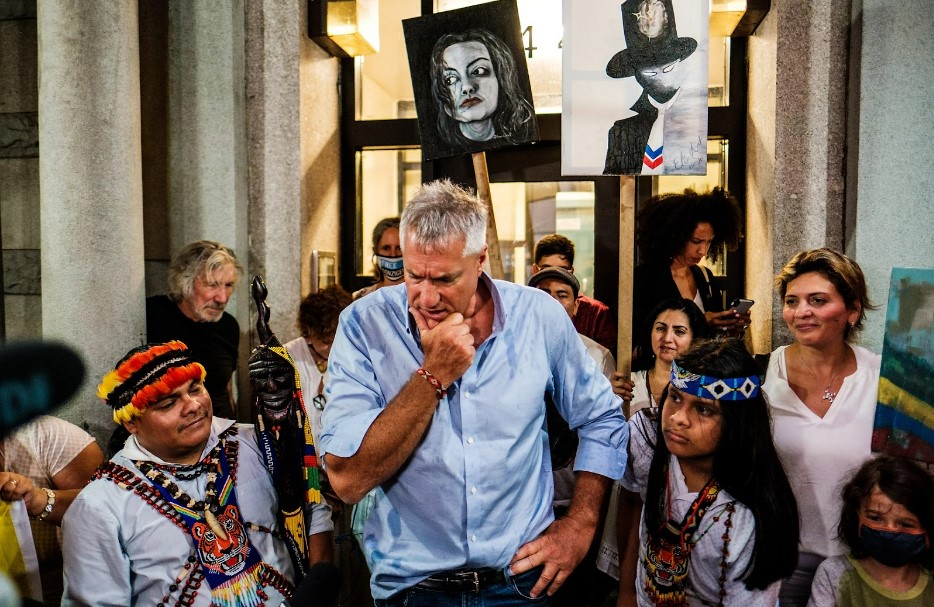
Lakota LawPhoto credit: Steven Donziger from the Free Donziger website.

Chevron, represented by Big Oil law firm Gibson Dunn, relentlessly contested Donziger’s legal victory in Ecuador, eventually securing a challenge in U.S. federal court. You’re probably also familiar with Gibson Dunn — the same firm now representing the plaintiffs seeking to dismantle the Indian Child Welfare Act (ICWA) at the Supreme Court. We feel that’s no coincidence, and it’s one reason we met with Mr. Donziger while he was confined at a halfway house about a year ago.

A few other things make this case particularly concerning. Atypically, after the federal prosecutor in Manhattan declined to bring criminal contempt charges against Donziger, a federal judge — who held investments in Chevron at the time of his decision — appointed a private law firm to prosecute anyway. A second federal judge delegated to oversee that prosecution served on the board of the Federalist Society, a far-right think tank known for helping stack the federal judiciary with conservative judges and regularly receiving donations from, you guessed it, Chevron.

It should come as no surprise, then, that Donziger was subsequently convicted. He ended up serving nearly two months behind bars and spent another two and half years under house arrest. In 2021, during his incarceration, the United Nations High Commissioner for Human Rights called for Donziger’s release, stating that his pre-trial detention was illegal.

Donziger appealed his conviction to the Supreme Court, but the justices, in March’s 7-2 decision, denied his petition. It may surprise you to learn the two dissenting justices who supported hearing Donziger’s case were Brett Kavanaugh and Neil Gorsuch. These two deeply conservative men raised concerns about judicial overreach and constitutional protections requiring separation of powers, while the liberal wing of the Court strangely remained silent.

It’s critical that we continue to pay attention to the Supreme Court, and not just on ICWA. It’s difficult to fathom the rationale behind some of their recent decisions, but in other cases, it may be entirely too clear. This court seems eager to roll back our freedoms despite years of precedent, as it did when it overturned Roe v. Wade. And, as it has done here, it appears willing to allow new degrees of overreach by activist judges with obvious conflicts of interest.

Wopila tanka — thank you for paying attention and standing for justice!
Chase Iron Eyes
Co-Director and Lead Counsel
The Lakota People’s Law Project

Goodbye to the Doctrine of Discovery

Lakota Law

As you may have heard, last Thursday marked a momentous decree. After nearly 500 years — and decades of repeated calls from Indigenous activists including my fellow Lakota Law organizer Phyllis Young — the Vatican finally renounced the Doctrine of Discovery.

The legacy of the Doctrine, a papal bull from the 1400s justifying Christian colonialism worldwide, includes westward expansion through the Americas, Manifest Destiny, and the Indian boarding school era. It also continues today through federal Indian law and a Supreme Court dominated by conservative Catholics who will soon rule on whether to dismantle or overturn the Indian Child Welfare Act (ICWA).

Watch: We interviewed Indigenous scholar Steve Newcomb about the Doctrine of Discovery.

Signed into federal law in 1978, ICWA helped fulfill a great and urgent need to protect Native children from centuries of state-sanctioned genocidal practices. By the 1960s, the boarding school era was nearing an end. Religious institutions masquerading as schools had been assimilating Indigenous children and annihilating their cultural identities since the 1800s. As you likely know, remains of these young victims who underwent horrendous treatment and unfathomable brutality are still being unearthed today. 

Government agencies then quickly discovered a new way to systematically take apart our families and cultures. Child welfare agents, emboldened by racial bias and religious motivations, stole children from their homes at ghastly rates. As the Lakota Times reported, “According to a 1969 report by the Association on American Indian Affairs, between 25% and 35% of all Native children were placed in adoptive homes, foster homes, or institutions; and about 90% of those children were being raised by non-Natives.” 

That’s why ICWA matters. It’s the best solution we currently have to the diabolical and prolonged period of mass kidnapping, which has robbed Native children of their communities, cultural practices, and Indigenous identities. It’s no coincidence that the Brackeens — plaintiffs in the lawsuit to dismantle this critical law at the Supreme Court — are avowed evangelicals. We remain hopeful for a positive outcome in the case, but it’s entirely possible rightwing Catholic justices will side with those seeking to Christianize a Diné (Navajo) child. 

Your advocacy makes a difference! Only by standing together for the rights of our young ones — to preserve our Indigenous families, sovereignty, and cultures — can we shatter the embedded patterns of the past. I’ll have more to say on all of this soon in my blog series, and I hope you’ll keep an eye out. In the meantime, thank you, sincerely, for your friendship. If we can get the Church to disavow the Doctrine of Discovery, anything truly is possible!

Wopila tanka — My deep appreciation for your solidarity with our children and families.
Tokata Iron Eyes
Organizer
The Lakota People’s Law Project

The Willow Project: Call to Action

Lakota Law

As you’ve likely heard already, President Joe Biden recently approved the Willow Project — an absolutely horrendous oil drilling enterprise by ConocoPhillips in Alaska and the Western Arctic. Willow will exacerbate the global climate emergency, and it will endanger a remote, fragile ecosystem and Alaska Native populations on the frontlines.

Biden promised to be aggressive in addressing climate change. He signed an executive order pledging that the federal government would reduce emissions by 65 percent by 2030 and be net-zero by 2050. He also said he’d ban new oil and gas permits on public lands and waters and create a pollution-free power sector by 2035. Willow’s approval, then, is a slap in the face to every climate-concerned citizen who cast a vote for him. Now, we must hold the president accountable. Please read my new blog and then sign the petition to Biden demanding an end to drilling on public spaces.

Click above to read my blog and then take action to stop drilling on public lands.

In my blog, I describe in more depth the myriad problems with the Willow Project, which Biden approved despite several million people publicly calling for its denial. Long story short, over 30 years, Willow will release 260 million metric tons of carbon emissions into the atmosphere. That’s not good, especially given a United Nations climate report saying global carbon emissions rose in 2022. Also, Alaska Natives are sharply divided on this project. The blog explores the long history of extractive capitalism in Alaska, and how that has essentially put impoverished Indigenous people at the end of the barrel of a gun when it comes to fossil fuel projects like Willow.

It’s also worth mentioning that the presence of man camps — temporary housing for oil workers — will likely exacerbate the epidemic of Missing and Murdered Indigenous People (MMIP) in Alaska, which is already so bad there that even network television shows have begun to explore the topic.

A pair of lawsuits have now been filed. Over the coming months, we’ll monitor the legal landscape and frontline action opportunities to keep you informed. In the meantime, please read my blog, take action, and pass along our petition to hold Biden’s feet to the fire on climate. We simply can’t afford to take any more steps backward. The future for my generation and those who will follow is on the line.

Wopila tanka — thank you for your advocacy!
Tokata Iron Eyes
Organizer
The Lakota People’s Law Project

Let's Green CA!

Wounded Knee Liberation Day’s 50th anniversary

Lakota Law

Greetings from the Cheyenne River Nation! Over the past couple weeks, you may have seen some of the news about our recent celebration of Wounded Knee Liberation Day’s 50th anniversary. The full weekend included a number of activities — including a ceremony, educational panels, the annual Four Directions Walk, and Warrior Women Project’s interactive exhibit on the women leaders of the American Indian Movement (AIM). Today, I urge you to watch our video narrated by my daughter, Marcella, featuring some of the weekend’s highlights.

Click above to watch: My relative and AIM compatriot Bill Means of the Oglala Nation addresses the many who attended this year’s Four Directions March in commemoration of Wounded Knee Liberation Day.

If you’ve been reading our emails, you’re already aware that what happened in the village of Wounded Knee a half century ago will live on forever. When law enforcement converged on the Pine Ridge Reservation and put us under a months-long siege, they unwittingly gave us an unparalleled media platform. We became a fixture on nightly news broadcasts, and suddenly our movement to win justice and promote the sovereignty of Native nations inspired solidarity across the world.

Today, that movement has only gained momentum, thanks to allies like you and new generations of Native leaders like Marcella, my granddaughter DeCora Hawk, Chase Iron Eyes, Chase’s daughter Tokata, and many more. And new forms of media now give us increased control of our own message. We have the agency and visibility to build alliances and resistance efforts and the means to amplify our concerns.

Your support is so critical to making sure Indigenous communities struggle less and thrive more. As far as we’ve come, too many Native People remain on the frontlines of the environmental justice battle. From mining and pipelines to cultural appropriation, we’re reminded every day that racism is real. So, as always, my deep appreciation and gratitude to you for all that you do to move us forward.

Wopila tanka — thank you for your friendship!
Madonna Thunder Hawk
Cheyenne River Organizer
The Lakota People’s Law Project

Free Leonard Peltier!

Lakota Law

On the 47th anniversary of Leonard Peltier’s arrest in 1975, I wrote to you about this seminal American Indian Movement (AIM) activist’s fight for freedom. Today, I’m happy to say it’s time to take action! Please send your demand to President Joe Biden and tell him it’s long past time to free America’s oldest and most important political prisoner!

Please click, sign, send, and share. Let’s act together to free Leonard Peltier!

Of Lakota and Ojibwe lineage and an Indian boarding school survivor, Leonard was accused of participating in the killing of FBI agents and convicted on false evidence. It’s unconscionable that he’s been left to rot in a federal penitentiary for nearly half a century. (Of course, Leonard refused to give up hope. He’s stayed active and on-message, even running for Vice President of the United States from his prison cell.)

Over the past year, we’ve been working in solidarity with the Leonard Peltier Defense Committee to amplify their call for Leonard’s freedom. Those who have also asked for Leonard’s release include: the prosecutor who put him behind bars; Nobel Peace Prize winners Bishop Desmond Tutu, Nelson Mandela, and Rigoberta Menchú; a former U.S. District Court judge; Sens. Brian Schatz (D-HI) and Patrick Leahy (D-VT); Rep. Raúl Grijalva (D-AZ); and the 14th Dalai Lama.

This weekend, as our people celebrate the 50th anniversary of our standoff with oppressive colonial forces at Wounded Knee, it’s an appropriate time to send our message of solidarity with Leonard to the president, loud and clear. Leonard exemplifies our strength and resilience, and he’s never been afraid to stand up for Indigenous rights. His voice and courage helped pave the way for our ongoing resistance. This good man deserves our respect, and he deserves his liberty. Please tell President Biden to free Leonard Peltier today.

Wopila tanka — thank you for your compassion and solidarity.
Chase Iron Eyes
Co-Director and Lead Counsel
The Lakota People’s Law Project

End Extraction: Thacker Pass

Lakota Law

A couple weeks ago, you heard from my daughter, Tokata, about some of our allyship work with our Nüümü and Newe (Paiute and Shoshone) relatives in California. At that time, she mentioned I was also on the ground in Nevada, visiting the Reno-Sparks Indian Colony (RSIC) to help develop media and outreach strategies for their frontline effort to protect the sacred PeeHee Mu’Huh (Thacker Pass) from an enormous, toxic lithium mining operation.

My trip to Thacker Pass last month was critical, and more are coming. Because mining in so-called Nevada is akin to what’s happening at Standing Rock — dangerous extraction threatening the health and safety of frontline Native communities without our consultation or consent — we must stand together, right now. That’s why, today, I’m asking for your help, in collaboration with our allies at Reno-Sparks. Please give what you can to support Lakota Law as we lend our expertise to build, sustain, and amplify a successful resistance movement at Thacker Pass. 

Give Your Gift Today! 

I sat down with Reno-Sparks Indian Colony Chairman Arland D. Melendez to talk about mining’s threats to his ancestral homelands.

As you know, we Lakota understand what it looks like on the frontlines of Big Extraction. Not only did we inspire the world with our resistance to the Dakota Access pipeline (DAPL) at Standing Rock, but now we also face the same dangers as RSIC to our water and sacred lands because of lithium and gold mining in the Black Hills. At every turn, corporate interests show zero regard for our wellbeing and feel no obligation to gain our permission when their projects will rip up sacred burial grounds and deplete or poison our water.

This is why it’s critical that we continue to travel to Nüümü and Newe homelands, help strategize with their leadership about resistance approaches, and help amplify their message through media support. On that note, we’ve just completed a separate video for use by RSIC’s Tribal Historic Preservation office. Our plan going forward is to keep listening to our valued relatives at every turn and keep producing content that can help them win justice.

Wopila tanka — my deepest gratitude for helping us lend needed support!
Chase Iron Eyes
Co-Director and Lead Counsel
The Lakota People’s Law Project
P.S. Lakota Law’s movement-building and legal savvy will be essential to the success of the Nüümü and Newe peoples’ effort to protect Thacker Pass. Please help fund our travel, media, and logistical expenses so we can assist our relatives at the highest level as they fight to safeguard their water, defend their sacred lands, and preserve their way of life.

Indian Child Welfare Act (ICWA)

Lakota Law

Anpetu Wašte. As the Supreme Court considers whether to gut the Indian Child Welfare Act (ICWA), two Native legislators in South Dakota are doing everything they can to preserve that critical law’s protections for our children at the state level. Predictably, though, it’s been a tough go. Just a week ago, the legislature failed to pass House Bills 1229 and 1168, both authored by Rep. Peri Pourier (from my home district of Oglala Lakota). 

SB 1229 would have provided a set of instructions for placing any child, once removed from their home, within their community. SB 1168 would have increased the requirements for the state’s Department of Social Services (DSS) to keep Native children with their families and tribes. Those losses are hard to swallow, but I am happy to say that — thanks to another powerful, Native woman, State Sen. Red Dawn Foster — hope remains.

We’re extremely grateful to Sen. Red Dawn Foster (left) and Rep. Peri Pourier for their excellent work in the state legislature on behalf of our Lakota children.

On Feb.15, South Dakota’s Senate Health and Human Services Committee will hold a hearing on SB 191, a bill championed by Sen. Foster which would establish a task force to address the welfare of Indian children in South Dakota. It would require the DSS to act in culturally responsive and socially supportive ways in cases of removal involving Native American children and make every effort to keep them with other relatives.

We’re rooting for a better outcome this time! We also remain hopeful that the High Court will uphold all or a significant part of ICWA, but can we rely on justices who have already rolled back our civil rights in astonishing ways over the past year? The smart move is to ensure ICWA’s mandates using all available methods, and that’s why these efforts by Sen. Foster and Rep. Pourier matter. They’re valiantly fighting an uphill — but essential — battle.

As you know, it’s important that we augment their work in the Capitol with on-the-ground organizing in our communities to provide Indigenous-led programming centered around healing and restoration of family services. It’s our obligation to be well informed on all the issues that affect our children, and we must lead from the grassroots on their behalf. Our young ones deserve to be supported by the Oyate (people) and enveloped in their cultural identity through kinship care. 

Please stay with us as we work to make that happen. With these rulings, it’s time to raise another battle cry for our children. We offer gratitude to Rep. Pourier and Sen. Foster, and we pledge to keep working hard, every day, with the same goal of a better future for the next generations.

Wopila tanka — thank you for standing with us!
DeCora Hawk
Field Organizer
The Lakota People’s Law Project

February Anniversaries: Calendar of Events

Lakota Law

As my colleague, Chase Iron Eyes, wrote to you earlier this week, February is a month of significant anniversaries here in Lakota Country. He told you about the 47th anniversary of the arrest of American Indian Movement (AIM) activist Leonard Peltier. Next comes a four-day celebration centered on the 50th anniversary of our AIM occupation of Wounded Knee in 1973 — an historic event that occurred a few years prior to Leonard’s unjust arrest. 

Here’s what happened: 50 years ago, the American Indian Movement was called to action by the communities of the Oglala Lakota territory on the Pine Ridge Reservation of South Dakota. That call resulted in a 71-day occupation of the town of Wounded Knee by AIM — and I was there, every step of the way. The resulting conflict with government agents, well chronicled in print and other media like the documentary “From Wounded Knee to Standing Rock,” is the stuff of legend. The occupation wasn’t without significant cost, but it also brought massive attention to our struggles as Native people.

Our gratitude to the Warrior Women Project, which is helping to organize and hosting a full calendar of events on their site.

From my perspective, it’s critical that we use part of the event to highlight the matriarchs who reached out to AIM in 1973. Fortunately, the Warrior Women Project has archival interviews of many of us, and we’ll take time during the four days to celebrate and honor the Wounded Knee veterans who are still here. The full event agenda also includes art and cultural celebrations, ceremonies, and a myriad of learning opportunities about the people and history of this movement.

We celebrate this moment in history with an eye toward our future. It’s important that we AIM elders take this opportunity to pass on our legacy to the younger generations. The standoff happened on the Pine Ridge Reservation, right down the road from where I live now at Cheyenne River. We must tell this story so it resonates with the communities and families on tribal nations in South Dakota today. As Chase mentioned, our Lakota Law staff is helping to organize numerous aspects of the event, including planned livestreams. We’ll let you know more about when and how to view those as we get a little closer, so please stay tuned! 

Wopila tanka — my gratitude, always, for your solidarity.
Madonna Thunder Hawk
Cheyenne River Organizer
The Lakota People’s Law Project

Return the Land

Lakota Law

As you may know, I’ve been involved in the landback movement for quite some time. Several years ago, I began helping lead the effort to return the Black Hills to the Lakota People. Protecting our water and returning our most sacred lands to Native stewardship — and defending them from degradation at the hands of mining and pipelines — is of paramount importance to me. I hope the same holds true for anyone who cares about the future of Unci Maka, our Grandmother Earth.

This movement extends far beyond the boundaries of Lakota Country. Recently, a friend of mine shared an important opportunity to return land to Native care in what we now call California. Because it’s critical that we act in solidarity with one another whenever possible, today I share this effort with you. I’ll describe things below, and I also hope you’ll visit the Owens Valley Indian Water Commission (OVIWC) website to learn more.

Click the pic to watch OVIWC’s video about Three Creeks.

Located just east of the Sierra Nevada mountain range in Central California, Payahuunadü — known in English as Owen’s Valley and translated as “land of the flowing water” — is part of the traditional homelands of the Nüümü (Paiute) and Newe (Shoshone) Native nations. They have now joined forces under OVIWC, a three-tribe consortium with an opportunity to acquire Three Creeks, a lush and beautiful five-acre property within Payahuunadü

The tribes intend to utilize this oasis as a haven for cultural resurgence involving food sovereignty initiatives, ceremonial healing, revitalization of kinship, and art and education to address traumas caused by displacement. Those goals also go hand in hand with a desire to preserve and protect this sacred space amid aggressive attempts by the Los Angeles Department of Water and Power (DWP) to control the area’s water. 

Over the past five years, 50 percent of Los Angeles’s water supply has come from Payahuunadü. The DWP has been taking and exporting its water since 1913 and owns 95 percent of the valley floor — while tribes share ownership of one third of one percent. This injustice must be addressed, and with an additional foothold in the area, the Nüümü and Newe Peoples will be better equipped to defend their homelands as a whole. 

My dad, Chase, is also on his way to Nüümü and Newe lands in present-day Nevada to meet this week with the Reno-Sparks Indian Colony and other Native leaders involved in the battle to protect PeeHee Mu’Huh (Thacker Pass) from lithium mining. You’ll hear more about that soon! Our family thanks you for joining us in showing solidarity with all Indigenous nations seeking to defend and return sacred lands.

Wopila tanka — thank you for your solidarity!
Tokata Iron Eyes
Organizer and Spokesperson
The Lakota People’s Law Project

Free Leonard Peltier

Lakota Law

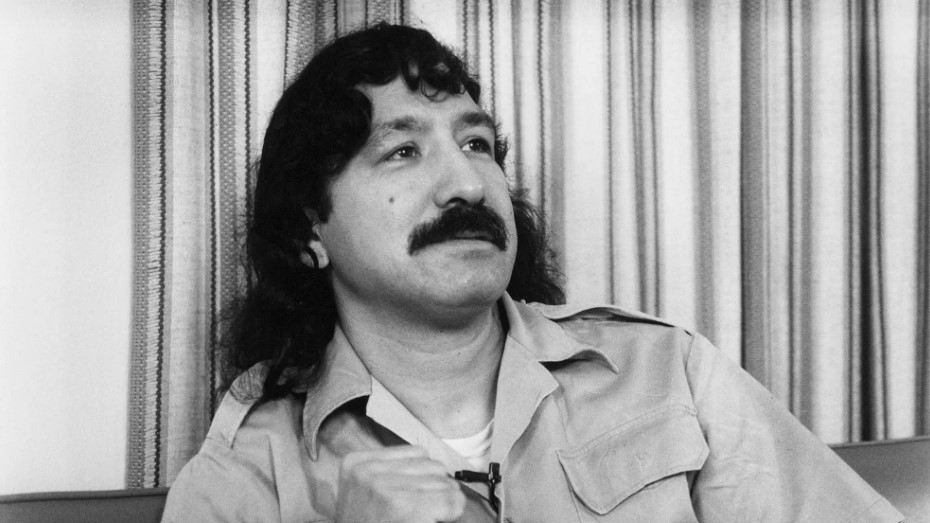
Today marks a shameful anniversary. It’s now been 47 years since our Lakota and Ojibwe relative, Leonard Peltier, was arrested after taking part in the 1975 American Indian Movement (AIM) standoff at the Pine Ridge Reservation in South Dakota. Wrongly convicted on false testimony for killing FBI agents, Leonard is now 78 years old and suffering with various health ailments in a federal penitentiary in Florida.

The good news is, the world has never forgotten Leonard, who during his lengthy incarceration has run for both President and Vice President of the United States. Today, “Rise Up for Peltier” events are happening in cities across the globe — including Paris, Rome, and Berlin. As part of this day of solidarity, our friends at the Red Nation Movement are also asking people to assist Leonard through their social media channels by sharing content and raising awareness.

Turtle Mountain’s Leonard Peltier, imprisoned in Florida, 1993. (Photo credit: Kevin McKiernan)

As Carol Gokee, co-director of the Leonard Peltier Defense Committee, wrote to you via our Lakota Law platform a year ago, the list of people who have supported clemency for Leonard is long and impressive. It includes Nobel Peace Prize winners Bishop Desmond Tutu, Nelson Mandela, and Rigoberta Menchú; former Chief Judge of Tennessee’s U.S. District Court, Kevin Sharp; Sens. Brian Schatz (D-HI) and Patrick Leahy (D-VT); Rep. Raúl Grijalva (D-AZ); and James Reynolds, the chief prosecutor who originally put Leonard behind bars. 

As we approach the anniversary of AIM’s Wounded Knee stand later this month, we’ll have much more to share with you. Lakota Law organizers Madonna Thunder Hawk and DeCora Hawk are on the ground helping to prepare a big event, and you’ll hear more from them this week. In addition, our video team is working on setting up live video feeds and our communications staff is working on an action you’ll be able to take to demand clemency for Leonard. 

You can find more info and other ways to assist right here. Please stay tuned and stand ready. We must do everything we can to right a grievous wrong. After nearly a half-century, It’s long past time to free Leonard Peltier.

Wopila tanka — thank you for your solidarity!
Chase Iron Eyes
Co-Director and Lead Counsel
The Lakota People’s Law Project