Today’s National Day of Remembrance for Indian Boarding School Survivors is another solemn reminder of how we acknowledge and learn from the past. The National Day of Remembrance began in Canada and is acknowledged in the States to honor the generations of Native and First Nations children forcibly removed from their homes to be sent to boarding and residential schools. Many of these institutions were government funded and many were church funded, but all were responsible for the oppression of Indigenous culture, language, and spirits.
And still — last week — we were given another reminder that those at the federal level continue to deny the truth. This past Thursday, as reported on our Last Real Indians Native News Desk, U.S. Secretary of Defense Pete Hegseth announced that soldiers who were awarded Medals of Honor for their 1890 massacre at Wounded Knee of nearly 300 Lakotas — including defenseless women and children — will keep them. Hegseth’s announcement, made on X, followed a review requested by former Defense Secretary Lloyd Austin in 2024.
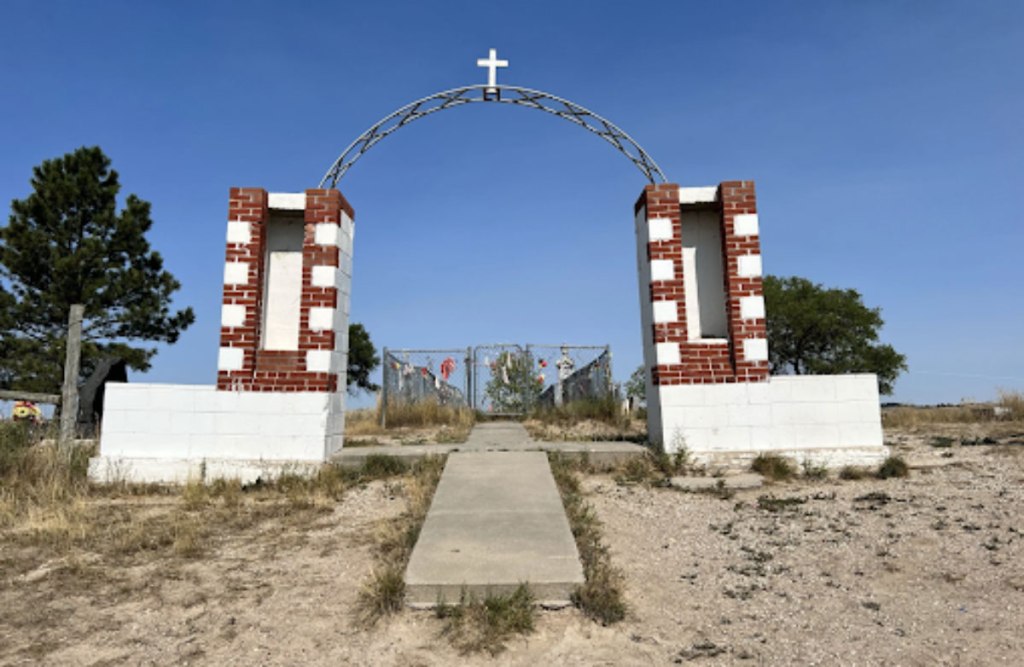
Read on LRI: Here’s the Wounded Knee Memorial on the Pine Ridge Reservation, located where more than 250 Lakota women, children, and men were killed by the U.S. military on December 29, 1890.
Many tribal leaders and organizations issued statements condemning the announcement, largely pointing out that the decision is not reflective of real American history — nor our shared values. People are simply asking for a correction in awarding the slaughter of women and children at Wounded Knee. This should not be a complicated issue.
Thankfully, our voices are being heard. After LRI Native News published our story on Hegseth’s announcement, Yahoo News and many others republished comments made by Lakota Law director Chase Iron Eyes. That’s important, because mainstream media often forgets to include voices from Indian Country, even on the issues that directly affect us. I see it as a simple equation: if you’re writing about a community, include that community’s voice.
While the announcement to rescind the Wounded Knee Medals of Honor was denied by the current administration, and though Hegseth said the decision is final, that doesn’t mean this battle is over. There are still other pathways to remove the medals from history. For instance, we can and should tell Congress to pass the Remove the Stain Act. It also took far too long to end the political imprisonment of Leonard Peltier — but through tremendous, coordinated organizing and continued discussion and pressure, we got there.
Soon, we’ll publish an op-ed on LRI Native News from South Dakota Senator Red Dawn Foster detailing the steps it took to pass the resolution in the South Dakota State Senate asking Congress to investigate the Wounded Knee Massacre and next steps we can take to rescind the medals. We’ll also have much more to say later this week on the pattern of governmental overreach currently eroding our human, civil, and constitutional rights.
Indigenous residents of Turtle Island have long known these struggles. And we also know that when things look grim, you can’t give in, give up, or lose faith. So I thank you for standing with us. Let’s keep fighting together.
Miigwech — my enduring gratitude to you as a fellow member of this movement! Darren Thompson Director of Media Relations Lakota People’s Law Project Sacred Defense Fund
Happy Juneteenth to all! Speaking of American racism, the domestic news cycle this past week largely focused on protests by millions nationwide against the attacks on migrant communities by U.S. Immigration and Customs Enforcement (as well as President Donald Trump’s costly, sparsely attended military parade). Those are important issues, and we hope you stand with us in the ongoing fights for equity and justice — and against fascistic policies and displays.
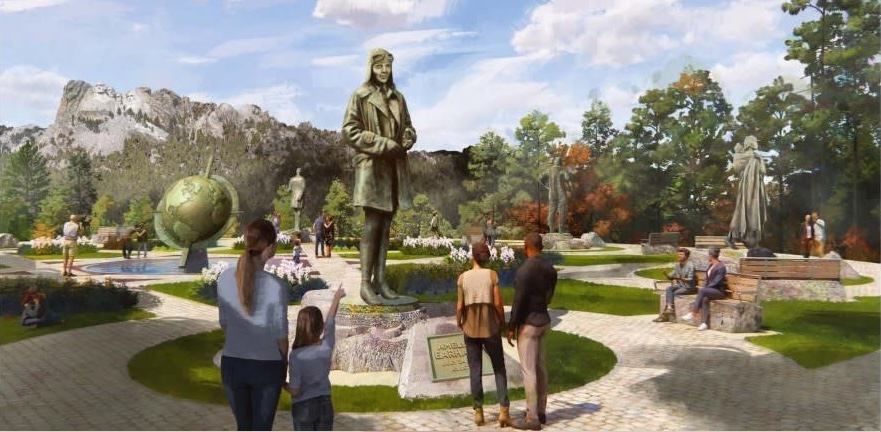
Meanwhile, it’s also important not to overlook the myriad implications of the administration’s proposed legislative agenda, including for Native communities. Those include massive budget cuts to eliminate funding for key programs and services, and now — as I report to you on our sister site, the Last Real Indians (LRI) Native News Desk — South Dakota elected officials want to put Trump’s proposed “Garden of Heroes” on Lakota homelands in the Black Hills, without consent from Native People.
Read on LRI: Do Native People want Trump’s Garden of Heroes in our homelands? Did anyone think to ask us?
In the story, you’ll get the gist of the proposal, and you’ll notice a vast difference in approaches toward it from South Dakota’s (white) elected officials and from Indigenous leaders. Because the Lakota have never ceded the sacred He Sapa (Black Hills) to the U.S., and because the area was stolen in violation of treaty law, one might think the elected officials would make it a priority to get thoughts — permission, even — from the land’s original inhabitants. Unfortunately, they continue to operate from a place of entitlement.
As you’re likely aware, the U.S. Supreme Court ruled 45 years ago in favor of the tribes, but the Lakota have never accepted the (now more than $1 billion in) settlement money. The Black Hills are not, and never have been, for sale. As Lakota Law and Sacred Defense Fund executive director Chase Iron Eyes mentions in our story, if the federal government wants to place its garden on Lakota lands, it should return them first.
On a positive note, the garden is slated to include Indigenous representation. That, at least, is something. But, on this monumental day commemorating the end of U.S. slavery, let’s be clear that respecting the perspectives and agency of marginalized groups must also be part of the process. Now more than ever, we must keep fighting — not just for recognition, but for an inclusive and healthy path forward for all who call this place their home.
Miigwech — thank you for fighting for equity and justice! Darren Thompson Director of Media Relations, Lakota People’s Law Project Editor-In-Chief, LRI Native News Desk
Warm greetings to you from the sacred (and chilly) He Sapa (Black Hills)! I’m here to witness and celebrate many young, Native runners on route from Fort Robinson, Nebraska to Busby, Montana, where — in solidarity with our Northern Cheyenne relatives, and on behalf of Lakota Law, Sacred Defense Fund, and the Standing Rock and Oglala Tribal Nations — I’m bringing you along for this year’s 29th Annual Fort Robinson Outbreak Spiritual Run.
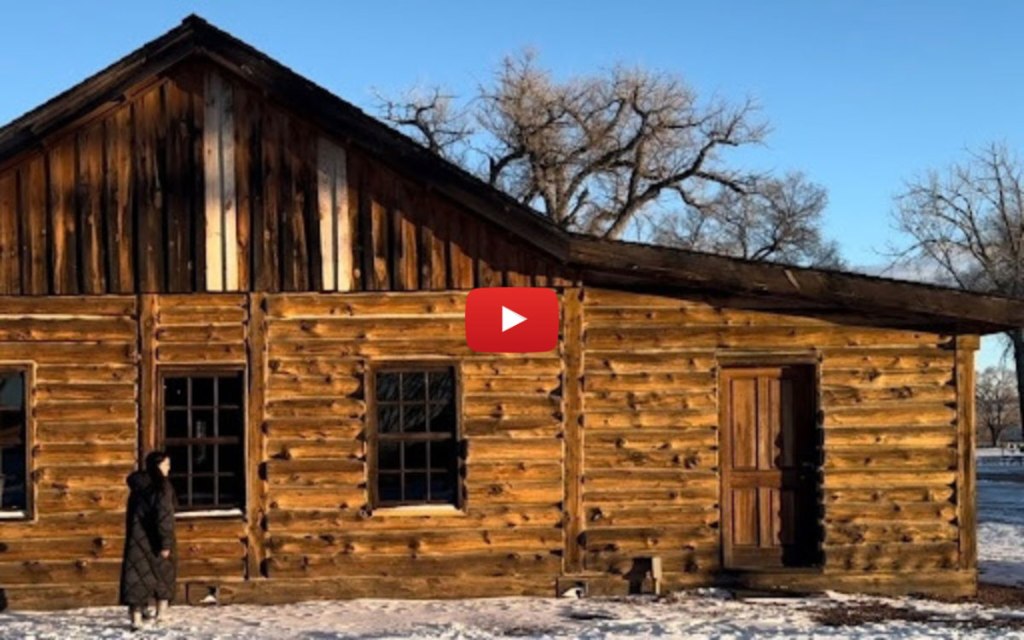
I encourage you to watch my short video introduction to this important and deeply meaningful yearly event. It honors — with a 400-mile run over six days through subzero temperatures and some of the most beautiful, wild, and sacred territory in all of Turtle Island — Northern Cheyenne ancestors who broke free from captivity in Fort Robinson on January 9th, 1879. The run retraces their steps and allows their descendants to complete the journey they were unable to finish to their homelands nearly a century and a half ago.
Watch: Here I am at the Fort Robinson barracks. In my new video, I discuss the history behind this run, which promotes healing through acknowledgment of generational trauma and taking healthful action.
I want to give recognition to the Two Bulls family and Yellow Bird Foundation for hosting this powerful event. The runners — mostly youth from many tribal nations — began with an orientation on Thursday before hitting the trail yesterday from Fort Robinson to Hot Springs, SD. After crossing though the He Sapa into Deadwood today, they’ll have three remaining legs before reaching their final destination in Busby.
Our participation here — and yours, through your support — is important, not least because it raises more awareness (both within our communities and without) of how colonization and imprisonment in “frontier” forts impacted our Northern Cheyenne relatives. In some ways, being present for and supporting this run embodies what our work is all about. It gives us a real opportunity to acknowledge the painful past while alchemizing generational trauma through healthy activity to empower the next generation.
Wopila tanka — my gratitude for your solidarity with our youth and ancestors! Tokata Iron Eyes Spokesperson & Organizer Lakota People’s Law Project Sacred Defense Fund
P.S. A second reminder: We remain deeply grateful to all of you who give of yourselves to make the ongoing work of Lakota People’s Law Project possible under our new home at Sacred Defense Fund. For those of you who donate through checks, please send them to our new mailing address, listed below, and kindly make out your checks to: Sacred Defense Fund. Thank you so much!
Note our new mailing address (and please make any checks payable to: “Sacred Defense Fund”)
Lakota People’s Law Project c/o Sacred Defense Fund PO Box 27 Santa Fe, NM 87504
Apologies for the incorrect subject on this message a few minutes ago. I hope that won’t detract from this important content.
I wish you a happy holiday season! When most people think of December, what comes to mind might be the holidays we celebrate, gathering with family, and the turning of the page to a new year at month’s end. In Lakota Country, unfortunately, the end of the Gregorian calendar year is also inextricably linked with a pair of troubling anniversaries. In solidarity with us, I hope you’ll make a little room to remember them with me today.
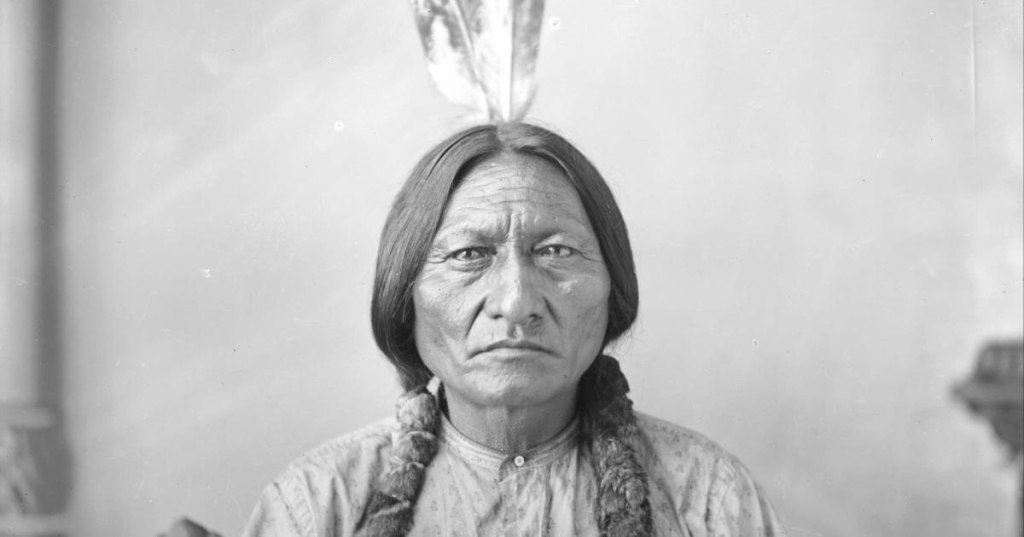
First, Dec. 15 was the 134th anniversary of the assassination of the great Hunkpapa Lakota Chief, Thatanka Iyotake, or Sitting Bull. I, too, am Hunkpapa Lakota, and I’ll say that Sitting Bull is one of our most celebrated ancestors for good reason. To learn more, I urge you to read (or reread) this blog, which I penned last year to give you more about Sitting Bull’s life, the context of his death, and an action you can take and share to rescind Medals of Honor granted to U.S. soldiers responsible for the second anniversary I referenced: the massacre of hundreds of Natives at Wounded Knee just days later, on Dec. 29, 1890.
Photograph of Sitting Bull by David Francis Barry, circa 1883.
Tied to both of those anniversaries, I’ve been doing research and thinking a lot about the unique, historic nature of policing in Indian Country. In general, cops have never been especially friendly to us — even when they are from our communities. They have always been in direct correspondence with and there to enforce rules made by American governmental officials and corporate institutions that we all face together, even today. In turn, those entities have frequently displayed genocidal intentions and undertaken endeavors, from the Wounded Knee Massacre and the murder of Sitting Bull to railroading pipelines through our sacred lands, meant to degrade or eliminate tribal nations (or, potentially, anyone demonstrating the will to defend American lands and waters).
In our last message to you, my father thanked U.S. Secretary of the Interior Deb Haaland (Pueblo of Laguna) for her service over the past four years. Let it not be lost on anyone the importance of a Native woman occupying that seat, because for many years, her department was (and sometimes still is) a great nemesis to our communities.
And that brings us back to Sitting Bull. In 1890, the Indian agent James McLaughlin, overseen by the U.S. military and the Secretary of the Interior, ordered him taken into custody. As 43 policemen and volunteers arrived that sad morning at the chief’s house and announced his arrest, a crowd of community members gathered at the commotion and began to protest. 150 Lakota arrived to protect him, and his son then led a group who attempted to free Sitting Bull from police custody.
Bureau of Indian Affairs police lieutenant Henry Bullhead and police sergeant Charles Shavehead, who bracketed Sitting Bull to prevent his escape, were shot. Mortally wounded, Bullhead then murdered Sitting Bull, shooting him in the ribs. Indian agent Red Tomahawk, who’d been behind Sitting Bull, then assumed command of the police. The ensuing fight resulted in the deaths of six police and eight Lakota protectors. After Thatanka Iyotake’s assassination, his people fled to join Spotted Elk (the brother of Iron Eyes, from whom my family takes its name). Then the band fled toward Red Cloud and the Oglala at the Pine Ridge Agency — and soon thereafter came the massacre at Wounded Knee.
These events live on with us — not just, unfortunately, as histories. As an Oglala who lives on Pine Ridge, I have witnessed police abuse in the modern day. And I have heard direct testimony and firsthand accounts of abuse of power and undue violence by Indian police over the past few decades. One example, and this is something I plan to expand on for you in subsequent messages, was the Reign of Terror on Pine Ridge in the early 1970s, which ultimately laid the foundation for the American Indian Movement’s occupation of Wounded Knee in 1973.
There is much more to say about that, and there’s so much more we can do moving forward. I promise you’ll hear more from me again soon. In the meantime, please hold us close, as you would all your loved ones at this time of year. I’m so grateful to be able to share with you, and I know that, together, we can continue to make progress. We can and we must use the often harsh lessons of the past to understand the present and create a future we can be proud of for all human beings.
Wopila tanka — thank you for your friendship! Tokata Iron Eyes Spokesperson & Organizer Lakota People’s Law Project Sacred Defense Fund
Happy Truthsgiving to you and yours! If that term is new to you, I refer you here, to a “debate” I had with Sean Sherman, known as the Lakota Chef, last year at this time, published in The Nation Magazine. I put “debate” in quotes, because — truthfully — Sean and I agree on many things. For instance, we both talk about how traditional Thanksgiving mythology fails to recognize the steep price paid by our people after colonizers came to our shores, the land that was stolen from us, and the variety of indispensable foods contributed by Indigenous cultures now enjoyed around Thanksgiving tables.
In my section, I expand on those thoughts by suggesting a rebrand of this deeply problematic holiday. Some in my community have called it “Thankstaking,” highlighting the many unwilling sacrifices Indigenous peoples have made over the centuries. Personally, I prefer Truthsgiving — which, while keeping with the traditional holiday spirit of sharing and gratitude, also calls for a necessary truthtelling component. And as a reminder to you: I invite you to stay in a space of gratitude and openness next week, when you’re invited to RSVP and join us online for our fourth annual Wopila Gathering, beginning at 4 p.m. PST on Giving Tuesday, Dec. 3.
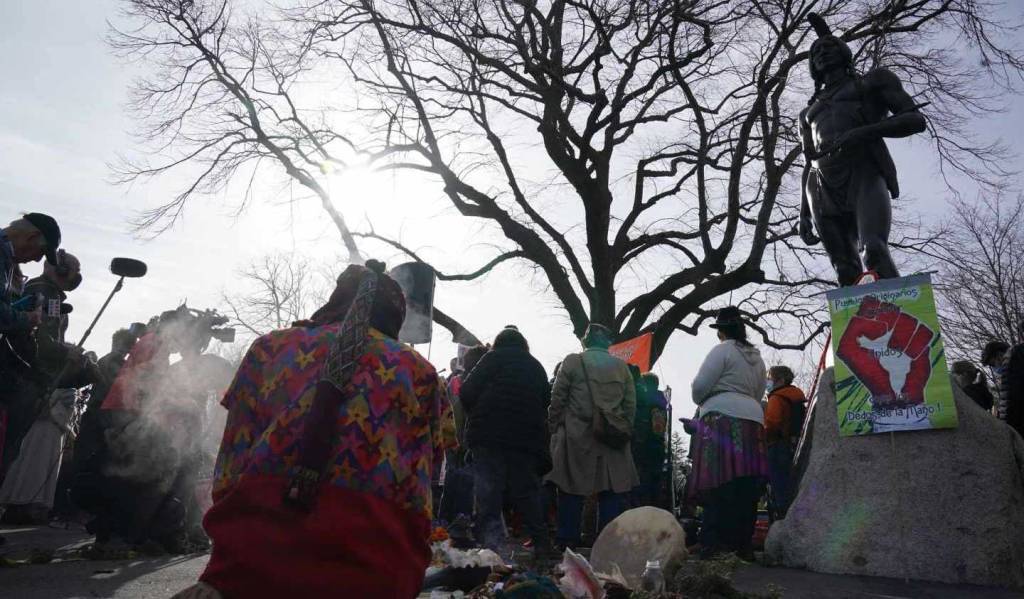
Lakota LawPeople engage in a National Day of Mourning ceremony in front of a statue of Chief Massasoit, leader of the Wampanoag tribe, in Plymouth, Mass. on Thanksgiving Day in 2021. (Bryan R. Smith / Getty Images)
Between Truthsgiving and our Wopila Gathering, on Friday the U.S. also celebrates Native American Heritage Day, at the conclusion of National Native American Heritage Month. I’m grateful that each November is designated as a time to celebrate the history, culture, and achievements of Turtle Island’s Indigenous nations. If you’re Native, I hope you’re able to take some extra time to commune with your relatives and acknowledge your ancestors this weekend. And if you’re non-Native, I hope you’ll make room to appreciate all we have given.
And then, everyone, please attend the Wopila Gathering on Giving Tuesday. This annual event provides an excellent opportunity for us to gather around an even larger table to share stories, priorities, music, and all we have to give to one another. It’s going to be a wonderful couple hours of togetherness, generosity, and joy, so I hope you’ll bookmark this page, RSVP, and Zoom in with us for the festivities!
Wopila tanka — thank you for hearing us, and I hope to see you on Tuesday. Chase Iron Eyes Director and Lead Counsel Lakota People’s Law Project Sacred Defense Fund
Lakota People’s Law Project
Lakota People’s Law Project 547 South 7th Street #149 Bismarck, ND 58504-5859
In case you missed it, President Joe Biden traveled to the Gila River Indian Community in Arizona today, where he made a landmark formal apology on behalf of the U.S. government for the federal Indian boarding school era. “It’s a sin on our soul,” he said, before asking for a moment of silence “for what was lost and the generations who have lived with that trauma.”
In his speech, Biden earnestly described some of the atrocities perpetrated on generations of young children, separated from their families at these “schools.” He also used the occasion to list his administration’s accomplishments on behalf of Native People, including hiring Deb Haaland of the Pueblo of Laguna as the nation’s first Indigenous Cabinet secretary and protecting the Indian Child Welfare Act (ICWA) in the Supreme Court.
As a Lakota Law supporter, you know those were team efforts, and I’ll always remain grateful to you for helping us participate in making them both happen. I am also thankful to the president for his long-overdue apology. But the truth is — as I said in a statement picked up widely by the press — it is not enough.
Let’s be clear: an apology is an acknowledgment of wrongdoing, but it is not any form of redress. An apology is just the beginning of a necessary truth-telling. It is a nice start, but it is not a true reckoning, nor is it a sufficient remedy for the long history of colonial violence. The president’s apology calls for a deeper examination. I ask him to work with those knowledge holders within Indigenous communities to tell the entire, historical truth and look at proper redress.
We need more real action on a path toward reconciliation. As you know, we have many ideas for what truly addressing the history of genocide in the U.S. should look like. From rescinding medals of honor given to those who massacred our people at Wounded Knee to codifying ICWA at the state level, there are many tangible steps that can be taken to help and honor Native families, children, and communities.
Let’s remember that the separation of Native children from their families did not end with boarding schools. Lakota Law came into being because our grandmothers sought help with the ongoing epidemic of South Dakota’s Department of Social Services (DSS) removing our children at alarming rates. While Native people make up around a tenth of the state’s population, Native children comprise about half of the children in foster care here. And a report we produced a few years back showed that more than 60 percent of children who aged out of DSS custody in South Dakota wound up dead, addicted, imprisoned, or houseless.
So yes, I’m grateful that Biden has acknowledged some historic wrongs and begun to prioritize Native representation and funding for our communities in the present day. I’m also clear-eyed that we have much more to do together moving forward, so let’s keep working! I thank you for your heart and your activism in helping us realize a better world for the generations to come.
Wopila tanka — my gratitude for your friendship in this journey. Chase Iron Eyes Director and Lead Counsel Lakota People’s Law Project Sacred Defense Fund
Over the past couple weeks, you may have seen stories or social media posts detailing the terrible treatment of the Muwekma Ohlone People by federal agents on the National Mall in Washington, D.C. It pains me just to write this, but government officials threatened to kill their horses and arrested tribal members at the tail end of the Muwekma’s cross-country “Trail of Truth” journey, in which tribal members sought government-to-government consultation with the U.S. Department of the Interior to restore their rightful federal recognition.
The San Francisco Bay region has been the homeland of the Muwekma Ohlone People for more than 10,000 years, and congressional censuses acknowledged them throughout the early 20th century. And yet, today they’re landless and unrecognized by the federal government. This egregious oversight negatively impacts tribal members, who lose out on a myriad of important benefits when their sovereignty is ignored. The Muwekma Ohlone People have spent 40 years presenting valid evidence and struggling to reinstate their federal status, and the Department of Interior’s continued indifference amounts to a perpetuation of the cultural genocide of the Muwekma Ohlone.
With high hopes that an Interior Department now led by Deb Haaland of the Pueblo of Laguna would be more receptive to their message, the tribe, led by Chairwoman Charlene Nijmeh, set out on horseback from San Francisco in August on their Trail of Truth. Sadly, they — including women, children, and elders — were violently assaulted by the National Parks Police upon arrival in D.C.
On Oct. 15 — the day after Indigenous Peoples’ Day — National Parks Police officers immediately moved to take the horses, which were provided by Lakota allies, specifically Percy White Plume (a direct descendant of Red Cloud) at the Horse Nation on the Pine Ridge Reservation. The police then arrested tribal members who tried to prevent the horses’ capture. Those actions were inconsistent with the law and far out of line, and these are some of the reasons why, in partnership with Muwekma, I plan to share more about various aspects of their story with you soon. In the meantime, please assist by taking action and telling your reps to restore federal recognition to the Muwekma Ohlone Tribe today.
Wopila tanka — thank you for supporting tribal sovereignty of the Muwekma Ohlone People! Chase Iron Eyes Director and Lead Counsel Lakota People’s Law Project Sacred Defense Fund
You’ve heard from me a few times already this year about the importance of coalition building to achieve a new level of effectiveness — not just in our own work, but in the work my Indigenous relatives are undertaking at tribal nations across Turtle Island. To that end, today I share with you about a trip I took to spend a few days earlier this month with people I greatly respect at the Wind River Reservation in so-called Wyoming.
The seventh largest reservation in the U.S., the Wind River Nation encompasses more than 2 million acres of incredible wildlands, and it’s home to people from both Northern Arapaho and Eastern Shoshone tribes. I went to visit a few friends there, including Wes Martel, who you may remember from his keynote speech at the Great Plains Water Alliance’s Winter Water and Climate Conference, featured in our 20th Dakota Water Wars chapter. I also spent time with Jason Baldes, a central figure helping to return American Buffalo to Wind River and other tribal nations. I encourage you to watch “Homecoming,” a short documentary on PBS, about his wonderful work.
Watch: Buffalo return to Wind River in “Homecoming,” a PBS short documentary featuring the voice and good work of Jason Baldes.
To you, the inextricable link between Native people and buffalo is likely no mystery. Jason speaks to this eloquently in the documentary.“To restore that animal to our communities means that we can begin to heal,” he says. “From atrocities of the past, from loss of land, from loss of culture, loss of language. It’s foundational to who we are.”
That’s just one example of good Indigenous storytelling emanating from Wind River. While there, I also discovered the great music of Christian Wallowing Bull, a talented Northern Arapaho singer-songwriter featured in the new documentary film “Lone Wolf,” which premiered in California a few days ago. I then spoke with Dave Herring, the film’s director. I hope that you’ll watch their film and be as inspired by Christian’s story as I was.
As you can see, we’re taking extra time this year to build connections with people, organizations, and tribal nations. In order to create a better society, it’s critical to advance not just our own priorities as Lakota People, but also those of all our relatives with their own traditional knowledge systems, art, and dreams. Between us, we’ve got much more in store to share with you. Stay tuned!
Wopila tanka — My continued thanks for supporting all Indigenous people, art, and culture. Chase Iron Eyes Director and Lead Counsel The Lakota People’s Law Project
Lakota People’s Law Project 547 South 7th Street #149 Bismarck, ND 58504-5859
Greetings from Las Vegas, where I stopped to observe the mayhem of Super Bowl week. As my dad wrote to you a few days ago, we remain committed to changing the Kansas City Chiefs team name — and all racist characterizations of our people in the sports world. Also, I want to take a moment to say that because we are all human, and no matter how big our differences, I offer my sincere condolences to the Kansas City community in the wake of yet another instance of senseless gun violence. I pray for the day when we find better ways to listen to one another, discover common ground and understanding, and stop killing each other.
On a happier note, on my way to Vegas, I journeyed through some spectacular, sacred places. These included some of the Trail of the Ancients and traditional homelands of the Diné (Navajo) and Ute Peoples, including Monument Valley and Bears Ears National Monument — where something wonderful has occurred. I encourage you to watch my short video, recorded onsite, to hear about the recent gift of land back to Indigenous stewardship in Cottonwood Canyon.
Watch: I visited the sacred lands of the Ute and Diné Peoples to see Cottonwood Canyon and share with you about the importance of Landback efforts like the one in Cottonwood Canyon.
In many ways, the process undertaken with Cottonwood Canyon can serve as a model elsewhere across Turtle Island. A nonprofit organization bought available land and synched with a consortium of Native Peoples to preserve a beautiful place featuring rare views of spectacular rock formations and ancient dwelling sites. That’s something I dearly hope we can eventually replicate on a much larger scale with the Black Hills — but I’m also happy anytime we see the return of sacred lands to Indigenous care.
I’ll also say that the model isn’t perfect. Such transfers shouldn’t come with conditions. Isn’t the point of Native stewardship to respect our traditional knowledge systems regarding the land? So, while I appreciate the intent behind a condition of the transfer that will limit access to the site, I would also suggest that it shouldn’t be about eliminating human contact. Human beings should, in fact, have the opportunity to visit sacred places and relearn how to live in harmony with them, just as my relatives and ancestors have done for time immemorial. Even our allies can learn something here: please stop holding us to rules designed by colonizers.
In any case, a win is a win! Ultimately this gift will ensure that a special place displaying the ingenuity of our relatives’ ancestors and the vistas they loved will remain unspoiled for generations to come. And for that, I am truly grateful.
Wopila tanka — thank you for supporting landback efforts! Tokata Iron Eyes Spokesperson & Organizer The Lakota People’s Law Project
Lakota People’s Law Project 547 South 7th Street #149 Bismarck, ND 58504-5859
The Lakota People’s Law Project is part of the Romero Institute, a nonprofit 501(c)(3) law and policy center. All donations are tax-deductible.
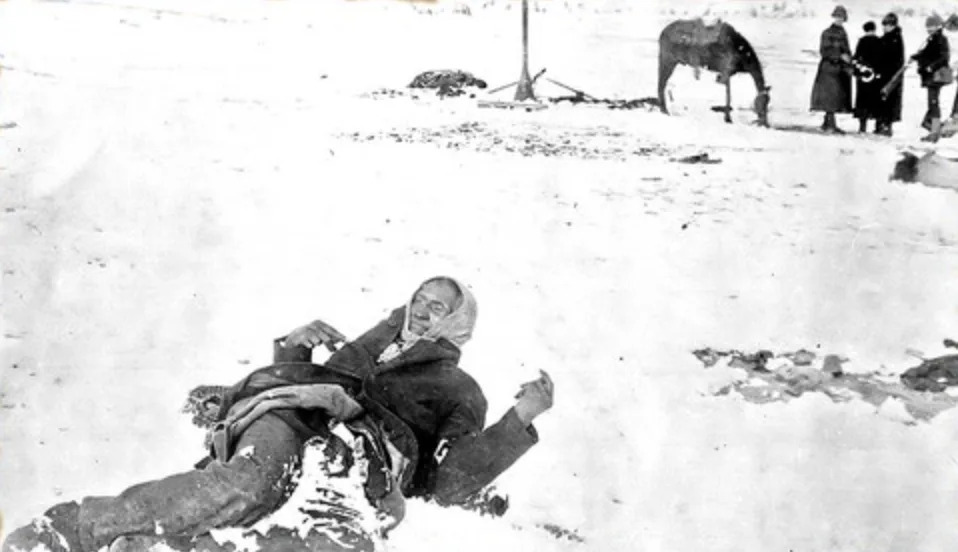
An iconic photo of Big Foot left frozen from the 1890 massacre at Wounded Knee of a dead and frozen Big Foot. (Photo/Public Domain)
Opinion. Today marks the 133rd anniversary of the Massacre of Wounded Knee during the wintry week between Christmas and New Years back in 1890.
Nine days before the massacre that left hundreds of Sioux men, women, and children dead, an obscure weekly newspaper in South Dakota ran an editorial about the death of the Hunkpapa Lakota leader Sitting Bull. In the opinion piece, L. Frank Baum, publisher of the Saturday Pioneer, wrote:
“The Whites, by law of conquest, by justice of civilization, are masters of the American continent, and the best safety of the frontier settlements will be secured by the total annihilation of the few remaining Indians. Why not annihilation? Their glory has fled.”
Early in the morning on Dec. 29, 1890, across the state of South Dakota at Wounded Knee Creek, the Sioux, who were captured the previous afternoon by members of the US 7th Cavalry Regiment, were surrendering their weapons. A shot was fired. The Calvary proceeded to shoot unarmed and innocent Sioux elders, women, and children. While an accurate account will never be known, it is believed between 250 and 300 Sioux were massacred that day.
Snowfall was heavy that December week. The Sioux ancestors killed that day were left on the frigid wintery plains of the reservation before a burial party came to bury them in one mass grave.
After the mass killing of Natives, Baum picked up his poisonous pen again and wrote another editorial for his Saturday Pioneer newspaper. This time, he wrote:
“The Pioneer has before declared that our only safety depends upon the total extirmination [sic] of the Indians. Having wronged them for centuries we had better, in order to protect our civilization, follow it up by one more wrong and wipe these untamed and untamable creatures from the face of the earth. In this lies future safety for our settlers and the soldiers who are under incompetent commands. Otherwise, we may expect future years to be as full of trouble with the redskins as those have been in the past.”
Ten years later, Braum wrote a children’s book called The Wonderful Wizard of Oz. Yes, that one. It was eventually made into one of the most famous movies of all time. When I was a youth, my siblings and I would make popcorn and sit and watch the movie when it was broadcast yearly. As an adult, I discovered Baum’s hatred and poisonous racism towards Native Americans. Suffice it to say, I stopped watching the film.
Now, I realize Braum did not single-handedly cause the genocide of Native Americans. But, he contributed to it with his editorials and his calls for the extermination of Native people. His family later apologized for Baum’s racist editorials.
This is why history matters. If you know your history, you know your place in this world.
In recent weeks, the Republican presidential front-runner, former president Donald Trump, has stated in his stump speech that immigrants entering the U.S. illegally are “poisoning the blood of our country.” There has been pushback that Trump borrowed the line from Adolf Hitler’s rhetoric in his autobiographical manifesto Mein Kampf, which set the principles behind Nazi Germany’s genocide of more than six million Jews.
Trump denies reading the book. I don’t doubt his claim because he is known for not being a reader. But I’m guessing that some of his speech writers and political advisers may have — and they certainly play a role in the words that come out of candidate Trump’s mouth.
I suspect most Americans don’t subscribe to the belief that immigrants are poisoning the blood of our country.
I also believe that most Americans would agree that racism has been a true poison in our country throughout the last two centuries, though it’s not something we’ve been able to eradicate.
That’s why it’s important we remember the Massacre of Wounded Knee, as well as the rhetoric and words used to justify it. Because it’s a potent reminder of what racism has led to in this country: the death of innocent Native people whose ancestors lived on this land since time immemorial.
Thayék gde nwéndëmen – We are all related.
About the Author: “Levi \”Calm Before the Storm\” Rickert (Prairie Band Potawatomi Nation) is the founder, publisher and editor of Native News Online. Rickert was awarded Best Column 2021 Native Media Award for the print\/online category by the Native American Journalists Association. He serves on the advisory board of the Multicultural Media Correspondents Association. He can be reached at levi@nativenewsonline.net.”
Contact: levi@nativenewsonline.net
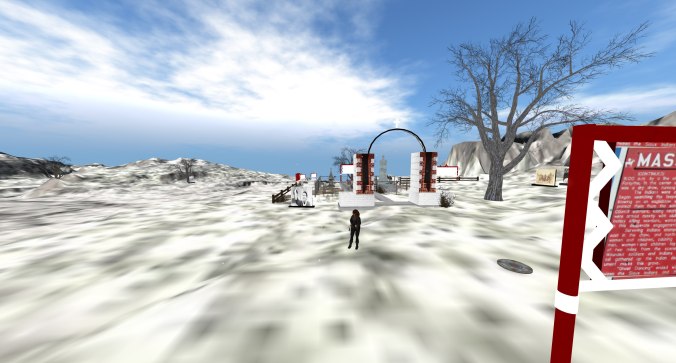
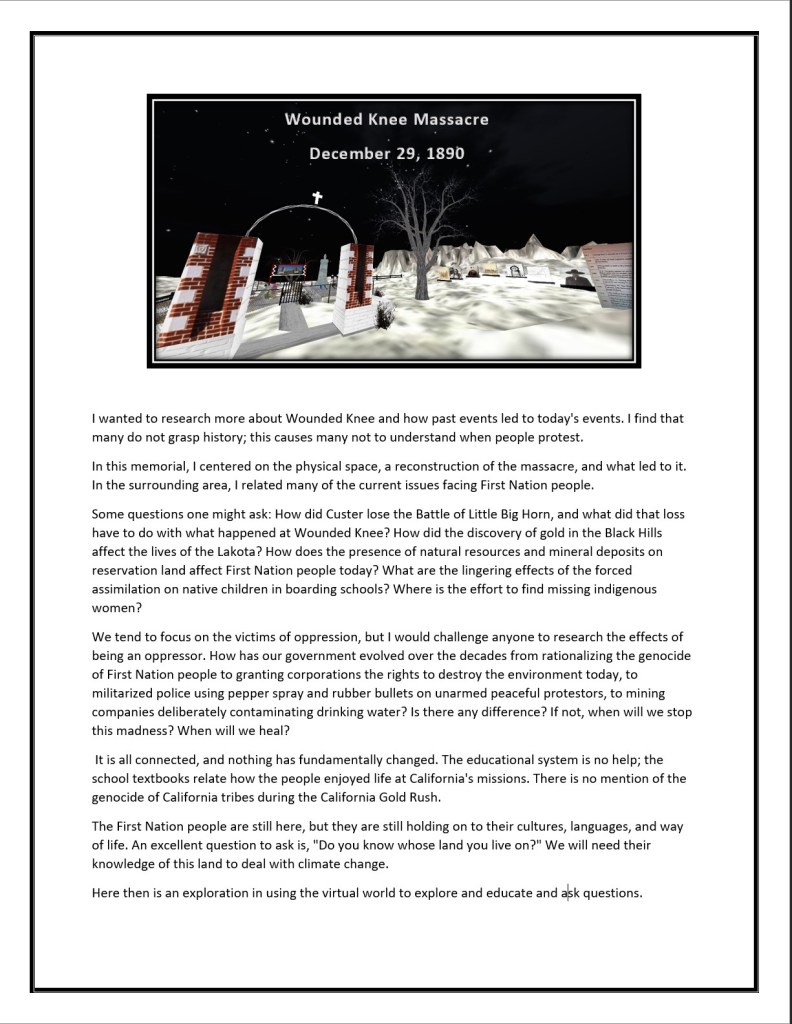
Wounded Knee Massacre December 29, 1890
by Renee Michel 2020 Second Life Virtual Wounded Knee Memorial
I wanted to research more about Wounded Knee and how past events led to today’s events. I find that many do not grasp history; this causes many not to understand when people protest.
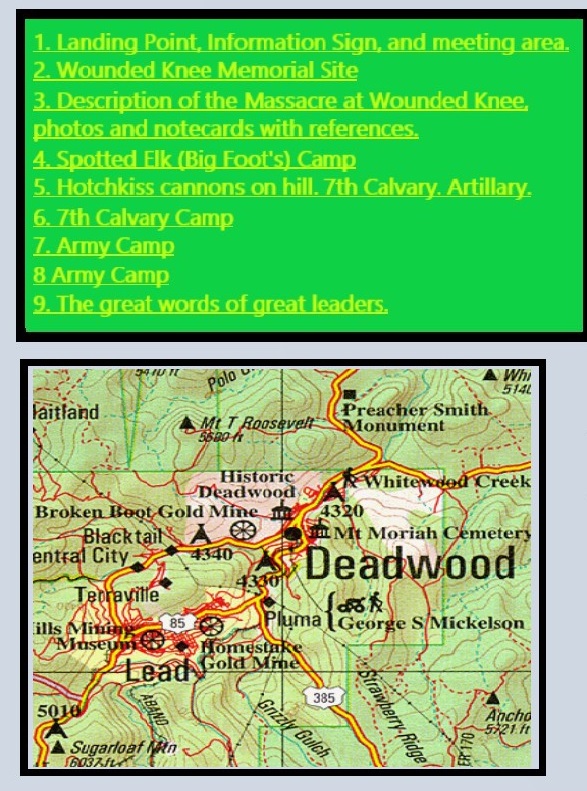
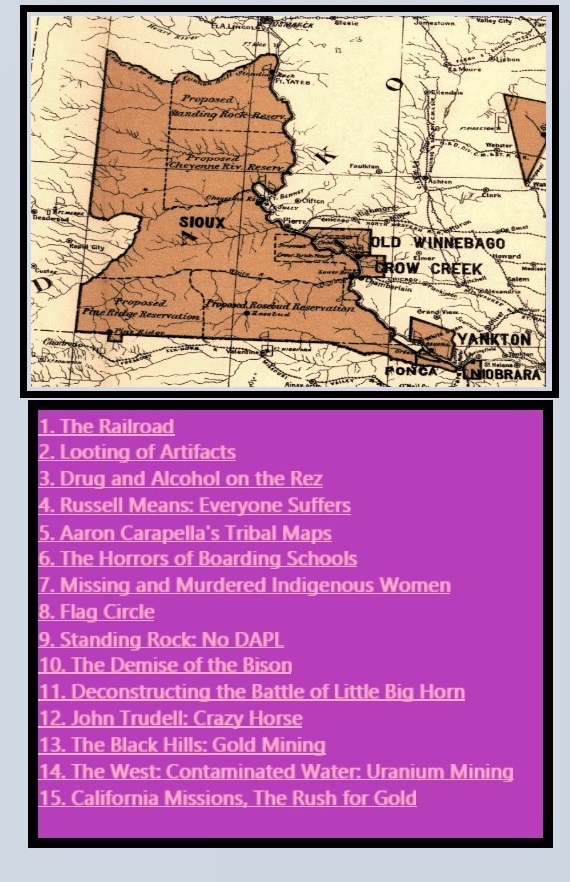
In this memorial, I centered on the physical space, a reconstruction of the massacre, and what led to it. In the surrounding area, I related many of the current issues facing First Nation people.
Some questions one might ask: How did Custer lose the Battle of Little Big Horn, and what did that loss have to do with what happened at Wounded Knee? How did the discovery of gold in the Black Hills affect the lives of the Lakota? How does the presence of natural resources and mineral deposits on reservation land affect First Nation people today? What are the lingering effects of the forced assimilation on native children in boarding schools? Where is the effort to find missing indigenous women?
We tend to focus on the victims of oppression, but I would challenge anyone to research the effects of being an oppressor. How has our government evolved over the decades from rationalizing the genocide of First Nation people to granting corporations the rights to destroy the environment today, to militarized police using pepper spray and rubber bullets on unarmed peaceful protestors, to mining companies deliberately contaminating drinking water? Is there any difference? If not, when will we stop this madness? When will we heal?
It is all connected, and nothing has fundamentally changed. The educational system is no help; the school textbooks relate how the people enjoyed life at California’s missions. There is no mention of the genocide of California tribes during the California Gold Rush.
The First Nation people are still here, but they are still holding on to their cultures, languages, and way of life. An excellent question to ask is, “Do you know whose land you live on?” We will need their knowledge of this land to deal with climate change.















 Water is Life