I have a short, one-question quiz for you today. What does Wounded Knee have in common with Washington, D.C., Los Angeles, Chicago, and Portland? At a glance, perhaps not much. But the rights and sovereignty of people across Turtle Island are now at risk as the federal government, as it did at Wounded Knee in 1890 and again in 1973, is sending armed troops into American cities to violently subjugate the people of this land.
We need to talk about this moment, what it means for our constitutional sovereignty, and what we can do about it. That’s why we’ll be hosting our next Lakota Law Membership Circle Event — Indigenous and Constitutional Sovereignty at Risk — at 5 p.m. PST on Wednesday, Oct. 29. Tokata will host, and I’ll be joined by our legal team to share our perspectives. Please become a Lakota Law member (for just $10 — the price of one fancy coffee!) to take part in this important discussion.
The invasions of left-leaning U.S. cities are not happening in a vacuum. The troops are there to accomplish three things. They’re enforcing the Trump administration’s racist and inhumane immigration policies, and they’re providing a means of distraction — a way to keep the American people from addressing, or even seeing, the corruption, grift, and scandal that should be synonymous with this version of the executive branch.
Perhaps most importantly, they’re sending a clear message that resistance, dissent, and demonstration — cornerstone First Amendment rights of our constitutional republic — will not be tolerated. Last week, Trump codified this ethos by issuing a national security memorandum that further erodes the rights of all U.S. citizens. It seeks to label those questioning the policies and methodologies of the administration as domestic terrorists — familiar territory from where I sit, as it’s exactly what happened to me and my family at Standing Rock in 2017.
The (same old) cavalry is coming, and I suggest that should be of comfort to absolutely nobody. In our homelands, it started with Custer, whom some descendants of the original immigrant settlers still love to exult and celebrate as a hero. In reality, he was a butcher of noncombatants, a gutter of women, children, and elders. His armed compatriots then earned Congressional Medals of Honor for doing the same to Native People who believed the Ghost Dance (incorporating elements of Christ consciousness) might bring about much needed shifts for our human family.
Fast forward 135 years, and our nation and our world are still badly in need of such a shift. Once again, large swathes of the population have bought into a mythology foisted upon them by the nefarious agents of the blood profiteer war machine — the main beneficiaries of government largess — at the continued expense of life, liberty, and happiness.
Many more of us are waking up to the reality that this is it; we must engage with everything we have in the existential battle to preserve our constitutional, civil, and human rights. It’s time to unite and fight! So, my relative, I hope I’ll see you on Oct. 29 to talk more about what we can and will do together to protect our sovereignty.
Wopila tanka — thank you for fighting for justice! Chase Iron Eyes Executive Director Lakota People’s Law Project Sacred Defense Fund
****Please take note of the complete shift in the political landscape. It is no longer left versus right. What is happening now is the total corruption and collapse of government. The U.S. experiment in democracy is over. The U.S. government is sponsoring and supporting genocide in Gaza. The prior and the current administration is complicit. Remember this in your discussions. RM
Today’s National Day of Remembrance for Indian Boarding School Survivors is another solemn reminder of how we acknowledge and learn from the past. The National Day of Remembrance began in Canada and is acknowledged in the States to honor the generations of Native and First Nations children forcibly removed from their homes to be sent to boarding and residential schools. Many of these institutions were government funded and many were church funded, but all were responsible for the oppression of Indigenous culture, language, and spirits.
And still — last week — we were given another reminder that those at the federal level continue to deny the truth. This past Thursday, as reported on our Last Real Indians Native News Desk, U.S. Secretary of Defense Pete Hegseth announced that soldiers who were awarded Medals of Honor for their 1890 massacre at Wounded Knee of nearly 300 Lakotas — including defenseless women and children — will keep them. Hegseth’s announcement, made on X, followed a review requested by former Defense Secretary Lloyd Austin in 2024.
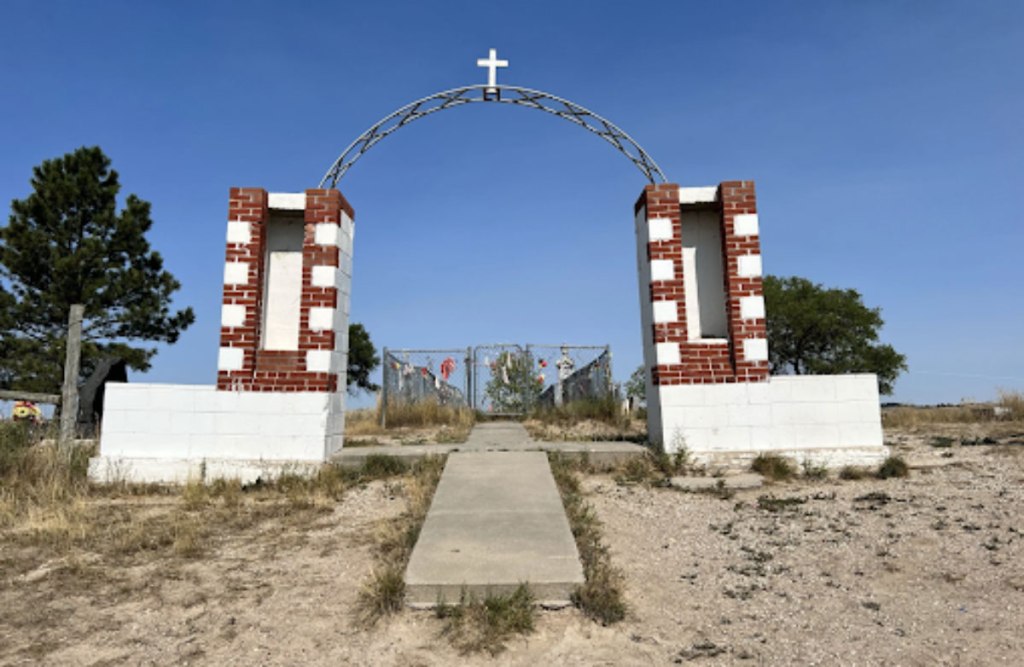
Read on LRI: Here’s the Wounded Knee Memorial on the Pine Ridge Reservation, located where more than 250 Lakota women, children, and men were killed by the U.S. military on December 29, 1890.
Many tribal leaders and organizations issued statements condemning the announcement, largely pointing out that the decision is not reflective of real American history — nor our shared values. People are simply asking for a correction in awarding the slaughter of women and children at Wounded Knee. This should not be a complicated issue.
Thankfully, our voices are being heard. After LRI Native News published our story on Hegseth’s announcement, Yahoo News and many others republished comments made by Lakota Law director Chase Iron Eyes. That’s important, because mainstream media often forgets to include voices from Indian Country, even on the issues that directly affect us. I see it as a simple equation: if you’re writing about a community, include that community’s voice.
While the announcement to rescind the Wounded Knee Medals of Honor was denied by the current administration, and though Hegseth said the decision is final, that doesn’t mean this battle is over. There are still other pathways to remove the medals from history. For instance, we can and should tell Congress to pass the Remove the Stain Act. It also took far too long to end the political imprisonment of Leonard Peltier — but through tremendous, coordinated organizing and continued discussion and pressure, we got there.
Soon, we’ll publish an op-ed on LRI Native News from South Dakota Senator Red Dawn Foster detailing the steps it took to pass the resolution in the South Dakota State Senate asking Congress to investigate the Wounded Knee Massacre and next steps we can take to rescind the medals. We’ll also have much more to say later this week on the pattern of governmental overreach currently eroding our human, civil, and constitutional rights.
Indigenous residents of Turtle Island have long known these struggles. And we also know that when things look grim, you can’t give in, give up, or lose faith. So I thank you for standing with us. Let’s keep fighting together.
Miigwech — my enduring gratitude to you as a fellow member of this movement! Darren Thompson Director of Media Relations Lakota People’s Law Project Sacred Defense Fund
Deadline: Montana Free Press/ICT fellowship Applications are being accepted through Dec. 9, 2024, for a full-time, paid fellowship position with ICT and the Montana Free Press to cover Indigenous issues in the upcoming 2025 Montana legislative session. The internship will be based in Helena, Montana, and will run from January through May 2025. A salary and housing allowance will be provided. The Montana Free Press, Montana’s premier independent nonprofit news organization, in partnership with ICT (formerly Indian Country Today), has an immediate opening for an Indigenous Montana Legislative Fellowship in our Helena, Montana, newsroom. The paid fellowship is open to undergraduate or graduate college students and early career journalists who want to develop statehouse and political reporting skills in service of impactful community coverage. Knowledge of Indigenous communities, issues and policies will be considered a plus. The fellowship is an opportunity to deepen and broaden reporting skills while learning from and collaborating with experienced statehouse journalists and news industry professionals.
FIND DETAILS HERE[Eliza Wiley/Montana Free Press] Read the work of JoVonne Wagner, the 2023 fellow, from her time in Helena!
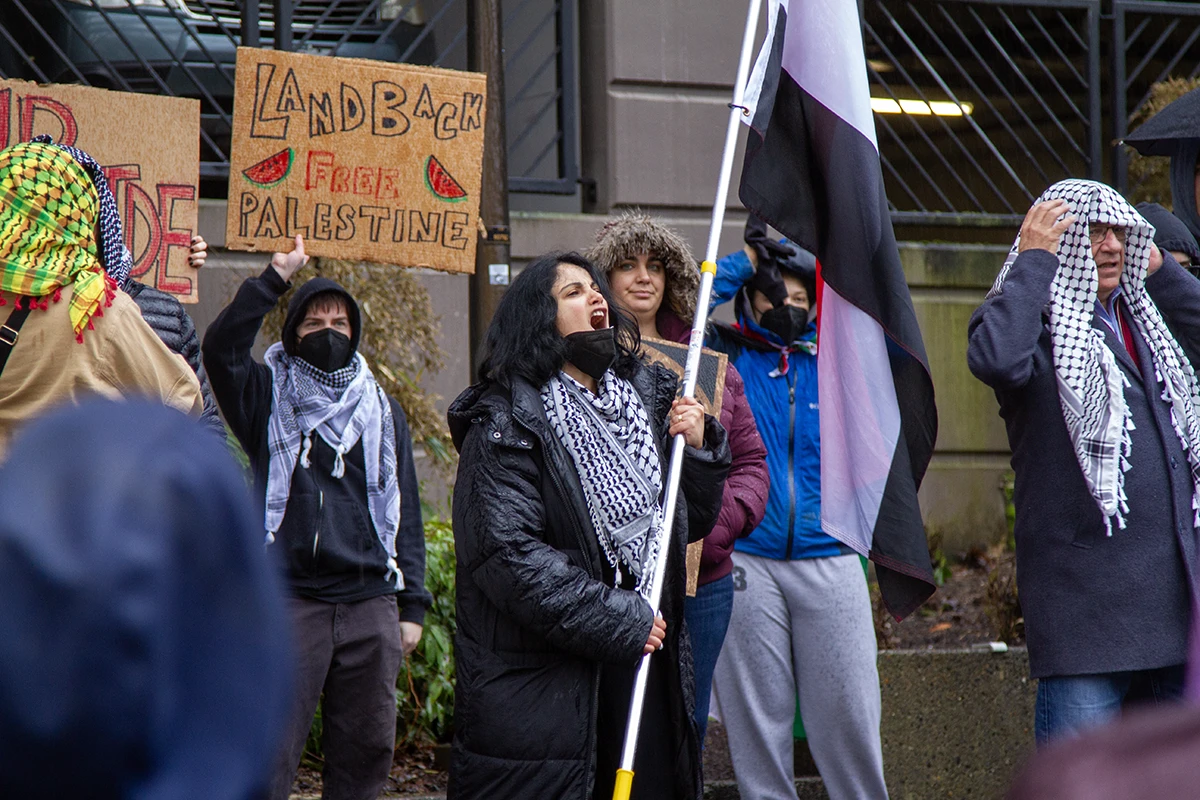
PORTLAND, Ore., Jan. 25 – As light from the morning sun began to fill the city of Portland, a group of over 100 community members gathered together on the steps of the Lovejoy Fountain Park in downtown Portland. Traditional Palestinian Keffiyehs, now a symbol for Palestinian freedom, shielded the faces of some attendees and kept them warm in the dreary weather.
The smell of sage wafted through the air leading community members to the Indigenous-led sunrise ceremony in solidarity with Palestine, as Lummi Nation citizen, Nic Niggemeyer, shared a hand drum song with the crowd.
As the clock ticked closer to 9:30 am, attendees lined up inside a City of Portland Building for the Jan. 24 Portland City Council meeting. Dozens streamed into the meeting room. Four people who signed up ahead of time, delivered remarks to city commissioners and asked them to pass a resolution calling for an immediate and permanent ceasefire in Gaza. Mayor Ted Wheeler was not in attendance, as he had a “conflict for the early part of the meeting,” according to commissioner Mingus Mapps, who presided over the meeting.
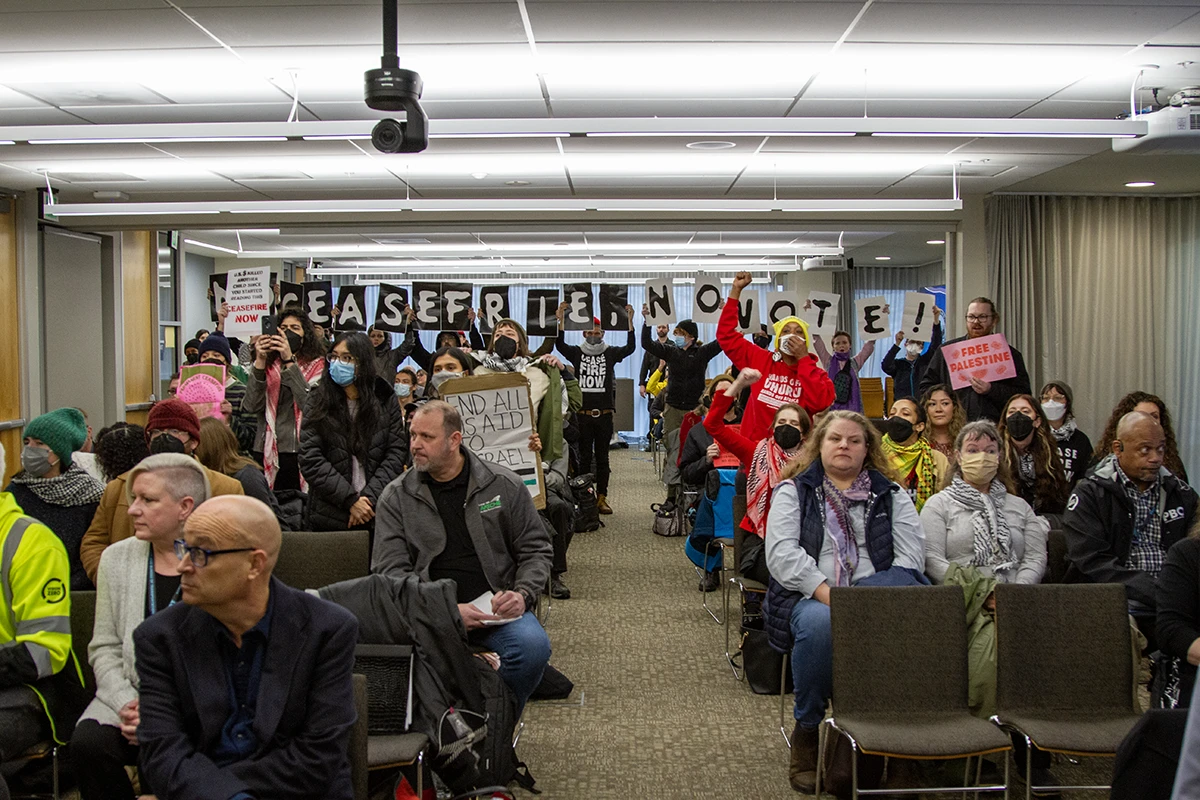
Each speaker stood in front of the council members and used their three minutes to speak about the injustices they believe are happening in Palestine and the complacency of the U.S. government and the city of Portland in the genocide of Palestinians. Members in the crowd stood up holding signs reading, “No ceasefire, no votes,” and, “Free Palestine.”
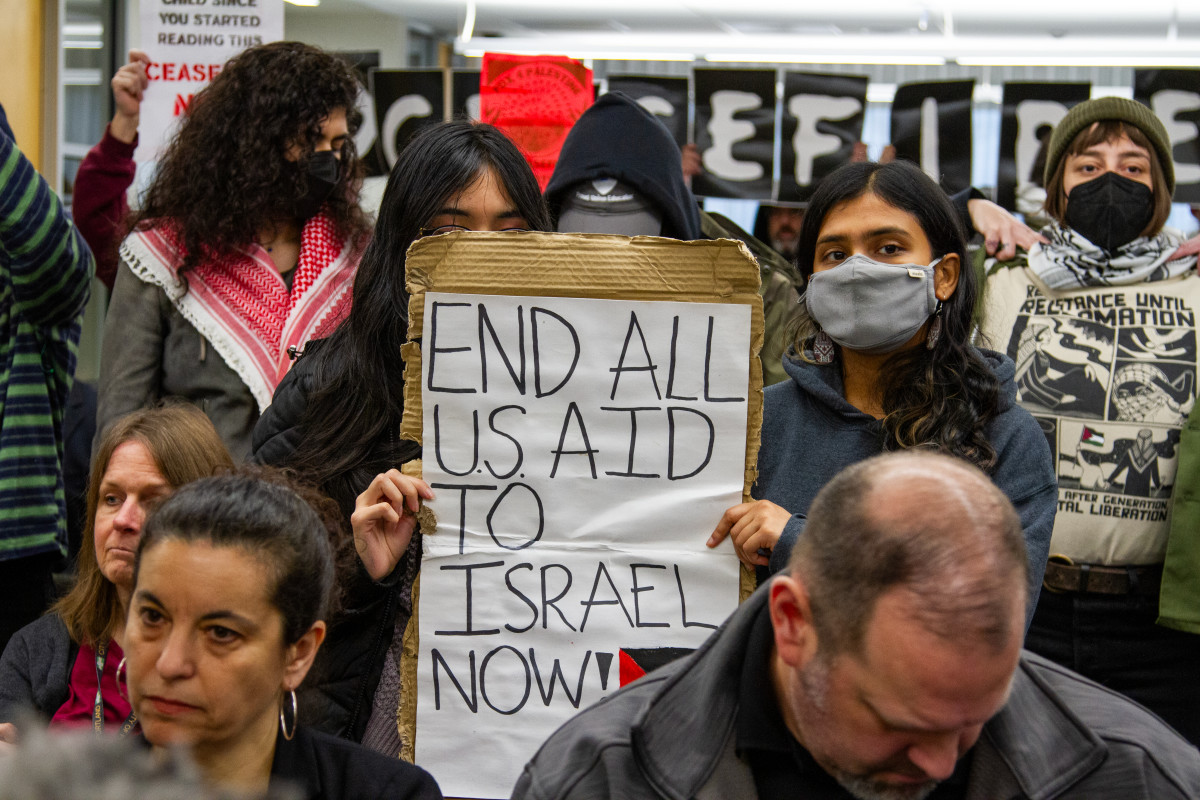
One attendee at the Jan. 24 Portland city council meeting held a sign that reads, “U.S. [money] killed another child since you started reading this. Ceasefire now.” (Photo by Jarrette Werk Underscore News/Report for America)
“I am here to emphasize that this global issue has deep, local repercussions and requires you to take action,” said Alexandria Saleem, a Palestinian American woman who spoke to the council. She shared that 19 members of her family have been killed in Palestine by Israeli airstrikes. “I am testifying today to urge you to support an immediate and permanent ceasefire and the entry of urgent humanitarian aid into Gaza.”
After the first four speakers, Portland commissioners moved on with little acknowledgement of the demands for a ceasefire. Attendees quickly erupted into chants of, “What about Palestine?,” “Acknowledge us,” “Blood on your hands,” and, “How many more children?” Dozens more spilled out of the room, down the hall and in the main entrance of the building holding signs and demanding a ceasefire.
The protest caused the commissioners to take a recess. None responded to the demands of their constituents.
Two individuals hold up a piece of cardboard with signs on the front and back. One reads, “End all U.S. aid to Israel now.” (Photo by Jarrette Werk Underscore News/Report for America)
‘Their struggle is our struggle’
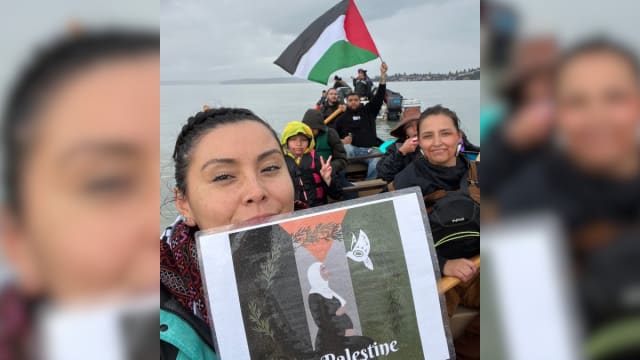
Protests like these have been consistent across the globe following the Israeli besiege and bombardment of the Gaza strip after a Palestinian resistance group called, Hamas, attacked Israeli civilians on Oct. 7. From organizing marches, to using social media to spread information, to paddling in traditional Nisqually canoes to block docked military ships, Indigenous organizers from across Turtle Island have been actively speaking up and speaking out against what they all agree is a genocide currently taking place in Gaza.
“I want to be loud,” said Colleta Macy, a Warm Springs artist and activist. “I want to be radical. I want to shut it down.”
During the first week of December, Macy, a citizen of the Confederated Tribes of Warm Springs, says she organized the first march in Warm Springs history to show support and solidarity for another country. Around 40 community members joined in as they marched to the Deschutes River to sing songs and offer prayers for Palestine.
One week later, she organized another protest in the neighboring town of Madras. On the last day of 2023, she joined hundreds of protestors while wearing her jingle dress, dancing and offering prayers for Palestine while they shut down the Morrison Bridge in downtown Portland. Last week, Macy and her daughter were invited to attend the “March in DC for Palestine,” where thousands gathered at the country’s capital to demand an end to the Israeli military action in Gaza.
On Jan. 24, Macy and members of her family joined the sunrise ceremony, offering a hand drum song, before the crowd marched to attend the Portland City Council meeting, calling for a ceasefire. Macy says as an Indigenous woman she has a responsibility to stand in solidarity with her Palestinian relatives.
Colleta Macy, citizen of the Confederated Tribes of Warm Springs, is an artist and activist who uses her platform to educate her community about what she calls an ongoing genocide of Palestinian people in Gaza. “Their struggle is our struggle,” Macy said. “It’s just history repeating itself. We can’t have what happened to us happen to them.” (Photo by Jarrette Werk Underscore News/Report for America)
Indigenous nations of Turtle Island have been dealing with colonization for over five centuries, and because of this Macy says all Indigenous people need to be standing in solidarity and demanding an end to the genocide that is being publicized for the world to see.
“Seeing that same resilience, that same strength as our people – it’s powerful,” Macy said, in reference to the resistance of Palestinian people. “It reminds me of our warriors, back centuries ago, who would dance in prayer before they would go out and face the cavalry.”
Over a century of Palestinian resistance
Most people think the conflict started on Oct. 7, but in reality the Palestinian story is more than 100 years old. The fight for Palestinian sovereignty came to a head with the passage of the Balfour Declaration of 1917 in which the United Kingdom expressed sympathy with the Zionist movement and support of Palestine becoming a “national home for the Jewish people.”
What follows has been over a hundred years of occupation, oppression and struggle for Palestinian sovereignty. Millions of Palestinians have been displaced and now live as refugees all over the world because of the violence of the occupation.
On May 15 every year, Palestinians around the world remember “Al Nakba,” which translates to “the catastrophe.” This is a reference to the Israeli ethnic cleansing of Palestinian people from 531 villages encompassing 78 percent of Palestine for settler occupation. This catastrophe is especially marked with memory of the many massacres by Zionist militias and attempted destruction of Palestinian society in 1948 when the State of Israel came into being.
Attendees were overtaken with emotions as one speaker, an expecting mother, shared statistics about infant and other deaths at the hands of the Israeli military. (Photo by Jarrette Werk Underscore News/Report for America)
Today, one of the few areas Palestinians have been relocated to is the Gaza strip, a portion of land roughly the size of the city of Las Vegas that is fenced in to control the movement of people and goods coming in and out of Gaza. Two-thirds of Palestinians before Oct. 7 were living in poverty.
“In reality, the Palestinian question…started in 1897, by the establishment of the Zionist movement,” said Michel Shehadeh, Palestinian writer and activist.
The goal of the Zionist movement claimed to be to secure a Jewish national home after the First World War — which they claim is Jersulem. However, in establishing Israel, the movement has displaced millions of Indigenous Palestinian people, who have lived in that region for millennia. Zionism has since come under scrutiny as a political ideology and settler colonial movement that has established an apartheid state.
The Reagan administration attempted to use the Immigration and Nationality Act of 1952 out of fear of a “communist infiltration” to deport Shehadeh. After a 20 year long legal battle that would bring their case to every level of federal court, including the U.S. Supreme Court, a federal appeals court decision declared the act unconstitutional in 2007 and they were allowed to stay in the U.S.. The group became known as the L.A. Eight.
Three years after the 2007 decision, Shehadeh and the other seven were allowed to apply for citizenship. Shehadeh went on to get married and started a family, raising two sons, in central Oregon. Today, he is retired but continues to speak out about the ongoing genocide in his homelands.
“Eighty percent of Gaza is destroyed,” said Shehadeh. “No schools, no hospitals, no infrastructure, no electricity, no water.”
Nearly 200 Palestinians are killed each day, according to Reuters. The death toll from Israeli air strikes has risen to 25,900. At least 11,500 of them were children and 7,300 were women. Thousands more are still unaccounted for, suspected to be under the rubble. Because of the Israeli blockade of humanitarian aid into Gaza, more than half a million people are also facing catastrophic hunger conditions in Gaza. According to the United Nations, no one is safe from starvation. The Israeli civilian death toll since Oct. 7 remains at 1,139.
“Basically, what they’re trying to do is ethnically cleanse Gaza,” Shehadeh said.
Scroll to Continue
Read More
‘We fight for whoever’s land that we are currently on’
Shehadeh also pointed to the long history of allyship between the Indigenous people of Turtle Island and Palestinian people. For him, this is rooted in both living through and resisting genocide and colonization.
“What they’re trying to do is exactly what happened to the Native Americans,” Shehadeh said. “They took the land and want to put the Palestinians in reservations and with time, ethnically cleanse the Palestinians.”
Shedadeh also sees parallels in the biased erasure and stereotyping of the Indigenous people of Turtle Island, and those Indigenous to Palestine in the media and popular films.
Shehadeh remembers watching Western movies growing up. In those movies, Indigenous people were vilified, creating an image of the “evil,” “savage” Native American person, free of any sense of humanity, as if to try and justify genocide. He says this intentional imagery is similar to the picture painted of Palestinians, particularly by mainstream media today equating all Palestinians with terrorism.
“They are vilifying the Palestinian people and dehumanizing them, so it becomes easier for the American public and the west in general, to accept killing [our] people,” Shehadeh said.
A small red pick up truck flew both a Palestinian flag and a Land Back flag with a sign on the back that reads, “No more colonial genocide.” (Photo by Jarrette Werk Underscore News/Report for America)
For both him and Krystal Two Bulls, executive director of Honor the Earth, this genocide is hauntingly similar to the one that colonial settlers brought upon Indigenous people across Turtle Island starting in 1492.
The same U.S. government that killed millions of Indigenous people to create what is now the United States for European settlers to occupy is providing money, weapons and diplomatic support to Israel to do the same to Palestinians. Shehadeh says that the U.S. government is enabling Israel in the genocide of Palestinian people.
Because of the similar history, Shehadeh and Two Bulls, Oglala Lakota and Northern Cheyenne, encourage Indigenous and Palestinian people to stand together in solidarity.
Indigenous Nations and organizations issue calls for a ceasefire
That solidarity can be seen all across Native country, in national Indigenous organizations and Native Nations. Showing solidarity has meant an urgency to release public calls for support of Palestinians and a ceasefire in Gaza. For many, this also means calling out the United States government for the role it plays in what they believe is a genocide.
“Settler colonialism is at the root of the violence in Gaza,” the statement said.
“A ceasefire, an end to the U.S. funding Israel’s military, and true Palestinian land rights and liberation are the path to peace.”
Over 100 community members from Portland and neighboring cities gathered at Lovejoy Fountain Park in downtown Portland for an Indigenous-led sunrise ceremony in solidarity with Palestine. (Photo by Jarrette Werk Underscore News/Report for America)
NDN Collective, an Indigenous-led organization dedicated to decolonization, made four specific demands. First, a call for an immediate ceasefire in Gaza. Second, to allow lifesaving food, fuel and water into Gaza to support Palestinian people. Third, the deployment of refugee and recovery support. And finally, an end to U.S. aid to Israel in the form of money for weapons and military efforts. Over 100 days later, none of those demands have been met and NDN Collective continues to advocate for Palestinian people.
Across Turtle Island, a few Native Nations have also issued public statements calling for a ceasefire. On Nov. 9, Yurok Tribal Council issued one such statement.
“We have endured mass violence, displacement and attempted genocide,” the statement said. “The trauma caused by these devastating events continues to reverberate through our community. For these reasons, we are calling for a swift and equitable end to the conflict.”
A few days later, the Winnemem Wintu Tribe in California issued a similar statement. The statement, released on Nov. 12, positions the nation as standing against the Israeli occupation and invasion of Palestine. The statement points to similar genocidal tactics used by the U.S. government against the Winnemem Wintu Tribe.
Last month, the Oceti Sakowin Treaty Council passed a resolution. The treaty council represents all 49 tribes within the Oceti Sakowin, according to a press release about the resolution.
“In 1830, Congress passed the Indian Removal Act as a means of claiming and expanding U.S. territory by violently removing Native Peoples from our homelands to territories not our own,” the resolution says. “This act was designed to cut relationships Native Peoples had with the land by removing us, keeping us in prisoner of war camps, destroying our homes, our medicines, our crops, our livestock, and killing any who resisted. On the other side of the world, our Palestinian Relatives in Gaza are resisting similar violence and conditions, albeit under a different timeline of settler colonization…the Oceti Sakowin Treaty Council stands in full solidarity with our Palestinian relatives and full liberation of their homeland.”
Attendees had posters, banners and tapestries all referencing Palestine and the demand for a ceasefire. Two individuals hold a black flag that reads, “No ceasefire, No votes.” (Photo by Jarrette Werk Underscore News/Report for America)
In the Southwest, President Buu Nygren of the Navajo Nation promised to issue a call for a ceasefire in Gaza in coming weeks, according to an article in the Navajo Times in December. No such call has been released to the public since.
Two Bulls said she hopes other Native Nations call for a ceasefire and for the U.S. government to withdraw military aid from Israel.
“[The U.S. government] always tells us that there’s no funding, and yet we can write checks to Israel to kill other people and do exactly what they did to us,” said Two Bulls. “So it’s actually really foolish of us to think that this doesn’t impact us and that it’s not our fight.”
Calling on Portland city council
As Indigenous people call for Native Nations to issue a ceasefire, there is a movement by community members in Portland demanding the Portland city council do the same. Attendees at the Jan. 24 city council meeting called for Portland to join over 40 other cities across the United States who have passed resolutions in support of a ceasefire.
Nearly five dozen community members attended the Portland city council meeting, on Jan 24. Four different individuals addressed the council, claiming the council is complacent in what they believe is an ongoing genocide in Palestine. They demanded the commissioners pass a resolution for an immediate and permanent ceasefire in Gaza. (Photo by Jarrette Werk Underscore News/Report for America)
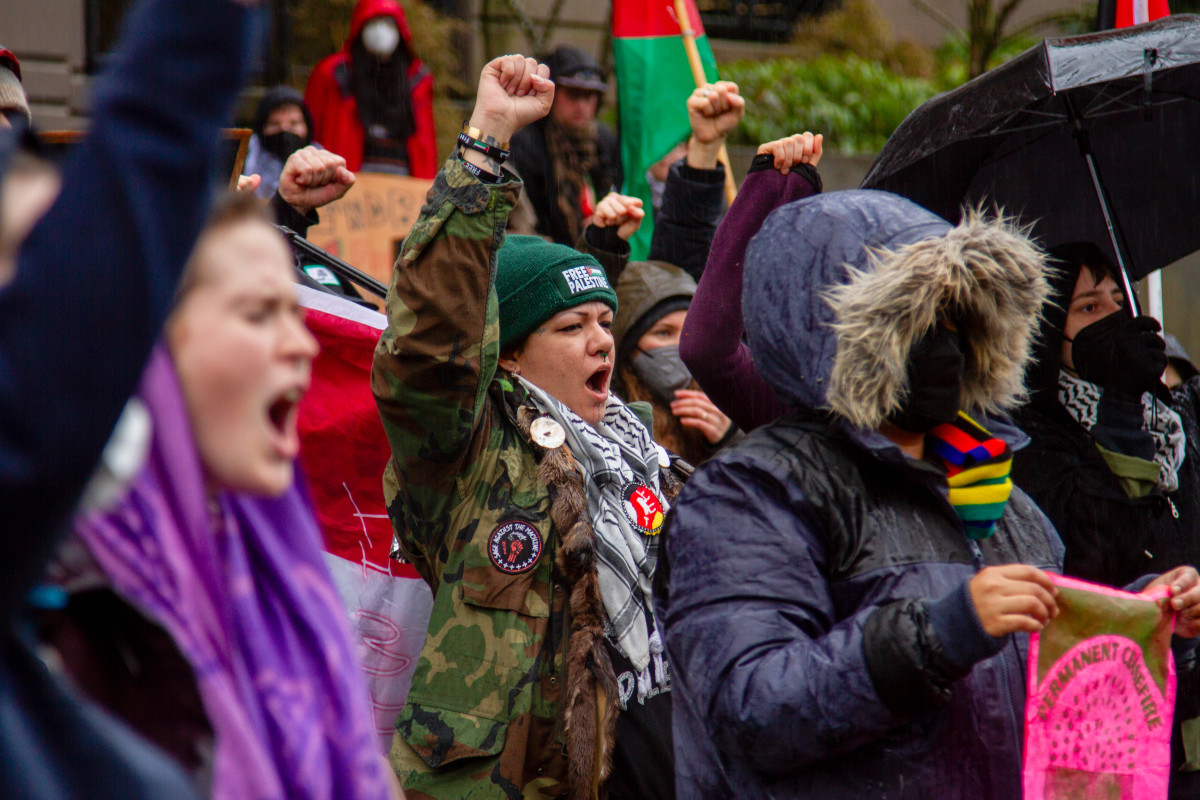
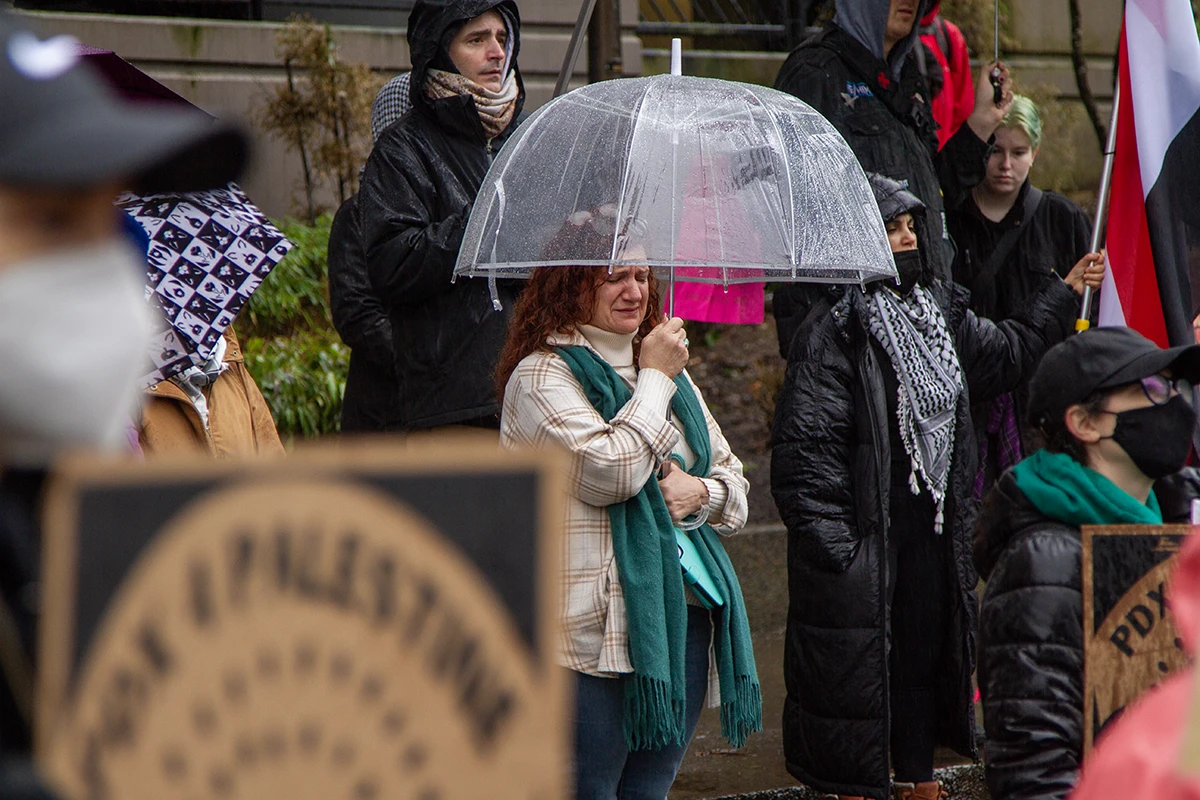
Though city council members didn’t respond to the demands of attendees during that meeting, organizers were not deterred. The crowd marched back to the steps of Lovejoy Fountain Park, taking to the streets despite the heavy downpour of rain, speakers continued to talk about the importance of this fight and standing in solidarity with Palestine.
“We call Palestine the tip of the spear because once they are liberated, all Indigenous people will be liberated,” Macy said to the crowd gathered at Lovejoy Fountain Park. “All oppressed people will be liberated. We are all Palestine. We are all Gaza.”


![One attendee at the Jan. 24 Portland city council meeting held a sign that reads, “U.S. [money] killed another child since you started reading this. Ceasefire now.” (Photo by Jarrette Werk Underscore News/Report for America)](https://ictnews.org/.image/t_share/MjAzODg2OTM0NDc5NjExMzg3/_mg_9813.jpg)




 Water is Life