As you know, after the past election cycle, American democracy is in trouble. Not because of phantom issues with fraudulent voters, as some people would have you believe, but because far too many voters — especially those of color — continue to be discriminated against and disenfranchised through obscene voter suppression tactics. And that’s why the Lakota People’s Law Project is going to fight back in court.
We’ve joined a lawsuit — as a plaintiff — against the State of South Dakota. Because the state has consistently violated elements of the National Voter Registration Act, tribes like the Oglala and Rosebud Nations, organizations like us, and individuals like McLaughlin city council member Hoksila White Mountain have valid cause to sue.
The Native American Rights Fund (NARF) will represent the tribal entities in the suit. We hope the Standing Rock Sioux Tribe will also join as a plaintiff and seek monetary compensation from South Dakota for failure to offer voter registration opportunities in a way consistent with federal law.
Lakota Law and Hoksila, among others, will be represented by Demos, a legal organization dedicated to winning voting rights justice. This will be a true team effort, bringing a number of great legal minds and passionate people together to fight for the community and expose the state for its litany of abuses.
As an example, you may recall that we have already shared quite a bit about the troubles in McLaughlin, the Standing Rock Nation’s second largest town. Hoksila was kept from mounting a valid mayoral campaign, and he was only granted a promised vacant city council seat in his own ward after intense pressure you helped us create.
McLaughlin also has suspicious zoning, seemingly designed to prevent its Native residents from voting in local elections. So NARF will provide support as we undertake an effort to improve voting access within the town. As you can see, access for people of color is an issue on our reservations in the Dakotas, just as it’s a national and statewide problem in places like Georgia and Arizona. Bottom line: we must fight, right now and on every level, to protect our democracy from those who want to move it backward. We’re drawing a line in the sand — and I’m so grateful you’re standing with us for fairness.
Wopila tanka — thank you for helping us make good trouble! Chase Iron Eyes Co-Director and Lead Counsel The Lakota People’s Law Project
In case you missed it, CNN commentator and former Pennsylvania GOP Senator Rick Santorum brazenly displayed his staggering ignorance once again last week. Speaking at a conference for conservative youth, he made sure to misinform young people by claiming that European colonizers “birthed a nation from nothing” and “there isn’t much Native American culture in American culture.”
I know ratings are king — and that controversial comments beget ratings — but it’s past time this man was fired by CNN and removed from any position of influence. I urge you to watch Takin’ Out the Trash, a new segment we introduced on the most recent episode of “Cut to the Chase.” I discuss the former senator’s ridiculous statements and some of the many ways in which Native culture informs the larger society.
Because Rick Santorum’s racist rhetoric is obviously a steaming pile of hot garbage, we took him out with the trash on this week’s episode of “Cut to the Chase.”
As a Lakota Law supporter, you’re already aware of the breadth and depth with which Indigenous cultures of the Americas have long made and continue to make deep impacts. From Native cultivation of corn, to the world’s oldest representative democracy (demonstrated by the Iroquois nation), to the movement we birthed against the Dakota Access pipeline at Standing Rock, our contributions are legion. It’s no accident that the names of several states and countless cities, towns, and counties pay homage to the Native peoples who first inhabited these lands.
It sure would be great if media outlets like CNN would stop platforming people like Rick Santorum so we can move beyond harmful, whitewashed notions of history. To create a better future — one in which we consistently progress based upon lessons learned from our past — we must be willing to take previously subverted perspectives into account, revise inaccuracies, and understand the deeper implications. Because, while Native cultures have already given much to those who came to our shores, we still have far more to say to the ears that know how to listen.
Wopila — thank you for lending your ear! Chase Iron Eyes Co-Director & Lead Counsel The Lakota People’s Law Project
I’m writing to thank you for supporting us water protectors here in the Dakotas, and to update you about my court case at Cheyenne River Tribal Nation near Standing Rock. Last year, construction of the Keystone XL pipeline was in full swing through my homelands. So my allies and I created a protest camp, similar to the one everyone knows about at Standing Rock four years ago (only smaller). Two days before Thanksgiving last year, I chained myself to an oil pump station and got arrested for trespassing. I’m facing up to a year in prison and I will be going to trial soon.
We won our fight against KXL — Biden has shut the pipeline down — but my allies and I are still facing potential prison time for our civil disobedience. Please pray for us, as we continue to face down the Oil Industrial Complex allied with law enforcement, and decipher the best path forward to serve Unci Maka, Grandmother Earth.
Please watch this new video that explains my court case.
Climate change has become a dominant topic of conversation in recent weeks because of Biden’s strong pivot away from Trump’s denialism. Even more is needed. As the ice caps melt and coastlines face dangerous flooding, Indigenous people all over the world are leading the fight for eco-sanity. Some are in Minnesota resisting Line 3, while many of us are still pushing the White House to shut down the Dakota Access Pipeline at Standing Rock.
Last month, I traveled with other Indigenous young people to D.C. to make our ongoing commitment to Standing Rock top of mind for policymakers. As a 24-year-old Lakota woman, I look forward to many more years of movement building. We cannot let up, not while our waters, lands, and climate are endangered by fossil fuel extraction. Renewables work. There is no excuse.
I will work with my attorneys at Lakota People’s Law Project to keep you updated in the coming months. Thank you for keeping your attention on Lakota country. Your solidarity is appreciated.Wopila, Jasilyn Charger via Lakota Law
Happy Earth Day! It’s appropriate that, on this day of reverence for Unci Maka, we celebrate the imminent return of one of her guardians. After many months in prison for his brave stand against the Dakota Access pipeline, Michael “Rattler” Markus is coming home! I hope you’ll join me in giving thanks to Rattler and to all those on the frontlines to defend sacred lands and water.
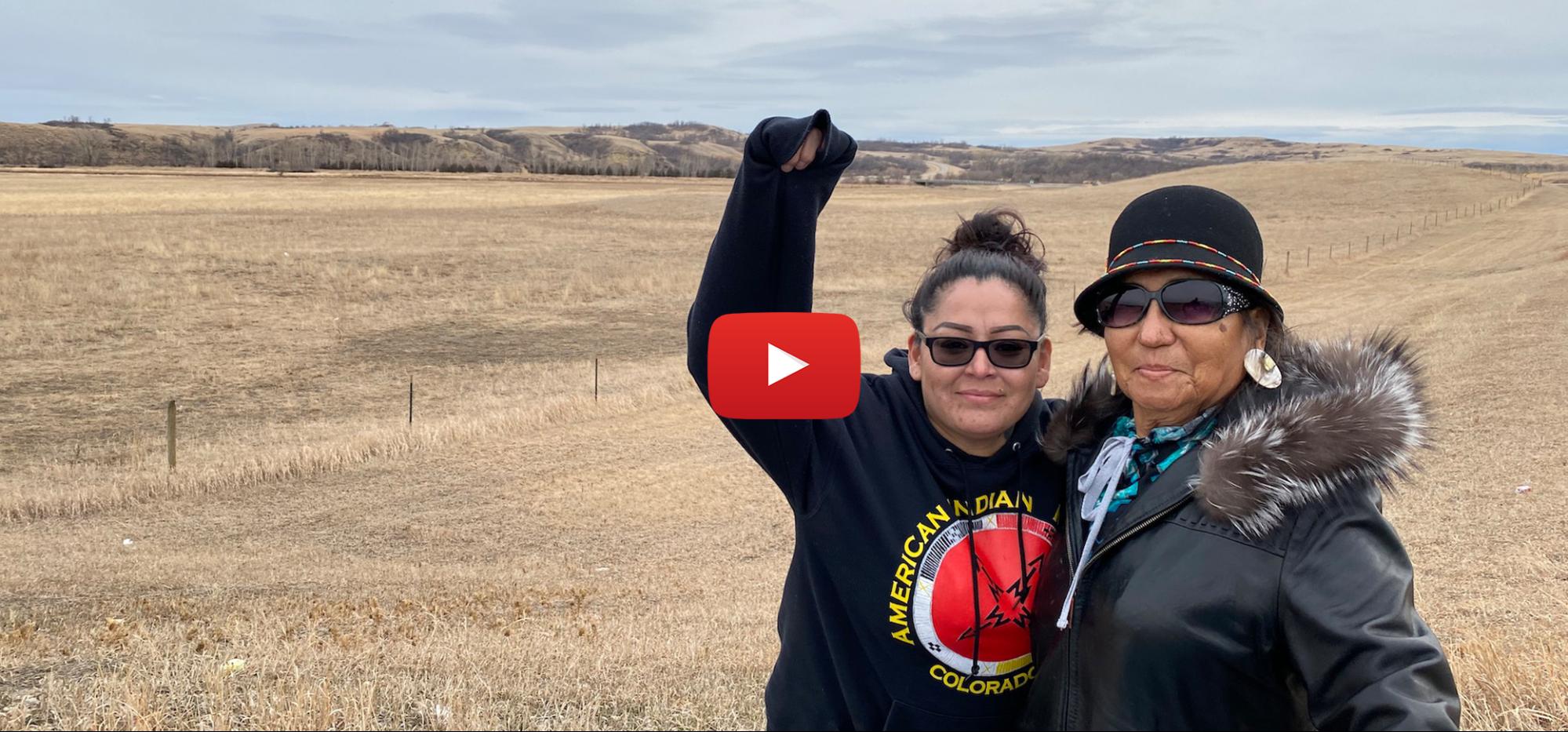
Watch: Our water protector matriarch, Phyllis Young, helps welcome Rattler back to freedom, including a brief interview and drum ceremony for him.
Rattler, who served during the NoDAPL protests as an Akicita (defender), positioned between police and water protectors to keep everybody safe, was arrested in February of 2017. He subsequently accepted a plea to a civil disorder charge stemming from his presence on Oct. 27, 2016 — when law enforcement assaulted unarmed water protectors with sound cannons, tasers, bean bags, rubber bullets, and pepper spray.
We have seen these tactics time and again — and we have seen how the colonizers use both the police and new legislation to back up their intrusions into our sacred lands. Following a year in which people all over the world stood together in the streets to promote justice, many lawmakers are now renewing their attacks on our ability to protest.
According to the International Center for Not-For-Profit Law, 71 laws currently pending at the federal or state level — in 29 different states! — seek to limit our right to protest. It is critical that we retain our right to protect the Earth from corporations who ramrod noxious extraction infrastructure like pipelines through our homelands and other communities of color.
I’m grateful to those who served time for their bold actions on behalf of Unci Maka — people like Red Fawn, who came home after years of incarceration a few weeks ago, and Rattler, who will be released from federal custody tomorrow.
You have my gratitude as well. Thank you for standing with all of us on the frontlines. The powers that be can keep trying to divide, conquer, and subjugate us, but we’ll stay informed and active until we achieve the justice we seek — for ourselves and for the world we inhabit.
Wopila tanka — thank you, always, for your solidarity with our movement. Madonna Thunder Hawk Cheyenne River Organizer The Lakota People’s Law Project
When LaDonna Brave Bull Allard, a citizen of the Standing Rock Sioux Tribe, learned of what she called “the black snake” — a 1,170-mile-long underground pipeline that would stretch from the shale oil fields of northwest North Dakota to Illinois — she volunteered the use of her land to establish a resistance camp.
That camp became the base for a global protest movement against the Dakota Access Pipeline, which Ms. Allard said would veer too close to sacred burial grounds, including the grave of one of her sons; could contaminate the region’s water supplies if it ever leaked; and violated longstanding treaties between Native Americans and the federal government.
The movement stood not only for stopping the pipeline but also against excavating fossil fuels in general while embracing tribal sovereignty, environmental justice and the protection of water sources everywhere.
Ms. Allard died on April 10 at her home in Fort Yates, N.D. She was 64. Her family announced the death online; local media outlets said the cause was brain cancer.
She established Sacred Stone Camp at Standing Rock at the confluence of the Cannonball and Missouri Rivers in March 2016. Neighbors starting bringing food, coffee and wood for a small core group. Indigenous youth spread the word across social media.
Within months, the resistance had turned into a cultural movement, with thousands of people — members of other tribes, environmental and civil rights activists, politicians — joining in, tucking into tents, tepees and trailers in similar camps across the prairie.
The movement also drew what Ms. Allard told Teen Vogue in 2017 were “spiritual leaders from every facet of every Indigenous people — Mongolians, the people out of Africa, India, China, Australia and New Zealand,” as well as South America, Canada and the Midwestern United States, all to be part of one of the largest gatherings of Indigenous peoples in more than a century.
Resistance to the pipeline turned into a cultural movement, with thousands of people joining in.Credit…Alyssa Schukar for The New York Times
Construction of the pipeline began under President Barack Obama. But with demonstrations growing — and security guards attacking protesters with freezing water from pressure hoses, pepper spray, rubber bullets, dogs and mass arrests — the Obama administration later had a change of heart and blocked construction of part of the pipeline.
The reprieve was only temporary. President Donald J. Trump, who viewed the project as a boon to the economy and a way of weaning the country off foreign oil, ordered the pipeline completed and the protest camps evacuated and razed. Environmental and Indigenous groups responded with legal challenges.
The fate of the $3.7 billion project now lies with the Biden administration and the courts. But while an environmental review continues, the pipeline remains in operation.
As one of the leaders of the resistance, Ms. Allard appeared on television; wrote opinion pieces for newspapers, including The Guardian in England; and traveled the world as a keynote speaker on Indigenous history and culture. She argued for the protection of sacred Indigenous lands everywhere. She worked on campaigns to encourage divestment from the fossil fuel industry, and she became an annual speaker at the United Nations Permanent Forum on Indigenous Issues.
“This movement is not just about a pipeline,” she wrote in 2017 on sacredstonecamp.org, a camp publication. “We are not fighting for a reroute, or a better process in the white man’s courts.”
Rather, she said, they were fighting for something much bigger: their rights and for the “liberation” of Mother Earth. “We want every last oil and gas pipe removed from her body,” she wrote. “We want healing. We want clean water. We want to determine our own future.”
LaDonna Carole Brave Bull was born on June 8, 1956, in Fort Yates to Valerie Lovejoy Brave Bull and Frank Brave Bull.
She spent much of her girlhood with her grandmothers and grew up all over, from the Dakotas to California to New England and Florida. She enrolled in Standing Rock Community College, transferred to Black Hills State College and eventually graduated from the University of North Dakota at Grand Forks in 1990.
After college, she went to work for the Standing Rock Sioux Tribe as cultural resource planner. She also served as its historian and genealogist. She later helped the tribe create its office of historic preservation and a tourism office.
She has said she had been struck by the depth of historical trauma when she visited the site of the 1863 massacre at Whitestone Hill, in south-central North Dakota, where the U.S. Army slaughtered hundreds of Sioux. In a 2017 essay in Yes! magazine, she linked that event with the pipeline’s destruction of hundreds of archaeological sites and sacred places.
“The U.S. government is wiping out our most important cultural and spiritual areas,” she wrote. “And as it erases our footprint from the world, it erases us as a people.”
In 2019 Ms. Allard became an official representative for Indigenous peoples within the United Nations Economic and Social Council. She held positions on numerous boards and taught a class on combining Indigenous knowledge with modern technology.
After two early marriages, she married Miles D. Allard, whom she met at the University of North Dakota, in 1990 and whom a family obituary called the love of her life. Mr. Allard died in 2018.
Her survivors include six sons, William J. Brave Bull, Freedom P. McLaughlin, Eric Grey Cloud, Ian Scotty Halsey, Alex Schien and Shannon Meister; two daughters, Prairie Fawn McLaughlin and Nikola Allard; 21 grandchildren; two great-granddaughters; eight sisters; and eight brothers.
Shortly before Ms. Allard died, Indigenous youth on their way to a rally against the pipeline stopped by her house and placed signs in her yard saying “We love you LaDonna” and “Water is Life,” Kandi White of the Indigenous Environmental Network told Indian Country Today.
“Her son told us that LaDonna heard us chanting and knew we were there,” Ms. White said. “She told us not to be sad for her but to continue the fight.”
Katharine Q. “Kit” Seelye is a Times obituary writer. She was previously the paper’s New England bureau chief, based in Boston. She worked in The Times’s Washington bureau for 12 years, has covered six presidential campaigns and pioneered The Times’s online coverage of politics. @kseelye
Breaking news: This morning, in a federal district court proceeding in Washington, D.C., the U.S. Army Corps of Engineers balked at stopping the oil flow through the Dakota Access pipeline (DAPL). The Corps officially refrained from taking a position by saying they need more time, which will allow the pipeline to continue operating illegally, without a valid permit.
For the past two months, we’ve been working overtime — with you and many allied organizations, in support of the Standing Rock Sioux Tribe — to pressure President Biden to use his executive authority and shut down the flow of oil through DAPL. Though he failed to take his first opportunity to do so, we must keep the pressure on him as the legal battle continues.
Today’s decision temporarily kicks the decision back to Judge James Boasberg, who says he intends to make a ruling by April 19 on the matter. We now have at least another 10 days to let the White House know we don’t accept DAPL’s continued operation. So please don’t slow down. Please continue sharing our call to action. Tell Biden: #NODAPL.
Whether Judge Boasberg will pass an injunction against the pipeline is anyone’s guess. There is reason to be at least moderately hopeful: he has already ruled in Standing Rock’s favor once. Last year, after vitiating DAPL’s permit because many of the tribe’s legitimate concerns were never met by the Army Corps or the pipeline’s operators, Boasberg ordered it emptied within 30 days. But he was temporarily overruled by a higher court, which asked him to consider a more stringent test.
Now, we expect Boasberg will make his final decision on April 19 — unless Biden decides to act first. We can’t take anything for granted with the courts, so let’s keep pushing hard for the political solution. Know that your support is critical to aiding us as we remain vigilant here in Lakota Country. Please continue to spread our petition to President Biden far and wide. It’s now or never!
Wopila tanka — thank you for fighting to end DAPL’s threat to our sacred lands and water! Chase Iron Eyes Co-Director & Lead Counsel The Lakota People’s Law Project
My name is Red Fawn Janis. I was born on the Oglala Nation and raised in Denver by my mother — a pipe carrier — and my grandmother. It was a spiritual home. But in 2016, everything changed. After losing both of these powerful women, my guiding lights, I went to Standing Rock to protest the Dakota Access pipeline (DAPL). As you may know, I was subsequently arrested and imprisoned for four and a half years. But today, I am finally home again. And despite the hardships, I would do it all over again.
Because there’s nothing more important than standing up for Unci Maka, our Grandmother Earth. She produces food, shelter, and life. And, at Standing Rock, she produced healing for so many of us. So I ask you today to stand with her, with me, with all our ancestors and relatives. If you have not yet done so, please tell President Biden: end DAPL now. I ask you, humbly, to help stop this pipeline and restore my homelands.
Watch my new video: I give one of my first interviews since my release from prison. I’m headed home!
Going to Standing Rock was a life-changing journey for me and for so many other people. Something deep within us called us there. I remember sitting with Standing Rock members and hippie kids and Black people — so many young ones — all of us together, in the first days, before construction began. We had no idea what was about to happen.
I showed up with about $300 and a couple changes of clothes, planning to be there for a few weeks at most. But I wound up staying, and even If I took a short trip home, I felt called back immediately. We formed not just a movement, but a real community. But, of course, not everyone can be trusted.
I will share more details with you soon, but what you should know for now is that I met a man who seemed genuine, who helped the elders, who was within a trusted circle. So I couldn’t believe what was happening when it turned out a gun had been planted on me. I’d been set up by the feds. And, after a confrontation with police, I was taken as a political prisoner.
Fortunately, I understand that things happen the way the Creator wants them to. This pivotal time in my life has led to growth and healing, and it’s positioned me to share my perspective with you. For that, I’m grateful. I really believe that I’ve been given my life back. It was the betrayal that blessed me.
Now, I look forward to telling my story in full and finding ways we can work together to protect our Grandmother, her waters, her creatures — all of our sacred relatives. Much will depend upon listening to our elders and supporting our youth. So many of those who came to Standing Rock have found new avenues in life, but others continue to struggle. I ask that you stand with them. Let’s start by defeating DAPL, but let us not stop there. There’s so much we can accomplish by praying together, by listening to one another, by taking united action. In this way, we will properly respect both those who came before us and the generations to come.
Wopila tanka — thank you, always, for standing in solidarity with me and all water protectors! Red Fawn Janis In partnership with the Lakota People’s Law Project
Charges against Nick Tilsen, Oglala Lakota, President and CEO of NDN Collective, and all other treaty defenders arrested at a Black Hills protest on July 3 will be dropped, announced NDN Collective, an Indigenous-led advocacy organization.
The initial charges came after Tilsen and more than 200 treaty defenders protested former President Donald Trump’s visit to the Black Hills last summer, as he traveled to speak at Mount Rushmore for an Independence Day celebration.
The Lakota have long attempted to have the Black Hill region returned to tribal authority, as specified under the Fort Laramie Treaty of 1868.
The treaty defenders gathered on a highway leading to the monument, using cars and vans to block the road for nearly three hours. In response, law enforcement officers and members of the South Dakota Air and Army National Guard were called in, leading to a skirmish between protestors and law enforcement.
Twenty-one treaty defenders ended up being arrested and charged with misdemeanors, with Tilsen receiving a combination of misdemeanors and felonies — a sentence that could have resulted in up to 17 years in prison. He told the Associated Press that he will participate in a prison diversion program in exchange for all but one charge against him being dropped. The final charge will be dropped once he completes the program.
In the aftermath, thousands of supporters came to the group’s defense through petitions, social media campaigns, and national media coverage of the cases. In December, the United Nations weighed in with a statement in support of the treaty defenders.
“This victory and the dropped charges are a direct result of the Movement showing up and standing up for all the Land Defenders who took a stand in the Ȟesápa (Black Hills) on July 3,” Tilsen said in a statement. “Tens of thousands organized, called, donated to our legal and bail fund and signed the petitions to drop these charges, and we acknowledge their invaluable support.”
Nick Tilsen, Oglala Lakota and CEO of NDN Collective, talks with park rangers on July 3, 2020. (Screenshot)
“I have so much gratitude for the thousands of supporters who prayed, donated, called, emailed, signed petitions and reached out over the past nine months. This is a wake up call for our communities,” said Krystal Two Bulls, Oglala Lakota and Northern Cheyenne, director of the LANDBACK Campaign at NDN Collective. “We will continue to organize forward and fight for all our targeted and incarcerated Relatives!”https://platform.twitter.com/embed/Tweet.html?dnt=false&embedId=twitter-widget-0&frame=false&hideCard=false&hideThread=false&id=1374138541639401474&lang=en&origin=https%3A%2F%2Findiancountrytoday.com%2Fnews%2Fcharges-against-treaty-defenders-dropped&theme=light&widgetsVersion=e1ffbdb%3A1614796141937&width=550px
Nataani Means, Oglala Lakota, Navajo, and Omaha, will join Tilsen and Two Bills in a discussion about the news on NDN Collective’s livestream show “NDN Live” on Tuesday at 6 p.m. MST.
“This is a day of victory for our Movement and our People,” said Tilsen. “We will utilize it to catalyze our cause forward.”
The Pennington County State’s Attorney’s office did not immediately respond to a request by The Associated Press to confirm the charges were dropped.
The Associated Press contributed to this story.
Meghan Fate Sullivan, Koyukon Athabascan, is a writer for Indian Country Today. She grew up in Alaska, and is currently reporting on her home state from Anchorage.
NCAI Events and Resources in Preparation for Upcoming Federal-Tribal Consultations on Consultation Policy
In response to President Biden’s “Memorandum on Tribal Consultation and Strengthening Nation-to-Nation Relationships,” the National Congress of American Indians (NCAI) is announcing several events and resources to support Tribal Nations in their efforts to shape federal tribal consultation policies to reflect a true government-to-government relationship. Events and resources include (scroll down for details): Webinar: “Federal Consultation Policies: Working towards Consent,” Wednesday, March 3, 2021 from 12:00 – 1:30 p.m. EST. Register here> Tribal Leader Caucus hosted by NCAI in preparation for the Department of the Interior’s (DOI) upcoming tribal consultation sessions. Thursday, March 4, 2021 from 12:00 – 1:30 p.m. EST. Register here> Tribal Leader Caucuses hosted by the Intertribal Agriculture Council (IAC), the Indigenous Food and Agriculture Initiative (IFAI), and NCAI in preparation for the Department of Agriculture’s (USDA) tribal consultation sessions. Tuesday, March 9, 2021 and Thursday, March 11, 2021 from 11:30 a.m. – 2:00 p.m. EST. Listing of Upcoming Federal Consultations. Please continue reading to learn more about each of these events and resources.
WEBINAR ANNOUNCEMENTFederal Consultation Policies: Working towards Consent March 3, 2021, 12-1:30 p.m. EST NCAI will hold a webinar on Wednesday, March 3, 2021 from 12-1:30 p.m. EST to discuss President Biden’s recent “Memorandum on Tribal Consultation and Strengthening Nation-to-Nation Relationships” and its implications for federal consultation policy with Tribal Nations. Register here > Panelists will include: Michael Connor, Partner, WilmerHale, and previously served as Deputy Secretary of the Interior under President Barack Obama from 2014-2017 Colette Routel, Professor of Law, Co-Director, Native American Law & Sovereignty Institute, Mitchell Hamline School of Law Fawn Sharp, President, National Congress of American Indians, and President, Quinault Indian Nation Kim Teehee, Director of Government Relations, Cherokee Nation, and previously served as the Senior Policy Advisor for Native American Affairs for President Barack Obama from 2009 to 2012 This webinar will provide an overview of federal consultation policies for tribal consultation, explore ideas regarding the future of the government-to-government relationship between the U.S. and Tribal Nations, and share resources for how Tribal Nations can prepare for the upcoming series of consultations being convened by federal agencies that will focus on how to improve current consultation practices. NCAI Contact:Ryan Seelau, Senior Researcher, Partnership for Tribal Governance, rseelau@ncai.org
Tribal Leader Caucus to prepare for DOI Consultation March 4, 2021, 12-1:30 p.m. EST NCAI will host a tribal leader caucus on Thursday, March 4, 2021 from 12-1:30 p.m. EST to give tribal leaders an opportunity to talk with one another and prepare for a series of Department of the Interior (DOI) consultations that will be taking place March 8-12. Information about the DOI consultations is available here. Registration for NCAI’s Tribal Leader Caucus is available here. The majority of the time during this event is designed to give tribal leaders and others space to discuss the issues they see concerning tribal consultation, and to discuss strategies on how to improve government-to-government consultations moving forward. NCAI Contact:Ryan Seelau, Senior Researcher, Partnership for Tribal Governance, rseelau@ncai.org
Federal Government Dates and Deadlinesfor Upcoming Consultations On January 26, 2021 President Biden signed a memorandum titled “Memorandum on Tribal Consultation and Strengthening Nation-to-Nation Relationships” declaring, “It is a priority of my Administration to make respect for Tribal sovereignty and self-governance, commitment to fulfilling Federal trust and treaty responsibilities to Tribal Nations, and regular, meaningful, and robust consultation with Tribal Nations cornerstones of Federal Indian policy.” The Presidential Memorandum goes on to convey its commitment to fulfilling the consultation requirements of Executive Order 13175, a directive originally issued by President Clinton on November 6, 2000. President Biden’s Memorandum also directs “each agency” to submit “a detailed plan of actions the agency will take to implement the policies and directives of Executive Order 13175.” These plans “shall be developed after consultation by the agency with Tribal Nations and Tribal officials”. All plans are to be submitted to the Director of the Office of Management and Budget (OMB) by April 26, 2021. In March, several federal agencies are holding tribal consultation sessions and/or have deadlines related to their tribal consultation plans, including: March 8, 2021: DOI consultation focusing on Great Plains, Midwest, and Rocky Mountain Regions. March 8: 2021: Department of Defense (DOD) deadline for all written comments regarding tribal consultation. March 9, 2021: USDA consultationon their tribal consultation plan. March 10, 2021: DOI consultation focusing on Eastern, Eastern Oklahoma, and Southern Plains Regions. March 10, 2021: DOI Consultation focusing on Navajo, Southwest, and Western Regions. March 11, 2021: USDA consultation on their tribal consultation plan. March 12, 2021: DOI consultation focusing on Alaska, Northwest, and Pacific Regions. March 19, 2021: DOI deadline for all written comments regarding tribal consultation. March 24, 2021: Department of Transportation (DOT) consultation on their tribal consultation plan. March 26, 2021: DOT deadline for all written comments regarding tribal consultation. For more detailed information about these dates and deadlines, visit NCAI’s Consultation Support Center. NCAI Contact:Ryan Seelau, Senior Researcher, Partnership for Tribal Governance, rseelau@ncai.org
Many across the country are battling the aftermath of a Feb. 13 winter storm as nearly 3.4 million customers around the U.S. are still without electricity or heat. The demand for power overwhelmed power grids unprepared for climate change.
Temperatures hovered in the single digits as snow and ice storms hit parts of Texas where winter temperatures seldom fall below 40 degrees.
The latest storm front was expected to bring more hardship to Texas, Arkansas and the Lower Mississippi Valley before moving to the Northeast on Thursday, according to the Associated Press.
“Most people here have electric stoves so there’s no way to heat or cook food; they heat their homes with electric heat, so there’s no heat,” said Ashley Fairbanks, White Earth Nation.
Originally from Minnesota, Fairbanks lives in San Antonio, where winter temperatures usually hover around 70-80 degrees. On Wednesday morning the temperature was around 28 degrees, she said.
“It got down to 6 degrees during the storm; the week before it was like 80 degrees,” she said
“The ice on roads finally melted today so we left the house in search of food. It really is like the end times out here.”
Customer lines at fast food establishments snaked around city blocks and half of San Antonio’s restaurants were closed; grocery stores have run out of essential food and many are closed, Fairbanks said.
“There’s really no letup to some of the misery people are feeling across that area,” said Bob Oravec, lead forecaster with the National Weather Service, referring to Texas.
At least 30 people have died in the extreme weather this week, some while struggling to find warmth inside their homes. In the Houston area, one family succumbed to carbon monoxide from car exhaust in their garage. Another perished as they used a fireplace to keep warm.
City of Richardson worker Kaleb Love breaks ice on a frozen fountain Tuesday, Feb. 16, 2021, in Richardson, Texas. Temperatures dropped into the single digits as snow shut down air travel and grocery stores. (AP Photo/LM Otero)
Record low temperatures were reported in city after city. Scientists say the polar vortex, a weather pattern that usually keeps to the Arctic, is increasingly spilling into lower latitudes and sticking around longer, and global warming caused by humans is partly responsible.
Utilities from Minnesota to Texas and Mississippi have implemented rolling blackouts to ease the burden on power grids straining to meet extreme demand for heat and electricity. In Mexico, rolling blackouts Tuesday covered more than one-third of the country after the storms in Texas cut the supply of imported natural gas.
Tribes in Texas are working together and handling the challenges well, according to tribal leaders from the Alabama-Coushatta Tribe of Texas, the Tigua Ysleta Del sur Pueblo and the Lipan Apache Tribe contacted by Indian Country Today.
“Native people are extremely resilient. We’re all kind of tired of the cold weather, but we’re hunkered down and staying warm; at first it was beautiful but now we’re kind of done,” said Christi Sullivan, director of media and communications for the Alabama-Coushatta Tribe of Texas.
About 600 of the 1,375 tribal citizens live on reservation land about 90 minutes north of Houston.
“We urged people to prepare for the weather before it hit; one of our main concerns is our elders. We are calling and checking in on everyone making sure they’re okay,” said Sullivan.
Fortunately, only a portion of the reservation has been hit by the rolling electricity blackouts.
“So far, everyone is safe,” Sullivan said.
The worst U.S. power outages by far have been in Texas, where officials requested 60 generators from the Federal Emergency Management Agency and planned to prioritize hospitals and nursing homes.
The state opened 35 shelters to more than 1,000 occupants, the agency said.
Texas’ power grid manager, the Electric Reliability Council of Texas, said electricity had been restored to 600,000 homes and businesses by Tuesday night. Many, however, remain without power.
The weather also caused major disruptions to water systems in the Texas cities of Houston, Fort Worth, Galveston, Corpus Christi and in Memphis, Tennessee, and Shreveport, Louisiana, where city fire trucks delivered water to several hospitals and bottled water was being brought in for patients and staff, KSLA News reported. In Houston, residents were told to boil their water — if they had power to do so — because of a major drop in water pressure linked to the weather.
In Abilene, Texas, firefighters were hampered by low water pressure as they tried to extinguish a house fire this week, the Abilene Reporter News reported.
“They had to watch that house burn,” City Manager Robert Hanna said Tuesday at a news conference.
“Last night we were lying in bed without power and we could hear emergency sirens going all night long,” Fairbanks said.
The Texas power blackouts could be a glimpse of the future as climate change intensifies winter extremes that overwhelm utility infrastructures unable to handle unseasonable demands, according to the New York Times.
“Hey, we’re not built for this,” said Robert Soto, vice chair of the Texas state recognized Lipan Apache Tribe of Texas.
The tribe’s headquarters is based in McAllen, just north of Reynosa, Mexico, and near the Gulf of Mexico.
“Homes here aren’t built to handle the cold; for us a cold front is around 60 degrees. With this storm it’s been in the single digits and the 20s,” he said.
Thankfully everyone is safe, according to Soto.
The greatest needs for the tribe now are food and water. “We’re delivering food and water when and where we can; we don’t have a lot of funds but we’re doing the best we can,” Soto said.
Temperatures are expected to rise to the 70s by the weekend.
“We’ll be enjoying life and happy again; in the meantime please keep us in your prayers.”
Mary Annette Pember, a citizen of the Red Cliff Ojibwe tribe, is a national correspondent for Indian Country Today.










 Water is Life