National Day of Remembrance for Indian Boarding School Survivors

Lakota Law

September 30th, 2025

Today’s National Day of Remembrance for Indian Boarding School Survivors is another solemn reminder of how we acknowledge and learn from the past. The National Day of Remembrance began in Canada and is acknowledged in the States to honor the generations of Native and First Nations children forcibly removed from their homes to be sent to boarding and residential schools. Many of these institutions were government funded and many were church funded, but all were responsible for the oppression of Indigenous culture, language, and spirits. 

And still — last week — we were given another reminder that those at the federal level continue to deny the truth. This past Thursday, as reported on our Last Real Indians Native News Desk, U.S. Secretary of Defense Pete Hegseth announced that soldiers who were awarded Medals of Honor for their 1890 massacre at Wounded Knee of nearly 300 Lakotas — including defenseless women and children — will keep them. Hegseth’s announcement, made on X, followed a review requested by former Defense Secretary Lloyd Austin in 2024. 
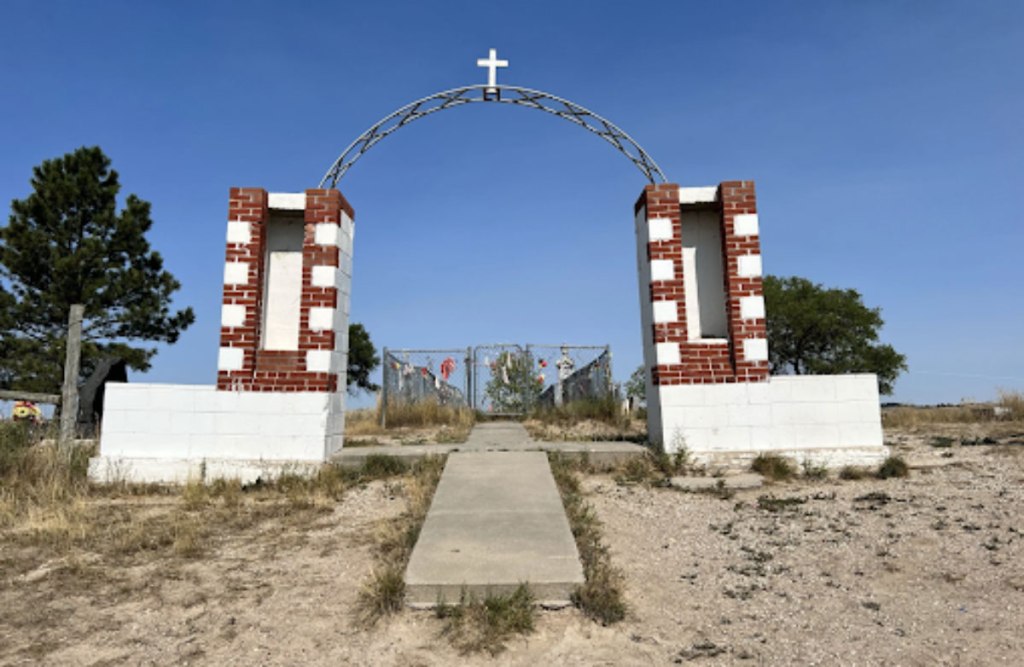
Read on LRI: Here’s the Wounded Knee Memorial on the Pine Ridge Reservation, located where more than 250 Lakota women, children, and men were killed by the U.S. military on December 29, 1890.

Many tribal leaders and organizations issued statements condemning the announcement, largely pointing out that the decision is not reflective of real American history — nor our shared values. People are simply asking for a correction in awarding the slaughter of women and children at Wounded Knee. This should not be a complicated issue.

Thankfully, our voices are being heard. After LRI Native News published our story on Hegseth’s announcement, Yahoo News and many others republished comments made by Lakota Law director Chase Iron Eyes. That’s important, because mainstream media often forgets to include voices from Indian Country, even on the issues that directly affect us. I see it as a simple equation: if you’re writing about a community, include that community’s voice. 

While the announcement to rescind the Wounded Knee Medals of Honor was denied by the current administration, and though Hegseth said the decision is final, that doesn’t mean this battle is over. There are still other pathways to remove the medals from history. For instance, we can and should tell Congress to pass the Remove the Stain Act. It also took far too long to end the political imprisonment of Leonard Peltier — but through tremendous, coordinated organizing and continued discussion and pressure, we got there.

Soon, we’ll publish an op-ed on LRI Native News from South Dakota Senator Red Dawn Foster detailing the steps it took to pass the resolution in the South Dakota State Senate asking Congress to investigate the Wounded Knee Massacre and next steps we can take to rescind the medals. We’ll also have much more to say later this week on the pattern of governmental overreach currently eroding our human, civil, and constitutional rights.

Indigenous residents of Turtle Island have long known these struggles. And we also know that when things look grim, you can’t give in, give up, or lose faith. So I thank you for standing with us. Let’s keep fighting together.

Miigwech — my enduring gratitude to you as a fellow member of this movement!
Darren Thompson
Director of Media Relations
Lakota People’s Law Project
Sacred Defense Fund

The Black Hills: Garden of Heroes?

Lakota Law

Happy Juneteenth to all! Speaking of American racism, the domestic news cycle this past week largely focused on protests by millions nationwide against the attacks on migrant communities by U.S. Immigration and Customs Enforcement (as well as President Donald Trump’s costly, sparsely attended military parade). Those are important issues, and we hope you stand with us in the ongoing fights for equity and justice — and against fascistic policies and displays.

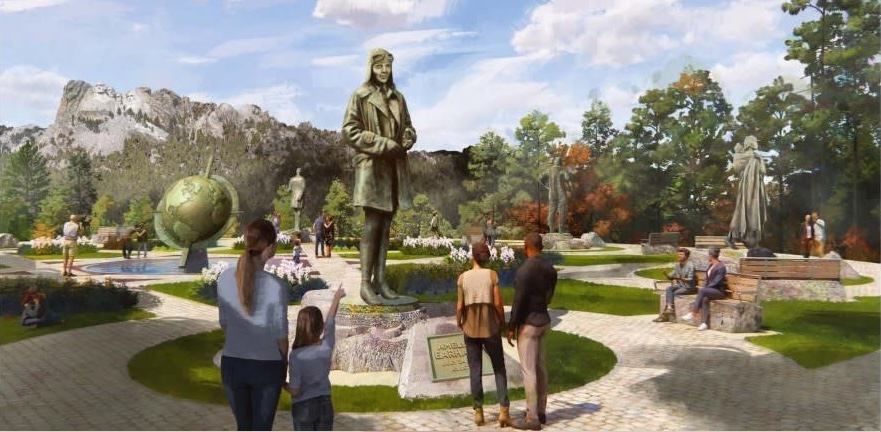
Meanwhile, it’s also important not to overlook the myriad implications of the administration’s proposed legislative agenda, including for Native communities. Those include massive budget cuts to eliminate funding for key programs and services, and now — as I report to you on our sister site, the Last Real Indians (LRI) Native News Desk — South Dakota elected officials want to put Trump’s proposed “Garden of Heroes” on Lakota homelands in the Black Hills, without consent from Native People. 

Read on LRI: Do Native People want Trump’s Garden of Heroes in our homelands? Did anyone think to ask us?

In the story, you’ll get the gist of the proposal, and you’ll notice a vast difference in approaches toward it from South Dakota’s (white) elected officials and from Indigenous leaders. Because the Lakota have never ceded the sacred He Sapa (Black Hills) to the U.S., and because the area was stolen in violation of treaty law, one might think the elected officials would make it a priority to get thoughts — permission, even — from the land’s original inhabitants. Unfortunately, they continue to operate from a place of entitlement.

As you’re likely aware, the U.S. Supreme Court ruled 45 years ago in favor of the tribes, but the Lakota have never accepted the (now more than $1 billion in) settlement money. The Black Hills are not, and never have been, for sale. As Lakota Law and Sacred Defense Fund executive director Chase Iron Eyes mentions in our story, if the federal government wants to place its garden on Lakota lands, it should return them first.

On a positive note, the garden is slated to include Indigenous representation. That, at least, is something. But, on this monumental day commemorating the end of U.S. slavery, let’s be clear that respecting the perspectives and agency of marginalized groups must also be part of the process. Now more than ever, we must keep fighting — not just for recognition, but for an inclusive and healthy path forward for all who call this place their home.

Miigwech — thank you for fighting for equity and justice!
Darren Thompson
Director of Media Relations, Lakota People’s Law Project
Editor-In-Chief, LRI Native News Desk

New Title: The Mahkato Reconciliation and Healing Ride

Lakota Law

From acknowledging the winter solstice to celebrating mainstream society’s holiday season, this time of year has always brought together gatherings of family and friends throughout Turtle Island.  And every December, reminders of our history add to the difficulties faced by many families, and tribes, as some of their people’s most tragic memories all occurred during this month — the assassination of Chief Sitting Bull, Wounded Knee Massacre, and the Dakota 38 Hanging.

The day after Christmas is more widely known as “Boxing Day,” especially outside of Indian Country, but in the last several years there has been growing momentum for mainstream society to acknowledge the day after Christmas as the day when 38 Dakota “Sioux” men were hanged in Mankato, Minnesota in 1862. The hanging, the largest mass execution in United States history, was carried out in front of an estimated 4,000 people in downtown Mankato and remains largely hidden from classrooms and public knowledge.

As the year ends, and millions gather to celebrate and acknowledge the holiday season, some Indigenous communities acknowledge its tragic past through memorial ceremonies aimed at teaching and healing while building community. 

The hangings were approved by former President Abraham Lincoln as a result of conflict between Dakota people and settlers in southwestern Minnesota. Dakota people were promised food and safety in exchange for ceding their lands, but they received neither, leading to attacks on white settlements in August 1862. The resulting widespread war in Minnesota lasted for five weeks, culminating in the hanging of 38 Dakota men in Mankato on Dec. 26, 1862.

Some say the Dakota War officially ended after the hanging, but the U.S. government’s oppression of the Dakota people, as well as other Indigenous groups, did not end with that atrocity. After the mass hanging, Dakota people were exiled and forcibly removed from Minnesota. Many sought refuge in Canada, South Dakota, Nebraska, and other communities willing to take them in. Memorializing such a painful history involves more than riding on horseback through blizzard-like conditions. While it remains a painful and tragic past, many have undertaken healing and positive efforts to repair relations with those in the places where history unfolded, hoping that such history will not repeat itself.

The movement to pay tribute to tragic times past is active healing in Indian Country. While memorials take time and tremendous effort, the initial memorial horse ride has caused great positive ripple. Today there are additional horse rides and a memorial run that begins at Ft. Snelling, the military fort where thousands of Dakota people were imprisoned during the Dakota War, and all convene at Reconciliation Park in Mankato, MN on Dec. 26. Many other Indigenous communities have begun to host memorial rides, runs, or walks, to pay their respects to their past, as well as to the land in hopes we continue to heal beyond times past.

Beginning in 2008, an annual memorial horse ride was organized to begin on the Lower Brule Reservation in central South Dakota and ride for 16 consecutive days, convening in Mankato, MN on Dec. 26. Their ride and ceremonial arrival to memorialize the Dakota 38 continues to this day — now under a new name — Mahkato Reconciliation and Healing Ride

Forever riding forward, while sometimes looking back, is magic we all have to embrace in this work. We’re grateful and gain strength as we join together to honor the pain and sacrifices of the past by celebrating and supporting these ongoing healing movements.

Miigwech — thank you, always, for remembering with us!
Darren Thompson
Director of Media Relations
Lakota People’s Law Project
Sacred Defense Fund

Your support makes jsutice possible - Donate Today

Lakota People’s Law Project
P.O. Box 27
Santa Fe, NM 87504

29th Annual Fort Robinson Outbreak Spiritual Run

Lakota Law

Warm greetings to you from the sacred (and chilly) He Sapa (Black Hills)! I’m here to witness and celebrate many young, Native runners on route from Fort Robinson, Nebraska to Busby, Montana, where — in solidarity with our Northern Cheyenne relatives, and on behalf of Lakota Law, Sacred Defense Fund, and the Standing Rock and Oglala Tribal Nations — I’m bringing you along for this year’s 29th Annual Fort Robinson Outbreak Spiritual Run

I encourage you to watch my short video introduction to this important and deeply meaningful yearly event. It honors — with a 400-mile run over six days through subzero temperatures and some of the most beautiful, wild, and sacred territory in all of Turtle Island — Northern Cheyenne ancestors who broke free from captivity in Fort Robinson on January 9th, 1879. The run retraces their steps and allows their descendants to complete the journey they were unable to finish to their homelands nearly a century and a half ago.


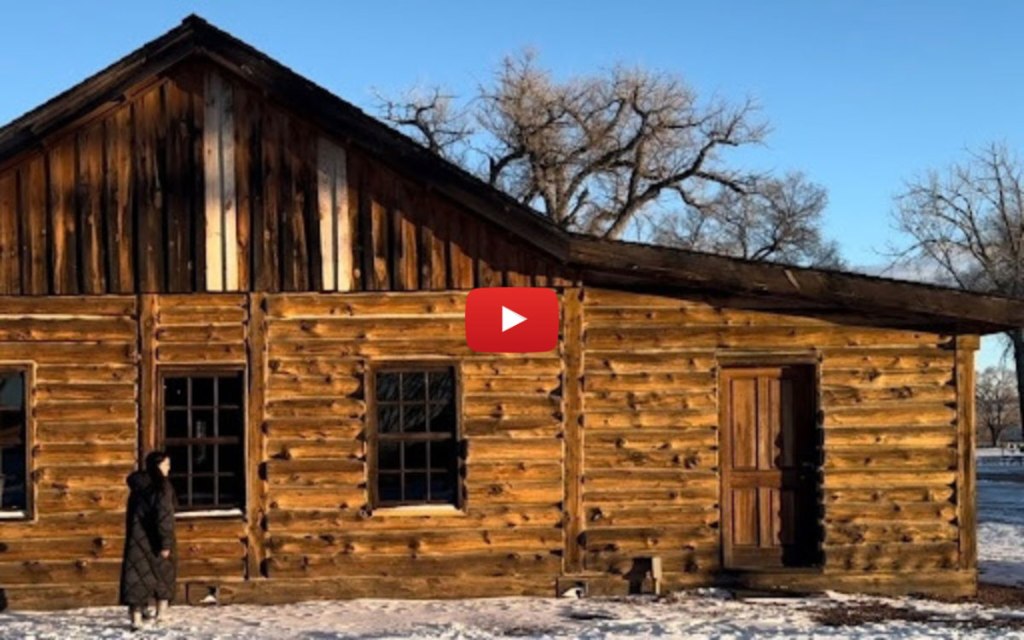
Watch: Here I am at the Fort Robinson barracks. In my new video, I discuss the history behind this run, which promotes healing through acknowledgment of generational trauma and taking healthful action.

I want to give recognition to the Two Bulls family and Yellow Bird Foundation for hosting this powerful event. The runners — mostly youth from many tribal nations — began with an orientation on Thursday before hitting the trail yesterday from Fort Robinson to Hot Springs, SD. After crossing though the He Sapa into Deadwood today, they’ll have three remaining legs before reaching their final destination in Busby.

Our participation here — and yours, through your support — is important, not least because it raises more awareness (both within our communities and without) of how colonization and imprisonment in “frontier” forts impacted our Northern Cheyenne relatives. In some ways, being present for and supporting this run embodies what our work is all about. It gives us a real opportunity to acknowledge the painful past while alchemizing generational trauma through healthy activity to empower the next generation.

Wopila tanka — my gratitude for your solidarity with our youth and ancestors!
Tokata Iron Eyes
Spokesperson & Organizer
Lakota People’s Law Project
Sacred Defense Fund

P.S. A second reminder: We remain deeply grateful to all of you who give of yourselves to make the ongoing work of Lakota People’s Law Project possible under our new home at Sacred Defense Fund. For those of you who donate through checks, please send them to our new mailing address, listed below, and kindly make out your checks to: Sacred Defense Fund. Thank you so much!

Note our new mailing address (and please make any checks payable to: “Sacred Defense Fund”)

Lakota People’s Law Project
c/o Sacred Defense Fund
PO Box 27
Santa Fe, NM 87504

Lakota Law

Apologies for the incorrect subject on this message a few minutes ago. I hope that won’t detract from this important content.

I wish you a happy holiday season! When most people think of December, what comes to mind might be the holidays we celebrate, gathering with family, and the turning of the page to a new year at month’s end. In Lakota Country, unfortunately, the end of the Gregorian calendar year is also inextricably linked with a pair of troubling anniversaries. In solidarity with us, I hope you’ll make a little room to remember them with me today.

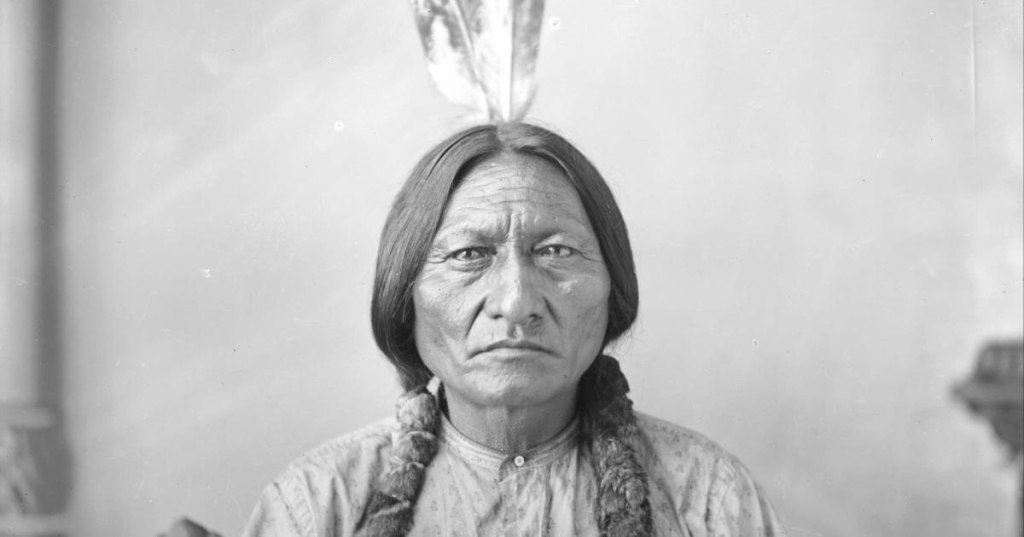
First, Dec. 15 was the 134th anniversary of the assassination of the great Hunkpapa Lakota Chief, Thatanka Iyotake, or Sitting Bull. I, too, am Hunkpapa Lakota, and I’ll say that Sitting Bull is one of our most celebrated ancestors for good reason. To learn more, I urge you to read (or reread) this blog, which I penned last year to give you more about Sitting Bull’s life, the context of his death, and an action you can take and share to rescind Medals of Honor granted to U.S. soldiers responsible for the second anniversary I referenced: the massacre of hundreds of Natives at Wounded Knee just days later, on Dec. 29, 1890. 


Photograph of Sitting Bull by David Francis Barry, circa 1883.

Tied to both of those anniversaries, I’ve been doing research and thinking a lot about the unique, historic nature of policing in Indian Country. In general, cops have never been especially friendly to us — even when they are from our communities. They have always been in direct correspondence with and there to enforce rules made by American governmental officials and corporate institutions that we all face together, even today. In turn, those entities have frequently displayed genocidal intentions and undertaken endeavors, from the Wounded Knee Massacre and the murder of Sitting Bull to railroading pipelines through our sacred lands, meant to degrade or eliminate tribal nations (or, potentially, anyone demonstrating the will to defend American lands and waters).

In our last message to you, my father thanked U.S. Secretary of the Interior Deb Haaland (Pueblo of Laguna) for her service over the past four years. Let it not be lost on anyone the importance of a Native woman occupying that seat, because for many years, her department was (and sometimes still is) a great nemesis to our communities. 

And that brings us back to Sitting Bull. In 1890, the Indian agent James McLaughlin, overseen by the U.S. military and the Secretary of the Interior, ordered him taken into custody. As 43 policemen and volunteers arrived that sad morning at the chief’s house and announced his arrest, a crowd of community members gathered at the commotion and began to protest. 150 Lakota arrived to protect him, and his son then led a group who attempted to free Sitting Bull from police custody. 

Bureau of Indian Affairs police lieutenant Henry Bullhead and police sergeant Charles Shavehead, who bracketed Sitting Bull to prevent his escape, were shot. Mortally wounded, Bullhead then murdered Sitting Bull, shooting him in the ribs. Indian agent Red Tomahawk, who’d been behind Sitting Bull, then assumed command of the police. The ensuing fight resulted in the deaths of six police and eight Lakota protectors. After Thatanka Iyotake’s assassination, his people fled to join Spotted Elk (the brother of Iron Eyes, from whom my family takes its name). Then the band fled toward Red Cloud and the Oglala at the Pine Ridge Agency — and soon thereafter came the massacre at Wounded Knee.

These events live on with us — not just, unfortunately, as histories. As an Oglala who lives on Pine Ridge, I have witnessed police abuse in the modern day. And I have heard direct testimony and firsthand accounts of abuse of power and undue violence by Indian police over the past few decades. One example, and this is something I plan to expand on for you in subsequent messages, was the Reign of Terror on Pine Ridge in the early 1970s, which ultimately laid the foundation for the American Indian Movement’s occupation of Wounded Knee in 1973.

There is much more to say about that, and there’s so much more we can do moving forward. I promise you’ll hear more from me again soon. In the meantime, please hold us close, as you would all your loved ones at this time of year. I’m so grateful to be able to share with you, and I know that, together, we can continue to make progress. We can and we must use the often harsh lessons of the past to understand the present and create a future we can be proud of for all human beings.

Wopila tanka — thank you for your friendship!
Tokata Iron Eyes
Spokesperson & Organizer
Lakota People’s Law Project
Sacred Defense Fund