Sugarcane: A New Documentary

Lakota Law

This weekend, I had the opportunity to experience an incredible work of art. Because you’re with us in the ongoing effort to find healing for our people, I feel it’s important to share it with you, too. “Sugarcane” — an award-winning new documentary feature about the generational trauma Indigenous families and communities face as a result of the residential and boarding school era — is currently touring Indian Country and in limited theatrical release across Turtle Island. Acquired for distribution by National Geographic, it will soon stream on Disney+ and Hulu. Today, I urge you to watch the trailer, then make plans to see the full movie as soon as it’s available to you!

 Watch the trailer: The film explores director Julian Brave NoiseCat’s fraught relationship with his father (pictured), who was born at a Canadian residential school.

By now, you’re no doubt all-too familiar with the horrors wrought at Indian residential and boarding schools — and the generational trauma that, as a result, affects virtually every person who grows up Indigenous in North America. Indeed, if you are Indigenous and didn’t go through it yourself, you 100% have relatives who experienced the forced assimilation, dehumanization, and cultural genocide of these institutions firsthand. If you’re non-Indigenous, you’ve probably read about it in more detail previously from us, in the news, or both.

Sugarcane,” co-directed by Julian Brave NoiseCat (a member of the Canim Lake Band Tsq’escen and descendant of the Lil’Wat Nation of Mount Currie) and Emily Kassie, takes on this dynamic in a personal way. Its uncompromising lens includes NoiseCat’s exploration of his relationship with his father, who was born at a Canadian residential school. If the implications of that are not immediately obvious, I caution you to prepare yourself for some heavy material.

The New York Times called “Sugarcane” a “must-see film about a difficult subject.” I couldn’t agree more. Nonetheless, this is not a movie that overtly seeks to polemicize. It brings you in, sharing with the viewer an investigation, a personal quest, a struggle to understand and forgive what can be forgiven and expose what cannot.

I want to acknowledge in this space my real respect for NoiseCat, who in addition to directing this film and sharing his deeply personal story, is a decorated journalist. He also led the call — which Lakota Law, and by extension, supporters like you — joined to position Deb Haaland as the U.S.’s first Indigenous Cabinet secretary. That’s a strong example of what we can accomplish together when we watch and follow with action.

So I hope you will watch what NoiseCat, Kassie, and their team have created with “Sugarcane.” It’s beautiful. It’s tough. It’s important.  

Wopila tanka — thank you for supporting Indigenous creators!
Tokata Iron Eyes
Spokesperson & Organizer
Lakota People’s Law Project

Federal Indian Boarding School Report

Lakota Law

This week, the Federal Indian Boarding School Initiative released the second volume of its investigative report. Its conservative estimate that at least 973 children died in federally operated Indian boarding schools sadly confirms what we in Native communities have known for decades. The legacy of these prison camps for children is generational trauma that may never fully heal. I know this is a difficult subject, but I invite you to read a recent article from USA Today, in which I offer more thoughts on this dark chapter of our shared history.

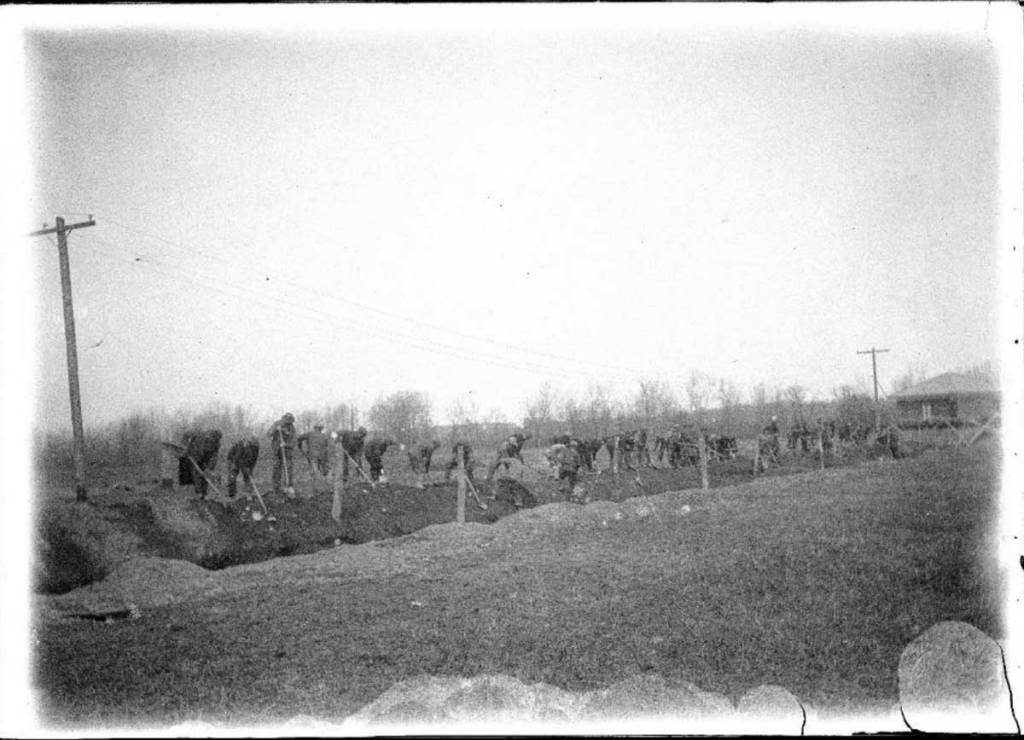
Students working outside [Photograph]. (ca. 1900-1930). Thomas Indian School glass plate negatives, Box 5; National Museum of the American Indian, Smithsonian Institution (Catalog Number N49089). From the Federal Indian Boarding School Initiative Investigative Report, Vol. II.

As a Lakota Law supporter, you’re likely well aware that Indian boarding and residential schools were noxious and dangerous places, designed to strip Native and First Nations children of their Indigenous identities, force them to work long hours, and assimilate them as good Christian subjects. (The report unfortunately does not include full statistics from the roughly 50 percent of domestic boarding schools formerly operated by religious institutions.) 

Many of the young ones fortunate enough to make it home after their incarceration bore permanent scars — mental and/or physical — which often later manifested in a variety of ways, not least a common difficulty raising the next generations in traditional and loving homes. Anyone who grew up Indigenous on Turtle Island can tell you stories of the danger, abuse, and dehumanization either they or family members experienced in these “schools.” 

That’s why, in 2021, on the heels of the revelation that 215 unmarked children’s graves had been discovered at the former Kamloops Indian Residential school located on Tk’emlúps te Secwépemc land in so-called British Columbia, Lakota Law advocated for a reckoning in the U.S. Secretary of the Interior Deb Haaland (a member of the Pueblo of Laguna and the nation’s first Native Cabinet secretary) quickly lept into action, launching the Federal Indian Boarding School Initiative to investigate, make public its findings, and provide recommendations for next steps.

Now the world knows what really happened. As I told USA Today, truth and reconciliation are not beyond our reach — and I’m grateful to see the United States begin to assist in providing paths to recovery. While we can’t go back in time and save the children who endured the terrors of the boarding school experience, we can move forward in a good way. Your solidarity, empathy, and generosity of spirit are always welcomed and valued as we forge ahead.

Wopila tanka — my gratitude for your support of our children.
Chase Iron Eyes
Director and Lead Counsel
Lakota People’s Law Project
Sacred Defense Fund

The Legacy of Crazy Horse

Lakota Law

Today, I write to you to share a little piece of joy. Summer is an important time of year in Lakota Country. Right now, many from the Oceti Sakowin and beyond — including my father, Chase — are reconnecting in a deeply meaningful way with their spiritual identities at the annual Sun Dance ceremony. 

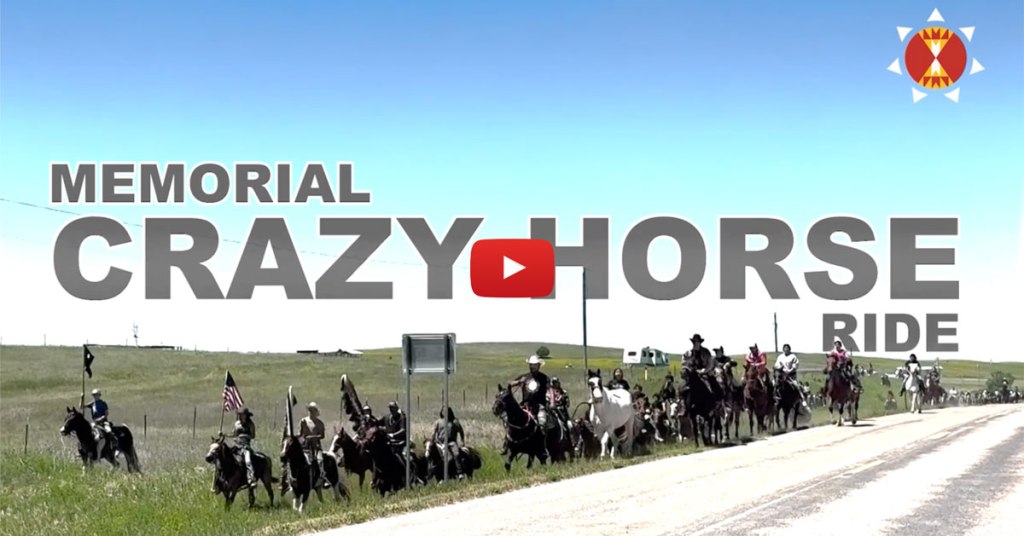
And about a month ago, I also felt the power of reconnection with our ancestors, homelands, and tradition of horseback riding at this year’s Memorial Crazy Horse Ride. I invite you to watch our new video, which features footage from the days-long event, background on its meaning, and an interview with Oglala Lakota organizer Kylie Richards Red Willow, a junior political science major and pre-law student at the University of Colorado.


 Watch: I interviewed organizer Kylie Red Willow about this year’s Memorial Crazy Horse Ride.

By now, you’re most likely aware of Crazy Horse and his enduring legacy. We recently wrote to you about the battles of the Rosebud and Greasy Grass (Little Big Horn), both of which were won in part thanks to this legendary Ogala Lakota war leader. The annual ride pays tribute to him, the role he played in those and many more confrontations with the U.S. Army, and also our other warriors, many of whom honorably served in the U.S. military over the decades.

Native People, of course, have a complicated and bloody history with the U.S. government, but that hasn’t stopped us from answering the call to serve in large numbers to protect this land, particularly when faced with existential threats like Hitler’s fascism during World War II. You may recall that, at that time, 29 Navajo code talkers in the Marine Corps provided a key to victory in the Pacific.

Today, of course, we still face fascist threats — some right here in our own homelands. Whether it’s the architects of Project 2025 seeking to reinstall Donald Trump as their presidential puppet, or S.D. Gov. Kristi Noem, who recently, offensively invoked the Sun Dance to falsely connect Native communities with Mexican drug cartels, we still have plenty of terrible people to fight.

As you know, we’ll take on those battles, and we won’t stop in the pursuit of justice and equality. When we pray to and ride for our ancestors, who fought so hard so we could be here today, we’re always reminded they expect nothing less.

Wopila tanka — my gratitude, always, for your friendship!
Tokata Iron Eyes
Spokesperson & Organizer
Lakota People’s Law Project

Parole Denied

Lakota Law

With a heavy heart, I report to you that, once again, American Indian Movement (AIM) activist Leonard Peltier has been denied his freedom. On July 2 — despite the best efforts of a large coalition and so many who lobbied the U.S. Parole Commission to do the right thing by Leonard, behind bars since 1977 and our longest-standing political prisoner — it decided against his release.

That said, options remain — so we must keep the pressure on! We continue to ask the president to grant Leonard clemency and let this legendary justice defender live out his remaining years at home. As we have mentioned to you before, Leonard has serious health issues which the prison cannot properly handle. Time is running out. That’s why we hope you’ll send your message to the president and share this action today.

It’s long past time for the president to free Leonard Peltier. Please send your message and share this action. 

Understand that Leonard’s case is a classic miscarriage of justice. Leonard, a citizen of the Turtle Mountain Band of Chippewa in North Dakota and a Dakota, was a key member of AIM — which pushed back hard in the 1970s against violence in our communities perpetrated under the auspices of federal law enforcement. Thus, the government went after him hard and, despite a host of problems with his trial, he’s now serving two life sentences as a scapegoat.

Problems with his conviction include a lack of eyewitnesses, recanted testimony from other witnesses, and withheld ballistics evidence. The prosecuting attorney is now on record saying Leonard should be freed — and a host of other justice advocates, including Amnesty International and the Dalai Lama, agree.

Leonard’s freedom is an issue of Indigenous sovereignty, as embodied by a single man. A good human being has now spent nearly 50 years behind bars, essentially because he’s Native and once made for a convenient example. Enough is enough! Please send your message to President Biden. Ask him to do the right thing, show empathy to a misunderstood elder with a good heart, and grant clemency to Leonard Peltier.

Wopila tanka — thank you for showing your love and respect.
Chase Iron Eyes
Director and Lead Counsel
The Lakota People’s Law Project
Let's Green CA!

Lakota People’s Law Project
547 South 7th Street #149
Bismarck, ND 58504-5859

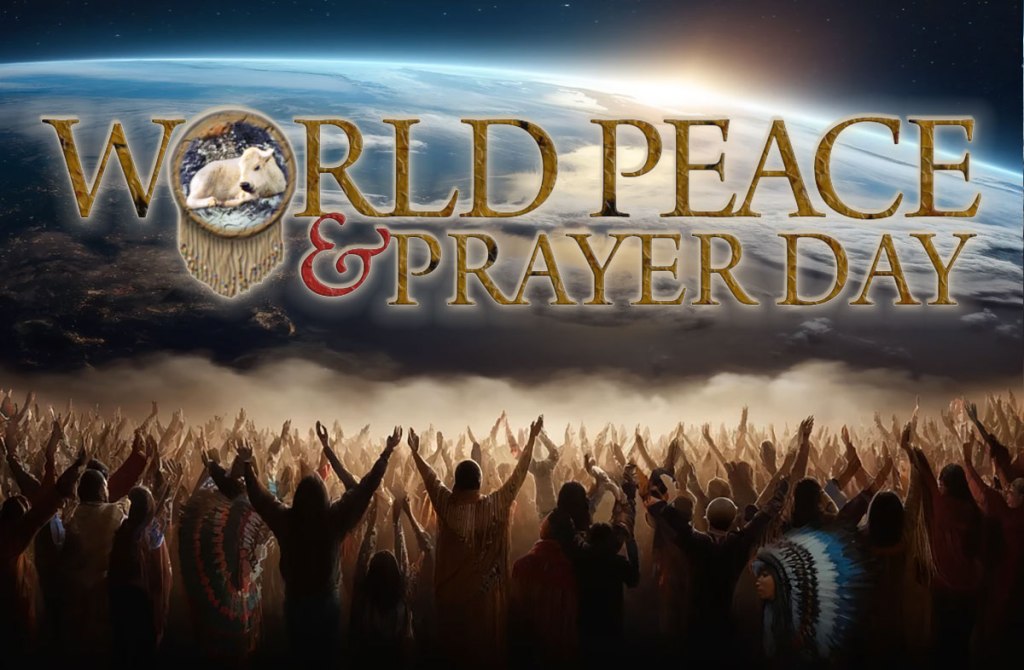
World Peace and Prayer Day

Lakota Law

This week, as we continue to track the humanitarian crises and wars in Gaza and Ukraine, the proliferation of the Iranian nuclear program, the Sudanese civil war, ongoing conflict in the Democratic Republic of Congo, and too many other global hotspots, Native nations have gathered together for peace and prayer.

Many of our friends and relatives have journeyed to Pipestone, Minnesota — the center of Turtle Island — for this year’s World Peace and Prayer Day. Pipestone is a significant sacred site. Underneath it lies a vein of the sacred stone used for carving into our ceremonial pipes. In this special place, spiritual leaders and knowledgeable representatives from Indigenous populations far and wide have converged for an “international and intergenerational celebration for people of all faiths, nations, races, [and] ages.”

Click the pic to join the live-streamed event, which begins at 8 a.m. PST/11 a.m. EST on Friday, June 21.

Even if you can not physically be at Pipestone, you can watch some of the speakers and join the ceremony via Friday’s internet live stream, right here. Lakota spiritual leader Chief Arvol Looking Horse — the 19th keeper of the Sacred White Buffalo Calf Pipe and Bundle — wants you to know that your participation, your prayers and actions, matter. 

“Each of us is put here in this time and this place to personally decide the future of humankind,” he wrote on the event’s website. “Did you think the Creator would create unnecessary people in a time of such terrible danger? Know that you yourself are essential to this world. Understand both the blessing and the burden of that. You yourself are desperately needed to save the soul of this world. Did you think you were put here for something less? In a Sacred Hoop of Life, there is no beginning and no ending.”

What more can be said? This is why all of us here at Lakota Law are so deeply appreciative of your friendship with our organization and your dedication to achieving peace and justice. As you know if you’ve read my past messages, we can’t have one without the other. Our ancestors fought so hard throughout the decades, and we must honor them now by uniting in both prayer and action. Our task is no less than to embrace our power and change this world.

Wopila tanka — my sincere gratitude for your participation!
Tokata Iron Eyes
Spokesperson & Organizer
Lakota People’s Law Project

Native Sovereignty/ Indian Citizenship Act

Lakota Law

It has been a century since the imposition of American citizenship on Indigenous Nations marked a systemic threat to Tribal Nationhood and people. Since the signing of the Indian Citizenship Act on June 2, 1924, we’ve resisted the many waves of attempted erasure of Tribal sovereignty – legal and otherwise – designed to assimilate Indigenous identities into American citizenship. 

Native Nations are not merely American citizens. The rights, privileges, and immunities granted by the U.S. Constitution are not the ultimate aspiration for Native people. Our treaties with the United States were made to uphold our status as sovereign nations, not subjects. Native people’s voluntary defense of the U.S. and its allies in World War I was used as a pretext to impose American citizenship, undermining Tribal sovereignty.

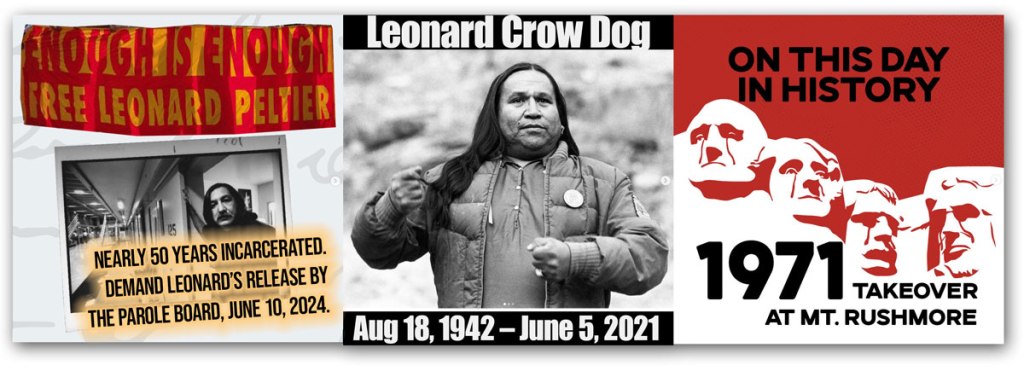
This week, we mark three of the many important anniversaries in our history: As Leonard Peltier nears 50 years in prison we demand his release by the June 10th parole board meeting. And we remember Leonard Crow Dog’s passing June 5, 2021, and the American Indian Movement (AIM) Mount Rushmore Action of June 6, 1971.

While it is good to pursue the rights that America considers inalienable, America will be lost unless it learns from the spiritual foundations of Native Nations and respects our sovereignty. We stand with all those who are willing to stand with Native Nations to defend our collective birthrights in these sacred lands and waters from the poison of corporations and government profiteering.

Free Leonard Peltier: No discussion of the American Indian Movement (AIM) can proceed without advocating for the release of Leonard Peltier, who has been illegally held captive as a political prisoner of the U.S.A. for nearly 50 years. Peltier is a victim of a corrupt FBI and anti-Indigenous Federal policies that caused numerous deaths and conflicts in the 1970s. Why have they not been held to account for this grave injustice? Why has no U.S. President or parole board, in 50 years, freed this man? Who are we if we live in a state of fear and terror of oppressive violent oligarchs? 

Join us in calling for Leonard’s release by the Parole Board that meets on June 10th. It is imperative for restoring faith in justice and upholding human rights. Leonard deserves to spend his remaining years embraced by his community.

Remember Leonard Crow Dog: We honor the legacy of Chief of Chiefs Leonard Crow Dog, who passed on June 5, 2021. As a primary spiritual leader of the AIM, Crow Dog’s influence ensured the survival and pride of our traditional ways. His efforts helped establish a world of allies (Oceti Sakowin) and fortified the Native American Church. Crow Dog’s spiritual strength offers hope for humanity’s future against colonial violence.

Commemorating AIM’s Mount Rushmore Action: On June 6, 1971, AIM leaders, including Russell Means and Madonna Thunder Hawk, responded to Oglala Sioux elders’ call to assert Indigenous sovereignty over the sacred Black Hills. Guided by Leonard Crow Dog, they conducted a ceremony and climbed Mount Rushmore to reclaim their rights. Despite National Guard intervention and arrests, the charges were dismissed, culminating this powerful act of resistance and treaty defense.

In Solidarity, we express profound gratitude to all who stand with Indigenous sovereignty. Upholding Native sovereignty is essential to defending our collective rights to clean water, air, and a healthy climate. This is the Native way.

Wopila tanka — Thank you for your unwavering support.
Chase Iron Eyes
Director and Lead Counsel
The Lakota People’s Law Project

Free Leonard Peltier: Call to Action

Lakota Law

Next week, on June 10, Anishinaabe-Lakota elder Leonard Peltier has a scheduled parole hearing — his first since July 28, 2009, nearly 15 years ago. Several months ago, Leonard said that he hopes he makes it to this hearing. He’s 79, he’s been incarcerated since 1976 — almost a half-century — and his health continues to decline. 

This means that right now, it’s time to act! Please stand with Leonard, the American Indian Movement, Lakota Law, NDN Collective, and Indigenous People everywhere. Tell the U.S. Parole Commission to let Leonard spend his final days at home, in Bellecourt, North Dakota. As you’ll see on the page, you can send a letter directly to the board, and you can also text a message of solidarity.

Please click above to write the parole board today!

Leonard was a leading member of the American Indian Movement (AIM) during a critical time in our history. In the 1970s, many Indian people began expressing pride in their identity. Then the “Reign of Terror” swept over the Pine Ridge Indian Reservation, resulting in the unsolved murders of dozens of Oglala Lakota people and the siege of Wounded Knee by federal agents. In this environment, elders asked AIM for additional security assistance, and Leonard answered the call to help protect Oglala Lakota elders, women, and children. 

In 1975, this led to another stand-off, a shooting incident during a violent and unwarranted FBI raid which resulted in the deaths of FBI Agents Jack Coler and Ronald Williams. Leonard was subsequently charged with nonsensical crimes, such as aiding and abetting “murderers” who even the day’s biased courts determined to have acted in self-defense. But the government needed a Native scapegoat, so Leonard was eventually falsely convicted and sentenced to two consecutive life sentences. 

We’ve been by Leonard’s side ever since. Since 1977, we’ve demanded his freedom. Evidence that exonerates him includes documents, proven to be illegal, used to secure his extradition from Canada, recanted witness testimony, and the court’s decision to exclude ballistics and other evidence surrounding the shooting, all of which prejudiced the process and prevented a fair trial.

The U.S. Parole Commission has held a number of hearings on Leonard’s case over the years, but it has always denied his parole on the grounds that he won’t accept criminal responsibility for killing Coler and Williams — murders he simply did not commit. That’s why it’s so important that we stand with Leonard, right now. It is now well beyond time for our elder to come home. 

Chi-miigwetch
Lisa Bellanger
Co-Director 
American Indian Movement Grand Governing Council
Leech Lake Ojibwe
Via the Lakota People’s Law Project

P.S. Please help flood the parole board with messages of support for Leonard. This is likely the last hearing he’ll have. Our treasured relative deserves to live out his remaining days free, happy, and vindicated. Recently, Leonard’s request for compassionate release was denied, leaving this as possibly his last, best chance of getting released. His team is planning his defense for the parole hearing next week, and in the meantime, he needs your support!

Upcoming Events: NCAI

May 29, 2024
We’re Less than a Week Away from the 2024 Mid Year Convention & Marketplace
The National Congress of American Indians 2024 Mid Year Convention & Marketplace is less than a week away, and we are thrilled to welcome you to Cherokee, North Carolina! If you haven’t registered yet, there’s still time to join us for this impactful event at Harrah’s Cherokee Hotel & Casino Resort.At this year’s convention, attendees will have the opportunity to engage in key discussions and strategy sessions between Tribal Nations, Native organizations, federal agencies, and the Administration that will shape the future of Indian Country. Additionally, attendees will hear from an exceptional lineup of speakers sharing their insights and experiences on critical topics facing Tribal Nations. Key speakers will feature: Tom Vilsack, Secretary, U.S. Department of AgricultureLynn Malerba, Treasurer, U.S. Department of the Treasury Bryan Newland, Assistant Secretary for Indian Affairs, U.S. Department of the InteriorElizabeth Carr, Tribal Advisor to the Director, Office of Management and BudgetRoselyn Tso, Director, Indian Health Service, U.S. Department of Health and Human ServicesHeidi Frechette, Deputy Assistant Secretary for Native American Programs, U.S. Department of Housing and Urban Development Dr. Sallie Ann Keller, Chief Scientist & Associate Director of Research and Methodology Directorate, U.S. Census BureauRose Petoskey, Senior Advisor and Tribal Affairs Director, White House Office of Intergovernmental AffairsMorgan Rodman, Senior Policy Advisor for Native Affairs, White House Domestic Policy Council
Register Now View the Agenda
Last Call to Register for the 2024 Mid Year Convention Golf Tournament
Join NCAI for the second annual Mid Year Convention Golf Tournament Fundraiser! Hosted at the Sequoyah National Golf Club, this exciting event will feature a 4-Person Team Scramble format with trophies and prizes up for grabs. Fuel up with breakfast, tee off with a shotgun start, and enjoy a boxed lunch before diving into a BBQ dinner. The course boasts 6,600 yards of championship play, offering immaculate greens, expansive practice areas, and a full-service golf shop overlooking the Great Smoky Mountains. Don’t miss out on an unforgettable day, and register now for an opportunity to connect at the Sequoyah National Golf Club.When: Sunday, June 2, 2024Where: Sequoyah National Golf ClubFormat: 4-Person Scramble
Register Now
Empowering Native Youth: View the Full Youth Agenda
The 2024 Mid Year Convention & Marketplace Youth Agenda is designed to empower Native youth with opportunities to connect, learn, and grow with like-minded leaders from across Indian Country. Through our curated agenda, Native Youth will engage in discussions, workshops, and activities focused on pivotal policy areas such as education, wellness, environmental stewardship, data sovereignty, civic participation, cultural knowledge, climate action, and much more. The Native Youth Agenda is intended for young adults ages 15-24.
Youth Agenda
ADDITIONAL INFORMATION:NCAI ResolutionsPress RegistrationSponsorships

Tribal Nations Maps

Note: I purchased maps for my class and recently purchased a flag that I will fly in front of my house. Aaron is also a great resource for books! Please support this business, check out what is available and spread the word!

Hello, We would like to introduce to you the most comprehensive maps of pre-contact Tribal homelands to date. These maps use Indigenous Nation’s original names for themselves (as well as common names), and show where Nations were just before contact with outsiders . The intent of these maps is to instill pride in Native peoples and to be used as a teaching tool from a Native perspective. These maps are part of our Tribal Nations Map series-which covers the Indigenous Nations from across the Western Hemisphere.                           We are a Native American-owned company ! We also have: books, puzzles, Tribal flags, classroom posters, postcards, films and more.

To purchase or check out all 250 maps , please click below !

Here is my website:
www.tribalnationsmaps.com (zoomable maps available)