Again: Permit Invalid

https://www.commondreams.org/news/2020/05/12/again-finding-us-permit-invalid-federal-court-upholds-block-climate-busting-keystone


Published on
by

Again Finding US Permit Invalid, Federal Court Upholds Block on ‘Climate-Busting’ Keystone XL Construction

“Our courts have shown time and time again that the law matters.”

A federal judge on Monday denied the U.S. Army Corps of Engineers’ request to amend his earlier ruling regarding TC Energy’s Keystone XL pipeline, reaffirming that a permit issued by the Army Corps was invalid.

Chief U.S. District Judge Brian Morris ruled again that the U.S. Army Corps of Engineers (USACE) violated the Endangered Species Act when it issued Nationwide Permit 12, which allows companies to construct energy projects at water crossings.

“The court rightly ruled that the Trump administration can’t continue to ignore the catastrophic effects of fossil fuel pipelines like Keystone XL.”
—Jared Margolis, Center for Biological Diversity

Climate action and Indigenous rights campaigners have for years fought the construction of the Keystone XL pipeline, which if built would cross bodies of water hundreds of times along its nearly 1,200-mile route from Alberta to Nebraska. TC Energy plans to send tar sands oil along the route, which opponents say would put Indigenous communities as well as wildlife at risk for dangerous leaks and exposure to toxic waste.

“The court rightly ruled that the Trump administration can’t continue to ignore the catastrophic effects of fossil fuel pipelines like Keystone XL,” said Jared Margolis, senior attorney with the Center for Biological Diversity, in a statement. “Constructing pipelines through rivers, streams, and wetlands without analyzing the impacts on imperiled species is unconscionable.”

The USACE had asked Morris to narrow his April 15 ruling, but the judge only changed his decision on Nationwide Permit 12 to allow non-pipeline construction, such as electrical transmission lines, to move forward.

“Our courts have shown time and time again that the law matters,” said Cecilia Segal, Natural Resources Defense Council (NRDC) attorney. “Today’s ruling makes clear that climate-busting pipelines like Keystone XL cannot be built until the federal government does its job and properly analyzes these projects’ devastating effects on their surrounding communities and wildlife. If that analysis is based on science and facts, pipelines like Keystone XL will never see the light of day because they remain, and always will be, a dire threat to our water, wildlife, and climate.”

Indigenous Environmental Network @IENearth

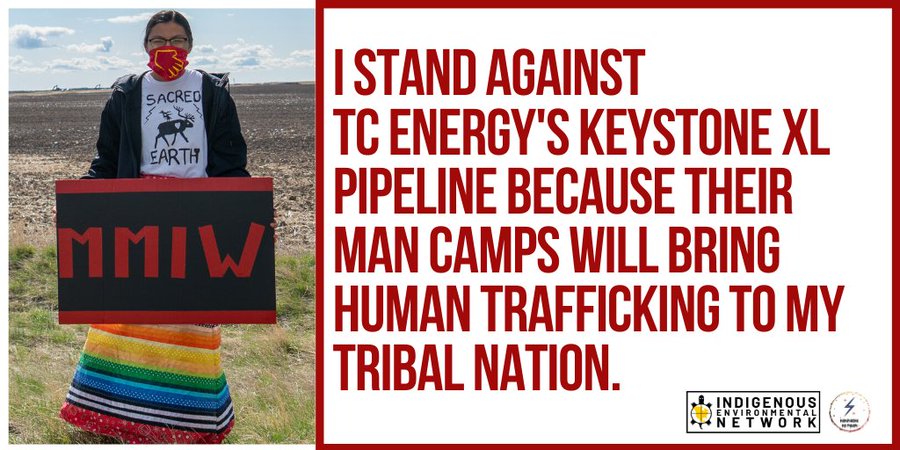
Ft. Peck Assiniboine Sioux Kokipasni youth organizer Prairiedawn has been speaking out against @TCEnergy‘s KXL pipeline because she and her friends are afraid of the increase in man camps bring to Indigenous communities. https://actionnetwork.org/petitions/cancel-kxl-halt-all-keystone-xl-construction-due-to-coronavirus-public-health-emergency 

15 people are talking about this

https://indiancountrytoday.com/coronavirus/virus-darkens-prospects-for-solar-wind-projects-t-ygmz5iakSVtpBTDF1Wow?utm_source=maven-coalition&utm_medium=salish&utm_campaign=email&utm_term=notification&utm_content=featured


Virus darkens prospects for solar, wind projects

The Associated Press

‘The industry was on a tremendous roll right up until the last month or two. That reversal is stunning and problematic.’

Cathy Bussewitz, John Flesher and Patrick Whittle

Associated Press 

NEW YORK (AP) — The U.S. renewable energy industry is reeling from the new coronavirus pandemic, which has delayed construction, put thousands of skilled laborers out of work and sowed doubts about solar and wind projects on the drawing board.

In locked-down California, some local agencies that issue permits for new work closed temporarily, and some solar companies furloughed installers.

In New York and New Jersey, SunPower CEO Thomas Werner halted installation of more than 400 residential solar systems, fearing for his workers’ safety.

As many as 120,000 jobs in solar and 35,000 in wind could be lost, trade groups say.

“There are many smaller companies going out of business as we speak,” said Abigail Ross Hopper, president of the Solar Energy Industries Association. “Up to half our jobs are at risk.”

Leaders are confident the future is bright. But the worldwide slowdown is delaying a transition to cleaner energy that scientists say is not happening quickly enough to curtail climate change.

Even as some states move toward reopening, executives fear diminished incomes and work disrupted by layoffs and social distancing will do lasting damage.

The wind industry is plagued by slowdowns in obtaining parts from overseas, getting them to job sites and constructing new turbines.

“The industry was on a tremendous roll right up until the last month or two,” said Tom Kiernan, CEO of the American Wind Energy Association. “That reversal is stunning and problematic.”

Residential solar business has been hit especially hard, Hopper said, with door-to-door sales no longer feasible and potential customers watching their wallets. Deals with commercial buyers also have slumped.

New solar installations could be 17% lower worldwide than expected this year, and wind turbine manufacturing could fall up to 20%, according to consulting firm Wood Mackenzie.

“Pre-pandemic, there were great dreams and aspirations for a record-setting year,” said Paul Gaynor, CEO of Longroad Energy, a utility-scale wind and solar developer. “I’m sure we’re not going to have that.”

Fossil fuels such as natural gas and coal remain the leading providers of the nation’s electricity, with nuclear power another key contributor, according to the U.S. Energy Information Administration.

But renewable sources — wind, solar, hydroelectric, biomass and geothermal — have jumped in the last decade as production costs have fallen and many states have ordered utilities to make greater use of renewable energy to reduce greenhouse gas emissions. Renewables produced nearly one-fifth of the country’s energy last year.

The EIA predicts renewable energy, despite recent setbacks, will grow 11% this year — an indication of the sector’s strong surge before the economy tanked. Meanwhile, coal-fired power is expected to decline 20% and gas generation to grow just 1%.

The setback for renewable energy still has been painful — even in California, where residential solar demand took off due to frequent blackouts and state laws requiring to new homes to produce as much energy as they consume.

“A lot of companies are just trying everything they can to just limp along and keep their workforce,” said Bernadette Del Chiaro, executive director of the California Solar and Storage Association.

All 20 employees were temporarily furloughed at Cinnamon Energy Systems, which sells residential and commercial solar systems in Northern California.

“I’m sure we’ll bounce back, just smaller,” CEO Barry Cinnamon said, adding that people might not spend as much as they once did, because their income will likely be down. “Whether that’s months or years, nobody knows.”

Luminalt, a San Francisco solar company, furloughed most of its 40 employees. And when work resumes, CEO Jeanine Cotter expects that projects will take longer and cost more to keep installers safe.

“Think about working on a roof with a mask,” Cotter said. “And think about not being able to pass a power tool to somebody unless you disinfect it before you pass it on.”

Since his furlough in mid-March, Luminalt solar technician Tom Hicks has been collecting benefits but no salary — and he’s worried about mortgage payments.

“My 401k got crushed by 30% just like everyone else,” said Hicks, 55. “How much time do I have to recover?”

Still, there are hopeful signs. The Boston-based developer Longroad recently began a utility-scale solar project in California and secured new financing for another in Texas.

Sunnova Energy International, a Houston-based residential solar and energy storage service provider, is doing more videoconferencing and fewer in-person dealings with customers. But CEO John Berger said, “Our installations are still moving ahead, service is still moving ahead, we still see customers paying us.”

In eastern Kansas, construction has continued at Southern Power’s 200-megawatt Reading Wind Facility despite delayed parts shipments, company spokeswoman Helen Northcutt White said. Sixty-two turbines are planned for the facility, scheduled to go online in mid-May.

The wind and solar industries have asked lawmakers and federal agencies for help, including an extension of their four-year deadlines for completing projects without losing tax benefits. Similar assistance was granted during the 2008-09 recession.

The renewable energy industry’s health is crucial to improving the climate and to a strong economic recovery, said Matthew Davis, legislative director for the League of Conservation Voters.

“These businesses, these workers deserve immediate relief,” Davis said.

It’s important to push for more responsible energy use as the economy reopens worldwide, said Andrew Pershing, chief scientific officer with Gulf of Maine Research Institute in Portland, Maine, which studies climate change and oceans.

“My hope is that we would use this as an opportunity to build toward an economy that doesn’t depend on burning coal and oil and that is more resilient to the climate impacts that are heading our way,” Pershing said.

___

Flesher reported from Traverse City, Mich. and Whittle reported from Portland, Me.

A Beautiful Book by John Chao


https://www.johnchao.com/standing-rock-add-name/

thumbnailJohn Chao created this beautiful photography book and has a chapter about Standing Rock. Check it out. People who were there have their names listed. I am listed there and am very proud to say that I was there, I was a witness, I contributed, and I tried to help in any way I could by waking up my school community on Sacramento to what was going on in North Dakota.


The struggle continues as we battle through a rogue government and a pandemic.

It will always be the artist, writers, and educators who will document and tell the tale.


Earth Day Strike


300x250

What’s Happening?

Separator

It’s more important now than ever to unite and support each other. That’s why, on the 50th anniversary of Earth Day, we’re launching a massive livestream from April 22-24 where you can join activists, celebrities, musicians, and more in an epic moment of community and hope for our future. Together, we’ll:

  • Drive donations to benefit the COVID-19 relief effort
  • Call on world leaders to take emergency action to build a more sustainable and just world
  • Inspire millions to pledge to vote for our future.

For 50 years, we’ve been losing the fight for our planet. But we can make this the century we saved the world — starting on Earth Day. Here’s how you can spread the word and make this as big as possible.

COVID-19

I hope this email finds you safe and well. As you have likely heard, the federal government recently passed a $2 trillion emergency relief package to aid Americans during the COVID-19 crisis. We’re so grateful to those of you who sent 13,000 emails to Congress demanding the CARES Act not bail out fossil fuel companies. It worked: the bill was revised — you and others stopped a $3 billion giveaway to oil companies! Other victories in the Act include expanded protections for unemployed workers, coverage for COVID-19 testing, and $64 million in aid to Indian Country. Even under quarantine, you are helping make a difference where it counts.

Despite those wins, Trump announced in a signing statement that he intends to ignore key congressional oversight provisions, leaving open the possibility that he will still earmark billions of dollars for the fossil fuel industry. Thankfully, such signing statements do not carry the force of law. As my comrade Chase Iron Eyes describes in our new video, Congress can take legal action. Click here to tell the House of Representatives to file a lawsuit against the executive branch and stop Trump from following through on his promise to bail out Big Oil.

Lakota Law
Chase Iron Eyes talks legal action against the White House.

In the midst of massive shelter-in-place orders, we’re seeing how quickly nature can start to rebound — bluer skies, cleaner water ways, thriving wildlife. Mother Earth is clearly sending us a message: we can’t go back to business-as-usual. The truth is, COVID-19 isn’t the primary reason the oil industry is now suffering. U.S. fracking simply can’t compete with cheap Saudi Oil and renewables. We must let the market dictate a shift to green alternatives before it’s too late, rather than continuing to subsidize dirty energy. Taking Trump’s Big Oil addiction to court can be an important step in severing our addiction to fossil fuels.

In more localized news, my part of Indian Country is beginning to feel the impacts of the pandemic, with confirmed cases near both Standing Rock and Yankton. Though we have no reported cases yet on Pine Ridge or Cheyenne River, limited testing means we can’t be sure the virus isn’t among us. We know that COVID-19 could disproportionately impact Native communities, and we’re remaining vigilant during these uncertain times. We organizers are sounding out tribal leaders (from a safe distance) on how LPLP can support public health in the days to come. Please stay tuned for ways you can assist our efforts on the reservations.

Thank you for your support. Wishing you and your family safety and health,

Madonna Thunder Hawk
Cheyenne River Organizer
The Lakota People’s Law Project

P.S. We must prioritize the health of people and planet during a pandemic — not the extractive industry that routinely jeopardizes both. I ask you to use your voice again to engage your reps and the courts. Together, let’s stop Trump’s Big Oil bailout.

Regarding DAPL/COVID-19

As the COVID-19 pandemic continues to spread throughout the nation, we’re aware that it could have an outsized impact on Indian Country. Relief programs may not provide needed tests and medical supplies for us — or anyone — on an appropriate scale. Please know we are monitoring this, and as my colleague Chase Iron Eyes mentioned a few days ago, we’ll keep you updated on developments. May we all stay safe and healthy.

In the meantime, I write with some wonderful news. Just yesterday, Standing Rock won a big victory in the ongoing legal battle against the Dakota Access pipeline when a federal judge granted the tribe’s request to strike down DAPL’s federal permits!

Lakota Law

Thank you for all you have done to aid our struggle! Today I ask that you take a few moments to watch our video about the win in court and send a note of solidarity to Standing Rock. I will deliver your messages to the tribal chairman and tribal council. This is a big moment!

The judge ruled that Trump’s Army Corps of Engineers must complete a full Environmental Impact Statement (EIS) — the much more comprehensive review we’ve all been demanding since the beginning of this movement (and that President Obama required, only to be reversed by Trump). The Corps fell short in three specific ways, according to the judge.

First, the Corps failed to respond adequately to claims by the tribe’s experts that DAPL’s leak detection system is wholly inadequate. Second, the company’s dreadful history of oil spills wasn’t properly addressed. Finally, the oil company failed to account for the adverse repercussions a “worst case discharge” might have on our treaty rights — our ability to hunt, fish, and perform traditional religious ceremonies near Lake Oahe, which the pipeline crosses under.

I was asked by the tribal chairman to represent Standing Rock’s interests at the hearing in Washington, D.C., but I couldn’t go because of Coronavirus travel restrictions. I’m gratified that, despite our troubles, we have been victorious, at least for now.

The logic of the judge’s ruling suggests the pipeline should not remain operational without a federal permit. The ruling actually references both the Titanic and Chernobyl concerning the possibility of human error, and I’m hopeful shutting down the flow will be the judge’s next step. He has now requested legal briefs on that issue.

Please stay tuned, as we hope to share more good news soon. In the meantime, stay safe and please listen to the medical professionals with knowledge about the requirements of this pandemic. We’re all in this together.

Wopila tanka — as always, we’re so grateful to you for standing with Standing Rock and Mother Earth.

Phyllis Young
Standing Rock Organizer
The Lakota People’s Law Project


Lakota People's Law Project

Lakota People’s Law Project
547 South 7th Street #149
Bismarck, ND 58504-5859

The Lakota People’s Law Project is part of the Romero Institute, a nonprofit 501(c)(3) law and policy center. All donations are tax-deductible.

Creativity even in troubled times…

First and foremost, I hope that you are staying safe and healthy. At this critical moment for our shared society, it’s more important than ever that we look out for one another — even as we are asked to keep our distance. Right now, the Lakota People’s Law Project has staff stationed at Standing Rock, Pine Ridge, and Cheyenne River. We are talking to tribal leaders about ways we can support them in essential work, even while they create emergency plans to respond to the spread of COVID-19. We will keep you updated.

Meanwhile, I write to share with you today about an inspirational partnership that has yielded three wonderful outcomes at Pine Ridge: four college scholarships for Native American girls, the planting of at least 7,000 trees on the reservation, and a new way to support Native artisans.

Lakota Law
Henry Red Cloud, pictured here, has planted over 110,000 trees with the help of a volunteer team. Picture courtesy of inourhands.love.

For some time now, the Lakota People’s Law Project has enjoyed dedicated support from the good people at Nomadics Tipi Makers. Like LPLP, Jeb and Nicole, who run the company, are always looking for ways to best support Native communities. As time has passed, we have deepened our connection with them and shared ideas.

As part of that, we’ve helped network them with others in the community. One such connection is with Henry Red Cloud — who, like our own Phyllis Young, is a MIT Solve Laureate. He is a visionary environmental leader at Pine Ridge who installs solar around the reservation and plants trees to restore sacred sites and provide increased access to fresh fruit for our people. With his company, Red Cloud Renewable, Henry has facilitated a (literally) fruitful partnership by agreeing to work with Nomadics to plant one tree for every tipi pole the company sells — with all expenses for the project covered by Nomadics.

Jeb and Nicole’s commitment to providing sustained support to Native people also includes the establishment of a $20,000 per year scholarship fund — $5,000 each for four young Native American women to attend Oglala Lakota College on the Pine Ridge Reservation. The first round of scholarship money is already headed to young women at Pine Ridge.

Finally, Jeb and Nicole have also found a great way to provide resources to Native artists at Pine Ridge by collaborating with them to paint tipi covers with personal, authentic artwork. Nomadics will send tipi covers to the artists and will pay forward to the reservation 100 percent of the artwork price as charged to individual customers.

These measures to bring support and health to Pine Ridge take on extra meaning at a time like the present. As we all hunker down for what looks to be a challenging road ahead, know that your support of the Lakota People’s Law Project has helped facilitate some extremely positive connections that will matter greatly, both right now for local artists and into the future for our young people and our reservation as a whole.

Wopila — Thank you, as always, and please stay safe and well!

Chase Iron Eyes
Lead Counsel
The Lakota People’s Law Project

Montana, Navajo-owned company reach deal on sovereign immunity

https://indiancountrytoday.com/news/montana-navajo-owned-company-reach-deal-on-sovereign-immunity-g-y4lyhK0UGjTLyqturwCw

The Associated Press

Matthew Brown

Associated Press

BILLINGS, Mont. (AP) — Montana regulators have reached a deal allowing the state to enforce environmental laws at a large coal mine bought by a Navajo-owned company, officials said Thursday.

For months, executives from the Navajo Transitional Energy Company and state officials had been unable to resolve demands the company waive its immunity as a tribal entity from future lawsuits.

The mine shut down briefly in October when the dispute over sovereignty first emerged. Thursday’s agreement came a day before a temporary waiver agreement was set to expire.

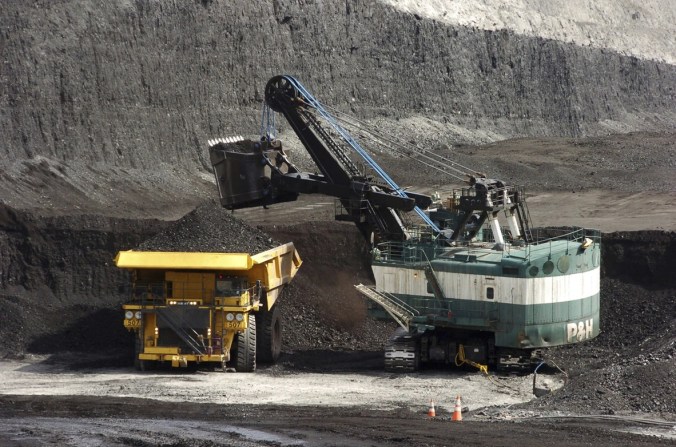
The Navajo company bought the 275-worker Spring Creek strip mine along the Wyoming border and two mines in Wyoming last year from bankrupt Cloud Peak Energy.https _images.saymedia-content.com_.image_MTcxMTA1NzUzODk2MDY5MTA1_ap_20007830298569


Thank the Women of Cheyenne River

Thank the Women of Cheyenne River for resisting KXL
Mon, Feb 17, 2020 11:30 am
Madonna Thunder Hawk, Lakota Law (info@lakotalaw.org)

As the Keystone XL pipeline (KXL) invades our homelands at the Cheyenne River Reservation, we women are preparing for the struggle.

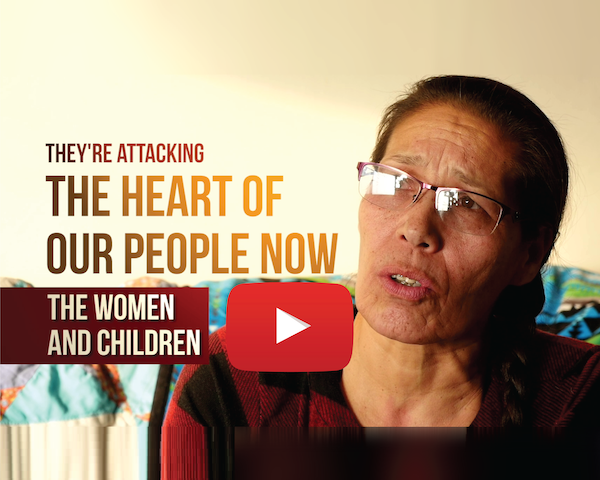
In December, my daughter, Marcy, helped to organize a talk about human trafficking and Missing and Murdered Indigenous Women and Children (MMIWC) happening on our reservation. At this important Women Gathering, community members and representatives of many concerned organizations initiated the Nazo Campaign — providing whistles to alert relatives to unfolding crime and violence on Cheyenne River — and a resolution asking our Tribal Council to declare a state of emergency. They then presented to the council, where our tribal nation made that declaration.

Lakota Law

Today I ask that you watch our video and send a note of thanks and solidarity to the women of Cheyenne River for standing up to protect the safety and security of our people.

Our matriarchy must and will lead this fight. We even have two generations of grandmothers working together here! The Was’agiya Najin — “Grandmothers Standing Strong” — includes both older grandmothers (OGs) like me and younger grandmothers (YGs) like Marcy.

In addition to Was’agiya Najin, our Women Gatherings also include representation from Warrior Women Project, Women of All Red Nations, Simply Smiles, Indigenous Environmental Network, the Lakota People’s Law Project, veterans, water protectors, and more. These are powerful, alliance-building meetups, and now the tribe has heeded our warning.

That’s critical, because Big Oil is building two KXL man camps — temporary housing for pipeline workers — on either side of Cheyenne River. These dens of machismo inevitably bring with them increases in sex and drug trafficking, worsening our MMIWC epidemic locally.

Here’s how bad it is: by 2014, our state’s federal courts had handed out more life sentences for commercial sex trafficking than all other states’ combined. Because 40 percent of South Dakota’s victims are Native women, we pay the highest price.

As a girl, I was shipped off to boarding school. I experienced what it is like to have my culture stripped from me, so as a young woman I became a leader in the American Indian Movement and created the “We Will Remember” Survival School. There, I taught Marcy and other children about treaty rights, to prioritize Native sovereignty, and to preserve our traditions.

Now, together, we are helping to pass on lessons of leadership and direct action to the next generations. That starts with making sure they don’t fall prey to man camps, and it means demanding action from our tribe. As Indigenous women, we have always been on the front lines, and we know how to stay ready. Will you stand with us?

Wopila tanka — my deepest gratitude for your solidarity,

Madonna Thunder Hawk
Tribal Liaison
The Lakota People’s Law Project


Lakota People's Law Project

Lakota People’s Law Project
547 South 7th Street #149
Bismarck, ND 58504-5859

The Lakota People’s Law Project is part of the Romero Institute, a nonprofit 501(c)(3) law and policy center. All donations are tax-deductible.

If you believe you received this message in error or wish to no longer receive email from us, please unsubscribe.

Coal Plant Closing

Navajo coal plant is the next to close; the end of an industry


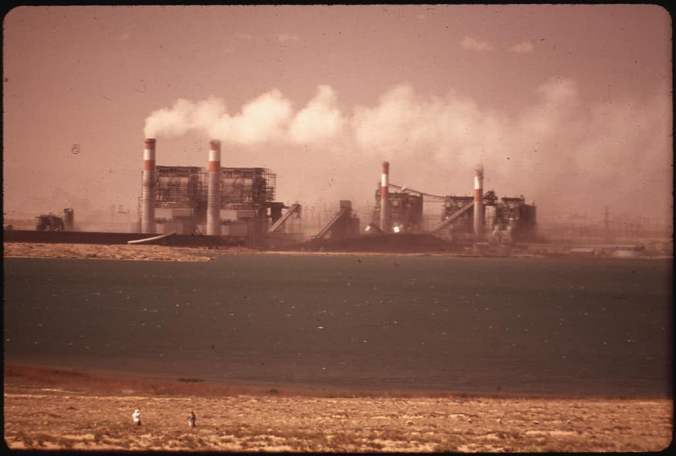
https _images.saymedia-content.com_.image_MTY5OTY5OTY4MzE2Njg3OTQ1_four_corners_power_plant_-_nara_-_544328


https://newsmaven.io/indiancountrytoday/news/navajo-coal-plant-is-the-next-to-close-the-end-of-an-industry-TkJ5Gh9Em0-G3YlYAbHxbg

Historical photo via National Archives
The Associated Press

Navajo President Jonathan Nez: ‘We are moving forward with renewable energy as our top priority’

Felicia Fonseca

Associated Press

FLAGSTAFF, Ariz. (AP) — The closure of a coal-fired power plant on the Navajo Nation sooner than expected will be a major blow to a region where coal has been a mainstay of the economy for decades.

The Arizona Public Service Co. now plans to shutter the Four Corners Power Plant near Farmington, New Mexico, in 2031 when its coal contract expires rather than wait until 2038.