Thu, Oct 1, 2020 6:36 pm Chase Iron Eyes, Lakota Law (info@lakotalaw.org)To:you Details
Warm greetings! As we look to escape the shadow of the most embarrassing presidential debate in the history of our still-young nation, our team here at Standing Rock has begun assembling tribal phone bankers. Our mission? We must remind Native voters in battleground states that their voice matters and help them cast their ballots. Much more news to come soon on that front.
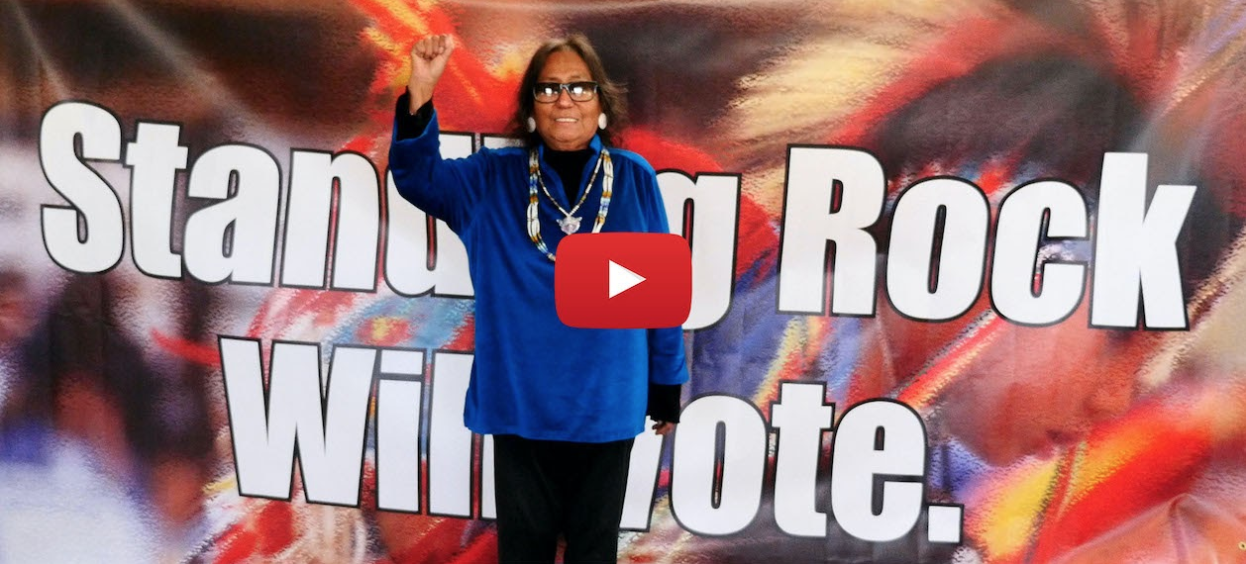
Meanwhile, I share with you a powerful new video about our NoDAPL stand, produced by VICE News in conjunction with the Lakota People’s Law Project. As we’ve continued to work with students at Loyola University to compile our archive of NoDAPL resources, we’ve also been releasing videos to tell you the full story of our stand to protect Standing Rock’s water. Another key reason for compiling these materials is to allow journalists, like our friends at VICE News, to help tell that story effectively.
About a month ago, VICE News sent their “I Was There” production team to meet me in South Dakota so we could talk about what really happened at Standing Rock. We also provided their team with access to our archival resources. Using all of that plus other sourced footage, they produced “I was There: DAPL Protests.” I urge you to watch it to gain a fuller picture of the timeline and meaning of our movement, and how it fits into the present cultural moment. I hope that you will find it informative.
Please know that, as we ramp up our Vote 2020 campaign to protect the future of our right to be heard in this democracy, we won’t stop our continued efforts to defeat DAPL — and Keystone XL — once and for all. This year has shown us so clearly that we must take our vigilance to new levels to protect one another. We have to fight on multiple fronts and make sure that the truth always comes to light. We’re so grateful for responsible journalists like the team from VICE News who help us do that. And, of course, we couldn’t be more appreciative of you for helping us stay in the fight every single day.
Wopila tanka — thank you for standing with us and with Standing Rock!
Chase Iron Eyes Lead Counsel The Lakota People’s Law Project
Lakota People’s Law Project 547 South 7th Street #149 Bismarck, ND 58504-5859
The Lakota People’s Law Project is part of the Romero Institute, a nonprofit 501(c)(3) law and policy center. All donations are tax-deductible.
I hope you’re hanging in there in what has become a more difficult and surreal year with every passing month. As if 2020 hadn’t hit hard enough yet, the death this week of Supreme Court Justice Ruth Bader Ginsberg landed yet another troubling blow to the health and safety of our democracy. But we’re pushing back in Indian Country.
The fate of the Dakota Access pipeline (DAPL) is one among many issues that could be adversely affected, if the Senate confirms a conservative nominee from President Trump as Justice Ginsberg’s replacement. But because Joe Biden’s team has announced his intention to shut down both DAPL and Keystone XL (KXL), the courts could be removed from the equation entirely should he become president.
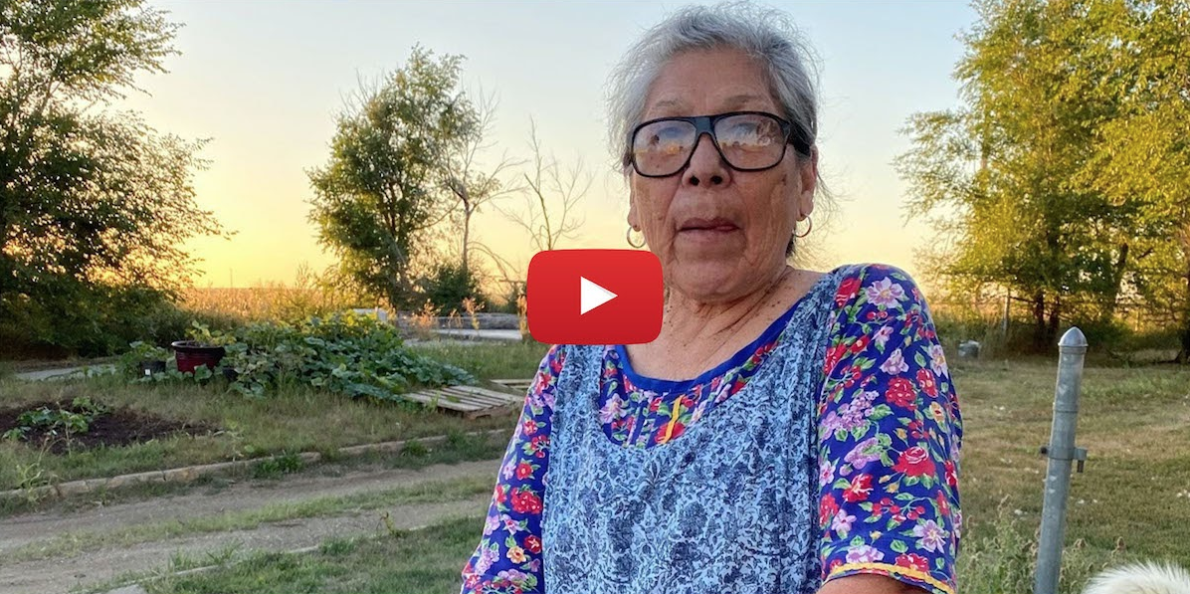
In our new DAPL Archive video, SD Rancher Marv Kammerer — the personification of what mutual understanding and alliance-building should look like — discusses appropriate stewardship of land and water.
No matter what happens in November, we must stand unified, together, across dividing lines real and imagined, to protect our future in this homeland. To see exactly what that looks like, I invite you to watch our latest DAPL Archive video. In 2017, I wrote an op-ed in The Hill about DAPL’s continuation of the age-old battle between cowboys and Indians. I’m happy to say that, in 2020, we have now evolved a small cowboy-Indian alliance against DAPL and KXL. Listen to our ally, rancher Marv Kammerer. You’ll be inspired.
At the end of the day, it is our shared values — not our racial differences — that must determine where we stand and where we’re going. By giving our common values a chance to resonate, we can heal the past and present and create the future we want.
Please stay with us as we begin to hire and train dozens of Standing Rock tribal members to call voters in states like Florida and Arizona between now and Nov 3. We’ll make sure Native votes are cast and counted in this all-important election. Despite the challenges 2020 has brought, America will hear our voice. As Marv so eloquently puts it, we must be proper stewards of this land. So let us rise to the occasion.
Wopila tanka — thank you for being part of our alliance!
Chase Iron Eyes Lead Counsel The Lakota People’s Law Project
Lakota People’s Law Project 547 South 7th Street #149 Bismarck, ND 58504-5859
The Lakota People’s Law Project is part of the Romero Institute, a nonprofit 501(c)(3) law and policy center. All donations are tax-deductible.
&nvep=ew0KICAiVGVuYW50VXJpIjogIm5ncHZhbjovL3Zhbi9FQS9FQTAwMS8xLzU4MDcwIiwNCiAgIkRpc3RyaWJ1dGlvblVuaXF1ZUlkIjogImRlMTY4NjBhLTZmZjgtZWExMS05OWMzLTAwMTU1ZDAzOWU3NCIsDQogICJFbWFpbEFkZHJlc3MiOiAiYXp0ZWM4ODg4QGFvbC5jb20iDQp9&hmac=ke7PoBOq6ZnUqC2Qe0IQ_hFLFUE7lPUxAbGUF9lImFQ=&emci=5e2001a3-9cf3-ea11-99c3-00155d039e74&emdi=de16860a-6ff8-ea11-99c3-00155d039e74&ceid=2659296″>That’s why we’re launching a membership program for Lakota Law, and we want you to be one of the first to join. Because a donor has promised to match all gifts, your generosity will do twice as much good.
What does membership with us mean? It means that together, we can make an even bigger impact on our journey to justice for the Lakota People. It will give you new ways to build community with like-minded supporters, contribute to the projects that matter most to you, and ensure stability for our work during turbulent times.
&nvep=ew0KICAiVGVuYW50VXJpIjogIm5ncHZhbjovL3Zhbi9FQS9FQTAwMS8xLzU4MDcwIiwNCiAgIkRpc3RyaWJ1dGlvblVuaXF1ZUlkIjogImRlMTY4NjBhLTZmZjgtZWExMS05OWMzLTAwMTU1ZDAzOWU3NCIsDQogICJFbWFpbEFkZHJlc3MiOiAiYXp0ZWM4ODg4QGFvbC5jb20iDQp9&hmac=ke7PoBOq6ZnUqC2Qe0IQ_hFLFUE7lPUxAbGUF9lImFQ=&emci=5e2001a3-9cf3-ea11-99c3-00155d039e74&emdi=de16860a-6ff8-ea11-99c3-00155d039e74&ceid=2659296″>Renee, will you join us by becoming a member of the Lakota People’s Law Project today?
&nvep=ew0KICAiVGVuYW50VXJpIjogIm5ncHZhbjovL3Zhbi9FQS9FQTAwMS8xLzU4MDcwIiwNCiAgIkRpc3RyaWJ1dGlvblVuaXF1ZUlkIjogImRlMTY4NjBhLTZmZjgtZWExMS05OWMzLTAwMTU1ZDAzOWU3NCIsDQogICJFbWFpbEFkZHJlc3MiOiAiYXp0ZWM4ODg4QGFvbC5jb20iDQp9&hmac=ke7PoBOq6ZnUqC2Qe0IQ_hFLFUE7lPUxAbGUF9lImFQ=&emci=5e2001a3-9cf3-ea11-99c3-00155d039e74&emdi=de16860a-6ff8-ea11-99c3-00155d039e74&ceid=2659296″>Some of our foster kids with their tribal foster parent, at our kinship care home on Standing Rock Nation.
Over the years, your support has created a better world for Lakota children and families. In the beginning, I formed the Lakota Child Rescue Project. In 2012, we hosted an Indian Child Welfare Act (ICWA) Summit. We transported dozens of Standing Rock families to Rapid City. There, tribal members from across South Dakota testified about the state’s Department of Social Services removing our children to illegally place them in non-Native care.
Now, your support can help fund a youth center adjacent to our Standing Rock foster home. We’re optimistic that, with your help, we could break ground as early as spring of 2021! So much of the suffering on our reservations — the suicide rates, the substance abuse, the juvenile offenses — could be solved by providing more resources for our young ones. We must work together to provide consistent places to sleep, learn, and play. That’s what building real stability looks like.
Wopila tanka — my deep gratitude to you for your committed friendship! Madonna Thunder Hawk Cheyenne River Organizer The Lakota People’s Law Project
&nvep=ew0KICAiVGVuYW50VXJpIjogIm5ncHZhbjovL3Zhbi9FQS9FQTAwMS8xLzU4MDcwIiwNCiAgIkRpc3RyaWJ1dGlvblVuaXF1ZUlkIjogImRlMTY4NjBhLTZmZjgtZWExMS05OWMzLTAwMTU1ZDAzOWU3NCIsDQogICJFbWFpbEFkZHJlc3MiOiAiYXp0ZWM4ODg4QGFvbC5jb20iDQp9&hmac=ke7PoBOq6ZnUqC2Qe0IQ_hFLFUE7lPUxAbGUF9lImFQ=&emci=5e2001a3-9cf3-ea11-99c3-00155d039e74&emdi=de16860a-6ff8-ea11-99c3-00155d039e74&ceid=2659296″>Please visit our website to learn more; and become a member by Saturday, Sept. 26 to join us for our special Membership Launch Event that day with me, Chase Iron Eyes, and our Lakota Law leaders!
Lakota People’s Law Project 547 South 7th Street #149 Bismarck, ND 58504-5859
The Lakota People’s Law Project is part of the Romero Institute, a nonprofit 501(c)(3) law and policy center. All donations are tax-deductible.
The best news I have heard this year! She should never have been arrested in the first place. It was a clear set up and attempt to intimidate protestors.
Image Credit: Twitter: @lakotalaw
An Indigenous water protector who was arrested during protests against the Dakota Access pipeline has been released from federal prison. Prosecutors accused Red Fawn Fallis of firing three shots from a handgun as police in riot gear, wielding batons, surrounded her to make an arrest amid mass protests against the pipeline in 2016. Red Fawn’s uncle, Glenn Morris, welcomed her release Thursday, telling Indian Country Today, “The real criminals continue to pump oil through the pipeline in violation of the 1851 and 1868 Ft. Laramie Treaties and US environmental laws.”
This year has called on us to respond with unprecedented creativity to unprecedented challenges. We’ve had to use the platforms we have to think big, make bold statements, and create rapid change. That’s why I was so heartened last week to see players in the National Basketball Association (NBA) take their position and influence seriously. After a police officer shot yet another black man — Jacob Blake — seven times in the back, players refused to take the court for their playoff games. Then they met, formed a plan, and got buy-in from team owners and the league to use NBA arenas as polling places and voting centers in November.
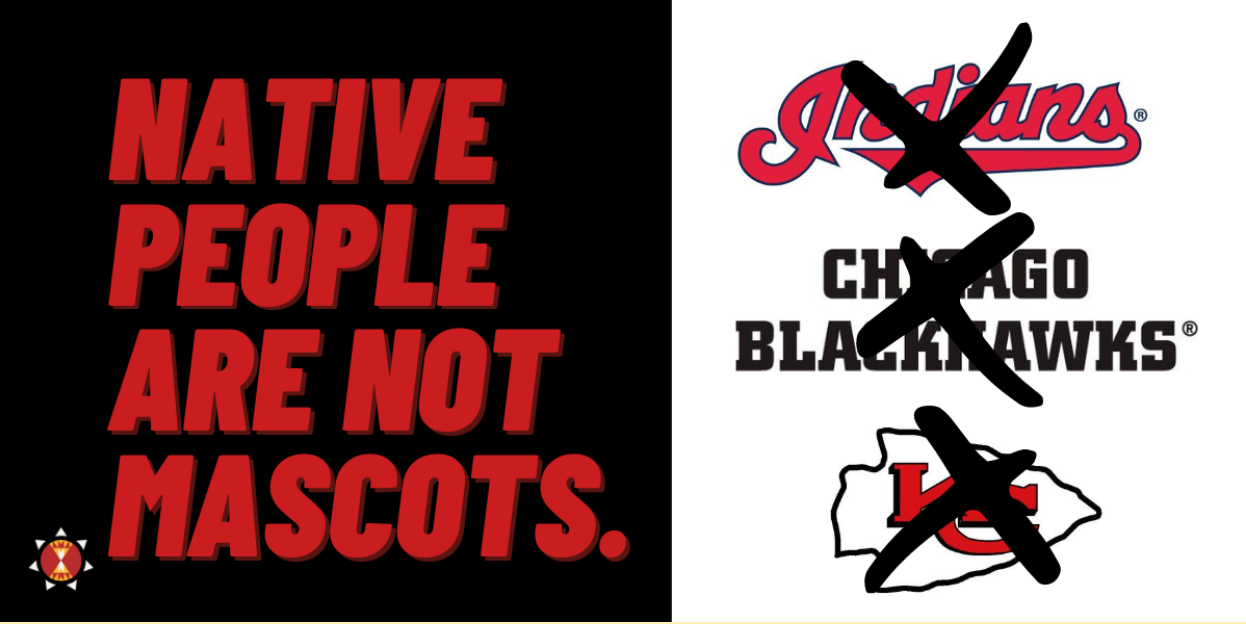
Unfortunately, no other American pro sports league approaches the NBA’s level of social justice awareness. Just weeks ago, after years of pressure, Washington, D.C.’s pro football team finally announced it would change its name from the most offensive in all of sports. But sports mascots and branding appropriated from Native culture are still all too common. This includes the Superbowl champion Kansas City Chiefs and baseball’s Atlanta Braves. Please sign and share our petition to change offensive sports mascots and branding, and watch my video about why it’s so important.
So many people watch and participate in sports, on every level from little league to the pros. Offensive team names, mascots, and logos impact all of us from a young age. Minor league baseball teams and college programs — like the Florida State Seminoles, whose fans often display the offensive “tomahawk chop” in stadiums — are guilty, just like the pros. A long time ago, I did all I could to help change my own alma mater’s nickname from the North Dakota State Fighting Sioux to the Fighting Hawks. Now I can be proud of my school.
These symbols rely upon stereotypes which demean Native culture and have real, negative effects on Indigenous children. Their continued existence perpetuates bullying and alienation.
Voting rights are under attack across America. President Trump’s threat to withhold funding from the U.S. Postal Service is just the latest attempt to limit our power by blocking free and fair elections. Of course, to Native people like me, this is nothing new. That’s why, two weeks ago, the Standing Rock Sioux Tribe voted unanimously to team up with the Lakota People’s Law Project, Sen. Tom Udall (D-N.M.), and U.S. House Assistant Speaker Ben Ray Luján (D-N.M.) to make sure Congress passes the Native American Voting Rights Act (NAVRA) as soon as possible.
We Standing Rocked the Vote in 2018, and now, with your help, we’ll pass NAVRA and ensure fair elections are held throughout all of Indian Country.
You likely recall that, in 2018, North Dakota passed a voter ID law specifically aimed at disenfranchising Native citizens without street addresses. I remain grateful that you leapt into action at that time, helping us Standing Rock the Vote. Together, we put 100 tribal volunteers on the street, printed 800 new IDs, and doubled turnout over the prior midterm.
But other Indigenous communities around the U.S. aren’t so fortunate. Many face significant hurdles, such as remote or difficult-to-reach polling locations, language barriers, and no vote-by-mail option. NAVRA will address these concerns and more.
I also want you to know that we’re just getting started. We intend to engage the members of the Great Plains Tribal Chairmen’s Association — the leaders of 16 tribes throughout North and South Dakota and Nebraska. We’ll also organize with tribal nations around the country to gain bipartisan support, and we’ll train a group of ambassadors from Standing Rock to phonebank and turn out the national Native vote, come election time. The tribe has also requested a congressional hearing.
Voter suppression within communities of color must end, right now. We have the opportunity to make a tremendous difference — not just for folks on reservations, but for the future of our nation. Please join us in what could be the most important action we’ve ever undertaken together.
Wopila tanka — my thanks for standing with Native voters!
Phyllis Young
Standing Rock Organizer
The Lakota People’s Law Project
Hello again from the front lines! I’m happy to report that, thanks largely to your support, things are much quieter here than you might expect. We’re at the tail end of the annual Sturgis Motorcycle Rally, the largest gathering without protection in our country since the pandemic began. But because of Cheyenne River’s lawsuit against the Trump administration, and because you’ve sent 28,000 emails to SD Governor Kristi Noem and federal agencies, our COVID checkpoints are still up and running. They’re keeping the bikers — and the contagion they could have delivered — outside our borders!
Thank goodness, because COVID-19 is bad enough here as it is. With nearly 200 confirmed cases at Pine Ridge, about 100 at Cheyenne River, and a death at Standing Rock, the Lakota People’s Law Project is spending tens of thousands on personal protective equipment, cots, tipis, stoves, and other supplies to help with the quarantine effort. But we still need more help, right now. Can you pitch in today to ensure we have what we need to keep our communities safe?
In my new video, you’ll hear about how our checkpoints keep our tribal nations safer, even as the Sturgis Motorcycle Rally descends and the pandemic grows.
Our combination of government advocacy and grassroots organizing is having an impact. And we need to keep it up, since we can’t allow the Oceti Sakowin to suffer the way our Diné relatives — the Navajo Nation — have, so tragically. Having 250,000 bikers descend on our homelands, most not wearing masks, just makes our situation more difficult.
As we await further action from Congress on COVID-19, we’ll remain vigilant in the face of the abject bullying and incompetence of this White House. Please keep eyes out next week for our joint message with the Standing Rock Sioux Tribe in support of the Native American Voting Rights Act. We will need every available Indigenous voice to be heard this November.
Wopila tanka — my sincere thanks for your solidarity throughout this crisis!
Madonna Thunder Hawk
Cheyenne River Organizer
The Lakota People’s Law Project
I write to you from Standing Rock with encouraging news: despite losing a tough mayoral campaign in McLaughlin, South Dakota, I’ve been promised appointment to the city council. Given the profound hardships it took to get here, I’m pleased with this outcome.
Three months ago, my uncle Robert White Mountain shared my story with you — I was unjustly removed from the ballot as a mayoral candidate by McLaughlin’s majority white city council. Robert’s message triggered an article in our local paper, The Teton Times, which put City Hall on alert: the Lakota People’s Law Project — and supporters like you — would not tolerate violation of my right to run for elected office. The pressure worked, and I gained a last minute chance to re-enter the race.
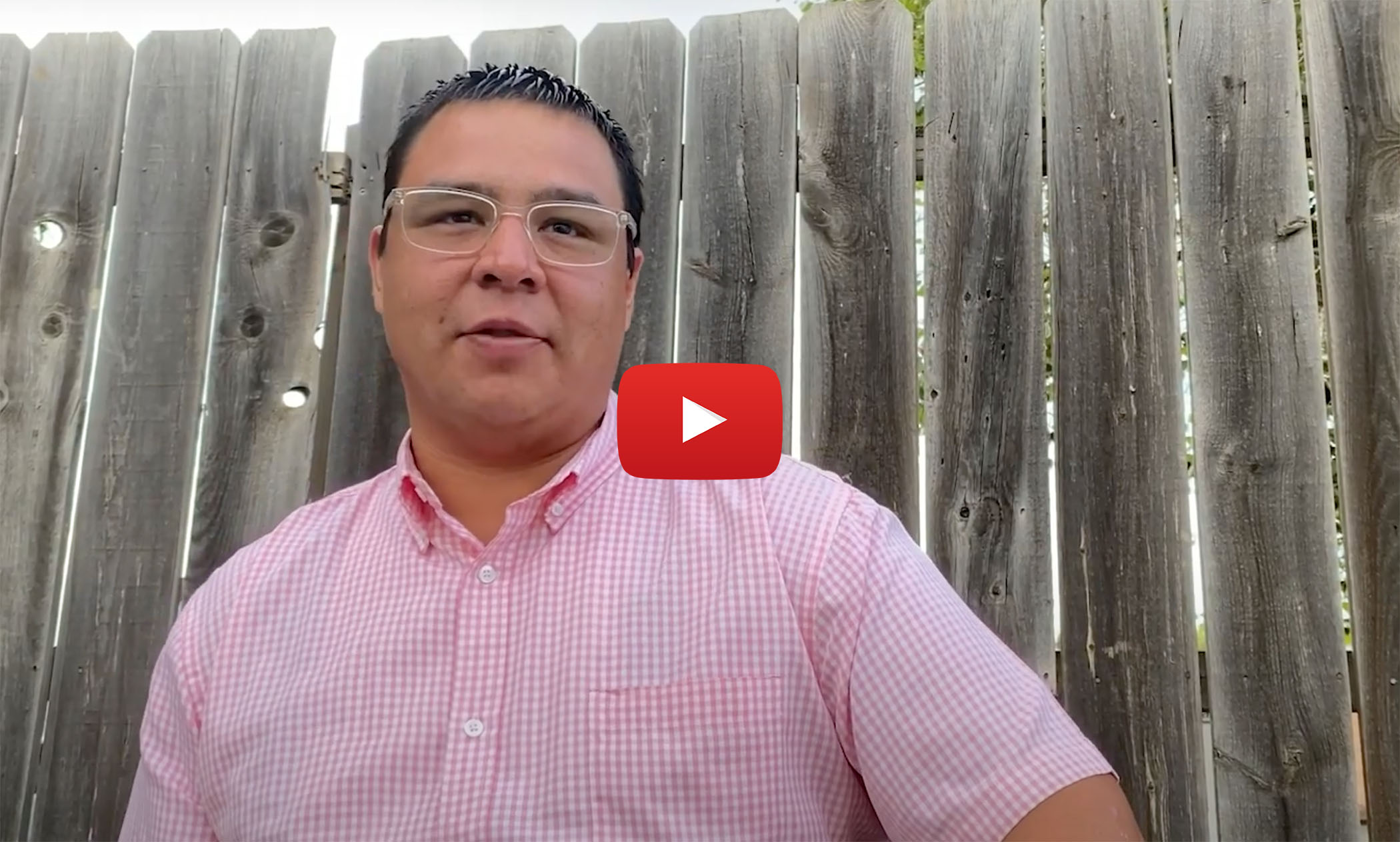
In Lakota Law’s new video, I talk about our mayoral race in McLaughlin and my plans, as a future City Council member, to provide for our youth.
While I couldn’t win with just days to campaign, an appointment to the council will still let me accomplish many good things for this town. Thank you for being part of the watchdog community who supported my right to run. More and more, we Indigenous people are seeking elected office throughout the United States, and we are casting more votes, too. But the trend of keeping us off ballots — or of not counting our ballots at all — remains a huge problem.
That’s why, just last week, the Lakota People’s Law Project forged a compact with the Standing Rock Sioux Tribe to support a nationwide campaign encouraging Congress to pass the Native American Voting Rights Act. Very soon, Lakota Law will give you an opportunity — via its about-to-be-launched Action Center — to make your voice heard on this critical topic.
As I prepare to join the city council here in McLaughlin, I plan to collaborate with the Lakota People’s Law Project to start a youth center where, as director, I will ensure that the children of our tribal nation have access to culturally enriching experiences, like sweat lodge, ceremony, and prayer songs. Because of the imposed poverty here at Standing Rock, far too many of our youth fall into substance use, gang activity, or suicide. As someone with a degree in social work, I intend to help solve this crisis.
Thank you for supporting our work here on tribal nations in the Dakotas. Please stay with us. We have much to accomplish together to protect Native voting rights and assist our youth.
Wopila tanka — my enduring gratitude for your care and attention!
Hoksila White Mountain
Via the Lakota People’s Law Project
Someone out there in the great E-universe, how can I match up this company and their technology with the Navajo nation that so desperately needs a green source of clean water? https://air2watersolutions.com/about-us/
Today contacted the company.
Tomorrow begin a GoFundMe page.
Wednesday begin calling around for assistance to make something happen.
In case you haven’t yet heard, yesterday an appellate court dropped a big decision in the Standing Rock Sioux Tribe’s lawsuit to stop the Dakota Access pipeline (DAPL). Unfortunately, the court’s ruling did not support immediately shutting down oil flow as we hoped. However, the court also failed to reverse the lower court’s decision to vacate DAPL’s permit to pass under Lake Oahe, Standing Rock’s primary source of drinking water. DAPL’s continued operation is now officially as illegal as it is dangerous.
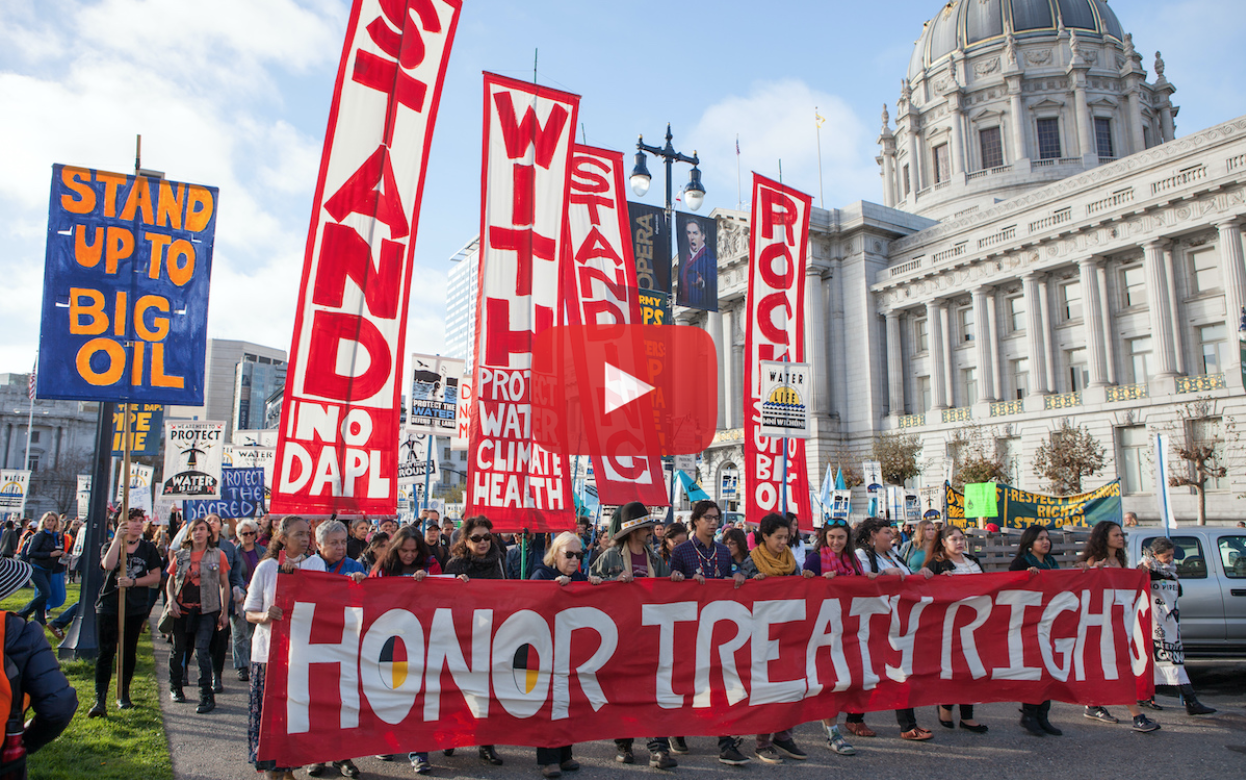
Press play to watch my video breakdown of the court’s decision.
You likely recall that, a month ago, D.C. Circuit Court Judge James Boasberg set a 30-day deadline for Energy Transfer to stop pumping oil through DAPL. Yesterday’s appellate court decision is complex, but it essentially delays that deadline while the U.S. Army Corps of Engineers decides whether to stop the oil given the absence of a permit. The Corps can demand Energy Transfer comply with the National Environmental Policy Act, shut down the oil, and perform a full Environmental Impact Study.
If that doesn’t happen, we’ll see more arguments before Judge Boasberg. Bottom line, this fight now looks likely to stretch into 2021, when a new administration could revoke DAPL’s permits for good. I urge you to watch my video breakdown, stay tuned for more updates, and keep a positive outlook.
The struggle continues, but hope is on the horizon. We remain optimistic, and we must keep fighting with all our collective strength. We won’t stop until this pipeline is emptied and dug out of our sacred ground. I look forward to the day we can gather together at Standing Rock again — this time to celebrate the end of DAPL, once and for all. Wopila tanka — my eternal appreciation for standing with Standing Rock!
Chase Iron Eyes
Lead Counsel
The Lakota People’s Law Project




 Water is Life