|
|
|
|
|
|
Joaqlin Estus
The spill took place Friday at a power plant in an outlying section of the city of Norilsk, 2900 kilometers (1800 miles) northeast of Moscow.
Booms were laid in the Ambarnaya River to block the fuel. The river feeds a lake from which springs another river that leads to the environmentally delicate Arctic Ocean. The area where the spill occurred is closer to the traditional homelands of the Nenets and northern Norway than Alaska. However, the fish and marine mammals of the Arctic Ocean and its interrelated coastal seas are an important source of food for Inuit and other Arctic Indigenous peoples.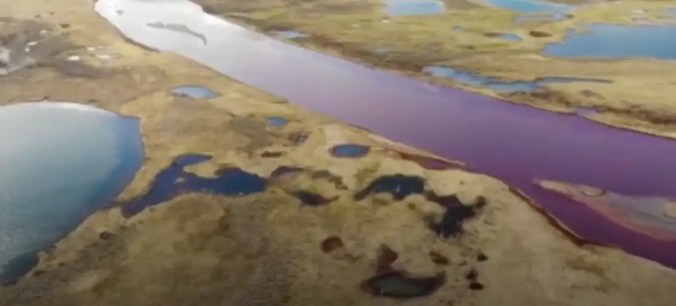

You may recall that, in late March, the Standing Rock, Oglala, Yankton, and Cheyenne River Sioux Tribes won a key round in their legal battle against the Dakota Access pipeline (DAPL). In a reversal of his prior decision, D.C. District Court Judge James Boasberg ruled that the pipeline hadn’t undergone proper environmental review. Though logic would dictate a subsequent cease to DAPL’s operations, Boasberg hasn’t taken that step. That’s why, last week, the Lakota Law team joined an Earthjustice-led effort and submitted an amicus curiae (friend of the court) brief to the judge, a strong legal argument that the oil flow must stop immediately.
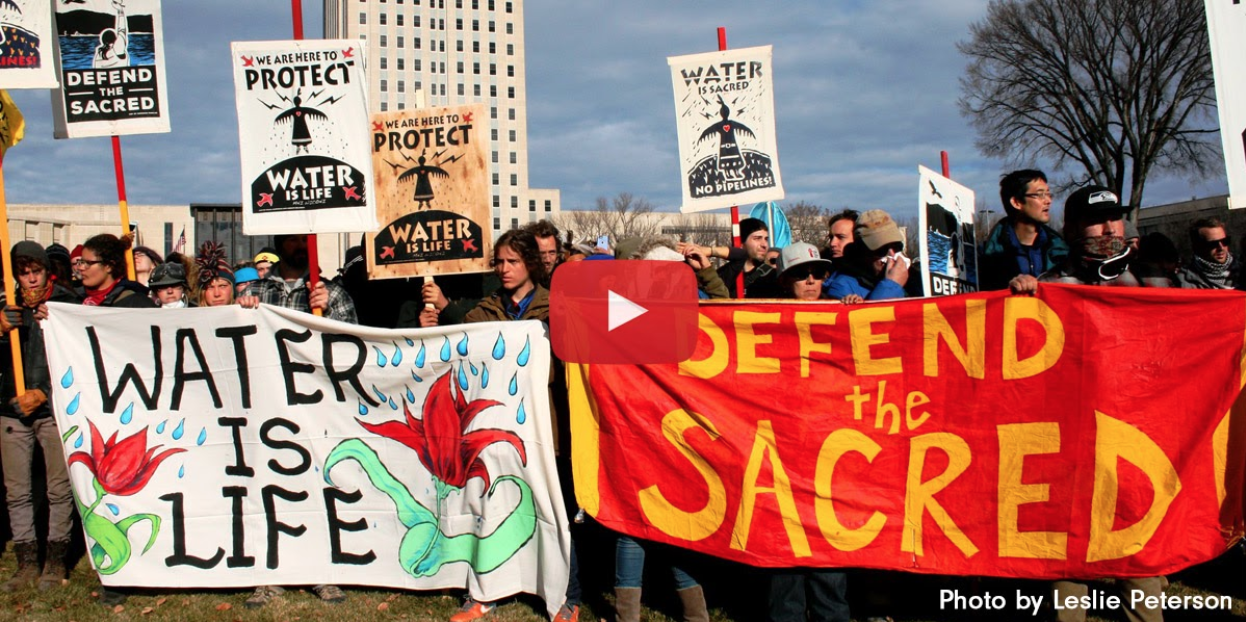
For a comprehensive picture of the history of DAPL and current legal landscape, check out our in-depth blog, which also features our television ad targeted to the D.C. market in 2017 arguing for a full Environmental Impact Statement.
It’s not complicated. Because Boasberg’s latest decision voids the easement granted for DAPL, it should no longer be permitted to carry oil, at least until we’ve seen an Environmental Impact Statement (EIS) compliant with the National Environmental Policy Act. We’ve been arguing for a proper EIS since the beginning, recognizing that — given the oil company’s horrendous safety track record — it may be impossible to produce.
As you know, the Obama administration agreed that a comprehensive review was needed in late 2016, shutting down construction as thousands cheered at Standing Rock during the #NoDAPL protests. Sadly, everything changed when Trump took office. One of his first executive orders fast-tracked the pipeline without the EIS. Then, when Standing Rock took legal action, Judge Boasberg cited an exception in the law allowing construction despite known, potential hazards.
Boasberg’s latest ruling has changed the game again, this time in our favor. In our brief, LPLP Chief counsel Daniel Sheehan argues that if the oil flow doesn’t stop now, the Court will send a perilous message that litigation against the government is “meaningless and tantamount to a bait and switch designed to fool those naïve enough to believe that the rule of law still has efficacy.”
We’re not alone. Democrats on the House Natural Resources Committee have also joined U.S. senators including Kamala Harris and Elizabeth Warren to submit a powerful amicus brief. Their legal argument was prepared by Rep. Raúl M. Grijalva (D-AZ) and endorsed by Alexandria Ocasio Cortez, both of whom met face-to-face with our team in recent months.
We are aligned with powerful people, and the support you have shown to the Lakota means we can keep fighting nonstop to cancel pipelines and forward justice. The tide may be turning. I hope that if you stay with us, we can bring additional legal victories — and safety — back to our homelands.
Wopila tanka — Thank you for your friendship and your support,
Chase Iron Eyes
Lead Counsel
The Lakota People’s Law Project
https://teespring.com/stores/gallery-no8
Greetings again from Bear Soldier District on Standing Rock Nation. I thank you for your dedicated action on behalf of the people here. You’ve sent almost 13,000 emails to the nearly all-white McLaughlin City Council and the town’s mayor telling them to suspend utility shut-offs during the COVID-19 pandemic. And more than one of you made anonymous donations to my son’s family, making it possible for him, his wife, and my grandchildren to return to their home. That’s huge. We know the city is feeling the pressure.
Unfortunately, their reaction has been to circle the wagons. Knowing that increased Native representation at City Hall could make all the difference in fair treatment of the town’s tribal people, they are resorting to what we believe are brazenly illegal means to make sure that doesn’t happen.
Here’s what I mean: a mayoral election is coming up on June 9, and my nephew, Hoksila White Mountain, is a promising candidate. A recent graduate of Sitting Bull College with a BA in social work, Hoksila has life experience and growing support from our Native community. He has already been working hard to remedy the utility shut-off problem.
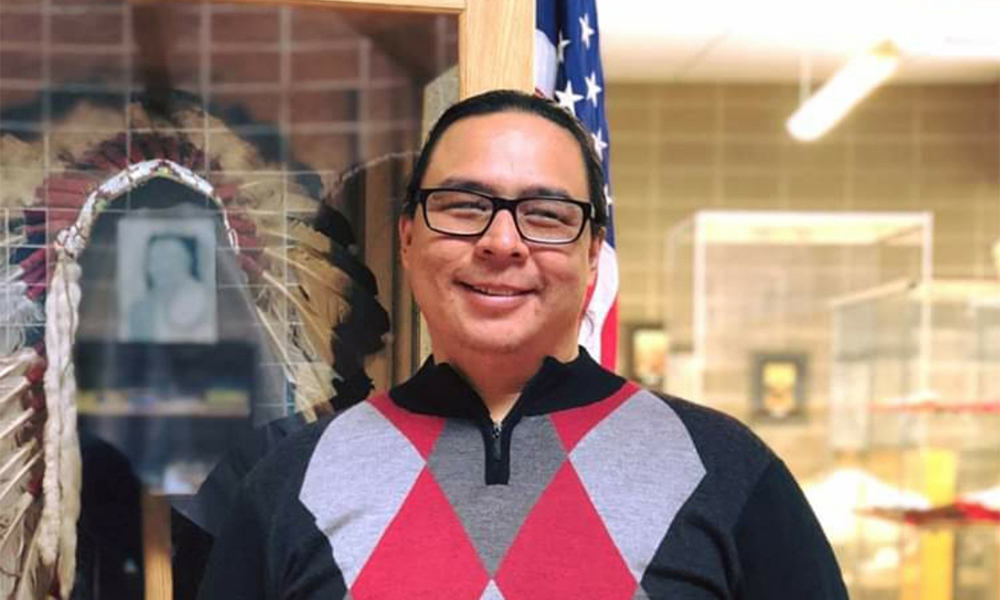
Hoksila White Mountain is being blocked from running for mayor by McLaughlin City Hall.
But now, City Hall has struck him from the ballot. They say they heard through the grapevine he didn’t follow a provincial law requiring him to collect petition signatures himself to enter the race. In fact, he did two separate rounds of signature gathering specifically to meet the standard. Our research tells us he followed all the rules, and yet he was still removed.
Thankfully, our partnership with the Lakota People’s Law project — and with you — could make all the difference. If necessary, the Lakota Law team will take legal action to get Hoksila back into the election.
Please stay tuned, because we’re also investigating which state and/or federal agencies can provide oversight — and we will share an opportunity soon to contact those agencies directly. Together, we are on the verge of creating significant change here in Bear Soldier. With your continued pressure, we’ll ensure that Native people can run for elected office anywhere at Standing Rock.
Wopila tanka — Thank you for helping us change lives for the better!
Robert White Mountain
via the Lakota People’s Law Project
https://350org.zoom.us/webinar/register/WN_LUAGAezKT6-xZvgneKG9Og
Sign up below to join our call on Thursday, May 14th at 8pm ET/5pm PT to hear from Bill McKibben, key partners, and members of the 350.org team about what’s next.
If you can, please have some paper and a marker or pen available to participate in a quick activity during the call.

We have a potentially explosive situation at the Cheyenne River and Pine Ridge Reservations. If you’ve been looking at the news, you may have seen that South Dakota Governor Kristi Noem has threatened our tribes with legal action because we have taken the rational step of setting up COVID-19 checkpoints on roads entering our homelands.
Native communities have the right to protect ourselves from the spread of disease, and the law is on our side. You can help. Email Kristi Noem right now and tell her to walk back her threat to Lakota tribes before lives are lost!
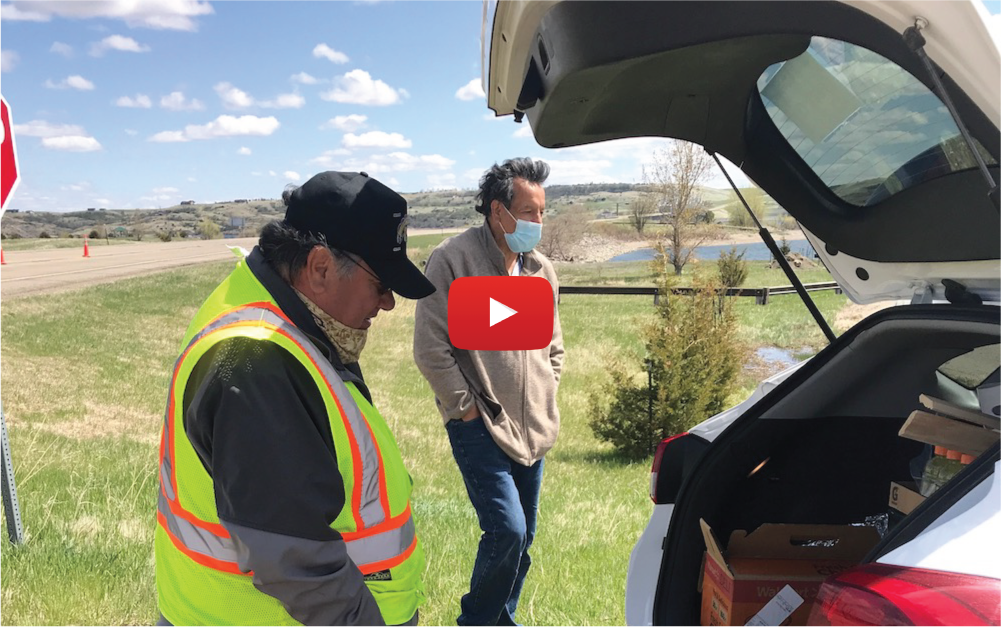
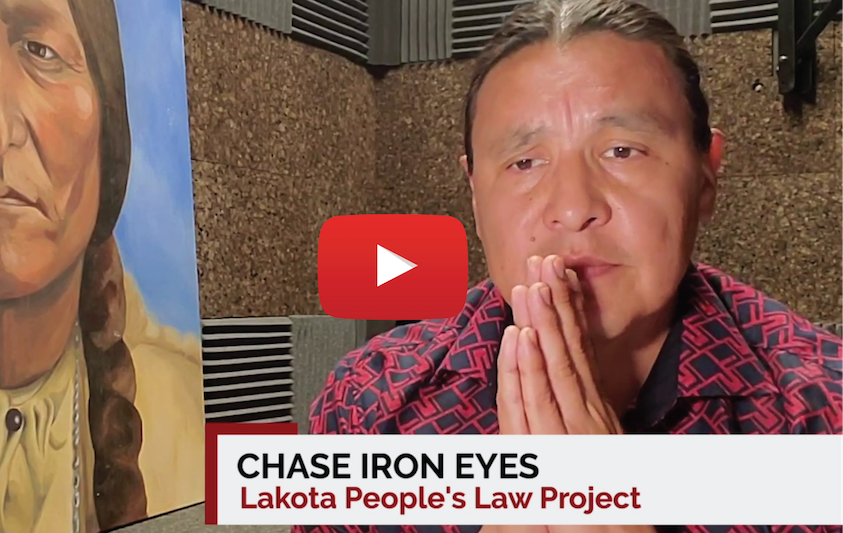
Caption: In our new video, my colleague, Chase Iron Eyes — who serves as public relations director for Oglala president Julian Bear Runner — discusses the urgency of protecting our citizens. (Photo courtesy of Warrior Women Project.)
Governor Noem has failed to mandate common sense protections for tribes and all the people of her state during the COVD-19 pandemic, so the Oglala and Cheyenne River Nations have taken matters into our own hands by setting up these checkpoints on reservation roads to limit the pandemic’s spread.
They are not roadblocks, and there is no truth to Governor Noem’s repeated assertions that essential or emergency traffic is being detained or turned back. Here at Cheyenne River, we are requiring visitors to fill out a health questionnaire or travel through the reservation without stopping. And just yesterday, two more positive cases at Pine Ridge forced a 72-hour lockdown to enable contact tracing and keep folks safe.
Although Governor Noem asserts that the tribes have not engaged in adequate consultation with state officials, both the Oglala and Cheyenne River Nations have interacted with a swath of state agencies on this issue. 17 state senators have now published an open letter declaring that she has no legal authority to regulate activity on reservation roads without tribal consent.
Governor Noem in no position to issue threats. She’s failing to protect her own constituents within our jurisdiction, so we will. This is a life or death situation, and we have a right to live.
Wopila tanka — my gratitude for your action!
Madonna Thunder Hawk
Cheyenne River Organizer
The Lakota People’s Law Project
“Our courts have shown time and time again that the law matters.”
A federal judge on Monday denied the U.S. Army Corps of Engineers’ request to amend his earlier ruling regarding TC Energy’s Keystone XL pipeline, reaffirming that a permit issued by the Army Corps was invalid.
Chief U.S. District Judge Brian Morris ruled again that the U.S. Army Corps of Engineers (USACE) violated the Endangered Species Act when it issued Nationwide Permit 12, which allows companies to construct energy projects at water crossings.
“The court rightly ruled that the Trump administration can’t continue to ignore the catastrophic effects of fossil fuel pipelines like Keystone XL.”
—Jared Margolis, Center for Biological Diversity
Climate action and Indigenous rights campaigners have for years fought the construction of the Keystone XL pipeline, which if built would cross bodies of water hundreds of times along its nearly 1,200-mile route from Alberta to Nebraska. TC Energy plans to send tar sands oil along the route, which opponents say would put Indigenous communities as well as wildlife at risk for dangerous leaks and exposure to toxic waste.
“The court rightly ruled that the Trump administration can’t continue to ignore the catastrophic effects of fossil fuel pipelines like Keystone XL,” said Jared Margolis, senior attorney with the Center for Biological Diversity, in a statement. “Constructing pipelines through rivers, streams, and wetlands without analyzing the impacts on imperiled species is unconscionable.”
The USACE had asked Morris to narrow his April 15 ruling, but the judge only changed his decision on Nationwide Permit 12 to allow non-pipeline construction, such as electrical transmission lines, to move forward.
“Our courts have shown time and time again that the law matters,” said Cecilia Segal, Natural Resources Defense Council (NRDC) attorney. “Today’s ruling makes clear that climate-busting pipelines like Keystone XL cannot be built until the federal government does its job and properly analyzes these projects’ devastating effects on their surrounding communities and wildlife. If that analysis is based on science and facts, pipelines like Keystone XL will never see the light of day because they remain, and always will be, a dire threat to our water, wildlife, and climate.”
 Indigenous Environmental Network @IENearth
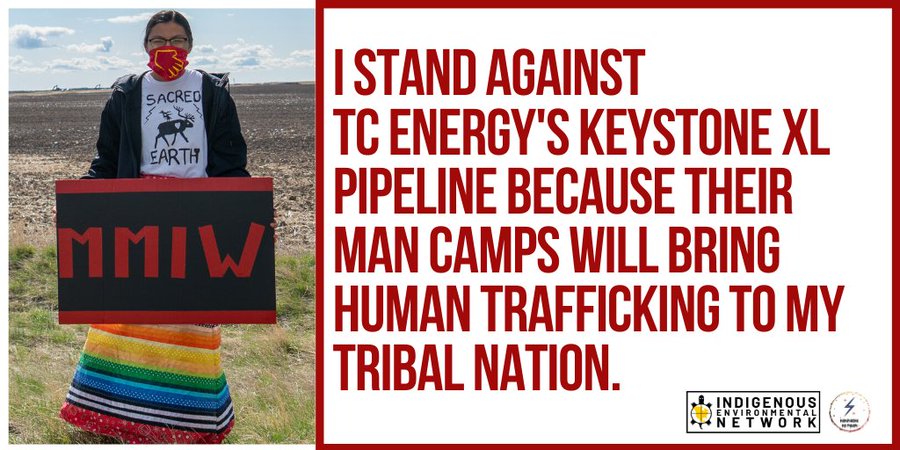
Ft. Peck Assiniboine Sioux Kokipasni youth organizer Prairiedawn has been speaking out against @TCEnergy‘s KXL pipeline because she and her friends are afraid of the increase in #humantrafficking man camps bring to Indigenous communities.#MMIW #NoKXLhttps://actionnetwork.org/petitions/cancel-kxl-halt-all-keystone-xl-construction-due-to-coronavirus-public-health-emergency …
https://www.theguardian.com/world/2020/apr/29/coronavirus-andrea-circle-bear-federal-prison-death
I write to you today with sad news that highlights so many of the layers of injustice we face as Native people.
Here at the Lakota People’s Law Project, we’ve seen a lot and worked hard to address a variety of important issues over the past 15 years — among them criminal justice reform for American Indians. Now, in the coronavirus era, this problem has raised its ugly head again: a 30 year-old woman from my tribal nation, the Cheyenne River Sioux Tribe, died in federal custody in a Texas prison on Tuesday, Apr, 21, just three weeks after giving birth. The cause of her death? COVID-19.

Andrea Circle Bear and her newborn.
How is it that one of our tribal members was taken from my homelands into custody by South Dakota state officials bent on ignoring the threat of coronavirus, and then shipped to a prison in another state that also ignores science — Texas — where she contracted a preventable disease that killed her?
At no point in this process did Andrea have the power to protect herself — an age-old crisis here in Indian Country: lack of sovereignty. Who will someday explain to Andrea’s infant child how and why her mother died in the hands of the enemy?
For a fuller picture of the circumstances surrounding Andrea’s premature and avoidable death, I encourage you to read this chilling article in The Guardian.
Andrea’s tragic story shows why your attention to our Indigenous communities is so important. In the coming days, the Lakota People’s Law Project media team will work with journalists to ensure they have support on the ground as they uncover what happened to Ms. Circle Bear. Moreover, we will redouble our efforts to resist willful ignorance in states like South Dakota and Texas in the face of this pandemic, and we’ll work in every way we can to strengthen tribal nations. We live in poverty and we are vulnerable, but we know how to fight.
Please stay with us. With courage, everything is possible.
Wopila — My gratitude for your solidarity,
Madonna Thunder Hawk
Cheyenne River Organizer
The Lakota People’s Law Project
| 👏 Tell South Dakota: public safety now! |
Mark Trahant
“The Treasury Department and Small Business Administration announced further details on the Paycheck Protection Program, which was made possible by the 2-trillion-dollar relief bill I signed into law last week,” he said at a White House briefing. “Nearly $350 billion in loans will soon be available through lending partners to help small businesses meet payroll and other expenses for up to two months. These loans will be forgiven as long as businesses keep paying their workers. This includes sole proprietors and independent contractors.”
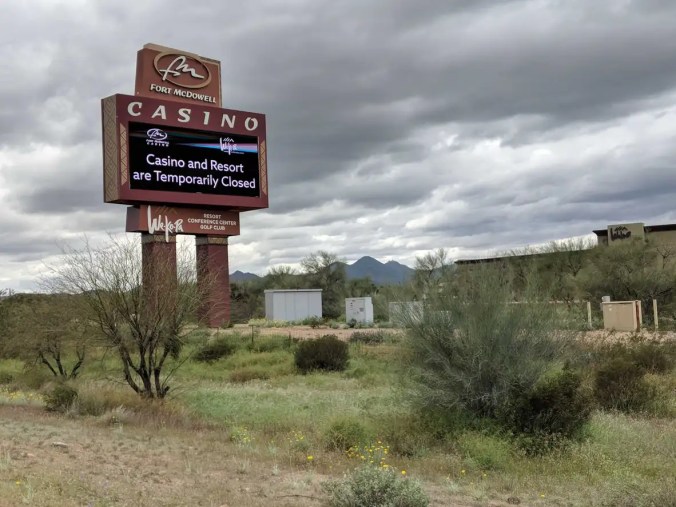
However there remains uncertainty about whether tribal enterprises — namely casinos that employ less than 500 people — will even qualify for the program under the Coronavirus Aid, Relief and Economic Security Act (or CARES act).


 Water is Life