Removal of Christopher Columbus Statues

FOR IMMEDIATE RELEASE
June 13, 2020
CONTACT:
NCAI Statement on the Removal
of Christopher Columbus Statues
WASHINGTON, DC | The National Congress of American Indians (NCAI), the largest and most representative American Indian and Alaska Native organization in the country, does not acknowledge Christopher Columbus as a hero. To Indigenous peoples, he was the opposite:
[O]ut of timbers for the Santa Maria, . . . Columbus built a fort [on Hispaniola], the first European military base in the Western Hemisphere. . . . He took . . . Indian prisoners and put them aboard his two remaining ships. . . . [H]e got into a fight with Indians who refused to trade as many bows and arrows as he and his men wanted. Two were run through with swords and bled to death. Then the Nina and the Pinta set sail. . . . When the weather turned cold, the Indian prisoners began to die. . . .
In the year 1495, they went on a great slave raid, rounded up fifteen hundred Arawak men, women, and children, put them in pens guarded by Spaniards and dogs, then picked the five hundred best specimens to load onto ships. Of those five hundred, two hundred died en route. The rest arrived alive in Spain and were put up for sale. . . .
Howard Zinn, A People’s History of the United States, 3-4 (1980 Ed.).
“This growing movement across the country to rid our shared spaces of symbols that represent hate, genocide, and bigotry illustrates that it is past time for all cities to stand on the right side of history moving forward,” said NCAI President Fawn Sharp.
NCAI also strongly supports the recent actions taken by United States citizens and the international community calling for proper law enforcement reforms and the recognition of basic human rights for the African American community and all communities of color. We are humbled that these voices are including Indian Country’s perspectives. NCAI encourages local governments and their citizens to seek mutual understandings of their diverse perspectives and to develop peaceful solutions that are mindful of all human beings and our rich distinct and shared histories. Together we can build the tomorrow our children deserve to lead.
###
About the National Congress of American Indians:
Founded in 1944, the National Congress of American Indians is the oldest, largest and most representative American Indian and Alaska Native organization in the country. NCAI advocates on behalf of tribal governments and communities, promoting strong tribal-federal government-to-government policies, and promoting a better understanding among the general public regarding American Indian and Alaska Native governments, people and rights. For more information, visit www.ncai.org.

Black Lives Matter

I trust that, as a supporter of Lakota sovereignty, you believe in justice and equity for all people. So I hope you’ll join me in standing with the #BlackLivesMatter movement. My experience as a lifelong activist gives me insight into what a moment that shifts society looks like. It can look messy, it can look dangerous — it can look just like this.

Lakota Law
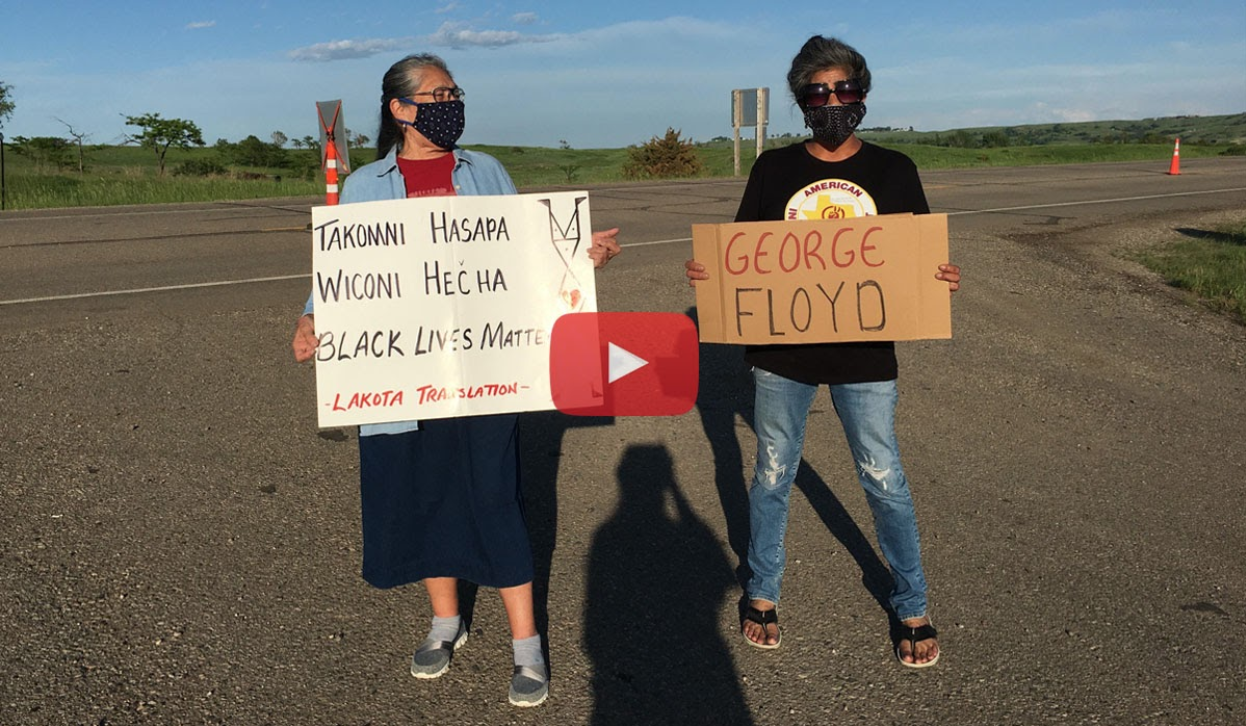
Lisa Skye and I stand with BLM at the Cheyenne River Reservation border. Photo courtesy of Warrior Women Project. Please click the play button above to watch this video message from me.

As you are no doubt aware, in the wake of George Floyd’s murder by police on a Minneapolis street, our nation is on fire. This follows the recent murders of Breonna Taylor by police in her home and Ahmaud Arbery by white vigilantes on a Georgia street.

Now, every day and every night, thousands march and kneel and vocalize to end police brutality and demand a new respect for Black bodies, lives, and communities. A few days back, Lakota Law’s Chase Iron Eyes and his daughter, Tokata, helped lead one such protest in Rapid City.

As a nation, many of us are listening to, and gaining further understanding of, the pain suffered by communities of color for centuries in this land. With that understanding, hopefully we will feel compelled to offer support and advocacy in whatever ways are most appropriate or asked of us. Whatever lane each of us occupies, we can find our role in the struggle.

I and many people of the Oceti Sakowin and other Indigenous nations can empathize with the pain wrought by institutional racism. Seeing the young people of today demonstrating and standing up for what is right takes me back to my own youthful days organizing for Red Power — once upon a time, right there in that same place, the Twin Cities. It reminds me of our American Indian Movement, born from Lakota, Dakota, and Ojibwe activism in that northern midwest metropolis.

And, of course, it reminds me of the #NoDAPL protests at Standing Rock. Anyone surprised to see the president unleash militarized police, security forces, and tear gas on peaceful protesters wasn’t paying attention in 2016 and ‘17. For decades, from Sitting Bull to MLK, from the American Indian Movement to Black Lives Matter, Black and Brown communities have taken turns leading the movement for understanding, equality, and justice.

The struggle is now being live-streamed, and it’s not easy to watch. We know that a few irresponsible people on our side and, more often, counter-protesters with hate-filled hearts are infiltrating, looting, and trying to paint legitimate civil disobedience with the brush of violence. But we know the difference. We know that we are not terrorists, and neither is anyone who truly seeks justice and calls out tyranny.

The world is changing, and it’s long overdue. I hardly need to remind you that Black and Native people die at the hands of police and are incarcerated at far higher rates than white folks. So yes, I empathize. And I offer you my deep gratitude for your compassion. Thank you for standing with us through our struggle. I hope we can all say we also stand arm-in-arm with Takomni Hesapa Wiconi Heĉha — #BlackLivesMatter.

Wopila tanka — Thank you for your friendship and your support,

In solidarity, always,
Madonna Thunder Hawk
Cheyenne River Organizer
The Lakota People’s Law Project

A Victory: Recommitment to Tribal Sovereignty 

FOR IMMEDIATE RELEASE
June 6, 2020
CONTACT:
Mashpee Wampanoag Tribe and Native Organizations Encouraged by Recent Decision in Mashpee v. Bernhardt and Now Call on DOI for Recommitment to Tribal Sovereignty
Yesterday, the United States District Court for the District of Columbia rendered a decision in favor of the Mashpee Wampanoag Tribe in the case of Mashpee Wampanoag Tribe v. Bernhardt. In its opinion, Judge Paul L. Friedman ruled:
The Court will grant the Mashpee Tribe’s motion for summary judgment and deny the federal defendants’ and defendant-intervenors’ motions for summary judgment. Furthermore, because the Secretary of the Interior’s September 7, 2018 Record of Decision is arbitrary, capricious, an abuse of discretion, and contrary to law, the Court remands the matter to the Secretary of the Interior for a thorough reconsideration and re-evaluation of the evidence before him consistent with this Opinion, the 2014 M-Opinion, M-37209 – its standard and the evidence permitted therein – and the Department’s prior decisions applying the M-Opinion’s two-part test.
For the first time since the termination era, the Department of the Interior (DOI) attempted to disestablish a Tribal reservation, ordering the homelands of the Mashpee Wampanoag Tribe to be taken out of trust. The order from DOI Secretary David Bernhardt came on March 27, 2020, as the Tribal Nation worked to respond to the COVID-19 public health emergency, during active litigation on the status of the land, and following the rescission of the 2014 Carcieri M-Opinion and the issuance of a new 4-part test to qualify under the first definition of “Indian” in the Indian Reorganization Act (IRA). On March 30, 2020, the Mashpee Wampanoag Tribe asked the Court to issue an emergency restraining order to prevent DOI from taking immediate action to disestablish its reservation.
“The DC District Court righted what would have been a terrible and historic injustice by finding that the Department of the Interior broke the law in attempting to take our land out of trust,” said Mashpee Wampanoag Tribal Chairman, Cedric Cromwell. “We will continue to work with the Department of the Interior — and fight them if necessary — to ensure our land remains in trust.”
The Court ruled DOI’s 2018 decision that the Mashpee Wampanoag Tribe did not prove it was “under federal jurisdiction” in 1934, and therefore did not meet the first definition of “Indian” under the IRA—making the Mashpee Wampanoag Tribe ineligible to acquire land in trust—was arbitrary and capricious. It remanded the decision to DOI with clear direction to issue a decision consistent with the 2014 M-Opinion’s standard and the evidence permitted therein, as well as DOI’s prior decisions applying the 2014 M-Opinion test. The Court further directed DOI to properly address each piece of evidence, give a reasoned analysis as to whether it is probative, explain any departure from past DOI precedent, and view all probative evidence in concert rather than in isolation. And importantly, the Court’s decision also mandates that DOI maintain the land in trust pending DOI’s new determination and prevents DOI from applying its new 4-part test in this case.
“USET SPF is pleased that the Court acted swiftly and justly to provide necessary certainty to the Mashpee Wampanoag in these uncertain times,” said USET SPF President, Kirk Francis. “The Department of the Interior was under no order to take the land out of trust, and so to attempt to rob the Mashpee of their homelands is nothing short of shameful. The Department should be assisting Tribal Nations as we work to reestablish our homelands after centuries of federal action designed to assimilate and terminate. Instead, actions by this Administration are aimed at perpetuating antiquated and regressive federal policies, resulting in the destabilization of our governments. While we celebrate this victory with Mashpee and all of Indian Country today, the centuries-long fight to protect and restore Tribal homelands is ongoing and we must remain steadfast in our vigilance. We continue to stand with Mashpee as the Department reexamines its evidence on remand.”
“On behalf of the National Congress of American Indians, we congratulate the Mashpee Wampanoag Tribe on their historic victory. We consider this a win for all of Indian Country,” said NCAI President Fawn Sharp. “The Mashpee Wampanoag relationship with the United States is one of political equality, derived from their inherent sovereignty, powers, and authority that long predates the United States. No federal agency or civil servant has the authority to diminish or in any way undermine that unique political relationship and standing. We will remain vigilant and stand united with Mashpee who have shaped and supported this country from the arrival of the first European settlers and will coexist as sovereign equals for generations to come.”
USET SPF and NCAI share a profound commitment to Tribal sovereignty and the restoration of Tribal homelands. In light of this commitment, we have been advocating for a fix to the Supreme Court decision in Carcieri v. Salazar since it was handed down in 2009. Carcieri has created a deeply inequitable 2-class system, in which some Tribal Nations have the ability to restore their homelands and others do not. This 2-class system serves to deny these Tribal Nations a critical component of the trust relationship, vital aspects of the exercise of inherent sovereignty, and the opportunity to qualify for several government programs.
We continue to call for the immediate passage of a fix that contains the two features necessary to restore parity to the land-into-trust process:
(1) A reaffirmation of the status of current trust lands; and
(2) Confirmation that the Secretary has authority to take land into trust for all federally recognized Tribal Nations.
While this decision is an important step toward righting centuries of wrong against the Mashpee Wampanoag Tribe, our collective work is not finished. We urge and await a positive determination from DOI on Mashpee’s homelands once and for all. Our organizations will continue to fight for the restoration of Tribal homelands and the full delivery of trust and treaty obligations. We call upon DOI to recommit itself to the restoration of homelands, the trust obligation, and Tribal sovereignty.
###
About the Mashpee Wampanoag Tribe:
The Mashpee Wampanoag Tribe, also known as the People of the First Light, has inhabited present day Massachusetts for more than 12,000 years. After an arduous process lasting more than three decades, the Mashpee Wampanoag were re-acknowledged as a federally recognized tribe in 2007. In 2015, the federal government declared 150 acres of land in Mashpee and 170 acres of land in Taunton as the Tribe’s initial reservation, on which the Tribe can exercise its full tribal sovereignty rights. The Mashpee tribe currently has approximately 2,700 enrolled citizens.
About the National Congress of American Indians:
Founded in 1944, the National Congress of American Indians is the oldest, largest and most representative American Indian and Alaska Native organization in the country. NCAI advocates on behalf of tribal governments and communities, promoting strong tribal-federal government-to-government policies, and promoting a better understanding among the general public regarding American Indian and Alaska Native governments, people and rights. For more information, visit www.ncai.org.
About the USET Sovereignty Protection Fund (USET SPF):
Established in 2014, the USET Sovereignty Protection Fund (USET SPF) is a non-profit, inter-Tribal organization advocating on behalf of thirty (30) federally recognized Tribal Nations from the Northeastern Woodlands to the Everglades and across the Gulf of Mexico.  USET SPF is dedicated to promoting, protecting, and advancing the inherent sovereign rights and authorities of Tribal Nations and in assisting its membership in dealing effectively with public policy issues.
National Congress of American Indians
Embassy of Tribal Nations
1516 P Street NW, Washington, DC 20005

Siberian Fuel Leak

https://indiancountrytoday.com/outside/putin-declares-emergency-after-siberia-fuel-leak-O-0pNaAH5EWPqQiwJP7tXg

Joaqlin Estus

Diesel pollutes waters that will drain into the Arctic Ocean
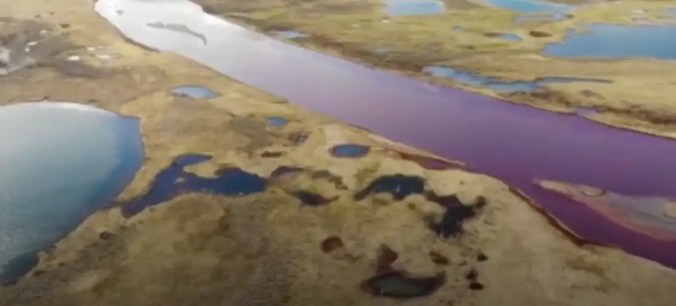
MOSCOW (AP) – Russian President Vladimir Putin has declared a state of emergency in a region of Siberia after an estimated 20,000 tons, or 5.7 million gallons, of diesel fuel spilled from a power plant storage facility and fouled waterways.

The spill took place Friday at a power plant in an outlying section of the city of Norilsk, 2900 kilometers (1800 miles) northeast of Moscow.

Booms were laid in the Ambarnaya River to block the fuel. The river feeds a lake from which springs another river that leads to the environmentally delicate Arctic Ocean. The area where the spill occurred is closer to the traditional homelands of the Nenets and northern Norway than Alaska. However, the fish and marine mammals of the Arctic Ocean and its interrelated coastal seas are an important source of food for Inuit and other Arctic Indigenous peoples.Siberia

New Information:Dakota Access pipeline (DAPL).

Lakota Law


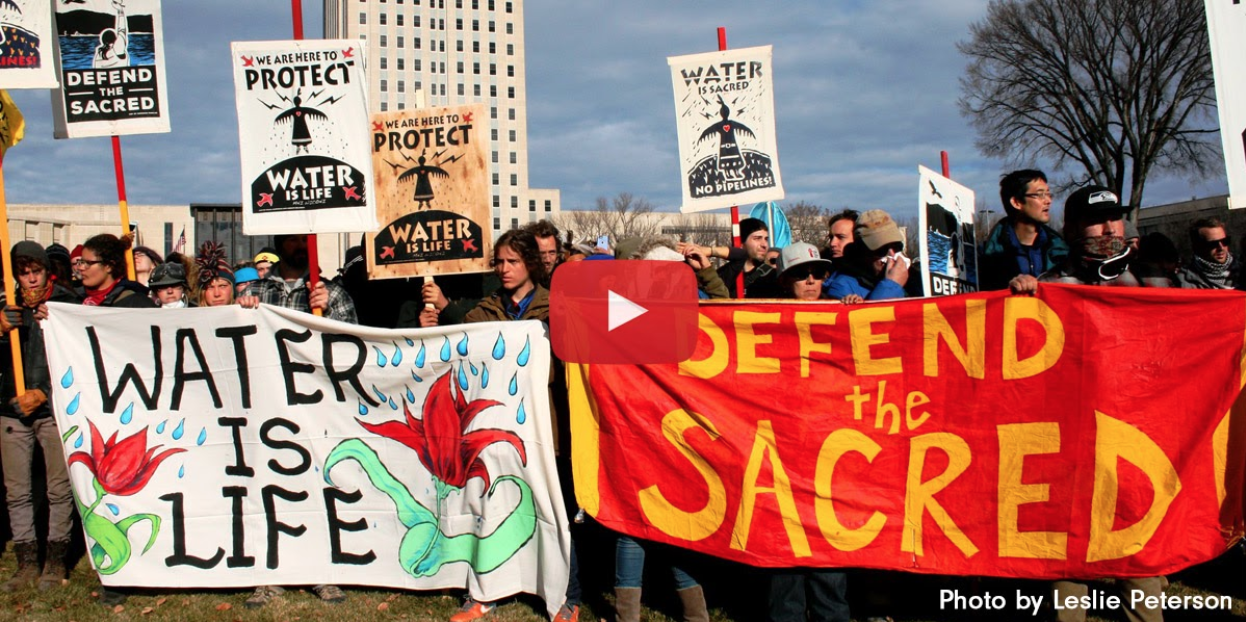
You may recall that, in late March, the Standing Rock, Oglala, Yankton, and Cheyenne River Sioux Tribes won a key round in their legal battle against the Dakota Access pipeline (DAPL). In a reversal of his prior decision, D.C. District Court Judge James Boasberg ruled that the pipeline hadn’t undergone proper environmental review. Though logic would dictate a subsequent cease to DAPL’s operations, Boasberg hasn’t taken that step. That’s why, last week, the Lakota Law team joined an Earthjustice-led effort and submitted an amicus curiae (friend of the court) brief to the judge, a strong legal argument that the oil flow must stop immediately.

Lakota Law
For a comprehensive picture of the history of DAPL and current legal landscape, check out our in-depth blog, which also features our television ad targeted to the D.C. market in 2017 arguing for a full Environmental Impact Statement.

It’s not complicated. Because Boasberg’s latest decision voids the easement granted for DAPL, it should no longer be permitted to carry oil, at least until we’ve seen an Environmental Impact Statement (EIS) compliant with the National Environmental Policy Act. We’ve been arguing for a proper EIS since the beginning, recognizing that — given the oil company’s horrendous safety track record — it may be impossible to produce.

As you know, the Obama administration agreed that a comprehensive review was needed in late 2016, shutting down construction as thousands cheered at Standing Rock during the #NoDAPL protests. Sadly, everything changed when Trump took office. One of his first executive orders fast-tracked the pipeline without the EIS. Then, when Standing Rock took legal action, Judge Boasberg cited an exception in the law allowing construction despite known, potential hazards.

Boasberg’s latest ruling has changed the game again, this time in our favor. In our brief, LPLP Chief counsel Daniel Sheehan argues that if the oil flow doesn’t stop now, the Court will send a perilous message that litigation against the government is “meaningless and tantamount to a bait and switch designed to fool those naïve enough to believe that the rule of law still has efficacy.”

We’re not alone. Democrats on the House Natural Resources Committee have also joined U.S. senators including Kamala Harris and Elizabeth Warren to submit a powerful amicus brief. Their legal argument was prepared by Rep. Raúl M. Grijalva (D-AZ) and endorsed by Alexandria Ocasio Cortez, both of whom met face-to-face with our team in recent months.

We are aligned with powerful people, and the support you have shown to the Lakota means we can keep fighting nonstop to cancel pipelines and forward justice. The tide may be turning. I hope that if you stay with us, we can bring additional legal victories — and safety — back to our homelands.

Wopila tanka — Thank you for your friendship and your support,

Chase Iron Eyes
Lead Counsel
The Lakota People’s Law Project

Continued Vigilance Needed

https://teespring.com/stores/gallery-no8

Greetings again from Bear Soldier District on Standing Rock Nation. I thank you for your dedicated action on behalf of the people here. You’ve sent almost 13,000 emails to the nearly all-white McLaughlin City Council and the town’s mayor telling them to suspend utility shut-offs during the COVID-19 pandemic. And more than one of you made anonymous donations to my son’s family, making it possible for him, his wife, and my grandchildren to return to their home. That’s huge. We know the city is feeling the pressure.

Unfortunately, their reaction has been to circle the wagons. Knowing that increased Native representation at City Hall could make all the difference in fair treatment of the town’s tribal people, they are resorting to what we believe are brazenly illegal means to make sure that doesn’t happen.

Here’s what I mean: a mayoral election is coming up on June 9, and my nephew, Hoksila White Mountain, is a promising candidate. A recent graduate of Sitting Bull College with a BA in social work, Hoksila has life experience and growing support from our Native community. He has already been working hard to remedy the utility shut-off problem.

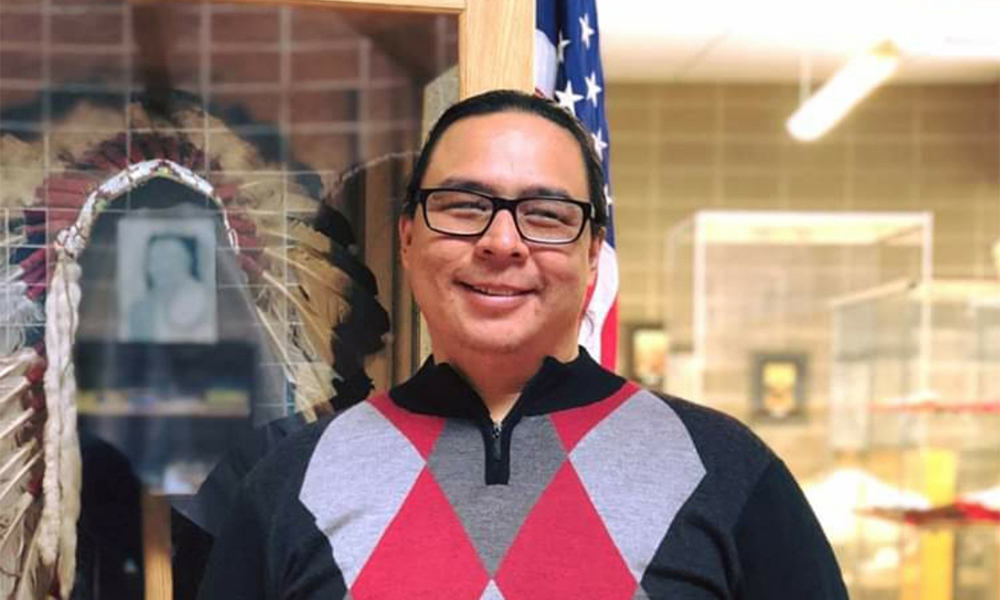
Hoksila White Mountain
Hoksila White Mountain is being blocked from running for mayor by McLaughlin City Hall.

But now, City Hall has struck him from the ballot. They say they heard through the grapevine he didn’t follow a provincial law requiring him to collect petition signatures himself to enter the race. In fact, he did two separate rounds of signature gathering specifically to meet the standard. Our research tells us he followed all the rules, and yet he was still removed.

Thankfully, our partnership with the Lakota People’s Law project — and with you — could make all the difference. If necessary, the Lakota Law team will take legal action to get Hoksila back into the election.

Please stay tuned, because we’re also investigating which state and/or federal agencies can provide oversight — and we will share an opportunity soon to contact those agencies directly. Together, we are on the verge of creating significant change here in Bear Soldier. With your continued pressure, we’ll ensure that Native people can run for elected office anywhere at Standing Rock.

Wopila tanka — Thank you for helping us change lives for the better!

Robert White Mountain
via the Lakota People’s Law Project

Important Online Meeting!

https://350org.zoom.us/webinar/register/WN_LUAGAezKT6-xZvgneKG9Og

Organize to Win in 2020
Description

We’re hosting an urgent call to provide updates on the status of Keystone XL, what we’re doing to fight back in the midst of COVID-19, and how we can win in November.

Sign up below to join our call on Thursday, May 14th at 8pm ET/5pm PT to hear from Bill McKibben, key partners, and members of the 350.org team about what’s next.

If you can, please have some paper and a marker or pen available to participate in a quick activity during the call.

Time

May 14, 2020 07:30 PM in Eastern Time (US and Canada)

Regarding Vital Checkpoints!

We have a potentially explosive situation at the Cheyenne River and Pine Ridge Reservations. If you’ve been looking at the news, you may have seen that South Dakota Governor Kristi Noem has threatened our tribes with legal action because we have taken the rational step of setting up COVID-19 checkpoints on roads entering our homelands.

Native communities have the right to protect ourselves from the spread of disease, and the law is on our side. You can help. Email Kristi Noem right now and tell her to walk back her threat to Lakota tribes before lives are lost!

Lakota Law
Caption: In our new video, my colleague, Chase Iron Eyes — who serves as public relations director for Oglala president Julian Bear Runner — discusses the urgency of protecting our citizens. (Photo courtesy of Warrior Women Project.)

Governor Noem has failed to mandate common sense protections for tribes and all the people of her state during the COVD-19 pandemic, so the Oglala and Cheyenne River Nations have taken matters into our own hands by setting up these checkpoints on reservation roads to limit the pandemic’s spread.

They are not roadblocks, and there is no truth to Governor Noem’s repeated assertions that essential or emergency traffic is being detained or turned back. Here at Cheyenne River, we are requiring visitors to fill out a health questionnaire or travel through the reservation without stopping. And just yesterday, two more positive cases at Pine Ridge forced a 72-hour lockdown to enable contact tracing and keep folks safe.

Although Governor Noem asserts that the tribes have not engaged in adequate consultation with state officials, both the Oglala and Cheyenne River Nations have interacted with a swath of state agencies on this issue. 17 state senators have now published an open letter declaring that she has no legal authority to regulate activity on reservation roads without tribal consent.

Governor Noem in no position to issue threats. She’s failing to protect her own constituents within our jurisdiction, so we will. This is a life or death situation, and we have a right to live.

Wopila tanka — my gratitude for your action!

Madonna Thunder Hawk
Cheyenne River Organizer
The Lakota People’s Law Project

Again: Permit Invalid

https://www.commondreams.org/news/2020/05/12/again-finding-us-permit-invalid-federal-court-upholds-block-climate-busting-keystone


Published on
by

Again Finding US Permit Invalid, Federal Court Upholds Block on ‘Climate-Busting’ Keystone XL Construction

“Our courts have shown time and time again that the law matters.”

A federal judge on Monday denied the U.S. Army Corps of Engineers’ request to amend his earlier ruling regarding TC Energy’s Keystone XL pipeline, reaffirming that a permit issued by the Army Corps was invalid.

Chief U.S. District Judge Brian Morris ruled again that the U.S. Army Corps of Engineers (USACE) violated the Endangered Species Act when it issued Nationwide Permit 12, which allows companies to construct energy projects at water crossings.

“The court rightly ruled that the Trump administration can’t continue to ignore the catastrophic effects of fossil fuel pipelines like Keystone XL.”
—Jared Margolis, Center for Biological Diversity

Climate action and Indigenous rights campaigners have for years fought the construction of the Keystone XL pipeline, which if built would cross bodies of water hundreds of times along its nearly 1,200-mile route from Alberta to Nebraska. TC Energy plans to send tar sands oil along the route, which opponents say would put Indigenous communities as well as wildlife at risk for dangerous leaks and exposure to toxic waste.

“The court rightly ruled that the Trump administration can’t continue to ignore the catastrophic effects of fossil fuel pipelines like Keystone XL,” said Jared Margolis, senior attorney with the Center for Biological Diversity, in a statement. “Constructing pipelines through rivers, streams, and wetlands without analyzing the impacts on imperiled species is unconscionable.”

The USACE had asked Morris to narrow his April 15 ruling, but the judge only changed his decision on Nationwide Permit 12 to allow non-pipeline construction, such as electrical transmission lines, to move forward.

“Our courts have shown time and time again that the law matters,” said Cecilia Segal, Natural Resources Defense Council (NRDC) attorney. “Today’s ruling makes clear that climate-busting pipelines like Keystone XL cannot be built until the federal government does its job and properly analyzes these projects’ devastating effects on their surrounding communities and wildlife. If that analysis is based on science and facts, pipelines like Keystone XL will never see the light of day because they remain, and always will be, a dire threat to our water, wildlife, and climate.”

Indigenous Environmental Network @IENearth

Ft. Peck Assiniboine Sioux Kokipasni youth organizer Prairiedawn has been speaking out against @TCEnergy‘s KXL pipeline because she and her friends are afraid of the increase in man camps bring to Indigenous communities. https://actionnetwork.org/petitions/cancel-kxl-halt-all-keystone-xl-construction-due-to-coronavirus-public-health-emergency 

15 people are talking about this

Tragic News

https://www.theguardian.com/world/2020/apr/29/coronavirus-andrea-circle-bear-federal-prison-death

I write to you today with sad news that highlights so many of the layers of injustice we face as Native people.

Here at the Lakota People’s Law Project, we’ve seen a lot and worked hard to address a variety of important issues over the past 15 years — among them criminal justice reform for American Indians. Now, in the coronavirus era, this problem has raised its ugly head again: a 30 year-old woman from my tribal nation, the Cheyenne River Sioux Tribe, died in federal custody in a Texas prison on Tuesday, Apr, 21, just three weeks after giving birth. The cause of her death? COVID-19.

Lakota Law
Andrea Circle Bear and her newborn.

How is it that one of our tribal members was taken from my homelands into custody by South Dakota state officials bent on ignoring the threat of coronavirus, and then shipped to a prison in another state that also ignores science — Texas — where she contracted a preventable disease that killed her?

At no point in this process did Andrea have the power to protect herself — an age-old crisis here in Indian Country: lack of sovereignty. Who will someday explain to Andrea’s infant child how and why her mother died in the hands of the enemy?

For a fuller picture of the circumstances surrounding Andrea’s premature and avoidable death, I encourage you to read this chilling article in The Guardian.

Andrea’s tragic story shows why your attention to our Indigenous communities is so important. In the coming days, the Lakota People’s Law Project media team will work with journalists to ensure they have support on the ground as they uncover what happened to Ms. Circle Bear. Moreover, we will redouble our efforts to resist willful ignorance in states like South Dakota and Texas in the face of this pandemic, and we’ll work in every way we can to strengthen tribal nations. We live in poverty and we are vulnerable, but we know how to fight.

Please stay with us. With courage, everything is possible.

Wopila — My gratitude for your solidarity,

Madonna Thunder Hawk
Cheyenne River Organizer
The Lakota People’s Law Project