*Note: scroll back through this blog for events that happened from 2016 and historic background regarding pipelines in North Dakota.
I write today about an exciting project our team has taken on: the creation of an unparalleled online archive of DAPL-related media such as this that will make the water protector movement accessible to students, journalists, and activists all over the world. When we’re finished, anyone will be able to dig into an enormous amount of raw source material about the historic events that transpired at Standing Rock several years ago.
In coordination with various academic partners, we’re well down the road to building the infrastructure needed to launch this engine. We’re also conducting outreach to tribal community colleges to build more partnerships. The human family — for time immemorial — needs to know what happened. We’re doing our part to make that happen.
Water protectors gather on the shores of the Missouri River in 2016.
As many of you know, back in 2017, my colleague Chase Iron Eyes — an attorney and a former candidate for Congress from North Dakota — faced the potential of 6 years in prison for posting on Facebook. Chase used social media to help organize the last effective protest of the NoDAPL effort, at a place called “Last Child’s Camp.” For this, North Dakota tried to put him in prison and strip his law license. But they failed, in part because our lawyer team defended him vigorously in court.
Meanwhile, in the process of defending Chase, our attorneys gathered an enormous amount of media — everything from videos to documents, which, taken together, tell the remarkable story of a tribal nation defending itself against the world’s most powerful industry: Big Extraction.
The only way that history ever reflects the view of underdogs like Standing Rock is when people like you — like all of us — work together to document events from the perspective of those normally ignored. Our online DAPL archive will tell the story of the many water protectors who put their bodies on the line to protect air, water, and the sovereignty of tribal nations. Mni Wiconi (“water is life”)! Wopila tanka — thank you for standing with us as we move forward on many fronts! DeCora Hawk Field Organizer The Lakota People’s Law Project
Lakota People’s Law Project 547 South 7th Street #149 Bismarck, ND 58504-5859
When I was a little girl, I lived in paradise. I would roam out from my family’s cabin along the banks of the Mni Sose — the Missouri River — and drink straight from her waters. Around our allotment, the Standing Rock Nation was home to one of the most glorious forests on Turtle Island. Our gardens had every fruit tree you could want, and berries to nourish our growing bodies and souls. We were healthy in that place. Our homelands and the river provided for us — and then everything changed.
Before I tell you the rest of the story, I want to share a new video that Lakota Law has produced for the Standing Rock Sioux Tribe. The second chapter in our “Water Wars” series, it follows the first video, which highlighted the uniting of tribes from across the Oceti Sakowin to stop the Dakota Access pipeline (DAPL). This installment gives you more background and history, detailing the U.S. government’s refusal to honor the treaties that should preserve and protect our homelands.
Watch: In the new video we produced for Standing Rock, I address other leaders from across the Oceti Sakowin to inspire #NoDAPL action.
What happened to the paradise of my youth? In 1958, I was ten years old when the government completed construction of the Oahe Dam and flooded my home to create Lake Oahe. That same lake now provides our tribe’s drinking water, and it’s under that precious resource that DAPL dangerously crosses — without an adequate leak detection system — threatening to devastate our lives once again.
After the flood, for several years, we children lived on white bread, bologna, and hard cheese. We developed vitamin deficiencies and sores on our hands. We no longer had cherries, plums, grapes, wild onions, and all the things that came from the land. We could no longer find many of the medicinal plants that used to grow wild and abundantly in the riverbed and forest. No more could we collect the mushrooms we called “ears of the tree.” When they flooded our homelands — some of the richest in the world — it was an act of pure cruelty. They took our land and the food we grew up on, and they replaced it all with a welfare state.
This was, of course, illegal under both our Indigenous laws and those of the United States. The Fort Laramie Treaties of 1851 and 1868 guaranteed that we would retain our sacred He Sapa, the Black Hills, forever. Those treaties and subsequent agreements also protected 14 million acres in North Dakota. Today, we call these “taken lands,” the spoils of manifest destiny and the dam’s construction.
That’s why we fight. DAPL is only the latest in a long line of projects meant to benefit the colonizer without regard for the original peoples of this land. But with your help, we’ll resist, we’ll sue, we’ll work to replace fossil fuels with Native-run renewable projects, and we’ll use the media to make ourselves heard. And when, at last, our lands are returned, our sacred sites respected, and our treaties honored, I will invite you to come sing with us. Because, despite everything, I still believe we can restore justice together.
Wopila tanka — thank you for standing with Standing Rock and Lakota Law. Phyllis Young Standing Rock Organizer The Lakota People’s Law Project
For generations, the He Sapa (Black Hills) have been revered by the Oceti Sakowin as sacred grounds. As Indigenous Peoples, we are the original stewards of this land, and we have never relinquished that right. That’s why it’s so important for us to take a stand against harmful extraction in our homelands — like the mining interests currently tearing up and poisoning the He Sapa.
Click the pic to read our blog, then please take action to protect the Black Hills!
Over the past weeks, I’ve been working closely with the good people of the Black Hills Clean Water Alliance to understand and help communicate the scope and urgency of the mining problem in the Black Hills. We collaborated to create a blog for you to read, which explains the situation in more detail, and the action you can take to convince Secretary Haaland and the U.S. Department of the Interior to intervene.
At present, 184,000 acres of mining claims litter the Black Hills, covering 15 percent of our sacred grounds, and water system contamination caused by mining represents the greatest threat to the area. And, of course, the mining companies routinely walk away after tearing up the land and contaminating the water, leaving waste behind — forcing taxpayers to cover the clean up costs.
It’s long past time to return the sacred by honoring treaty rights with Indigenous nations and treating Unci Maka — our grandmother Earth — with utmost respect. So, please read our blog and then take action to protect the He Sapa. You can help make a huge difference for our homelands and our people.
Wopila tanka — thank you for your action and care! DeCora Hawk Field Organizer The Lakota People’s Law Project
Lakota People’s Law Project 547 South 7th Street #149 Bismarck, ND 58504-5859
The Lakota People’s Law Project is part of the Romero Institute, a nonprofit 501(c)(3) law and policy center. All donations are tax-deductible.
We remain 100 percent focused on our ongoing fight to end the Dakota Access pipeline (DAPL), despite the turmoil in the world around us. As you’ll see in a new video we co-produced with Standing Rock, a strong coalition among South Dakota’s tribal nations has formed to get it done.
Watch on Standing Rock’s Vimeo page: Standing Rock Chair Janet Alkire is joined by leaders from across the Oceti Sakowin to coordinate the current #NoDAPL strategy.
In the video, you’ll hear from Standing Rock Sioux Tribe Chairwoman Janet Alkire, Oglala Sioux Tribe President Kevin Killer, and Cheyenne River Sioux Tribe Chairman Harold Frazier. It’s the first in a planned series that will delve more deeply into the complex issues faced by the tribes in their fight to stop DAPL — a pipeline which continues to operate without a permit for its crossing under Lake Oahe just north of the Standing Rock Nation.
Chairwoman Alkire has been actively relaying tribal concerns directly to Michael Connor, Assistant Secretary of the Army for Civil Works. She recently returned from a meeting with him, in which she discussed the lack of transparency concerning DAPL’s oil spill response plan for the Missouri River and the terrible safety track record of its parent company, Energy Transfer. As detailed in a press release from the tribe, over a recent 8-year period, nine pipelines owned and controlled by Energy Transfer and its affiliated companies experienced nearly 300 spills — including 50 large ones in vulnerable areas like Lake Oahe.
Until this pipeline has a valid Environmental Impact Statement and federal permit, it is operating in violation of the laws designed to safeguard our people, our delicate water systems, and our sacred homelands. We must keep the pressure on U.S. leaders to do the right thing and shut DAPL down. Please watch our video, stay tuned for the next chapters, and be ready when the time comes to take action together.
Wopila tanka — thank you for standing with Standing Rock and the entire Oceti Sakowin! Chase Iron Eyes Co-Director and Lead Counsel Lakota People’s Law Project
Lakota People’s Law Project 547 South 7th Street #149 Bismarck, ND 58504-5859
The Lakota People’s Law Project is part of the Romero Institute, a nonprofit 501(c)(3) law and policy center. All donations are tax-deductible.
I wish you a happy Earth Day! Here’s an anniversary (unlike some others) that I think we can all celebrate. We all care deeply about Unci Maka, our Grandmother Earth, and when I joined the Lakota Law staff a couple months back, part of the reason was because this organization is never afraid to take on the biggest environmental issues in Indian Country and beyond. Big Oil — which has been knowingly killing this world and lying about it to the public for decades — must be held accountable. Our methodology to make that happen doesn’t stop at resisting pipelines. We mean to end harmful extraction entirely.
I urge you to follow all the work of the Romero Institute — home to both Lakota Law and Let’s Green CA!, a statewide initiative which aims to make California a model of equitable climate action. You’ll see that we have an effective, multipronged approach to winning environmental justice.
Here’s that all-too-familiar vista of another oil refinery belching toxic filth into the atmosphere. This is why we’re taking polluters to task and working to pass green legislation.
This week, Let’s Green CA! Is celebrating a big victory with the passage of SB 1230 out of the California Senate’s Committee on Environmental Quality. Romero’s staff — in partnership with legendary activist Dolores Huerta and the Dolores Huerta Foundation — has worked very hard to make this clean transportation legislation a reality, from the ground up. Sponsored by State Senator Monique Limón, the bill would rapidly cut greenhouse gas emissions, reduce toxic air pollution, and support green jobs by accelerating a just transition to clean cars in the largest state in our country and the fifth largest economy in the world. I applaud our sister program!
Meanwhile, the Romero Institute’s legal team is drafting a 300-page Racketeer Influenced Corrupt Organization Act (RICO) criminal complaint against the six major oil companies presently doing business in California. It’s designed to stimulate filings by state attorneys general and U.S. Attorneys against corporations, their CEOs, management officials, principal shareholders and financiers, and the American Petroleum Institute, which conspired with the oil leaders to lie to the American public about the known dangers of fossil fuel emissions causing climate change. I encourage you to watch this excellent, new documentary by PBS Frontline to learn more.
As you can see, we’re not taking our responsibilities to Unci Maka lightly. Our Lakota way is not to look at what we can do for ourselves, but to ask how we can be of service to our relatives — including this beautiful world that holds us all in her embrace. So, today, let’s celebrate her. Then, every day from here on, let’s make sure we’re doing better by her.
Wopila tanka — thank you for fighting for environmental justice! DeCora Hawk Field Organizer The Lakota People’s Law Project
The key to life and liberty is access to water, Water is Life. The clue to what is happening across the world as a certain class seeks to totally control is what is being done in Standing Rock. There, in 2016, the government was able to try out their new military-grade weapons to control the peaceful protest. There in Standing Rock, we witnessed a rehearsal for complete control and domination. Now, the water is being confiscated.
This is environmental warfare.
The Dakota Access pipeline’s threat level is at an all time high for the people of the Standing Rock Nation. In a new video we made in partnership with Standing Rock, you’ll see the distressingly low water levels in the Mni Sose, our sacred Missouri River. You’ll also hear Chairwoman Janet Alkire address the oil company’s lack of adequate emergency response planning for the pipeline’s inevitable spill. It’s critical you stay with us and be ready to assist as soon as the Army Corps of Engineers releases DAPL’s Environmental Impact Statement (EIS).
Standing Rock Chairwoman Janet Alkire addresses DAPL’s inadequate emergency plan, the Missouri River’s low water levels, and the elevated threat to her people.
As you heard a few weeks back, an Army representative came to Standing Rock to meet with tribal leaders from across the Oceti Sakowin. He listened to presidents and chairpersons, elders and community members, and he told us he heard our concerns. We hope that’s true. But since that day, it’s been a game of wait and see, with no movement from the Army and no release of the EIS — which, of course, was prepared by a pro-oil firm. It’s almost as if they know we’re not going to be happy unless the pipeline is shut down, and that we have a legion of supporters ready to engage in favor of an honest process.
In my dual capacities as Lakota Law’s co-director and a special consultant to the chairwoman’s office, I’m here to amplify your voices and those of my people. Lakota Law’s communications and technical teams have been hard at work for months helping the Alkire administration upgrade the tribe’s digital infrastructure and outreach capabilities. As part of that, we also collaborated with the tribe’s Game and Fish Department to access remote areas of the reservation and film 30 miles of the river, capturing first-of-its-kind, comprehensive drone footage near DAPL’s crossing. As you’ll see, the footage shows clearly that water levels are dangerously low, and that any spill would pose a special threat right now.
We will continue to do whatever we can to support Standing Rock and all those within the Great Sioux Nation to push back against Big Extraction. And, of course, we’ll keep you updated on developments. Please stay tuned and ready to take action!
Wopila tanka — thank you for always standing with Standing Rock. Chase Iron Eyes Co-Director and Lead Counsel The Lakota People’s Law Project
In 2016 and ‘17, when tens of thousands of people showed up at Standing Rock to protest the Dakota Access pipeline, our rallying cry was “mni wiconi” — water is life. Many of us hail from river tribes, and this saying isn’t just some trite slogan for us; it is our reality as Lakota People. We’re all connected by our ties as human beings, just as water systems are connected above and underground. That’s why, in February — in the same spirit as NoDAPL — representatives from many Great Plains tribes gathered together to bring one voice to the halls of power in South Dakota in support of SB 181.
This legislation, proposed by Lakota State Senator Red Dawn Foster, would require our Department of Agriculture and Natural Resources to assemble a task force to study the adoption of a comprehensive and sustainable watershed ecosystems management approach. Please watch our new video, a co-production by Lakota Law and Uniting Resilience, the nonprofit I run with my partner, Felipa De Leon. It depicts highlights from our presentations and the real impression we made on the senators.
Watch: Lakota Law’s Chase Iron Eyes joined a host of Lakota leaders in addressing the SD State Senate about the importance of SB 181.
The day was a victory, though the legislation didn’t pass this go-round. The senators listened closely and showed real appreciation for our dedication to achieving environmental justice through legislative channels. Tamar Stands And Looks Back made a presentation in Lakota; Chief John Spotted Tail impressed with his words and ceremonial headdress; Lakota Law’s Madonna Thunder Hawk and Chase Iron Eyes made key points that shook the room; and we also heard from the new Standing Rock Sioux Tribe Chairwoman, Janet Alkire, and many others. In the end, senators from both parties spoke in favor of Red Dawn’s legislation and encouraged us to come back with the bill next session.
That’s exactly what we’ll do. We’re ready to show the power of tribal unity until the bill passes. This legislation is important, because the groundwater and aquifers that connect Lakota Country must be protected. As a study I did in cooperation with Lakota Law shows, the long history of uranium mining throughout South Dakota means our people often rely on toxic water. That’s not acceptable, and we will change it. I invite you to stay connected with us. Only by working and showing up together can we make the right impressions, overcome historical barriers, and improve the health and safety of our communities.
Wopila tanka — thank you for helping us protect our homelands and water! Monique “Muffie” Mousseau Via the Lakota People’s Law Project
Lakota People’s Law Project 547 South 7th Street #149 Bismarck, ND 58504-5859
The Lakota People’s Law Project is part of the Romero Institute, a nonprofit 501(c)(3) law and policy center. All donations are tax-deductible.
NDN Collective released a damning climate justice report Tuesday on the controversial Dakota Access Pipeline, the same day as World Water Day.
In a detailed analysis, the Climate Justice Campaign calls on the Biden administration to drain and shut down the pipeline, which the roughly 200-page report argues would protect the nation’s longest river, the Missouri River, and its basin. The report is drawn from court documents, treaties, government documents, news stories, congressional hearings and more.
Engineering and construction flaws of DAPL that threaten tribal sovereignty; and
Six continuous years of failed U.S. Army Corps of Engineers processes.
“The vision of this report is to hold accountable these agencies to their own regulations, to their own laws, to their own climate agendas, but also to support our communities in understanding the regulatory processes and the laws so that we can push against them, or hold these agency accountable to their own laws,” said NDN Collective’s Climate Justice Campaign Director Jade Begay, Diné. Begay also sits on the White House Environmental Justice Advisory Council.
Begay noted how the Standing Rock Sioux Tribe opted out as a cooperating agency in the environmental review process. This happened after the tribe was repeatedly denied access to information, which the report details.
The tribal nation didn’t immediately respond to Indian Country Today’s attempts for a comment.
NDN Collective Climate Justice Organizer Kailea Frederick, Tahltan and Kaska, said draining and shutting down the pipeline would send a clear message to its operator, Energy Transfer, and other companies like it: It’s not okay to violate treaties or environmental protection laws. People, water and the land must be respected, Frederick said.
“The current routing of the Dakota Access Pipeline is a blatant suppression of treaty rights and free, prior and informed consent,” Frederick said.
A recent U.N. report states climate change is already “causing widespread disruption in nature and affecting the lives of billions of people around the world” and calls for urgent action to adapt to climate change and to make deep cuts in greenhouse gas emissions.
“It is actually a conversation on life and death,” Frederick said. “The other voices in the room that continue to try to dominate the conversation are trying to give an illusion that we have more options and more time than we do. And the reality of climate change is that we actually have very few options and we have very limited time to get it right.”
There’s been years of community resistance against the Dakota Access pipeline and recently the Standing Rock Sioux Tribe claimed a legal victory in the case.
Indigenous water protectors and allies blocked the pipeline for months starting in 2016 and were met with violence.
The Standing Rock Sioux Tribe sued Energy Transfer over National Environmental Policy Act violations. A district court judge ruled a new Environmental Impact Statement would be required by the company. The Supreme Court denied Energy Transfer’s bid to thwart environmental oversight.
The new environmental impact statement is due in September and a public comment period will open up after that.
NDN Collective will issue a call to action at that time and help the public navigate the public comment requirements because comments must meet strict guidelines that specifically deal with the underwater pipeline crossing on Lake Oahe.
But the possibility of shutting down the pipeline entirely is left up to the executive branch and the Biden administration has so far refused to do so.
Begay questions if the policies and proposals in the Build Back Better Plan and the Green New Deal will be enough to help with a needed paradigm shift.
“The paradigm shift of not consuming as much, staying home more, being more localized, valuing getting around and living our lives without fossil fuels – and plastics,” Begay said.
Frederick said “we don’t have a choice at this moment in time other than to think about how we’re going to live our lives differently and how we’re going to descale.”
NDN Collective releases Dakota Access Pipeline report on World Water Day. The organization worked on the report for over a year. It offers the most thorough, and critical, analysis of the DAPL project yet. (Courtesy of NDN Collective)
“Indigenous peoples need to see the government acting in good faith and so one action towards that is taking action around DAPL and reducing the flow and eventually abandoning the pipeline. That’s our demand,” Begay said.
The NDN Collective report took more than a year to develop in “consultation with an array of skilled and respected industry Indigenous and non-Indigenous specialists who also possess intimate knowledge of the DAPL.”
“It feels like a very big responsibility to get it right, on many different levels,” Frederick said.
The environmental impact statement requires the public’s participation to determine its contents but the report found that didn’t happen with the DAPL project.
“Previously, through the EIS process, there was a time that they would sit down with tribes and strategize together and this process was called scoping. And with the DAPL process, this did not happen,” Frederick said.
The report is critical of how the Army Corps of Engineers has carried out “flawed” processes.
“The way that the entirety of the DAPL process has gone even just now that this pipeline is operating illegally without the right permitting, it really sets the precedent for the other future types of projects,” Frederick said. “If this specific issue around DAPL is not corrected and if this pipeline is not drained and shut down, that it lets other agencies know or companies know that it’s okay to operate in this way with our people on our lands. And the truth is that it’s not okay. And that it is a true violation of treaties.”
The report states the Army Corps lacks “transparency by continuing to withhold critical technical information requested repeatedly by the Tribes while hiding under the guise of “national security”.
One of the major concerns listed in the report is an “independent third-party.” A contractor that is meant to be neutral in the environmental review process has blatant financial ties to the oil and gas industry through membership in the American Petroleum Institute, according to the report.
The report calls for transparency and diligent assessments on the impact of the DAPL project.
Five key elements are:
1. Challenge the legitimacy of the DAPL on Indian land – Treaty Rights 2. Approval of DAPL continues as modern-day dispossession of Indigenous people 3. Army Corps and the Trump era NEPA 4. Major DAPL routing, engineering, spill risk, and safety issues 5. Failure to adequately address environmental justice
“We feel really grateful that our campaign has been able to steward this report coming out into the world,” Frederick said.
She’s looking forward to seeing how tribes and other organizations utilize the material compiled in the report.
When you heard from me last week, Standing Rock was about to host tribal representatives and the Assistant Secretary of the Army Civil Works (Michael Connor) for a meeting about the Dakota Access pipeline (DAPL). Today, I’m happy to report that things went about as well as could be expected. I attended the meeting in my capacity as an advisor to Standing Rock Chairwoman Janet Alkire, and I can report that Connor paid close attention as leaders from nine nations of the Oceti Sakowin expressed a unity of purpose in our fight to end DAPL once and for all.
Yankton Sioux Tribal Councilman Kip Spotted Eagle addresses the Army, flanked (left to right) by Spirit Lake Chairman Doug Yankton, Cheyenne River Chairman Harold Frazier, and Standing Rock Chairwoman Janet Alkire.
As you know, this toxic pipeline, which crosses the Mni Sose — the Missouri River — on Standing Rock’s doorstep, is an existential threat to our homelands and our water. I almost went to prison for peacefully protesting against it in 2017. As Connor sits atop the Army Corps of Engineers — tasked by the courts with creating DAPL’s Environmental Impact Statement — this meeting was critical. Connor listened for many hours, eventually postponing a subsequent meeting with North Dakota Governor Doug Burgum so all our people could speak.
The fact that Chairwoman Alkire was joined by representatives from the Oglala, Cheyenne River, Flandreau, Rosebud, Crow Creek, Yankton, Lower Brule, and Spirit Lake Sioux Nations was an important show of tribal solidarity. And while getting federal officials to take action on our behalf will be an uphill climb at a time when gas prices are rising on account of the Ukraine invasion, this was an important step.
Left: Standing Rock Chairwoman Janet Alkire with Michael Connor. Center: The color guard presents the flags. Right: Cheyenne River Chairman Harold Frazier, Connor, and Spirit Lake Chairman Doug Yankton.
Renewable energy is now cheaper than fossil fuel throughout the nation, so regardless of what’s happening to oil markets, there is no excuse for failing to go green immediately. And tribal communities should never be forced to bear the risk of noxious infrastructure.
This resistance united us in 2016, and it’s still uniting us today. Now we are being heard by the U.S. Army instead of being shot with water cannons and rubber bullets by TigerSwan, a contracted private army. The fight goes on in a new way — but we still have a long way to go before we can say the Black Snake is defeated. So please stay with us. We’re in this together, and your spirit is always valued in this struggle.
Wopila tanka — thank you for your solidarity! Chase Iron Eyes Co-Director and Lead Counsel The Lakota People’s Law Project
I hope you’re safe and remaining hopeful despite the horrific world events taking place. The Russian invasion of Ukraine highlights once again how important it is for people everywhere to remain sovereign and free of tyranny. My heart goes out to all who are now suffering through another needless, bloody war.
Perhaps it will lend you some comfort to know that there is good news this week from Standing Rock. This Wednesday, tribal leaders from across the Great Sioux Nation will have an opportunity to sit down with the U.S. Army Civil Works and relay our concerns about the Dakota Access pipeline (DAPL). After years of our #NoDAPL resistance falling on deaf ears — as highlighted by Standing Rock Chairwoman Janet Alkire in our new video, co-produced with the tribe — the Army finally reached out to Standing Rock. This is a potential turning point, though we are keeping our expectations modest.
Watch: In our new video, Standing Rock Sioux Tribe Chairwoman Janet Alkire discusses the importance of tribal input and gaining our consent for projects like DAPL.
We originally expected the Army Corps of Engineers to release its DAPL Environmental Impact Statement (EIS) earlier this month. But that’s now on hold, pending our coming conversation about this dangerous pipeline. This opportunity to have the appropriate government officials really listen to our concerns is long overdue.
Of course, given the long history of broken promises by the U.S. government to Native People, I take everything with a grain of salt and won’t celebrate prematurely. We must continue to stand ready to protest the EIS, should it eventually be released in any form that doesn’t fully address our concerns.
Right now, I’m happy to say we have some additional leverage. The meeting with Civil Works will happen against the backdrop of a huge win for Standing Rock in the Supreme Court this past week. Justices shut down DAPL’s attempt to make an end-run around the environmental oversight process.
Solidarity remains paramount if we are to achieve our goal of ending DAPL once and for all. As people from many nations gathered for our original NoDAPL stand in 2016 and ‘17, Wednesday’s meeting will bring together leaders from throughout the Oceti Sakowin — our Great Sioux Nation. We will, of course, report on the results of that conversation to you. So, please continue to stay with us. We must remain vigilant, united, and ready to act.
Wopila tanka — my deep gratitude to you for your friendship! Chase Iron Eyes Co-Director and Lead Counsel The Lakota People’s Law Project
Lakota People’s Law Project 547 South 7th Street #149 Bismarck, ND 58504-5859
The Lakota People’s Law Project is part of the Romero Institute, a nonprofit 501(c)(3) law and policy center. All donations are tax-deductible.








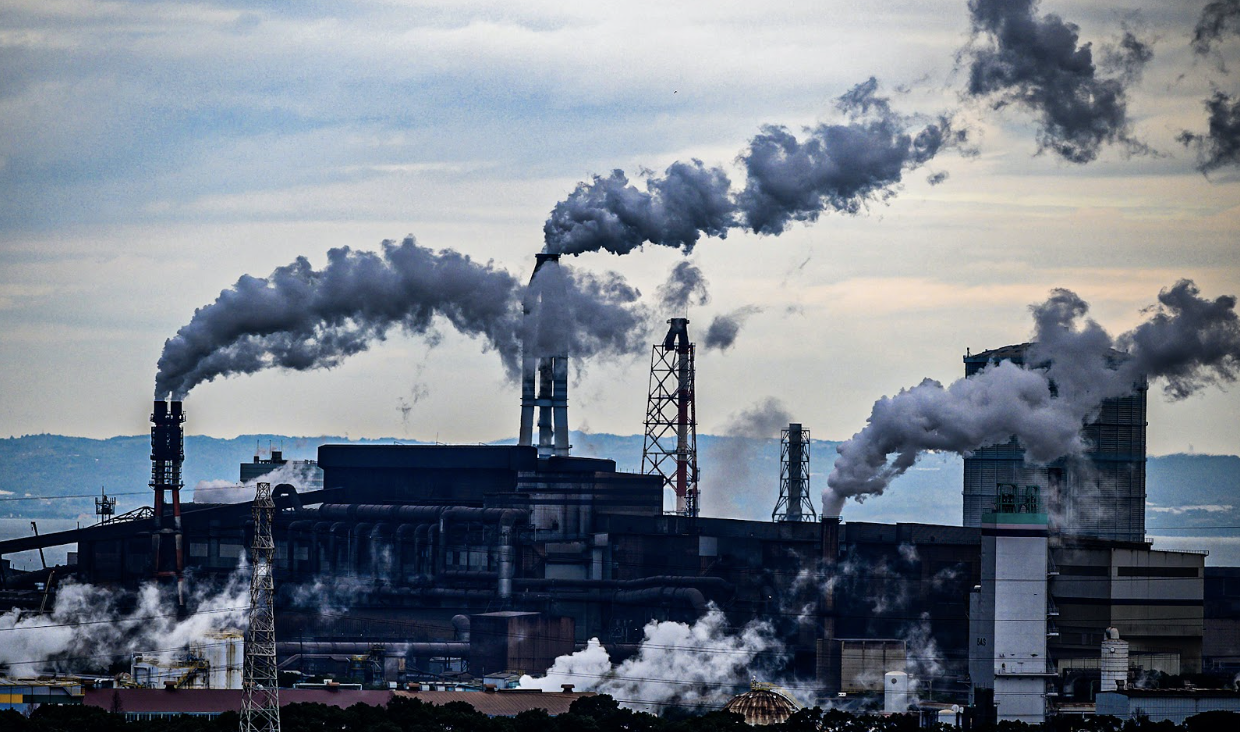 Here’s that all-too-familiar vista of another oil refinery belching toxic filth into the atmosphere. This is why we’re taking polluters to task and working to pass green legislation.







 Water is Life