End DAPL

Lakota Law

When you heard from me last week, Standing Rock was about to host tribal representatives and the Assistant Secretary of the Army Civil Works (Michael Connor) for a meeting about the Dakota Access pipeline (DAPL). Today, I’m happy to report that things went about as well as could be expected. I attended the meeting in my capacity as an advisor to Standing Rock Chairwoman Janet Alkire, and I can report that Connor paid close attention as leaders from nine nations of the Oceti Sakowin expressed a unity of purpose in our fight to end DAPL once and for all.

Yankton Sioux Tribal Councilman Kip Spotted Eagle addresses the Army, flanked (left to right) by Spirit Lake Chairman Doug Yankton, Cheyenne River Chairman Harold Frazier, and Standing Rock Chairwoman Janet Alkire.

As you know, this toxic pipeline, which crosses the Mni Sose — the Missouri River — on Standing Rock’s doorstep, is an existential threat to our homelands and our water. I almost went to prison for peacefully protesting against it in 2017. As Connor sits atop the Army Corps of Engineers — tasked by the courts with creating DAPL’s Environmental Impact Statement — this meeting was critical. Connor listened for many hours, eventually postponing a subsequent meeting with North Dakota Governor Doug Burgum so all our people could speak.

The fact that Chairwoman Alkire was joined by representatives from the Oglala, Cheyenne River, Flandreau, Rosebud, Crow Creek, Yankton, Lower Brule, and Spirit Lake Sioux Nations was an important show of tribal solidarity. And while getting federal officials to take action on our behalf will be an uphill climb at a time when gas prices are rising on account of the Ukraine invasion, this was an important step. 

Left: Standing Rock Chairwoman Janet Alkire with Michael Connor. Center: The color guard presents the flags. Right: Cheyenne River Chairman Harold Frazier, Connor, and Spirit Lake Chairman Doug Yankton.

Renewable energy is now cheaper than fossil fuel throughout the nation, so regardless of what’s happening to oil markets, there is no excuse for failing to go green immediately. And tribal communities should never be forced to bear the risk of noxious infrastructure.

This resistance united us in 2016, and it’s still uniting us today. Now we are being heard by the U.S. Army instead of being shot with water cannons and rubber bullets by TigerSwan, a contracted private army. The fight goes on in a new way — but we still have a long way to go before we can say the Black Snake is defeated. So please stay with us. We’re in this together, and your spirit is always valued in this struggle.

Wopila tanka — thank you for your solidarity!
Chase Iron Eyes
Co-Director and Lead Counsel
The Lakota People’s Law Project

Brackeen v. Haaland

Lakota Law

The moment has come to rally together for our children. The United States Supreme Court has announced that, this autumn, it will hear the case of Brackeen v. Haaland — which could redefine the constitutionality of the Indian Child Welfare Act (ICWA) and threaten tribal sovereignty. Because legal arguments will soon be due, we’re already in high gear. Our attorneys are now preparing an amicus brief for the justices, and it’s up to all of us to raise awareness about the importance of protecting this law and keeping Native kids in Native care. I ask you today, with all my heart, please stand with us in this fight.

Please give what you can today to help us protect ICWA and our rights to self-determination. With Russia’s recent attack on Ukraine — and all the other challenges we face together as a society — it is more critical than ever that we do everything we can to protect future generations and uphold the sovereignty of oppressed communities. 

The Supreme Court could strike down the Indian Child Welfare Act this year, which could also jeopardize Native sovereignty as we know it. We must not 👏 let 👏 that 👏 happen! 👏

Protecting our youth and keeping them in Native care — or kinship care, as we call it — is a huge deal for all of us in Indian Country, especially with the ongoing discovery of mass graves at boarding schools. In fact, safeguarding our children is what motivated me to co-found the Lakota People’s Law Project. 

Over the years, with help from friends like you and conscientious reporters like Laura Sullivan at NPR (who won a Peabody Award for her coverage of South Dakota’s foster care crisis), we have made massive inroads. Today, Lakota Law has a Native-run kinship care home at Standing Rock, and I’m helping to oversee the creation of similar facilities and lobby for a tribally-run Child Welfare Department here at the Cheyenne River Nation.

Importantly, too, this Supreme Court case isn’t just about our young ones. As we detailed in our blog a few months back (if you haven’t yet, please read that!), it’s also potentially an attack on tribal mineral rights and, ultimately, our sovereignty. It’s no coincidence that the white family who initiated the case in Texas after adopting Native children is backed, pro bono, by Big Oil lawyers — including a hideous firm called Gibson-Dunn — who normally have no interest in these matters.

If ICWA falls, it could become the first domino in a series of Native rights rollbacks. The colonists want our children because our youth are our future. The chair of our board of advisors, Senator James Abourezk, was the principal author of ICWA back in the late 1970s, and our president and chief counsel, Danny Sheehan, consulted with the Department of Justice to draft the enforcement guidelines that are the subject of this Supreme Court case.

That’s why we’ll work night and day to stop this legal attack. In the coming weeks, we’ll help the Supreme Court justices understand the legal arguments behind this critical law. We’ll also continue to ensure the case gets maximum media coverage. This must be a full team effort. So, stay with us over the year to come, and please do everything you can to help us amplify this issue.

Wopila tanka — thank you for helping us protect our children and our culture.
Madonna Thunder Hawk
Cheyenne River Organizer
The Lakota People’s Law Project

P.S. With ICWA headed to the Supreme Court, it’s an all-hands-on-deck moment. Please donate today to ensure our skilled legal and media teams can protect Native children, kinship care, and sovereignty. The forces of modern colonialism, capitalism, and racism are aligned against us. Let’s unite, stand strong, and show them what we’re made of.

Lakota People's Law Project

Lakota People’s Law Project
547 South 7th Street #149
Bismarck, ND 58504-5859

#NODAPL

Lakota Law

I hope you’re safe and remaining hopeful despite the horrific world events taking place. The Russian invasion of Ukraine highlights once again how important it is for people everywhere to remain sovereign and free of tyranny. My heart goes out to all who are now suffering through another needless, bloody war.

Perhaps it will lend you some comfort to know that there is good news this week from Standing Rock. This Wednesday, tribal leaders from across the Great Sioux Nation will have an opportunity to sit down with the U.S. Army Civil Works and relay our concerns about the Dakota Access pipeline (DAPL). After years of our #NoDAPL resistance falling on deaf ears — as highlighted by Standing Rock Chairwoman Janet Alkire in our new video, co-produced with the tribe — the Army finally reached out to Standing Rock. This is a potential turning point, though we are keeping our expectations modest. 

Watch: In our new video, Standing Rock Sioux Tribe Chairwoman Janet Alkire discusses the importance of tribal input and gaining our consent for projects like DAPL.

We originally expected the Army Corps of Engineers to release its DAPL Environmental Impact Statement (EIS) earlier this month. But that’s now on hold, pending our coming conversation about this dangerous pipeline. This opportunity to have the appropriate government officials really listen to our concerns is long overdue.

Of course, given the long history of broken promises by the U.S. government to Native People, I take everything with a grain of salt and won’t celebrate prematurely. We must continue to stand ready to protest the EIS, should it eventually be released in any form that doesn’t fully address our concerns. 

Right now, I’m happy to say we have some additional leverage. The meeting with Civil Works will happen against the backdrop of a huge win for Standing Rock in the Supreme Court this past week. Justices shut down DAPL’s attempt to make an end-run around the environmental oversight process. 

Solidarity remains paramount if we are to achieve our goal of ending DAPL once and for all. As people from many nations gathered for our original NoDAPL stand in 2016 and ‘17, Wednesday’s meeting will bring together leaders from throughout the Oceti Sakowin — our Great Sioux Nation. We will, of course, report on the results of that conversation to you. So, please continue to stay with us. We must remain vigilant, united, and ready to act.

Wopila tanka — my deep gratitude to you for your friendship!
Chase Iron Eyes
Co-Director and Lead Counsel
The Lakota People’s Law Project
 

Lakota People's Law Project

Lakota People’s Law Project
547 South 7th Street #149
Bismarck, ND 58504-5859

The Lakota People’s Law Project is part of the Romero Institute, a nonprofit 501(c)(3) law and policy center. All donations are tax-deductible.

Regarding the Indian Child Welfare Act

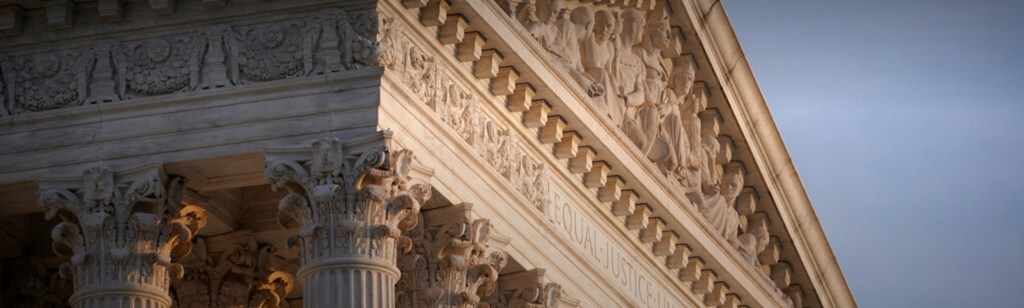
FILE – In this Nov. 5, 2020, file photo the Supreme Court is seen in Washington. (AP Photo/J. Scott Applewhite, File)

The U.S. Supreme Court agreed to hear Texas v. Haaland, a case seeking to overturn the Indian Child Welfare Act.

The high court said Monday morning it would take the case reviewing the 1978 federal law. Many call the Indian Child Welfare Act a gold standard for child welfare policy.

A federal appeals court in April upheld the law and Congress’ authority to enact it. But the judges also found some of the law’s provisions unconstitutional, including preferences for placing Native American children with Native adoptive families and in Native foster homes.

“The far-reaching consequences of this case will be felt for generations,” stated the National Indian Child Welfare Association in a statement. “In a coordinated, well-financed, direct attack, Texas and other opponents aim to simultaneously exploit Native children and undermine tribal rights.”

ICWA has long been championed by tribal leaders to preserve Native families and cultures involving Native children, and it places reporting and other requirements on states.

“In keeping (Native children) connected to their extended family and cultural identity, the positive outcomes are far-reaching and include higher self-esteem and academic achievement. Further, they recognize that collaboration between sovereign Tribal Nations and state child welfare systems is effective and just governance,” the national organization stated.

RELATED:
Tribes, states seek review of ICWA
Child welfare law is battered by court. Still standing
Court strikes key provision of Indian child welfare law

https://platform.twitter.com/embed/Tweet.html?dnt=false&embedId=twitter-widget-0&features=eyJ0ZndfZXhwZXJpbWVudHNfY29va2llX2V4cGlyYXRpb24iOnsiYnVja2V0IjoxMjA5NjAwLCJ2ZXJzaW9uIjpudWxsfSwidGZ3X2hvcml6b25fdHdlZXRfZW1iZWRfOTU1NSI6eyJidWNrZXQiOiJodGUiLCJ2ZXJzaW9uIjpudWxsfSwidGZ3X3NwYWNlX2NhcmQiOnsiYnVja2V0Ijoib2ZmIiwidmVyc2lvbiI6bnVsbH19&frame=false&hideCard=false&hideThread=false&id=1498306127179694082&lang=en&origin=https%3A%2F%2Findiancountrytoday.com%2Fnews%2Fsupreme-court-to-review-icwa-case&sessionId=a283d7c97a3d93f70390dd4fe067fd2d26534208&theme=light&widgetsVersion=2582c61%3A1645036219416&width=550px

The case will be argued during the court’s new term that begins in October.

Texas, Louisiana, Indiana and seven individuals had sued over provisions in the law, and a federal district court initially sided with the group and struck down much of the law. But in 2019, a three-judge federal appeals court panel voted 2-1 to reverse the district court and uphold the law. The full court then agreed to hear the case and struck some provisions.

https://platform.twitter.com/embed/Tweet.html?dnt=false&embedId=twitter-widget-1&features=eyJ0ZndfZXhwZXJpbWVudHNfY29va2llX2V4cGlyYXRpb24iOnsiYnVja2V0IjoxMjA5NjAwLCJ2ZXJzaW9uIjpudWxsfSwidGZ3X2hvcml6b25fdHdlZXRfZW1iZWRfOTU1NSI6eyJidWNrZXQiOiJodGUiLCJ2ZXJzaW9uIjpudWxsfSwidGZ3X3NwYWNlX2NhcmQiOnsiYnVja2V0Ijoib2ZmIiwidmVyc2lvbiI6bnVsbH19&frame=false&hideCard=false&hideThread=false&id=1498320528205090820&lang=en&origin=https%3A%2F%2Findiancountrytoday.com%2Fnews%2Fsupreme-court-to-review-icwa-case&sessionId=a283d7c97a3d93f70390dd4fe067fd2d26534208&theme=light&widgetsVersion=2582c61%3A1645036219416&width=550px

RELATED:
ICWA experts say state laws could protect Native families
‘This Land’ tackles attacks on ICWA
Supreme Court appointment could re-position tribal law
Biden administration brings changes to Indian Country

The Biden administration asked the Supreme Court to review the case, arguing that the provisions should not have been struck.

Before the Indian Child Welfare Act was passed, between 25 percent and 35 percent of Native American children were being taken from their homes and placed with adoptive families, in foster care or in institutions. Most were placed with white families or in boarding schools in attempts to assimilate them.

This is a developing story. Watch “ICT’s Newscast with Aliyah Chavez” on Tuesday, March 1 at 5 p.m. EST for more.

ICT logo bridge

The Associated Press contributed to this report. 

Indian Country Today is a nonprofit news organization. Will you support our work? All of our content is free. There are no subscriptions or costs. And we have hired more Native journalists in the past year than any news organization ─ and with your help we will continue to grow and create career paths for our people. Support Indian Country Today for as little as $10. Sign up for ICT’s free newsletter

International Leonard Peltier Defense Committee (ILPDC)

Lakota Law

As the co-director of the International Leonard Peltier Defense Committee (ILPDC), I have spent many years working to see justice for Leonard. A political prisoner wrongly convicted — on demonstrably false evidence — of killing FBI agents in 1975 at the Pine Ridge Reservation in South Dakota, Leonard is now 77 years old, and he’s still stuck in a Florida federal prison. In January, to add to his plight, he contracted COVID-19. 

As you may know, for many years, we’ve been asking U.S. presidents to do the only responsible and human thing: Free Leonard Peltier. I urge you to watch Lakota Law’s new video, as their media team was on hand to film our recent rally in Rapid City, South Dakota.

Watch: We rallied to free Leonard earlier this month.

President Joe Biden has the power to pardon Leonard, right now. In addition, Leonard is eligible for release under COVID-19 guidelines or compassionate release under Bureau of Prisons rules — but he has been denied multiple times. Unfortunately, Leonard can’t appeal these denials, because he was convicted prior to November, 1987.

Due to constitutional violations and prosecutorial misconduct surrounding his case, Leonard should have been freed long ago. For instance, the government originally withheld exculpatory evidence — including a ballistics report showing the shell casings collected from the scene didn’t come from Leonard’s weapon. In addition, the prosecution relied on testimony from so-called witnesses who later recanted their statements, saying that FBI agents threatened and coerced them into lying.

Leonard’s conviction was wrong from the start, and he has now suffered behind bars for decades. The many people who have called for his clemency include Nobel Peace Prize winners Bishop Desmond Tutu, Nelson Mandela, and Rigoberta Menchú; Judge Kevin Sharp, former Chief Judge of Tennessee’s U.S. District Court; Sens. Brian Schatz (D-HI) and Patrick Leahy (D-VT); and Rep. Raúl Grijalva (D-AZ). Also, in a move we believe to be unprecedented, James Reynolds, the chief prosecutor who helped convict Leonard, has called his conviction an injustice and written on Leonard’s behalf to Presidents Obama and Biden. 

Will you join us in our fight for Leonard’s freedom? To learn more about our struggle, please visit our ILPDC website.

Wopila tanka — I thank you for your care and solidarity!
Carol Gokee
Co-Director, Leonard Peltier Defense Committee
Via the Lakota People’s Law Project

“OYATE”

Lakota Law

My greetings to you from the Standing Rock Nation. Today, I invite you to experience something wonderful: Next week, Big Sky Documentary Film Festival is hosting the online world premiere of “OYATE” — a brand new feature documentary film produced by Films with a Purpose and Irrelevant Media, in association with the Lakota People’s Law Project. Big Sky has graciously also made the movie available for viewing online at the same time, and you can purchase your ticket to watch today.

Look, it’s me and Phyllis Young in “OYATE!” Please click here to watch the trailer for this heartfelt and skillfully done documentary, and purchase your tickets for the premiere on the same page.

We wanted to make sure you have the opportunity to watch this special premiere with us! Please note that the film will be available through Big Sky for a limited time. I urge you to purchase your ticket right now, then mark your calendar to remind yourself the streaming window opens on Feb. 25 at 9 a.m. PST. After that, you’ll have about three days to start watching and another 24 hours to finish.
 
Now that you’ve got all those important details, let me tell you a little more about our involvement and what you’ll see. In the wake of the protests at Standing Rock in 2016 and ‘17, our Lakota Law team worked closely with producers Brandon Jackson, Emil Benjamin, Sandra Evers-Manly, and Jennifer Martel of the Cheyenne River and Standing Rock Sioux tribes, to tell this powerful story of resistance. You’ll spend time with Phyllis Young, me and my daughter Tokata, U.S. Secretary of the Interior Deb Haaland of the Laguna Pueblo People, and many more powerful Native voices.

Lakota LawHere’s a promotional still of Secretary Haaland and other sisters in the fight for Indigenous justice. This film is really beautifully shot.

As you know, our #NoDAPL struggle at Standing Rock became an inflection point for human rights and environmental justice, a rallying cry for Indigenous people everywhere to take a stand against centuries of land theft, imposed poverty, and cultural erasure. “OYATE” successfully communicates our thoughts, as Indigenous activists, organizers, and politicians, on that complicated history.

Lakota Law

Lakota Law aided the filmmakers by providing exclusive interviews, archival footage, and perspective. The directors did a fantastic job of using a blend of storytelling tools to weave all elements harmoniously and to fully immerse you in our worldviews. The end result is a thing of beauty, ambitious in scope and, at the same time, personal and intimate. I think you’ll very much enjoy watching, and I hope you’ll find it illuminating. You may gain new understanding of our struggles for sovereignty and justice — and you’ll even meet some rez dogs! So, please watch the trailer, and then join us for this exciting premiere. I can’t wait to hear your feedback.

Wopila tanka — thank you, and happy watching.
Chase Iron Eyes
Co-Director & Lead Counsel
The Lakota People’s Law Project

Climate Accountability

https://indiancountrytoday.com/news/the-economics-of-climate-accountability

Mark Trahant
Indian Country Today

Last weekend some 400 Karankawa Kadla and their supporters organized protests across Texas to call attention to the expansion plans for an Enbridge oil terminal. It’s already the largest crude export terminal in North America potentially transporting as much as 1.5 million barrels of oil per day.

“The Enbridge terminal expansion is planned to be constructed in the ancestral settlement and land of the Karankawa Kadla, where thousands of sacred Karankawa artifacts remain and ceremony and prayer have continued for the past 2,000 years,” said a news release from the Indigenous Environmental Network. “If the expansion of the Enbridge terminal on Karankawa land continues, the Karankawa Kadla will lose direct access to their land and ancestral artifacts in addition to the pollution of sacred natural waters.”

The release also included a simple line asking for “accountability from Enbridge and Bank of America, one of the major funders of the expansion, for developing on Indigeneous land without consent and the environmental destruction of the Gulf Coast.”

That word “accountability” shifts the protest to another kind of action, one based on ESG standards; a metric that includes Environment, Social and Governance as well as the planning for net-zero carbon emissions by 2050.

Both Bank of America and Enbridge say they have ESG plans and are on track to reach net-zero carbon emissions by 2050.

Further reading:
What the heck is Indigenous economics?
Are carbon markets the new gaming for tribes?
Climate change, Indigenous community and ESG

At a conference last year, Al Monaco, Enbridge’s president and chief executive officer, called ESG and sustainability the key to an energy transition. “Essentially, this is society’s dual challenge,” he said. “One the one hand, it’s clear that population growth, urbanization and a growing middle class will drive energy demand higher. On the other hand . . . energy supplies need to be developed sustainably, and aligned with climate goals.”

This dual challenge, he said, will lead to “responsible” growth over the next three decades including achieving net-zero greenhouse gas emissions, reducing emissions from operations by 35 percent in eight years and increasing the diversity of its workforce in the next couple of years. That’s a lot of ambition. Enbridge says that existing infrastructure, such as pipelines, is a part of that plan.

So why expand an oil terminal now? How does it move the company forward on its promises of sustainability? And what about Bank of America?

The big picture

Let’s zoom out and look at the big picture.

A new report by the global management and accounting company, McKinsey, outlines the economic challenges of getting to a net-zero economy.

“The net-zero equation remains unsolved: greenhouse gas emissions continue unabated and are not counterbalanced by removals, nor is the world prepared to complete the net-zero transition,” the report warns. “Indeed, even if all net-zero commitments and national climate pledges were fulfilled, research suggests that warming would not be held to 1.5°C above pre industrial levels, increasing the odds of initiating the most catastrophic impacts of climate change, including the risk of biotic feedback loops.”

McKinsey said getting to net zero requires significant changes. Significant is an understatement because the numbers are huge. McKinsey estimates that an investment need of $9.2 trillion per year on average, an annual increase of as much as $3.5 trillion from today. To put this increase in comparative terms, the $3.5 trillion is approximately equivalent, in 2020, to half of global corporate profits, one-quarter of total tax revenue, and 7 percent of household spending. An additional $1 trillion of today’s annual spend would, moreover, need to be reallocated from high-emissions to low-emissions assets.”

Hence the urgency of reducing existing energy investments that do not meet climate change goals.

And there is a difference of opinion here. Some companies, even those claiming an ESG or net-zero plan, say that reductions are necessary but will come down the road.

“Some pathways to net-zero emissions assume that the decline in emissions begins immediately and progresses gradually to 2050, with appropriate measures in place to manage disruptions and limit costs. Others assume that reduction of emissions begins later and progresses more quickly to achieve the same amount of cumulative emissions,” McKinsey reports. “The latter could involve significant and abrupt changes in policy, high carbon prices, and sudden changes to investment practices—along with greater socioeconomic effects and a larger-scale response. Making job transitions would be more challenging, and there could be greater risk of stranded assets.”

The energy companies that are betting on “later” for dramatic emission reductions could be putting at risk significant assets, stranded assets. Enbridge, for example, spent $3 billion on its acquisition of the Moda Midstream Terminal, nearly $10 billion on the line 3 project, and millions more on smaller projects, including a seaport near Houston.

169 indigenous economics

What about Bank of America?

A report last year by the Rainforest Action Network said that “until the banks prove otherwise, the ‘net’ in ‘net zero’ leaves room for emissions targets that fall short of what the science demands, based on copious offsetting or absurd assumptions about future carbon-capture schemes, as well as the rights violations and fraud that often come hand in hand with offsetting and carbon markets.”

That reported Bank of America’s at number four for the “dirty dozen” banks that finance fossil fuel development.

“These ‘Dirty Dozen’ banks have very different policies regarding restriction and phase-out of coal, oil, and gas, but none are sufficient. Among the world’s largest banks, strong coal policies are rare, and even the strongest oil and gas policies are sorely lacking,” the Rainforest Action Network said.

Bank of America says it’s goal is “to rebalance our portfolios away from more carbon emission intensive fossil fuel extraction, power generation, transportation and other consumption … toward low-carbon business models.”

The bank says it’s committed to “industry-leading disclosures” on its environmental progress, including a metric called “emission intensity.” That metric is different from overall carbon emission reduction because it’s based on a connection with the larger economy. So if the economy grows, so can total emissions.

Of course all of this economic and investment framework misses another leverage point, consent from Indigenous communities.

The company outlines its Indigenous People’s Policy that includes a commitment “to pursuing sustainable relationships with Indigenous Nations and groups in proximity to where Enbridge conducts business.”

Yet there has been no communication with Indigenous groups in Texas.

The Indigenous Peoples of the Coastal Bend, the Karankawa Kadla Tribe of the Texas Gulf Coast, and Ingleside on the Bay Coastal Watch Association filed a lawsuit in August against the U.S. Army Corps of Engineers for its approval of permits for the Texas project.

“Members of the Indigenous Peoples and of the Karankawa Kadla tribe travel regularly to Ingleside on the Bay in San Patricio County, Texas to enjoy the natural beauty of the land and the ocean, to observe wildlife in the area, and to find spiritual joy and fulfillment through their connections to the land, water, wildlife, and their ancestors who lived in the area,” according to the lawsuit. “This undeveloped space between the Moda facility and Ingleside on the Bay is the only remaining undeveloped area in this part of the Bay. This undeveloped space represents the last remaining vestige of the landscape and ecosystems that once occupied the area.”

The dredging of the bay “will destroy the McGloin’s Bluff site and the surrounding area. The increase in ship traffic and the associated increase in noise, industrial activity, and pollution will destroy their ability to pray and find spiritual joy and fulfillment in observing their ancestral lands and waters.”

This leads to even more questions about ESG, and especially its connection to Indigenous communities. Enbridge and other companies’ Indigenous Peoples Policies support the United Nations Declaration on the Rights of Indigenous People. Yet that protocol explicitly calls for Free, Prior and Informed Consent on projects.

This is why many critics dismiss ESG as “greenwashing,” giving companies cover to continue business as usual. On the other hand, companies see the growing value of being favored as ESG-compliant. Last year more than $120 billion flowed from investors into sustainable projects (more than double from 2020) and a regulatory structure is being added. The U.S. Securities and Exchange Commission is nearing completion of guidelines for companies to disclose climate-related risks.

There are three climate tests ahead: Transparent. Sustainable. And accountable.

Indian Country Today - bridge logo

Mark Trahant, Shoshone-Bannock, is editor-at-large for Indian Country Today. On Twitter: @TrahantReports Trahant is based in Phoenix. The Indigenous Economics Project is funded with a major grant from the Bay and Paul Foundations.

Indian Country Today is a nonprofit news organization. Will you support our work? All of our content is free. There are no subscriptions or costs. And we have hired more Native journalists in the past year than any news organization ─ and with your help we will continue to grow and create career paths for our people. Support Indian Country Today for as little as $10.

To the Real

As January 2022 comes to a close, the narrative is unraveling. We can win this war on our freedoms and our lives. #tothereal

aztec8888's avatarGrid Trek Magazine

We had a profound experience with the lab created virus called Sars-Covid2 and the lung infection Covid-2019. It was mind altering, it was thought provoking, and it was eye-opening.

We are under a full worldwide assault called fear. We are at war.

The result is that everyone is afraid. In being afraid one becomes insecure and looks to an authority to take control and alleviate the fear. People stop being rational, stop thinking for themselves, they feel paralyzed.

People are stressed out, worried about their lack of money, insecure housing, inflation, and the plandemic. They turn on the TV and soak up the latest lies.

Grid Trek Magazine issued its last issue June 2021. We are no more.

We are fighting the battle against fear by turning to the real.

That means we are disengaging from all electronic, Wi-fi, network power waves. We are pulling ourselves…

View original post 383 more words

Coastal GasLink Pipeline – Action Needed

Lakota Law
Lakota Law

Toward the end of last year, I told you about Gidimt’en Checkpoint — which has rapidly become something akin to a Canadian Standing Rock. Right now, the Wet’suwet’en People are standing strong to protect their yintah, or homelands, and the planet we all share from the Coastal GasLink pipeline. But, just as happened with our own movement against the Dakota Access pipeline in 2016-’17, the fossil fuel industry — backed by big banks, the colonial government, and militarized law enforcement — is ignoring their sovereign rights and violently attempting to stamp out Indigenous-led resistance.

That’s why it’s absolutely critical that we do all we can to support the Wet’suwet’en People right now, before this pipeline can further desecrate their yintah. Please email the United Nations: tell them to end human rights abuses on Wet’suwet’en land, and demand that First Nations’ hereditary right to that land be respected. Let the UN know the world is watching. 

Read more about the Wet’suwet’en struggle and take action here.

After setting up their Gidimt’en Checkpoint blockade, the Wet’suwet’en People have been subject to violent raids by the Royal Canadian Mounted Police, including the use of sniper rifles and police dogs. 30 people have been arrested, including two elders. In one incident, a chainsaw and axes were used to break into homes and arrest movement leaders, journalists, and legal observers. One CBC TV journalist was jailed for three days, and the home he was removed from was subsequently burned to the ground.

I’ve also authored a blog detailing some of the history of the Wet’suwet’en struggle for justice. Notably, this pipeline crosses unceded lands under the care of Wet’suwet’en hereditary chiefs for time immemorial. Their free and prior and informed consent should be the first requirement before any project threatening their sacred headwaters, Wedzin Kwa, can move forward. Their consent has not been given, and their title to the land has been upheld by Canada’s Supreme Court.

The violence against Wet’suwet’en land protectors must end and their yintah protected. It’s long past time to stop treating Indigenous People protecting their homelands and Unci Maka — our Grandmother Earth — like terrorists and start listening to our calls for environmental justice.

Wopila tanka — thank you for standing strong with the Wet’suwet’en!
Chase Iron Eyes
Co-Director and Lead Counsel
The Lakota People’s Law Project

Clyde Bellecourt

Lakota Law

Two days ago, we lost a good man. I write to you today from the road, as I make my way northeast to celebrate the life of Clyde Bellecourt. I knew Clyde for decades. An Anishinaabe activist from the White Earth Nation, he was a co-founder of the American Indian Movement (AIM) in Minneapolis and, for years, focused on ending police brutality against Native People. He remained active throughout his long life, eventually becoming a strong advocate for eliminating offensive sports mascots.

Clyde Bellecourt leaves a legacy of activism and progress for our People. His was a life well lived.

I met Clyde in the late 1960s when AIM was young. My sister and I went to the twin cities and met up with Dennis Banks, who invited us to a protest action against the movie “Little Big Man” — and its Hollywood-style depiction of Native people and our Sun Dance.

We were all a bunch of young people fired up to get something done. Afterwards, we got invited to Red Power gatherings, which included some of the first AIM meetings. At that time, just a couple dozen of us attended. I met Clyde’s wife, Peggy, and the local women of the movement. Then I met Clyde. That’s where it all started.

AIM’s actions moved into South Dakota as a result of Dennis Banks and Clyde recruiting my first cousin, Russell Means, to be part of AIM in 1968. When Russ got involved, we expanded. Our first action was at Mount Rushmore. From a starting place of working on police brutality issues, we were able to help grow the movement until we had national awareness.

In our neighborhood and in our corner of the movement, our direction came from the reservations, the people. Unfortunately, in Minnesota, the reservations didn’t stand with AIM or back their actions. But I’m happy to say that trend changed when AIM came to South Dakota, where we found support on tribal nations such as Pine Ridge. For us as Lakotas and Dakotas, our focus was on our territory, and our actions became a family thing. 

This movement has always been larger than any one individual, but there is no doubt that Clyde was a leader of his time. No matter the issues the organization confronted — in Minnesota and even internationally — he was involved. I had respect for him, and it took a lot of organizing and a lot of guts to do what he and others did in those early days. And, as the years went by, he showed up in solidarity. That set a strong example for our younger generations.

Clyde lived a long and good life. I’m in my 80s now, and for those of us who were there during the original AIM era, our ranks are getting thin. But I don’t look on death with sadness, not when we have lived this long and well. This is part of the cycle. It’s going to happen to all of us, and we should be ready. We are individuals, yes, but what we do together is a group effort. Clyde was an icon of our time for our People, and for that, I am grateful. Now it’s up to you and me to carry on his legacy of justice with whatever time we have left.

Wopila  — Thank you for standing with our People, always.
Madonna Thunder Hawk
Cheyenne River Organizer
The Lakota People’s Law Project