John Chao created this beautiful photography book and has a chapter about Standing Rock. Check it out. People who were there have their names listed. I am listed there and am very proud to say that I was there, I was a witness, I contributed, and I tried to help in any way I could by waking up my school community on Sacramento to what was going on in North Dakota.
The struggle continues as we battle through a rogue government and a pandemic.
It will always be the artist, writers, and educators who will document and tell the tale.
It’s more important now than ever to unite and support each other. That’s why, on the 50th anniversary of Earth Day, we’re launching a massive livestream from April 22-24 where you can join activists, celebrities, musicians, and more in an epic moment of community and hope for our future. Together, we’ll:
Drive donations to benefit the COVID-19 relief effort
Call on world leaders to take emergency action to build a more sustainable and just world
Inspire millions to pledge to vote for our future.
For 50 years, we’ve been losing the fight for our planet. But we can make this the century we saved the world — starting on Earth Day. Here’s how you can spread the word and make this as big as possible.
After I wrote to you last week with news that the McLaughlin City Council had shut off the power to my son’s home, you came through in a big way. You flooded the council with nearly 10,000 emails demanding that they stop this harmful practice during the COVID-19 pandemic. Thank you, and good work! However, though my son’s power is back on, the council still hasn’t stopped shut-offs citywide.
If you have already sent your message to the city council, please share our action on social media using the buttons below. Ask your friends and family to join our call for Standing Rock safety now.
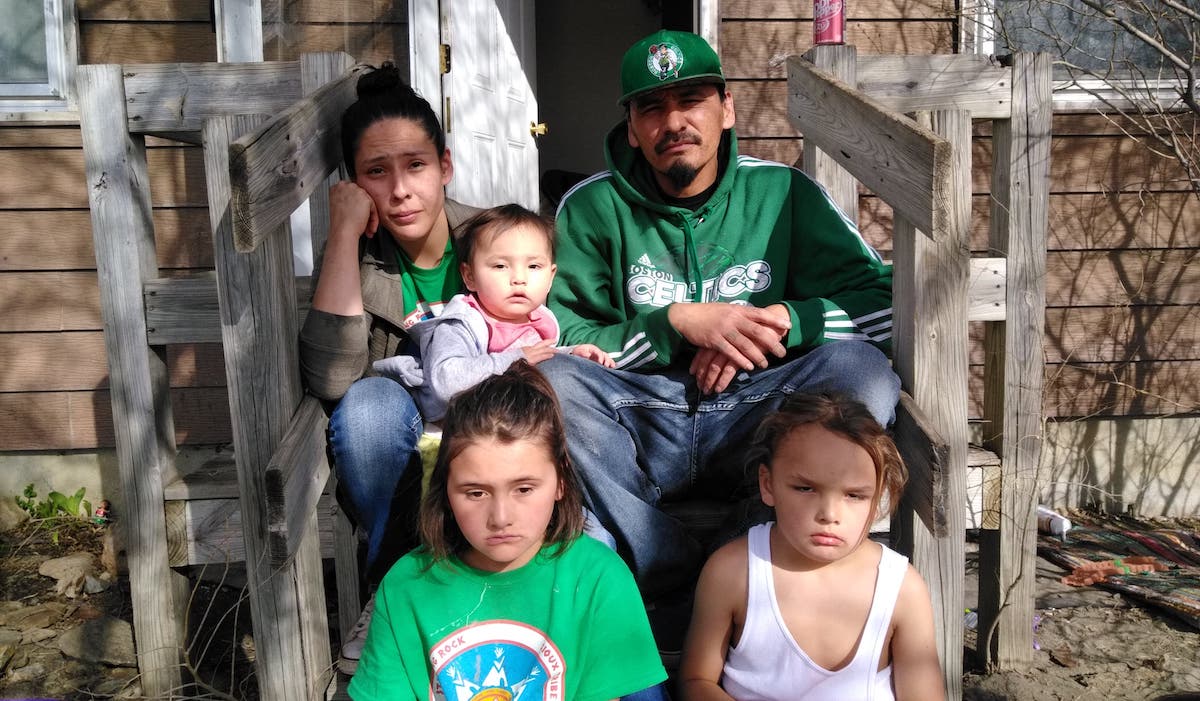
My son, his wife, and my grandchildren.
I am happy to tell you that a conscientious reporter from the Rapid City Journal also followed up on a press release we sent and wrote an article, later picked up by the Bismarck Tribune. We hope that the continued pressure from you and the media will pay off in policy change soon. The council will meet again on Apr. 21. Let’s make sure they know we won’t accept their failure to provide public safety for the people of Bear Soldier District (our Lakota name for McLaughlin).
Because South Dakota Governor Kristi Noem stubbornly refuses to call for even the most basic precautions to slow the viral spread, the pandemic has now exploded in my state. (We will share more with you about this very soon.) Sioux Falls is home to the single worst hot spot in the nation, and there are also multiple cases in Bear Soldier. This just makes it all the more important that local officials — like those on the McLaughlin City Council — behave responsibly.
Our goal in this campaign is not to increase racial division or get free electricity for anyone. Rather, we’re hoping to encourage compassion and concern for public health on the part of our elected officials — and reconciliation between Native and non-Native residents of Standing Rock. But our goal of unity can only be furthered if justice is secured.
Wopila — I thank you on behalf of all the families of Bear Soldier!
Robert White Mountain
via the Lakota People’s Law Project
Navajo Nation President Jonathan Nez and Vice President Myron Lizer met with the Chinle Service Unit Command Team and Federal Emergency Management Administration (FEMA) Region 9 representatives Josh Allan and Ricardo Zuniga on March 31, 2020 to evaluate local facilities in Chinle, Arizona, to discuss the establishment of a federal medical station to help fight the spread of COVID-19. (Photo courtesy of Navajo Nation President Jonathan Nez and Vice President Myron Lizer, Facebook)
Indian Country Today
Data, story summaries, lists of closures, resourcesIndian Country Today
COVID-19 Tracker in the United States
April 16, 2020 9:15 pm EDT
Cases confirmed in the Indian health system: 1,397
Good news: Two Phoenix-area women who were living in the U.K. when coronavirus cases began skyrocketing in Europe say they’re relieved to be back with family
Two pueblos in New Mexico have some of the highest infection rates in the United States. The numbers are stark. Zia Pueblo has 31 confirmed positive cases with a population of 900 people. And San Felipe has 52 cases with a population of 2,200.
‘Congress said ‘any’ small business can get paycheck protection for its people, the SBA has no right to say anything less to small tribal gaming businesses’
COVID-19 pandemic threatens health in Alaska Native villages and the thousands of workers who usually arrive for the short, lucrative Bristol Bay fishery.
Navajo Nation is an Indian Country COVID-19 hotspot, as medical supplies are dwindling nationally. A summary of COVID-19-related news for Saturday April 4, 2020
Ravn Air carried passengers, food, freight and mail to more than 120 communities announced it’s ending service to all but 11 villages. Ravn Air sent the message at 6 a.m. telling employees to stop operations that day.
New Mexico Gov. Michelle Lujan Grisham said there are “’incredible spikes” of coronavirus cases in the Navajo Nation and that the virus could “wipe out” some tribal nations, according to a recording of a call between Trump and the nation’s governors obtained by ABC News.
“We’re seeing incredible spikes in the Navajo Nation, and this is going to be an issue where we’re going to have to figure that out and think about maybe testing and surveillance opportunities,” Grisham said.
Indian Country Today Reporters’ Roundtable, March 30
Another Monday. Another tranche of global COVID-19 cases on National Doctors Day. There are now more than 122,000 cases in the United States, resulting in 2,112 deaths. And in Indian Country there are 190 cases with at least 10 deaths confirmed.
The Lummi Nation in Washington state reported the sharpest increase so far this week. There are now 16 positive cases, 12 of them being Lummi citizens, and nine people who live on the Lummi Reservation. Two of the cases include members of the Lummi Business Council. The identified cases are likely to go up — there are 22 more cases pending, according to the tribe’s public health department.
Meskwaki Nation among others in Indian Country with confirmed cases
Weekends are usually days when people take time off. Not these days as the number of positive coronavirus cases continue to grow in Indian Country. Over the weekend, tribal nations reported new numbers, instituted new curfews and organizations asked for more donations to send to both students and community members. Others used this time to connect on social media. In Iowa, a 31-year-old Meskwaki woman was confirmed positive for the virus, the Times Republican reported. She has been identified as Lindsey Johnson.
‘Three weeks ago we were doing great! And now we’re done.’
It’s a sparse lunch crowd at the Bee Line Cafe in Payson, Arizona. Only four tables have guests seated and eating. Business has slowed considerably in the past week says owner Kassie Sexton.“People are not wanting to come in because they’re afraid they’re going to get cooties.” She laughs nervously as she looks around her nearly empty cafe.
The sweeping bill that President Donald Trump signed will help better equip health care systems that serve Native Americans, improve the emergency response time on tribal lands, provide economic relief for tribal members, and help with food deliveries to low-income families and the elderly.
Tribes have been lobbying Congress to help address shortfalls in an already underfunded health care system and to ensure the federal government fulfills its obligation to them under treaties and other acts. While the $10 billion for tribes in the $2.2 trillion package is less than they requested, tribes say it represents progress.
The number of coronavirus cases is growing globally.
On Saturday, 103,321 cases were reported in the United States by the Centers for Disease Control and Prevention, making the U.S. the country with the highest number of confirmed cases and 1,668 people have died from coronavirus-related complications.
Italy’s death toll from the coronavirus pandemic is the highest in the world, with over 10,000 fatalities.
Federal and state services include monetary and food assistance, unemployment benefits, and more. The National Retail Federation also has over 70 corporations looking for workers
Updated: New coronavirus cases on the Navajo Nation have increased by 20 on Wednesday, from 49 to 69
Tribes in Minnesota are the latest across Indian Country to fall under a statewide stay-at-home order in the fight to prevent the coronavirus spread.Minnesota Gov. Tim Walz signed an executive order on Wednesday ordering Minnesota residents in nonessential jobs to stay at home. The order begins midnight Friday and is scheduled to run through April 10.
The Senate and White House reached an agreement on the bailout funds for America, the largest in history. The $2 trillion relief package includes $8 billion for tribal governments and $2 billion for emergency supplemental funding for federal Indian programs.
The Senate vote on the agreement is set to happen this afternoon. Even if passed by the Senate, they would need House approval.
Two Arizona tribes in the Phoenix valley see their first COVID-19 cases while the Navajo Nation adds 20 more reports. The Salt River Pima-Maricopa Indian Community reported its first case and the Gila River Indian Community has two positive cases.
These new cases bring the total number of COVID-19 cases in the Indian health system to 64 and two deaths. Eight out of 10 deaths due to the coronavirus in the U.S. have been people 65 and older, according to the CDC.
Salt River Pima-Maricopa Indian Community President Martin Harvier made the announcement Tuesday afternoon on the tribal government’s Facebook page.
Generations and generations … have had to deal with these pandemics and these viruses, and they’ve also had to get up in the morning and feed themselves, and make things run for society’
Alaska Governor Mike Dunleavy announced a mandatory 14-day quarantine for people arriving from out of state to slow the spread of COVID-19. On Sunday Hawaii Governor David Ing took the action for travelers headed there.
Surgeon General: ‘America … It’s going to get bad’
This morning U.S. Surgeon General Dr. Jerome Adams said on national television, “I want America to understand this week, it’s going to get bad.” As if he needed proof, the number of positive cases for COVID-19 listed on the Centers for Disease Control and Prevention doubled over the weekend. There are now 33,404 cases and 400 people across the country have died.
Minnesota Lt. Gov. Peggy Flanagan: Someone feeling well could still be carrying the virus … ‘then you walk past the next Ron, my big brother, in public’
Indian Country Today Reporters’ Roundtable, March 24
Zibaaska’iganagooday is the exploding sound in the Ojibwe language and it has a long history of healing
Community song and dance have always been a part of healing and prayer for Native people. In this time of social distancing, however, people are putting a digital spin on these healing traditions. People all over Indian Country are organizing virtual powwows and other social dances via social media as a means to offer hope and spiritual support during the Covid19 pandemic
Swords, rez dogs, Indian Country adventures and more
Bored at home? Nonsense. Practicing safe social distancing during the coronavirus pandemic can also mean opportunity. We can finally catch up on all the streaming shows, Native YouTubers, read all the books we never have time for and listen to all the saved podcast episodes tucked away on our devices.
Native artists, musicians, comedians, actors and writers speak on careers affected by the COVID-19 virus. Freelance Artist Resources website hopes to provide relief
American Indians and Alaska Natives clustered in camps or on the streets; ‘It’s been a crazy time’
Every major city has a virtual suburb for the homeless. Homes consisting of tents, scrap wood, shopping baskets and cardboard boxes. In shelters, a family dwelling might have a common kitchen and bedrooms with bunk beds. Others may have a large room filled with dozens of bunk beds or canvas cots. Some have dozens of rubber-coated thick pads placed a foot apart in rows laid across a concrete floor.
The number of positive COVID-19 cases in the Navajo Nation has grown to 14, a dramatic increase from the three confirmed cases reported only a day ago.
The announcement came hours after a 55-year-old Cherokee Nation citizen was the first coronavirus related death in Oklahoma. Before the Navajo Nation announcement late Thursday, March 19, there were nine cases confirmed in the Indian health system.
The Cherokee Nation and Oklahoma have confirmed the first COVID-19 related death, according to the Cherokee Phoenix. A 55-year-old Cherokee man died on March 18 after fighting a cold and then contracted the coronavirus disease.
The death of a tribal citizen that has been confirmed is one of the nine cases reported in the Indian health system as of March 19. On Wednesday, the Navajo Nation confirmed its third case, a 62-year-old Navajo man.
The Lummi Nation in Washington state has confirmed three positive COVID-19 cases, according to Tony Hillaire, chief of staff of the Lummi Indian Business Council. This adds to the total of seven within the Indian health system; one in the Portland Area of the Indian Health Service, one in the Great Plains area and two in the Navajo region.
Of the three Lummi cases, one is a Lummi citizen who resides on the reservation. The other two cases are residents of King and Whatcom counties.
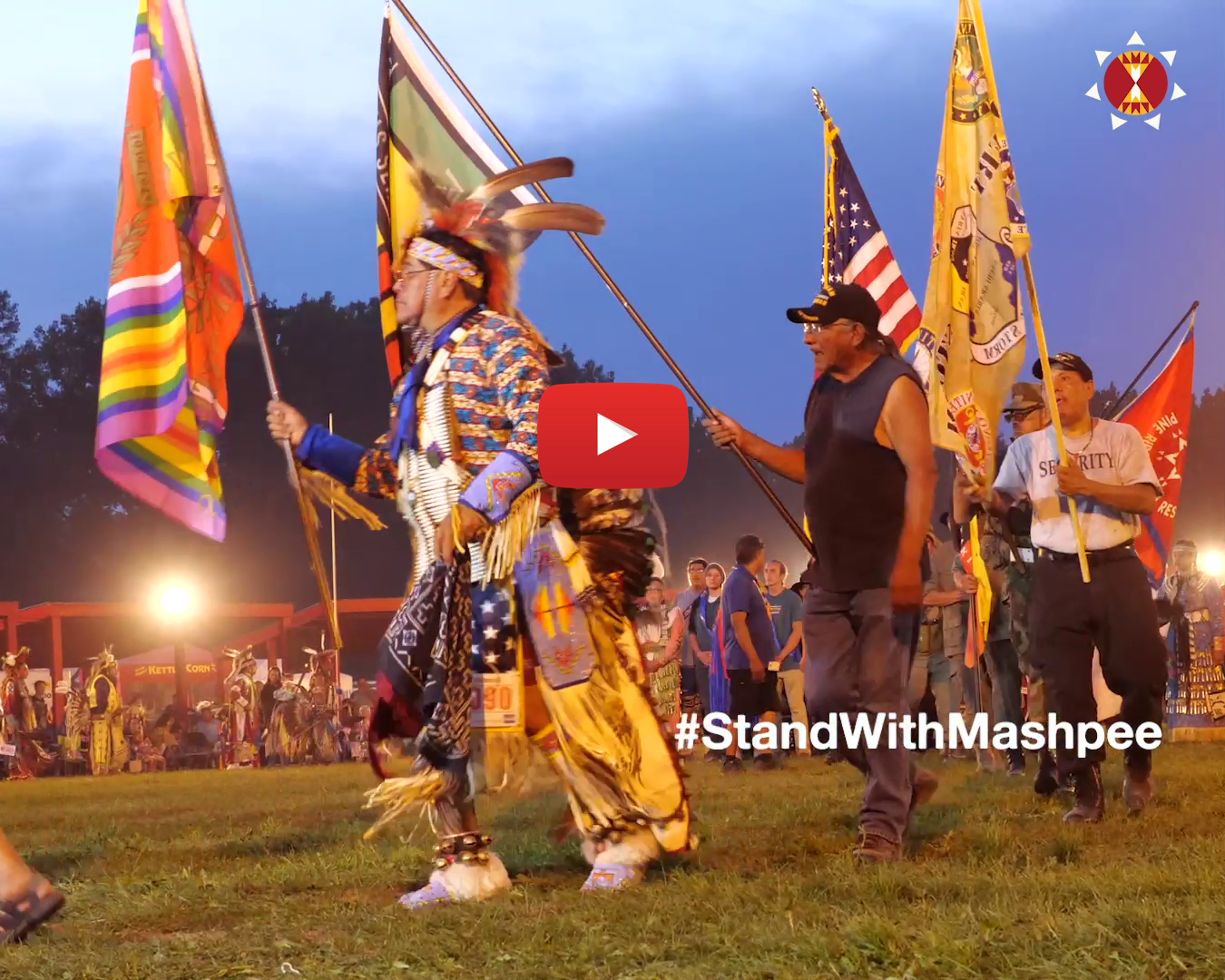
Aƞpétu wašté (Good day)! I hope you are staying well, and I want you to know that we’re praying for all our relations impacted by the ongoing COVID-19 outbreak. One benefit of sheltering in place is that we’re able to keep our eyes peeled for important news. In case you missed it, I wanted to highlight a recent attack on Indigenous sovereignty and ask for your solidarity for our Mashpee relatives.
At the end of last month, the Department of Interior announced that 321 acres of land will be taken out of trust, effectively revoking the reservation status of the Mashpee Wampanoag people of Massachusetts. For those who learned the Thanksgiving story in elementary school, the Wampanoag people broke bread with the Pilgrims in Plymouth colony, and it was Wampanoag land that the Pilgrims took. And now, in the middle of an unprecedented global pandemic, President Trump’s cabinet is moving to rescind the sovereign status of these people.
The Lakota People’s Law Project stands with the Mashpee Wampanoag in the struggle to defend their birthright to live on the land of their ancestors, and we ask that you take a few moments to watch my video and #StandWithMashpee too.
President Obama placed the land in question into trust in 2015, but that decision has been reversed under Trump. A reinterpretation by our executive branch of a 2009 Supreme Court decision now only grants trust status to tribes recognized before 1934, when the Indian Reorganization Act was signed. Because the Mashpee weren’t federally recognized until 2007, they’ve now lost their status. As Jessie Little Doe Baird, vice chair of the tribe, said “they came for our children and took them to Carlisle because we were ‘too Indian.’ Today, they tell us we are not Indian enough.”
The Mashpee, who have lived in the Massachusetts area for over 12,000 years, are being denied their right to autonomy. With federal trust status comes the right to manage, develop, and tax a parcel of land. This “disestablishment” of the Mashpee reservation will likely force the closure of the tribal court and police department; it will cost Native people their livelihoods in an already barren economic landscape.
This blatant land-grab isn’t even court-ordered — the directive came from Trump’s Department of the Interior. Now, the Mashpee have asked a D.C. court to issue an emergency restraining order to prevent the dissolution of trust status, and Massachusetts senators Elizabeth Warren and Ed Markey have vowed to combat this assault on the tribe’s self-determination, saying “We will not allow the Mashpee Wampanoag to lose their homeland.”
We Native people have struggled to retain less than 2.5 percent of our lands since European contact. The Indian Wars, in essence, have never truly ended. The United States’ long history of systemically suppressing Native rights continues, and in 2020, land trust removal is the latest iteration of that same legacy of colonialism. We are disheartened, but as Indigenous people and allies, we have each others’ backs in the face of adversity. You can stand for sovereignty by standing with the Mashpee people in their time of need.
Wopila — thank you. Solidarity forever,
Chase Iron Eyes
Lead Counsel
The Lakota People’s Law Project
First of all, from my home in Cheyenne River to yours wherever you may be, I hope you are staying safe and well. Over my years, I’d come to think maybe I’d seen it all — but not so! One thing I know is that we’ll only get through this period of separation and hardship by sticking together. So I write to you today with an opportunity to help make a real difference that could save lives.
Please join us in telling Montana stop KXL construction now, before it spreads COVID-19 on tribal nations.
As I have shared with you previously, we Native women have been hard at work organizing our communities to prepare for the dangers KXL poses. The man camps that house oil workers were already scary before we knew they could become petri dishes for the virus. Allowing two of them near our reservation just increases our peril.
But allow them, Trump will. He’s cynically using the pandemic to take full advantage of our inability to engage in grassroots organizing on the ground. On March 31, TC Energy announced a final decision to complete KXL, explicitly thanking the president for giving the go-ahead. Three days later, Trump tweeted his happiness.
Though TC Energy has claimed it will follow procedures to limit the spread of the virus, Republican Nebraska Governor Pete Ricketts has said that he won’t expect workers traveling from out of state to be quarantined. Meanwhile, here in South Dakota, Republican governor Kristi Noem has steadfastly refused to institute shelter-in-place mandates or close businesses, despite 447 documented positive tests and six deaths in our state.
We must lean on the Democrat, Bullock, to do the right thing. He has, at least, waffled on KXL. On the one hand, he said, “Look — if it’s done right, we can’t take it off the table.” On the other hand, he’s commented that the Department of State failed to adequately consider the pipeline’s environmental impacts, and he’s expressed concern about the threat to Montana’s water from a leak or spill. Bullock has also criticized the Trump administration’s failure to adequately consult with Native American tribes affected by the pipeline — a major reason to hope he’ll listen to us now.
It’s worth noting that KXL has many of the same weaknesses in its design and approval process as the Dakota Access pipeline, which — partially due to safety concerns including an inadequate leak detection system — just had its federal permits revoked by a court ruling. Let’s protect public safety and stop KXL construction.
Wopila tanka — I thank you, sincerely, for your life-saving activism!
Madonna Thunder Hawk
Cheyenne River Organizer
The Lakota People’s Law Project
“Our hearts are heavy today as we mourn the passing of our dear friend Karen. This is a shock, both to the many loved ones Karen leaves behind, and to the Cherokee Nation as a whole. As Cherokees, we all feel the weight of her loss, which is tragic and too soon,” said Principal Chief Chuck Hoskin Jr. “ Photo via Facebook. Cherokee Nation Principal Chief Chuck Hoskin Jr, Tribal Council Deputy Speaker Victoria Vazquez, Administrative Assistant Rae Wacoche, Self Governance Director Karen Ketcher and Government Relations Ethan Greene.
Indian Country Today
Oklahoma tops COVID-19-related news for Monday April 6, 2020Facebook is where the news often breaks. Families tell their stories, as do tribes.
Monday the Cherokee Nation reported the death of its self-governance director, the first COVID-19-related death within the tribe’s health system.
Karen Ketcher, Cherokee, died Monday at age 70, according to the tribe. She previously worked for the Bureau of Indian Affairs.
The nation said Ketcher died of COVID-19 complications.
“Our hearts are heavy today as we mourn the passing of our dear friend, Karen,” Cherokee Nation Principal Chief Chuck Hoskin Jr. said on Facebook. “This is a shock, both to the many loved ones Karen leaves behind, and to the Cherokee Nation as a whole. As Cherokees, we all feel the weight of her loss, which is tragic and too soon.”
This is the tribe’s second death: A 55-year-old man died in mid-March outside of the Cherokee Nation’s health system.
The tribe announced an increase of 13 cases today Monday, bringing the total to 24 cases and two deaths. The tribe’s health system also has 11 ventilators.
The Choctaw Nation also has seen cases increases, with Chief Gary Batton announcing three new ones Monday. That brings the tribe’s total to 18 cases and 1 death.
The tribal nation had its first case March 26. The Choctaw Nation Health Service Authority is waiting for 49 test results, while 49 tests have come back negative.
Meanwhile, the Muckleshoot Tribe in Washington state had two cases as of April 2. Both will be in isolation for 14 days, and contact tracing has been done on both people, says the tribe.
Contact tracing is when health officials interview the infected about where they’ve been and who they may have had contact with. Dean Seneca, CEO of Seneca Scientific Solutions Plus, said during an interview on Indian Country Today’s newscast, that this method was effective when he was on the frontlines of the Ebola outbreak in West Africa
In the Southwest, the Navajo Nation continues to see a jump in cases. On Monday, it had 30 new cases. This gives the tribal nation a total of 384 cases.
In New Mexico, San Felipe Pueblo last week became one of the latest pueblos to issue a strict stay-at-home order for its community.
Thirty-two miles away is Zia Pueblo. Its leadership adopted similar guidelines in a weekend memo.
Zia Pueblo leadership confirmed Sunday that their pueblo had 11 confirmed cases.
In addition to a stay-at-home order, the pueblo has enacted a curfew that will remain in effect until further notice, according to its memo. Only essential works and those with medical appointments or emergencies can leave the pueblo, it says.
Zia Pueblo also says only two people per household can be designated to go shopping, and they cannot be elders or children. Tribal members can shop only on Tuesdays and Wednesdays.
“We are a small, close-knit community with strong family connections. If the “Stay at Home” Order is not taken seriously or ignored, even by one person, more harm will be inflicted upon Zia Members,” the memo reads. “Please, our Zia People, abide by the ‘Stay at Home’ Order. Practice all social distancing guidelines and frequently follow through with personal hygiene recommendations set forth by Public Health experts.”
Joining other pueblos, Zia Pueblo has cancelled all Easter activities, including church services, dances and Easter egg hunts.
This weekend will look drastically different for residents of the Navajo Nation.
The Navajo Department of Health has issued an emergency order implementing a curfew beginning at 8 p.m. Friday and ending at 5 a.m. Monday. Those who do not comply will be given a citation and fined, officials say.
“We are seeing way too many people contract the virus, and we need to step up measures to begin to reduce the numbers,” Navajo Nation President Jonathan Nez said in a press release. “Our health care system cannot manage the growing numbers of patients and those who need to be admitted. We continue to receive reports of people on the road and traveling with families to nearby border towns.”
The weekend curfew does not apply to essential employees. These employees, however, are required to show proof of identification from their employer on an official letterhead to be exempt from being penalized.
Tribe says to keep medical equipment in the region
Seneca Nation President Rickey Armstrong, Sr. issued the following statement in opposition to the executive order outlined by Governor Andrew Cuomo for taking vital resources and medical equipment away from Upstate New York hospitals for use downstate. A press release said:
“The Governor’s order flies in the face of the life-saving work our hospitals, doctors, nurses and first responders are risking their own health to perform every day. By preparing to send the National Guard to the region to demand our healthcare community relinquish ventilators and equipment, the Governor is signaling his willingness to sacrifice the lives and safety of our family and neighbors. He is creating a dangerous ‘us’ versus ‘them’ dynamic, and he is making his choice crystal clear.”
Jourdan Bennett-Begaye, Dalton Walker and Aliyah Chavez contributed to this report. The Associated Press also contributed.
I hope this email finds you safe and well. As you have likely heard, the federal government recently passed a $2 trillion emergency relief package to aid Americans during the COVID-19 crisis. We’re so grateful to those of you who sent 13,000 emails to Congress demanding the CARES Act not bail out fossil fuel companies. It worked: the bill was revised — you and others stopped a $3 billion giveaway to oil companies! Other victories in the Act include expanded protections for unemployed workers, coverage for COVID-19 testing, and $64 million in aid to Indian Country. Even under quarantine, you are helping make a difference where it counts.
Chase Iron Eyes talks legal action against the White House.
In the midst of massive shelter-in-place orders, we’re seeing how quickly nature can start to rebound — bluer skies, cleaner water ways, thriving wildlife. Mother Earth is clearly sending us a message: we can’t go back to business-as-usual. The truth is, COVID-19 isn’t the primary reason the oil industry is now suffering. U.S. fracking simply can’t compete with cheap Saudi Oil and renewables. We must let the market dictate a shift to green alternatives before it’s too late, rather than continuing to subsidize dirty energy. Taking Trump’s Big Oil addiction to court can be an important step in severing our addiction to fossil fuels.
In more localized news, my part of Indian Country is beginning to feel the impacts of the pandemic, with confirmed cases near both Standing Rock and Yankton. Though we have no reported cases yet on Pine Ridge or Cheyenne River, limited testing means we can’t be sure the virus isn’t among us. We know that COVID-19 could disproportionately impact Native communities, and we’re remaining vigilant during these uncertain times. We organizers are sounding out tribal leaders (from a safe distance) on how LPLP can support public health in the days to come. Please stay tuned for ways you can assist our efforts on the reservations.
Thank you for your support. Wishing you and your family safety and health,
Madonna Thunder Hawk
Cheyenne River Organizer
The Lakota People’s Law Project
A number of First Nations are scheduled to hold elections across Canada in the coming weeks. Some say they don’t want to proceed but fear being cut off from federal government programs. (Al MacCormick/CBC)
First Nations are being pressured by the federal government to hold elections in the middle of the COVID-19 pandemic, according to legal experts and band officials.
One Saskatchewan First Nation is going ahead with a vote on Friday despite pleas from its own emergency management team to postpone for 30 days.
“They’re forcing First Nations into a really awful dilemma. This is a huge health risk,” said lawyer Maggie Wente, whose Ontario firm works with Indigenous communities across Canada.
A number of First Nations across the country are scheduled to go ahead with their elections in the coming weeks. Others, such as the Red Pheasant Cree Nation, already have. A few others, such as the Lac La Ronge Indian Band, are postponing.
In an internal email obtained by CBC News, Yves Denoncourt, acting director in the federal government’s Indigenous Governance Operations Directorate, said First Nations have the right to postpone their own elections but they aren’t allowed to extend the terms of the current leaders.
“At the end of the mandate, a First Nation will find itself dealing with a governance gap,” Denoncourt wrote in the email sent to more than two dozen government staff last week.
Officials instructed to clean tables ‘every 5-10 voters’
Denoncourt outlines steps for First Nations to decrease the risk of spreading COVID-19, the illness caused by the novel coronavirus: Election officials should supply 50 pens and pencils, and clean them after each use; voters should be encouraged to bring their own pens and pencils; and voting tables and screens should be cleaned “every 5-10 voters.”
Up to 50 people will be allowed into each polling station, although Denoncourt noted any stricter provincial orders would take priority. In Saskatchewan, for example, gatherings of more than 10 people were banned as of Thursday.
Wente said many of her First Nation clients are calling her in a panic. They don’t want to put people at risk, especially elders. But they are confused and afraid by the federal rules, she said.
Many wonder if the federal government will refuse to deal with their community in the event of a “governance gap,” and whether that will mean delaying or halting life-saving supplies or economic relief, Wente said.
“I mean, it sounded very threatening,” Wente said. “‘We’re not going to accept your government if you decide to extend your own term and so you should take sanitizer and pencils to the polls,’ which had a real kind of, ‘Let them eat cake,’ attitude, which I found really distasteful.”
Saskatchewan Conservative MP Gary Vidal said the elections go against the advice of medical experts trying to contain the COVID-19 pandemic.
Vidal, whose riding of Desnethé-Missinippi-Churchill River is home to one of the highest percentages of Indigenous people in Canada, said he has asked Indigenous Services Minister Marc Miller to assure First Nations they can postpone these elections without repercussions from the federal government. But Vidal said there’s no indication Miller has done so.
“As a result, First Nations are feeling pressured to go ahead with these potentially dangerous elections,” he said in a written statement Thursday.
Miller was not available for an interview Thursday, according to his office.
‘Awkward and unfair situation,’ professor says
First Nations are right to be worried, said University of Saskatchewan law professor Dwight Newman, after CBC News showed him a copy of the email.
“There’s a real problem here. This isn’t the way other levels of government are being dealt with,” said Newman, who is a Canada Research Chair in Indigenous Rights in Constitutional Law.
“This is an awkward and unfair situation where they seem to be under pressure to hold the elections.”
University of Saskatchewan professor Dwight Newman says First Nations are being treated differently by the federal government than other levels of government. (Dwight Newman)
In Saskatchewan, the Red Pheasant Cree Nation went ahead with its vote last week. In videos posted to social media, groups of a dozen people or more sat together on bleachers in the election hall, while volunteers sat shoulder-to-shoulder at tables without gloves or masks.
The Nekaneet First Nation vote took place on Wednesday. An official with Beardy’s and Okemasis’ Cree Nation confirmed their 3,500 members will vote Friday.
The Beardy’s official, who spoke on condition their name was not used, said the band’s emergency management team called for a 30-day delay. But after election officials got legal advice, they decided they had to go ahead.
“All we can do now is recommend how to proceed safely,” the official said.
Indian Act has strict rules
Wente and Newman said the big problem is the federal Indian Act, which places strict rules on most aspects of First Nations governance, including fixed election terms.
Newman said cabinet could issue an order making exceptions in this case or in the case of all pandemics.
He said federal agencies could also announce they will recognize incumbent chiefs and councils for a fixed period of time. He said it could likely be done in a way that withstands challenges from other candidates.
Vanessa Adams, an official in the office of the Indigenous services minister, said in a written statement that the “health and welfare of Indigenous peoples is our sole focus.”
She also said they’ll “work to ensure there are no gaps in governance during this health crisis.”
But Adams would not say whether the government would reconsider its position on term limits for First Nations chiefs and councils.
As the COVID-19 pandemic continues to spread throughout the nation, we’re aware that it could have an outsized impact on Indian Country. Relief programs may not provide needed tests and medical supplies for us — or anyone — on an appropriate scale. Please know we are monitoring this, and as my colleague Chase Iron Eyes mentioned a few days ago, we’ll keep you updated on developments. May we all stay safe and healthy.
In the meantime, I write with some wonderful news. Just yesterday, Standing Rock won a big victory in the ongoing legal battle against the Dakota Access pipeline when a federal judge granted the tribe’s request to strike down DAPL’s federal permits!
The judge ruled that Trump’s Army Corps of Engineers must complete a full Environmental Impact Statement (EIS) — the much more comprehensive review we’ve all been demanding since the beginning of this movement (and that President Obama required, only to be reversed by Trump). The Corps fell short in three specific ways, according to the judge.
First, the Corps failed to respond adequately to claims by the tribe’s experts that DAPL’s leak detection system is wholly inadequate. Second, the company’s dreadful history of oil spills wasn’t properly addressed. Finally, the oil company failed to account for the adverse repercussions a “worst case discharge” might have on our treaty rights — our ability to hunt, fish, and perform traditional religious ceremonies near Lake Oahe, which the pipeline crosses under.
I was asked by the tribal chairman to represent Standing Rock’s interests at the hearing in Washington, D.C., but I couldn’t go because of Coronavirus travel restrictions. I’m gratified that, despite our troubles, we have been victorious, at least for now.
The logic of the judge’s ruling suggests the pipeline should not remain operational without a federal permit. The ruling actually references both the Titanic and Chernobyl concerning the possibility of human error, and I’m hopeful shutting down the flow will be the judge’s next step. He has now requested legal briefs on that issue.
Please stay tuned, as we hope to share more good news soon. In the meantime, stay safe and please listen to the medical professionals with knowledge about the requirements of this pandemic. We’re all in this together.
Wopila tanka — as always, we’re so grateful to you for standing with Standing Rock and Mother Earth.
Phyllis Young
Standing Rock Organizer
The Lakota People’s Law Project
Lakota People’s Law Project
547 South 7th Street #149
Bismarck, ND 58504-5859
The Lakota People’s Law Project is part of the Romero Institute, a nonprofit 501(c)(3) law and policy center. All donations are tax-deductible.


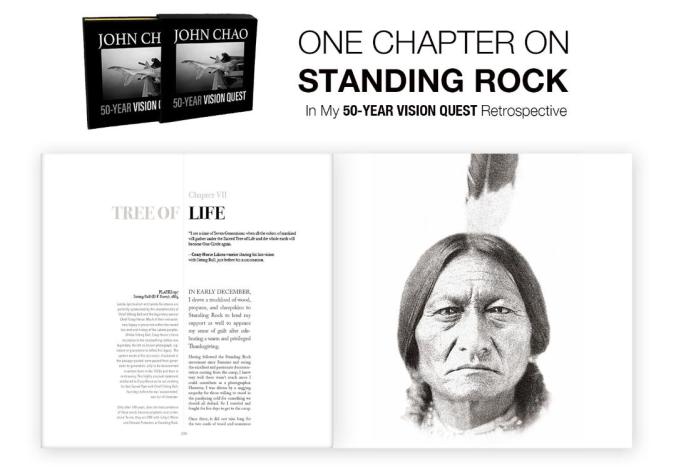 John Chao created this beautiful photography book and has a chapter about Standing Rock. Check it out. People who were there have their names listed. I am listed there and am very proud to say that I was there, I was a witness, I contributed, and I tried to help in any way I could by waking up my school community on Sacramento to what was going on in North Dakota.











 Water is Life