Day #3 Oceti Sakowin Camp and the Drive back to Bismarck.

I met Ashley and her friend, both were still suffering from the night before, and we presented the Sioux elders with the banner. They really loved the blue color and how large it was with all of the students’ signatures. We were told to hang it on the front fence of Oceti Sakowin Camp. So, with another water protector, off we went to look for a spot. Class, know that your banner is hanging on the front fence to Oceti Sakowin, making history, supporting the water protectors here.

000_0003000_0004

It is not allowed to take photos and videos in the camp, but I think you can see that there are thousands here. As the day wore on and we came back later, there were even more people coming and beginning to set up camp.

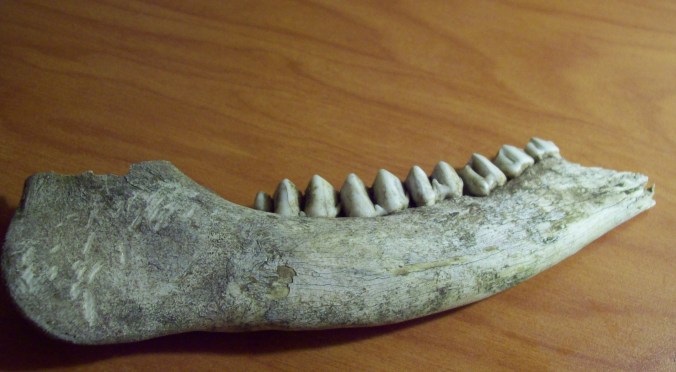
This item was found by the banner in the tall grass, they said it was a coyote jaw bone.

000_0009

On the way to Bismarck to pick up supplies, we stopped at a pizza restaurant in Mandan, because Ashley’s friend was wanting pizza for days. It kind of broke the tension from the attack the night before. Both said their throats hurt from the mace and pepper spray, both complained of their skin still burning, and Ashley’s friend was very sore from the rubber bullets he took.

https://drive.google.com/open?id=1G8I6XXFHuF8EV3u04v_bmwLt86OAHtDtAQ

We could still find something to laugh about, which is our strength.

When we reached the Walmart in Bismarck, I met Vince again. He was happy to see me! We also saw some fellow water protectors in the store shopping for supplies. All of the people in the store were looking at us like we were from another planet. I made friends with another employee, he was from Liberia, Africa. He said he had only been in North Dakota for a few months. We bought first aid items like saline solution, beef, bacon, a large turkey, paper, pens, and markers, . Also, greens, lemons, honey, apple cider vinegar, coffee, coconut oil, scarves, and toilet paper. Basically, items for the three major units of the camp; the kitchen, the first aid tent, and the banner/poster group. In addition, we bought tobacco for gifts to the elders. The tradition is, if you want to speak to an elder you give them a gift. Natural tobacco and sage is considered appropriate. The total came to over $300.00. I also cash advanced $60.00 for gas and purchased lens wipes, extra batteries, and the all useful backscratcher.

Then there was the long drive back to the Oceti Sakowin Camp. I got turned around in Mandan, used the opportunity to get gas, then found my way again. It is truly dark, the clouds kept the stars covered and I could only see as far as the headlights on parts of the road. I dropped Ashley, her friend, and the supplies off, then I drove the very long way back to Bismarck. I got home at 12.45 a.m. It had been a very long day.

Day#3 Sacred Stone Camp, North Dakota

Monday, November 21, 2016   It was a cold somber day. I had been up all night watching the horrible actions of the Morton County Sheriff’s Department and DAPL mercenaries, and National Guard?(really, our National Guard) firing on innocent civilians. I felt very worried about my new friend and how she was since she had just arrived at the camp that evening. I decided to drive out after making some calls, my personal finance stuff, and deliver the banner my school had signed. I left the hotel around 12:30 p.m. and it was a very long drive. North Dakota is a very vast landscape. There was a little blue sky peeking out from mostly a cloudy sky as I drove the roundabout way to the camp. This issue of roads will come up again. The main road 1806 is closed by DAPL and Morton County. Why? In order to protect the drill site and maintain an access route for delivering their equipment. What this means is that the bridge is barricaded and the route 1806 is closed. No emergency equipment can go straight through from Standing Rock to Bismarck which puts lives in jeopardy when and if there is a medical or natural emergency.  I had to take 94 north and go through Mandan, then take 6 south to 21 through Solen, then take 1806 north from the south to Sacred Stone main camp near Cannonball. The Oceti Sakowin camp is just a mile north of the main camp. What might be a 30 -40 minute trip is a little over an hour now.

Oceti Sakowin. Seven Council Fires. The proper name for the people commonly known as the Sioux is Oceti Sakowin, (Och-et-eeshak-oh-win) meaning Seven Council Fires. The original Sioux tribe was made up of Seven Council Fires.

Oceti Sakowin – Akta Lakota Museum & Cultural Center

aktalakota.stjo.org/site/News2?page=NewsArticle&id=8309

map-of-bismarcknd

from: Google Maps


000_0001

000_0002

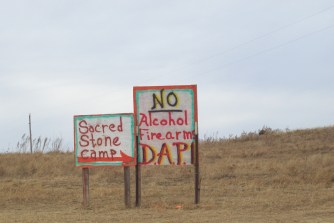
I arrived at the Sacred Stone main camp. I was met at the gate and a young woman gave me an orientation about the camp. It is very beautiful there, overlooking the Missouri River. While we spoke a police helicopter flew overhead. I was told where I could drop off the clothing I had brought. I drove on down the hill through the camp. Everyone was fixing their shelters, I saw very many vehicles from many states of the country, Wisconsin, Florida, Nevada, to name a few. There are no weapons allowed in the camp – that is stated on a sign right at the entrance. Everyone entering is greeted and asked what they are there for. You are encouraged to be self-sufficient and bring something to share. However, if you have nothing, others will share with you and you will not be turned away. I saw two women at the clothing drop off and spoke to them as I gave them the clothes I donated. They said there would be a ceremony on Sunday and that they would be at the concert at the Prairie Knights Casino http://prairieknights.com/ in Standing Rock.

casino

I was given directions to get to the Oceti Sakowin camp and was driving when I got a call from Ashley. She said she would meet me at the gate with her friend.

https://drive.google.com/open?id=1bSUk_5hCwcchIDkTX61Ax5IHagzvEMN_Ig


Day #2 Bismarck, North Dakota

Sunday, November 20th. I had to spend the entire day organizing and figuring out my technology. I had purchased a selfie stick, memory chips, a new camera and everything had just been thrown into my luggage.

As I was figuring this out, the cleaning staff came to clean the room. I opened the door and there was this guy in an old thin tee shirt and jeans. He talked as he gathered up the used towels and trash. He said he was from Florida and he was really tired because he was doing many jobs starting over here in North Dakota. He had no warm clothes. As he left I gave him a pair of waterproof pants, thermal bottoms, and winter gloves. He was so thankful. He did not have anything that was warm but now he had one less thing to worry about. I had purchased these items for the water protectors, but this guy needed warm clothes Now. In addition, Leah had told me that the camp had gotten many clothing donations already. Sometimes things just present themselves to you and you must act.

I ordered some new winter boots from Walmart and met Vince, I had to ask him where to pick up the boots. He is a Walmart greeter and has worked there for 10 years. He described how the snow does not come up as high on the building as it used to . He said they don’t have to plow the parking lot as often. He was a very friendly man who was very easy to talk to. He used to live on the rez but now lives in Bismarck.

Sunday, November 21, 2016  Evening: I was online with my Facebook friend Shay who had connected me with her friend from Massachusetts, Ashley Bays. Ashley was just arriving in the evening to the Oceti Sakowin camp and I was making arrangements to meet her afterwards so that we could go get needed supplies. However, it was getting late and I had not heard back from her. I was online at 7:30 p.m. as I watched in horror what was happening at the bridge. Here is the story as it unfolded and as I heard it from eyewitnesses – around 7:00 p.m. law enforcement from the other side of the barricade had sent over a flare that began a fire. Water protectors ran in to put out the fire. There were also water protectors removing some of the burned vehicles that was on the bridge in front of the razor wire and concrete barricade that DAPL and law enforcement had erected behind this mess. In the photos and video, the razor wire and barricade is clearly seen. People dressed in regular winter gear are not going to get over that wire. That is just common sense observation. Men dressed in full riot gear, helmets, and armed are not going to get hurt from a bunch of everyday citizens who are unarmed, some of whom are elderly, all who are untrained in military tactics. It is laughable and misleading to state otherwise what can be so plainly observable.

From Digital Smoke Signals/Myron Dewy

The background story, from some water protectors I spoke to, is that this was setup to be a distraction from the actual beginning of drilling going on at night behind the barricade. Without permit to do so, having been told on November 14th by the Army Corps of Engineers to stop, DAPL is beginning to drill and had brought in parts of the drill to tunnel under the river. A witness at the Sacred Stone main camp told me that at night they have begun to hear booming and feel vibration in the ground from the other side of the hill from the construction. So, a confrontation was staged to keep everyone focused on something else. A confrontation was staged so that there is an excuse to call in more military and more law enforcement – which is exactly what was done the very next morning by Morton County. Why on a Sunday evening? It became clear to me as I tried to make calls to TV networks and government offices about what was happening that all offices were closed. Here is the story about Sophia Wilansky, an unarmed water protector who got shot in the arm with one of the many concussion grenades being shot at the people that night.


I saw the water cannons being aimed at the crowd of people, I saw the smoke of the mace being sprayed on the people, I saw the people crowded on the bridge and medics carrying people who were overcome out to waiting cars and trucks. I saw people yelling and crying and hurting, I saw the officers laughing as they taunted and sprayed people. I saw a video of a man who had been hit in the head with a rubber bullet. I heard form witnesses who were there how it felt to not be able to breathe from the gas and the pepper spray. I saw an elder asking the officers why they were doing these things. I heard people swearing as they were hit or sprayed with mace. It was a total disgusting use of overwhelming force on our own citizens who are protesting an unlawful corporation operating on contested Federal land without a permit. As for fires – water protectors and medics quickly made small fires so that they could immediately warm people who were sprayed with the water. The water protector I spoke with said that he was freezing and stood close to the fire to warm but his waterproof pants melted, creating even more of a problem by his skin. As the medics and protectors made these fires to warm people, law enforcement sprayed those fires out and sprayed the medics. The temperature was 21 degrees https://www.timeanddate.com/weather/usa/bismarck/historic  To prevent hypothermia, these people doused with water had to be warmed. They were far from the camp and had to be warmed right where they were. The cowardly actions of law enforcement spraying people with water on a night with temperatures below freezing, and laughing about it like it was a game is despicable. I was horrified. I was worried about people I knew were there.

More Information:

https://www.adn.com/nation-world/2016/11/21/officials-defend-use-of-water-cannons-on-protesters-in-freezing-weather/

Listen to an Interview: http://m.democracynow.org/stories/16847

Guess what. We all need water and no one is going to go away. People will continue to pray, more people are going to support and arrive and write letters, and make calls, and demand justice for every injustice done. This is the message I got as I spoke to people in the camps. People are fighting for their lives and their water, nonviolently.


Day #1 Trip to Standing Rock

11/18/2016  I prepared for bad, cold weather by purchasing thermals, warm clothes, and a down jacket. I purchased extra and large sizes so that I can give these items away when I leave the day before departure. I also purchased more memory for my devices and a better camera. I thought I had plenty of time to get packed, the car was not going to pick me up for the airport until 3:25 a.m. Ha, ha, no! I was not even ready and was just stuffing stuff into my bag as the car drove up. I had to get the driver to carry my bags from upstairs because they were so heavy with the winter clothing.

11/19/2016  SMF Airport: Every person there had their heads into their phones. I thought it was funny because I could plainly hear the announcement about keeping one’s eye on one’s bag being played over and over and no one was doing that.

I had to pay an extra $150.00 for the long banner because of its length and I had to check it in as extra baggage.

I embarked and as I walked down the aisle, I could see dawning fear on every face where there was an empty seat. Seriously. I was not being paranoid. I know I am a large woman, but really! It was not a welcome feeling. I am not that large that I would be spilling over into anyone’s space.  Change fear, more like horror. I had paid extra for seats with extra legroom. I had an aisle seat next to two other women. I could see a beautiful dawn as the plane flew over mountains with covered snow. The two women next to me were both on a device throughout the whole flight, one seemed to be typing her dissertation on a tablet. No one spoke.

Except for a guy sitting directly behind me. Was it nerves that kept him talking? He talked throughout the entire flight. He was speaking to the man sitting next to him, but that man was not saying much as the other guy kept talking from one subject to another. The subject seemed to be “Things I Hate” because it was one complaint after another. The topics around this theme were; restaurants, travel, late and delayed flights, news, politics, and weather. I tuned him out until all I remember is blahblahblah and blah.

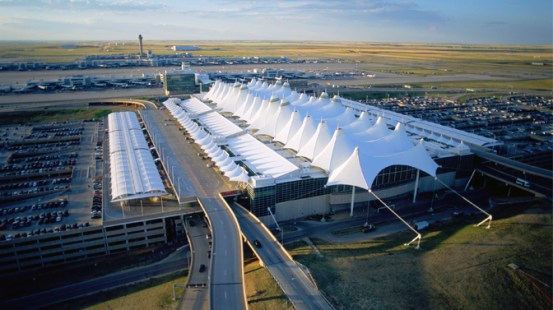
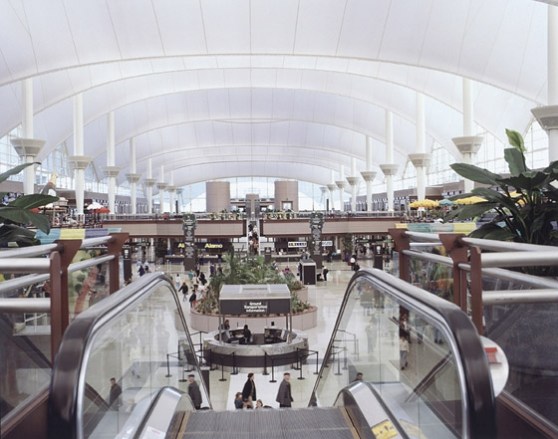
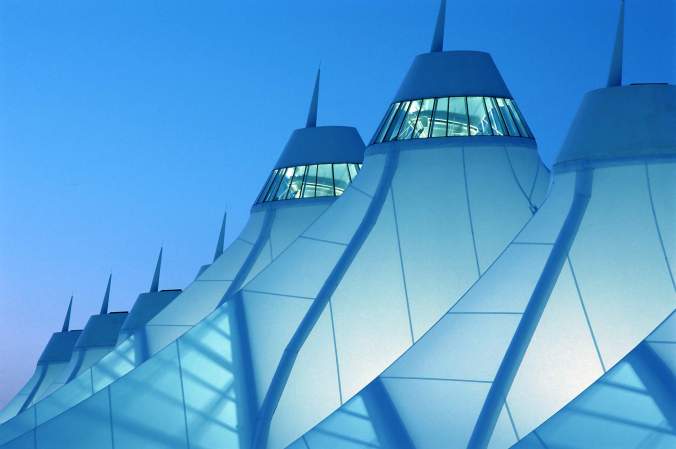
Arrived in Denver…and it was cold!  airport3

dia-terminalfentress-denverairport-03bg_splash2opt_0

img_20161119_091130240

https://drive.google.com/open?id=1LMyf61LbiKi5MDhs80wcq-TgaN4oc16pOg

**Notice what most people were doing in front and behind me! LOL  I felt everyone knew I was from California because I was the only one wearing a funny wool hat.

Bismarck, North Dakota To board the plane to Bismarck I had to first get all the way across the entire terminal and was very lucky that they have small shuttle cars that can drive you there! The man who drove the shuttle truly loved his job as he wove through people walking, honking his little horn. I sat next to him in the front seat so we began talking. He told me that he had been in the military, that he was originally from California, and he and his wife loved Colorado since they moved there almost 10 years ago. He also liked to dress up as Santa during the Christmas holidays as he drove the shuttle. This man truly loved his job!

people-passengers-riding-motorized-carts-airport-dia-den-denver-international-co-45420859Example of the airport shuttles.

After waiting for boarding, I discovered that one does not just walk down a tube to the plane door! No! I had to walk down two flights of stairs, then down a very long hallway in the opposite direction, then outside across the tarmac to a ramp up to the plane door. I was carrying two heavy carry on bags! Well, I was very glad to spy an attendant with a wheelchair who got me down the hallway to the plane ramp! It was cold, windy, and icy outside!

The plane was a small regional jet and I was really crammed in even though I paid for extra leg room. I do not think I would have fit into a regular seat! So, as I tried to belt myself in, (thank God for belt extenders!) a woman sat next to me. Her name was Leah Fool Bear and she worked for the Standing Rock Sioux Reservation. What luck! We began talking about what was happening with the pipeline, how people do not understand how the indigenous really feel about this injustice, how genetic trauma is a very big problem for a people who were almost wiped out in a genocide that the U.S. still does not want to talk about or acknowledge. Then we shared stories of our own experiences with racism, trying to raise a family, trying to be successful in a racist society, and what we hoped for in the future. I learned a great deal from her about what was needed in the camps at Standing Rock and what attitude one should bring when they arrive. If you are reading this Leah Fool Bear, I truly am glad to have met you and will keep in touch.

https://drive.google.com/open?id=1h98oZpCcQRIhWmknjnY7Hsd6ZPyNzyR9Fg

https://drive.google.com/open?id=1lR7Cioxk2mHfqpAibczpUcssZX6sLGvBWA

Once in Bismarck, I picked up my bags and the box with the banner, then proceeded to pick up the car rental. The agent asked me why I was in Bismarck. I have never been asked this question during past travels and I did not hear him ask others in line either. I just told him I was doing nature photography.

The small SUV I got was a Nissan Rogue. When the agent gave it to me, it was already running. There were no special instructions…more later!

2016_nissan_rogue_angularfront

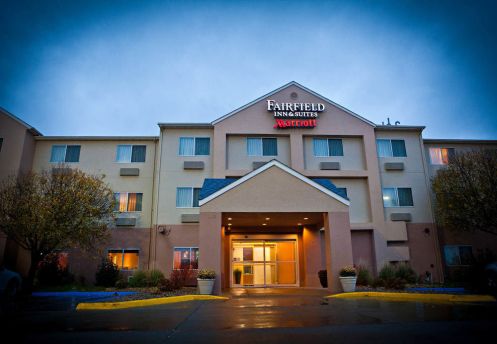
Fairfield Inn and Suites: I drove from the airport the short distance to the hotel. I registered at the front counter and the receptionist asked me why I was in Bismarck. Now, this was the second time I was asked about why I was there, and again, I never heard her ask anyone else who was registering this question. I told her I was a nature photographer.

By the time I got into my room, it was 5:30 p.m. and I was exhausted! I had not had anything to eat, so I ordered pizza delivered and I spent the evening organizing my suitcases – everything had been just thrown in. Then blissful sleep! What a day!

fairfield-inn


“Crazy Horse” by John Trudell

JOHN TRUDELL    
Crazy Horse Lyrics

We Hear what you say
One Earth, one Mother
One does not sell the Earth
The people walk upon
We are the land
How do we sell our Mother ?
How do we sell the stars ?
How do we sell the air ?
Crazy Horse
We hear what you say

Too many people
Standing their ground
Standing the wrong ground
Predators face he possessed a race
Possession a war that doesn’t end
Children of God feed on children of Earth
Days people don’t care for people
These days are the hardest
Material fields, material harvest
decoration on chains that binds
Mirrors gold, the people lose their minds
Crazy Horse
We Hear what you say

One Earth, one Mother
One does not sell the Earth
The people walk upon
We are the land.
Today is now and then
Dream smokes touch the clouds
On a day when death didn’t die
Real world time tricks shadows lie
Red white perception deception
Predator tries civilising us
But the tribes will not go without return
Genetic light from the other side
A song from the heart our hearts to give
The wild days the glory days live

Crazy Horse
We Hear what you say
One Earth, one Mother
One does not sell the Earth
The people walk upon
We are the land
How do we sell our Mother
How do we sell the stars
How do we sell the air

Crazy Horse
We hear what you say
Crazy Horse
We hear what you say
We are the seventh generation
Lyrics from http://www.elyrics.net

Whose Land (Water) is it Anyway…

Read and prepare to be upset. This is the mild version of events. Long ago, I wandered the stacks at college and read the primary source material, fort logs, memoirs, journals. It is not for the faint of heart. The land we are destroying, polluting, developing (into what?) is all stolen land. Taken by force and taken by trickery. It does not belong to us. It is here for all to care for and protect, and this is the message of Standing Rock. Once people understand this, they will totally “get it.” There are no protestors, there are water protectors. They are making a stand to help us change our paradigm of ownership and destruction, a paradigm that is literally killing us and not providing for the seventh generation.

http://ic.galegroup.com/ic/uhic/ReferenceDetailsPage/ReferenceDetailsWindow?failOverType=&query=&prodId=UHIC&windowstate=normal&contentModules=&display-query=&mode=view&displayGroupName=Reference&limiter=&currPage=&disableHighlighting=false&displayGroups=&sortBy=&search_within_results=&p=UHIC%3AWHIC&action=e&catId=&activityType=&scanId=&documentId=GALE%7CCX4019400066&source=Bookmark&u=oak30216&jsid=664cf2effc578c7cb615d3d53e5a1ae1

Seven generation stewardship is a concept that urges the current generation of humans to live and work for the benefit of the seventh generation into the future.[citation needed] It originated[citation needed] with the Iroquois – Great Law of the Iroquois – which holds appropriate to think seven generations ahead (about 140 years into the future) and decide whether the decisions they make today would benefit their children seven generations into the future. It is frequently associated with the modern, popular concept of environmental stewardship or ‘sustainability’ but it is much broader in context (see the quotation below relative to “in ALL your deliberations …”.

“In every deliberation, we must consider the impact on the seventh generation… even if it requires having skin as thick as the bark of a pine.” This is an often repeated saying, and most who use it claim that it comes from “The Constitution of the Iroquois Nations: The Great Binding Law.”

In fact, the original language is as follows: “In all of your deliberations in the Confederate Council, in your efforts at law making, in all your official acts, self-interest shall be cast into oblivion. Cast not over your shoulder behind you the warnings of the nephews and nieces should they chide you for any error or wrong you may do, but return to the way of the Great Law which is just and right. Look and listen for the welfare of the whole people and have always in view not only the past and present but also the coming generations, even those whose faces are yet beneath the surface of the ground – the unborn of the future Nation.”

Oren Lyons, Chief of the Onondaga Nation, writes: “We are looking ahead, as is one of the first mandates given us as chiefs, to make sure and to make every decision that we make relate to the welfare and well-being of the seventh generation to come. … What about the seventh generation? Where are you taking them? What will they have?” [1]https://en.wikipedia.org/wiki/Seven_generation_sustainability

Network News…when it does occur

http://kstp.com/news/dakota-access-pipeline-oil-water-north-dakota-access-crude-oil-pipeline/4317952/?cat=1

The closer the news source to North Dakota, the more the news leans to supporting the corporation. The indigenous are portrayed as delaying progress and jobs. Whenever I view the videos, I practice a technique we call “close reading”. Do not listen to the narrative, view closely what you actually see. There are no videos of any water protectors with weapons, there are no reports of any officers being hurt, the only thing you see is overwhelming force being used against peaceful men, women, and children. Yes, children and elders are there. I found it comical that this report implies the indigenous are “squatting” on federal land and the reporter asks “can’t they just kick them off”.

http://sacredstonecamp.org/

http://www.npr.org/sections/codeswitch/2016/09/10/493110892/at-the-sacred-stone-camp-a-coalition-joins-forces-to-protect-the-land

From an interview:https://itsgoingdown.org/conversation-on-sacred-stone-camp/

NF: When and how was the Sacred Stone Camp established?

AP: The camp is at the confluence of the Cannonball and Missouri Rivers. This is important location for the Mandan origin story as the place where they came into the world after the great flood. Where the two waters meet, created Iŋyaŋ Wakháŋagapi Othí, spherical Sacred Stones (thus the colonizers’ term ‘Cannon Ball River’), but after the Army Corp of Engineers dredged and flooded the rivers in the 1950s, the flow has changed and Sacred Stones are no longer produced. The camp is surrounded by historic burial grounds, village grounds and Sundance sites that would be directly impacted by this pipeline. The water of the Missouri River is essential to life on the Standing Rock Reservation as well as all of the nations downstream. On April 1st, 2016, a group of over 200 supporters, led by forty riders on horse, under the Lakota name, “Chante tin’sa kinanzi Po”, which translates as “People, Stand with a Strong Heart!” left Fort Yates for a thirty mile trek to the camp located just north of Cannonball, North Dakota. They setup up tipis and a sacred fire. This camp has swelled in the past two months and has had multiple satellite camps across the river on private as well as unceded land on both sides of the river.

NF:  How has the camp’s location on private land affected its character?  I would imagine the fact that it’s on private land gives it some protection against police but also means that if folks at the camp did engage in any illegal activities the land owner would be in a vulnerable position with regards to legal repression.  Is that a concern?  Does the person who owns the land have more say than others about tactics or daily matters at the camp?  What does the decision making process look like?

AP: The question of “private land” is especially difficult to address when we factor in Reservations (or what the U.S. Empire originally called and created them for, Prison of War Camps). The reservations are actually Federal Land. This means that local county and state police cannot enter it. A huge reason why Dakota Access (the company) is not building the pipeline thru the rez but literally a couple hundred meters north of it. When the reservations were created, imperial logic of “borderization” was imposed; meaning, the communal and nomadic lands used for Life were divided by borders: fencing for animal domestication, invisible lines drawn on maps to denote “property” i.e. who owns what, etc. This fundamentally changed people’s relation to land. And this set up the infrastructure/hierarchies for surveillance and policing. The camp exists in a way that resists this imperial imposition. We share food and water without hesitation. We have no leader. We all have knowledge to share and learn from each other. We recognize that the borders we build between ourselves are not “natural” anymore than the flooding in the 1950s by the Army Corps of Engineers is. They do not spread our Wildfire, so we continue to keep the eternal flame lit. Instead of framing things in colonial terms of “legal/ illegal”, it makes more sense at the camp to think in terms of effectiveness; effectiveness of stopping this genocidal project so the people can reclaim their Way of Life.

ETSI: Energy Transportation Systems, Inc. and Energy Transfer Partners, L.P.

Executives of the railroads, which until then shipped out all Powder River Basin coal, were not enthusiastic. ETSI was a joint venture of Bechtel, Lehman Brothers Kuhn Loeb, Kansas-Nebraska Natural Gas Co., United Energy Resources and Atlantic Richfield.[1] Frank Odasz, who was ETSI’s chief representative and lobbyist in the Rocky Mountain region for the project, explained Burlington Northern Railroad was initially a minor investor. “I think they did it just to spy on us,” he said.[2]

http://www.wyohistory.org/essays/coal-slurry-idea-came-and-went

coalslurry3

Look familiar????

http://law.justia.com/cases/federal/appellate-courts/F2/606/934/441399/

A copy of law documents from litigation between ETSI and Union Pacific Railroad.

This is a link to the environmental impact study by ETSI in 1981. The coal slurry pipeline project.  https://archive.org/details/finalenvironmentim01unit


What happened to ETSI?  http://www.wrlj.com/about-us-2/history/

Find out here: http://www.wrlj.com/  They just transport water!     

Energy Transfer Partners, L.P wants to take up what ETSI left behind; the fight to run pipelines through land that does not belong to them. http://www.energytransfer.com/ownership_overview.aspx

https://en.wikipedia.org/wiki/Dakota_Access_Pipeline

http://www.daplpipelinefacts.com/

Click to access DAPL_States_Counties.pdf

Broken Promises, broken treaties…

Flooding

In the 1960s, the Army Corps of Engineers and the Bureau of Reclamation built five large dams on the Missouri River, and implemented the Pick–Sloan Missouri Basin Program, forcing Native Americans to relocate from flooded areas. Over 200,000 acres on the Standing Rock Reservation and the Cheyenne River Reservation in South Dakota were flooded by the Oahe Dam alone. As of 2015, poverty remains a problem for the displaced populations in the Dakotas, who are still seeking compensation for the loss of the towns submerged under Lake Oahe, and the loss of their traditional ways of life.[12]

**see page 65 of the Pick-Sloan Missouri Basin Program…

Quote: “Control of the water of the west is control of the west.”

**see page 151    About a pipeline by ETSI, Energy Transportation Systems ,Inc. September 1981 – You will find that #1 In the whole paper up to this page there is no mention of indigenous people, even though the water projects directly affected them, and #2 This issue of pipelines is a long one  and in 1981 there is a total repeat of what is happening currently. The similarities are eerie.

**page 155-156 Below is where the case went to the Supreme Court to determine if the state could grant permission about building on Army Corps land without permission from the Army Corps. The court said no, only the Secretary of the Army could issue such permission. This has direct implications to the current issue of the DAPL construction being carried out without permission, yet they have state and local police enforcing the construction.

PeckSloanDoc.jpg

**page. 166   Begins to go into detail how the Pick-Sloan Program did not consider indigenous water rights. This had led to constant issues revolving around Lake Oahe – the largest water reservoir created under Pick-Sloan on the Missouri. The Winters-Doctrine holds that indigenous land rights are linked to water rights. This a good fact to remember.

Reading the Pick-Sloan Missouri Basin Program is a must read to understand how U.S. laws and government agencies were used against the indigenous to further the profits of individuals and corporations. This document is filled with the back-room deals, the use of timing to hurry something through legislation, and the favors granted to personal friends in terms of backing certain programs, construction, and permits.