I thank you for always standing with the Lakota people. Your attention to the work my father, Chase Iron Eyes, does on behalf of our tribal nations means more than I can say. Recently, I joined my dad, my auntie Madonna Thunder Hawk, and Lakota Law’s chief counsel Daniel Sheehan for an amazing Zoom session with The Nation Magazine. We’ve produced a short video with key outtakes. Please take a look!
Our friendship with The Nation has translated not only to excellent press coverage and great online events like this Zoom conference, but, in addition, the magazine has become sort of a sponsor for Lakota Law’s Native-run foster home on Standing Rock Nation. The home currently houses five children in need and has already provided shelter and safety for many more since the beginning of the year. Now that summer has arrived, the team has been busy devising ways to get the kids out into nature where they can be active and engaged while remaining safe during the pandemic.
I count myself fortunate not to rely on such assistance, and we must continue to work together on making sure all our vulnerable populations stay out of harm’s way. Much of our video focuses on our two recent wins against the Dakota Access and Keystone XL pipelines, wonderful for our frontline communities at Standing Rock, Cheyenne River, and here at Pine Ridge. Those victories show me that what we do together works. But as Auntie Madonna says, we also know these battles are ongoing.
To her point, on Tuesday, the U.S. Court of Appeals for the District of Columbia Circuit issued an administrative stay temporarily preventing the DAPL shutdown from taking effect. So the oil will keep flowing after all — for the moment — and Standing Rock has until Monday to file new briefs.
We have to stay strong, and we mustn’t get complacent. Just last week, we got two pieces of great news. Now, we see again how hard it is to win this fight. That’s why we need to continue to stand together — across generational, racial, and all artificially constructed boundaries — and, if we do, I have faith that there’s no limit to what we can accomplish.
Wopila tanka — my gratitude for your attention and care!
Tokata Iron Eyes
Via the Lakota People’s Law Project
Lakota People’s Law Project
547 South 7th Street #149
Bismarck, ND 58504-5859
The Lakota People’s Law Project is part of the Romero Institute, a nonprofit 501(c)(3) law and policy center. All donations are tax-deductible.
NCAI Statement on Legal Filing by Mandan, Hidatsa and Arikara Nation Regarding Illegal Taking of Nation’s Missouri Riverbed Property Rights
WASHINGTON, DC | Today, the Mandan, Hidatsa and Arikara Nation (MHA Nation) took steps to prevent the illegal taking of the Nation’s property rights to minerals beneath the Missouri River on its Fort Berthold Reservation in western North Dakota. The National Congress of American Indians (NCAI) holds firm its position in support of the MHA Nation’s land and mineral rights, and has advocated for government-to-government consultation between the MHA Nation and the Department of the Interior’s Office of the Solicitor to confirm the longstanding Executive and Congressional actions declaring that the Missouri River bed within the Fort Berthold Reservation is owned by the MHA Nation.
“The MHA Nation’s rights to the Missouri River bed minerals have been reaffirmed through a history of longstanding, well-settled, and still applicable legal precedents, and there should be no question as to the validity of the Nation’s claims,” says NCAI President Fawn Sharp. “We cannot reiterate strongly enough that consultation with tribal nations and upholding treaty obligations is not optional. It is mandatory.”
For these reasons, NCAI urges the Department of the Interior to immediately withdraw Solicitor’s Opinion M-37056 as an unwarranted threat to longstanding tribal trust assets. The fiduciary obligation of the United States is to protect and preserve tribal trust assets in order to ensure tribal nations have the resources needed to provide permanent homelands for present and future generations of their citizens. Instead, M-Opinion 37056 does the opposite, and completely reverses course on the Department of the Interior’s longstanding legal position with little or no rationale for doing so. NCAI stands with the MHA Nation in its fight to preserve its trust assets.
To view NCAI’s resolution on this issue, please click here.
###
About the National Congress of American Indians:
Founded in 1944, the National Congress of American Indians is the oldest, largest and most representative American Indian and Alaska Native organization in the country. NCAI advocates on behalf of tribal governments and communities, promoting strong tribal-federal government-to-government policies, and promoting a better understanding among the general public regarding American Indian and Alaska Native governments, people and rights. For more information, visit www.ncai.org.
Madonna Thunder Hawk, Lakota Law (info@lakotalaw.org)To:youDetails
Inconceivable! Energy Transfer Partners (ETP)—the parent company to the Dakota Access Pipeline—just announced that they will ignore Judge James Boasberg’s order to shut down oil flow through the pipeline by August 5th. An ETP spokesperson said in a statement yesterday: “We are not shutting down the line. We believe Judge Boasberg has exceeded his authority and does not have jurisdiction to shut down the pipeline.” Outrageous!
Perhaps they’re taking their inspiration from the father of the Trail of Tears, Andrew Jackson. In response to the 1832 Supreme Court decision that established tribal sovereignty in the U.S. — Worcester vs. Georgia — President Jackson declared: “[Chief Justice] John Marshall has made his decision. Now let him enforce it.”
But this is not 1832. And no matter how much Trump may want to do his best Andrew Jackson impersonation, we will not let him. We will not let this corporation, this pipeline, or this President trample on our sovereignty. It’s time to keep Indigenous voices as strong as possible in our collective defense of Mother Earth.
In 2016-17, more than ten thousand people of conscience traveled to Standing Rock to exercise grassroots power over commercial disregard for basic rights. We will stand again like this if we have to. And the Lakota Law legal team will explore options for submitting more amicus briefs to support Standing Rock and EarthJustice in court. One way or another, we won’t permit ETP to unilaterally disregard judicial decisions designed to protect Native health and sovereignty on treaty land. We will go toe to toe with Big Oil, and this time we will have the Constitution — not just Natural Law — clearly behind us.
Wopila — I thank you for your solidarity!
Madonna Thunder Hawk
Cheyenne River Organizer
The Lakota People’s Law Project
UPDATED 5:40 p.m. Eastern: ‘In holding the federal government to its treaty obligations, the U.S. Supreme Court put to rest what never should have been at question’
In a decision being hailed as a win for tribal sovereignty, the U.S. Supreme Court ruled Thursday that a large portion of eastern Oklahoma remains a reservation.
In the 5-4 decision, the nation’s highest court said Congress never explicitly “disestablished” the 1866 boundaries of the Muscogee (Creek) Nation.
“Today we are asked whether the land these treaties promised remains an Indian reservation for purposes of federal criminal law. Because Congress has not said otherwise, we hold the government to its word,” according to the majority opinion written by Justice Neil Gorsuch.
Gorsuch was joined in the majority by Justices Ruth Bader Ginsburg, Stephen Breyer, Sonia Sotomayor and Elena Kagan.
Jonodev Chaudhuri, Muscogee (Creek) Nation, said the decision is a huge win for Indian Country and a profoundly impactful day for the tribe.
“Many folks are in tears,” said Chaudhuri, ambassador of the tribal nation. “Despite a history of many broken promises, as is true with many tribal nations, the citizens feel uplifted that for once the United States is being held to its promises.”
Chaudhuri said the decision provides jurisdictional clarity and that the tribe will continue to work to improve the health, safety and welfare of tribal members and non-tribal members alike.
“Creek Nation has a long history of working with its local, state and federal partners to protect the interests of all people in its boundaries and the clarity brought by today’s positions will only enhance that,” he said.
Jonodev Chaudhuri, ambassador of the Muscogee (Creek) Nation. (Photo by Vincent Schilling, Indian Country Today)
In fact, the Oklahoma congressional delegation said in a joint statement that they are reviewing the decision and are ready to work with tribal and state officials. The group of legislators want to ensure consistency and stability in the application of law and bringing criminals to justice.
“Indeed, no criminal is ever exempt or immune from facing justice, and we remain committed to working together to both affirm tribal sovereignty and ensure safety and justice for all Oklahomans,” the delegation said.
Additionally the state, along with the Muscogee (Creek), Cherokee, Chickasaw, Choctaw, and Seminole Nations are working on an agreement to send to Congress and the Department of Justice addressing any issues related to the decision.
“The Nations and the State are committed to implementing a framework of shared jurisdiction that will preserve sovereign interests and rights to self-government while affirming jurisdictional understandings, procedures, laws, and regulations that support public safety, our economy, and private property rights,” the statement said. “We will continue our work, confident that we can accomplish more together than any of us could alone.”
Sarah Deer, Muscogee (Creek) Nation, expressed the same sentiment, saying that the sky is not falling on non-Native residents within the reaffirmed reservation boundaries.
“I think it’s a little too soon to know for sure what the ramifications will be outside the context of criminal jurisdiction,” said Deer, a professor at the University of Kansas. “I think that some of the media is overplaying it as, oh we’re going to start kicking everyone off of their land or something, but it will offer some new opportunities, I think, for the state and the tribe to collaborate to make everyone’s lives better.”
She was happy to see Gorsuch as the author of the court opinion with the first sentence carrying a lot of weight.
“As a Native person, as a Native attorney, you know, he starts out his decision with ‘On the far end of the trail of tears was a promise’ and, that very short sentence, I think it will make every Native person feel complete,” Deer said. “You know, that the court recognized that what happened to us was wrong but it’s time to make it right.”
The case has long kept Indian Country on pins and needles through two Supreme Court terms.
John Echohawk, Pawnee and executive director of the Native American Rights Fund, said the tribe endured a long and hard fight to protect their homelands.
“In holding the federal government to its treaty obligations, the U.S. Supreme Court put to rest what never should have been at question,” Echohawk said. “We congratulate the Nation on its success.”
Fawn Sharp, Quinault and president of the National Congress of American Indians, joined much of Indian Country in voicing support and congratulations to the tribe for their historic court win.
“This morning, NCAI joins the rest of Indian Country in congratulating the Muscogee (Creek) Nation and proudly asserting that its lands remain, and will forever be considered, Indian country – as guaranteed in their treaty relationship with the United States,” Sharp said in a statement.
Democratic U.S. Rep. Deb Haaland, Laguna and Jemez Pueblo, of New Mexico noted that Thursday’s decision sets an important precedent and affirms the federal government’s obligation to uphold and honor treaties.
“As we move forward addressing longstanding broken promises, this decision will serve as a marker to ensure the federal government honors its promises to Native Nations,” Haaland said.
The case involved tribal citizen Jimcy McGirt, Seminole, who was convicted of molesting a child but argued state courts lacked authority to try him for a crime committed on reservation.
The ruling means his case falls under federal jurisdiction. It does not mean McGirt’s conviction is nullified, rather he should have been tried in federal court under the Major Crimes Act. He is serving a 500-year prison sentence and could potentially be retried in federal court.
Ian Gershengorn, one of the lawyers who argued on behalf of the tribe in the May hearing, said in an emailed statement to Indian Country Today that the Supreme Court upheld promises made by the United States.
“The Supreme Court reaffirmed today that when the United States makes promises, the courts will keep those promises,” Gershengorn said. “Congress persuaded the Creek Nation to walk the Trail of Tears with promises of a reservation — and the Court today correctly recognized that this reservation endures.”
Robert Anderson, a law professor at the University of Washington School of Law, said in the larger scope of things the biggest changes will come in the future with the application of the Indian Child Welfare Act and the federal government prosecuting more cases.
“That’s what they [federal prosecutors] do in Indian Country all the time, is they prosecute cases where there’s an Indian defendant or whether there’s an Indian victim,” Anderson said. “It’s routine. And the fact that they haven’t been doing that for the last 100 years just shows us that a lot of people weren’t following the law, which is not unusual in Indian law.”
Cherokee Nation Principal Chief Chuck Hoskin Jr. reiterated that fact in an emailed statement to Indian Country Today.
“This ruling does not mean that those who commit crimes on reservation lands will not face justice, no tribe would ever welcome that, and now we will continue to work with the state of Oklahoma and our federal and tribal partners on legal parameters under the decision today,” Hoskin Jr. said.
Among the justices, Anderson said he felt Gorsuch was the swing vote among the nine justices.
Anderson, Bois Forte Band of Ojibwe, spoke with Indian Country Today before the decision was handed down. He thought Gorsuch’s questions during arguments in the case indicated he was “very much in the tribe’s camp.”
McGirt v. Oklahoma was granted review by the court and tied to an earlier case heard during the 2018 term. In that case, Carpenter v. Murphy, Gorsuch recused himself as he had already ruled on the case during his time on the 10th Circuit Court of Appeals.
Anderson added that Gorsuch, with his time served on the 10th Circuit Court of Appeals, and Sotomayor, through her own interest and undertaking, are the two justices with the most background and experience in federal Indian law.
At the time, Anderson said they most likely would have some sort of influence over their colleagues.
“It’s just human nature to defer to somebody to some degree who’s an expert in an area, I would hope, even on the Supreme Court,” Anderson said. “It’s interesting that, you know, Justice Gorsuch is a very conservative and Justice Sotomayor is probably the most liberal, and they seem to be on the same page on these Indian law cases, which is great.”
In the minority were Chief Justice John Roberts, along with Justices Clarence Thomas, Samuel Alito and Brett Kavanaugh. Roberts filed the dissenting opinion, joined by Alito and Kavanaugh and Thomas also filed his own.
Roberts wrote that the decision is not warranted and took the view that over the years, Congress disestablished the Creek reservation through a series of statutes leading up to Oklahoma statehood.
“What has gone unquestioned for a century remains true today: A huge portion of Oklahoma is not a Creek Indian reservation,” Roberts wrote.
At the May hearing in the case, several justices raised concerns that a ruling in favor of the tribe could have broad jurisdictional ramifications on things like taxes and other criminal cases. But Gorsuch indicated that so far, no signs of major consequences had emerged.
In the opinion, Gorsuch wrote that the federal government promised the Muscogee (Creek) Nation a reservation in perpetuity. While the reservation has been diminished over time, it was never explicitly disestablished.
“Yes, promises were made, but the price of keeping them has become too great, so now we should just cast a blind eye. We reject that thinking. If Congress wishes to withdraw its promises, it must say so. Unlawful acts, performed long enough and with sufficient vigor, are never enough to amend the law,” Gorsuch writes. “To hold otherwise would be to elevate the most brazen and longstanding injustices over the law, both rewarding wrong and failing those in the right. The judgment of the Court of Criminal Appeals of Oklahoma is Reversed.”
This story is breaking, stay tuned for more updates and information at indiancountrytoday.com
Kolby KickingWoman, Blackfeet/A’aniih is a reporter/producer for Indian Country Today. He is from the great state of Montana and currently reports and lives in Washington, D.C. Follow him on Twitter – @KDKW_406. Email – kkickingwoman@indiancountrytoday.com
Indian Country Today, LLC., is a non-profit, public media enterprise. Reader support is critical. We do not charge for subscriptions and tribal media (or any media, for that matter) can use our content for free. Our goal is public service. Please join our cause and support independent journalism today. We have an audacious plan for 2020 and your donation will help us make it so. #MyICT #MyVoiceMyICT #SocksAlot
Prime Minister Justin Trudeau’s government approved Trans Mountain in 2016 and was so determined to see it built that it bought the pipelineRob Gillies
Associated Press
TORONTO — The Supreme Court of Canada on Thursday dismissed an appeal from British Columbia First Nations against the Trans Mountain pipeline expansion that would nearly triple the flow of oil from the Alberta oil sands to the Pacific Coast
The court dismissed the appeal from the Squamish Nation, Tsleil-Waututh Nation, the Ts’elxweyeqw Tribes and Coldwater Indian Band, effectively ending the years long legal battle over the project.
The pipeline would end at a terminal outside Vancouver, resulting in a sevenfold increase in the number of tankers in the shared waters between Canada and Washington state.
Some First Nations successfully halted federal approval of the project in 2018 when the Federal Court of Appeal said Ottawa had failed to properly consult affected First Nations, which argued that the project would damage their lands and waters.
Tsleil-Waututh Chief Leah George-Wilson and Syeta’xtn of the Squamish Nation will be hosting a virtual news conference later Thursday.
But in February the same court dismissed another challenge by the same groups against the government’s June 2019 decision to approve the project a second time after another round of Indigenous consultation.
As usual, the Supreme Court gave no reasons for Thursday’s ruling.
Prime Minister Justin Trudeau’s government approved Trans Mountain in 2016 and was so determined to see it built that it bought the pipeline.
It still faces stiff environmental opposition from British Columbia’s provincial government but construction is underway. Natural Resource Minister Seamus O’Regan said consultations will continue as construction continues.
“To those who are disappointed with today’s SCC decision — we see and hear you,” O’Regan said in a statement. “The Government of Canada is committed to a renewed relationship with Indigenous people and understands that consultations on major projects have a critical role in building that renewed relationship.”
The pipeline would allow Canada to diversify oil markets and vastly increase exports to Asia, where it could command a higher price. About 99 percent of Canada’s exports now go to refiners in the U.S., where limits on pipeline and refinery capacity mean Canadian oil sells at a discount.
It’s time to celebrate for a second day in a row, because we have amazing news from the U.S. Supreme Court. Yesterday late in the day, SCOTUS announced its ruling effectively halting construction of the Keystone XL pipeline (KXL)! Based on the Endangered Species Act, the Supremes upheld a lower court ruling preventing the pipeline from crossing domestic waterways. This is on top of Monday’s court decision to shut down oil flow through DAPL, making yesterday a truly good day for the environment and Indigenous sovereignty.
Let’s be clear: TC Energy, the pipeline’s operator, is not going to take this lying down. This is not KXL’s death-knell. So, we need to remain vigilant. For now, the Supreme Court has simply let stand U.S. District Court Judge Brian Morris’ injunction against construction while the 9th Circuit Court of Appeals reviews the pipeline company’s appeal.
It’s likely there will be further legal wrangling and attempts by TC Energy to circumvent proper environmental review. We can expect the same from the Trump administration, should Trump be re-elected in November. On the other hand, Joe Biden has publicly pledged that his administration will cancel KXL, should he win the presidency.
For now, we can be thankful. Construction of KXL will remain stopped — a win for Unci Maka, our Grandmother Earth, and for our Lakota families here on the front line. We can be grateful that our people will retain access to clean water and a measure of safety from man camps, which might otherwise have spread COVID-19 and contributed to our epidemic of missing and murdered Indigenous women and girls.
I thank you for standing with us against KXL so far. We’ll keep you informed of all developments going forward — and I hope I can count on you to stay with us, come rain or shine.
Wopila tanka — My sincere gratitude for your spirit and resolve!
Chase Iron Eyes
Lead Counsel
Via The Lakota People’s Law Project
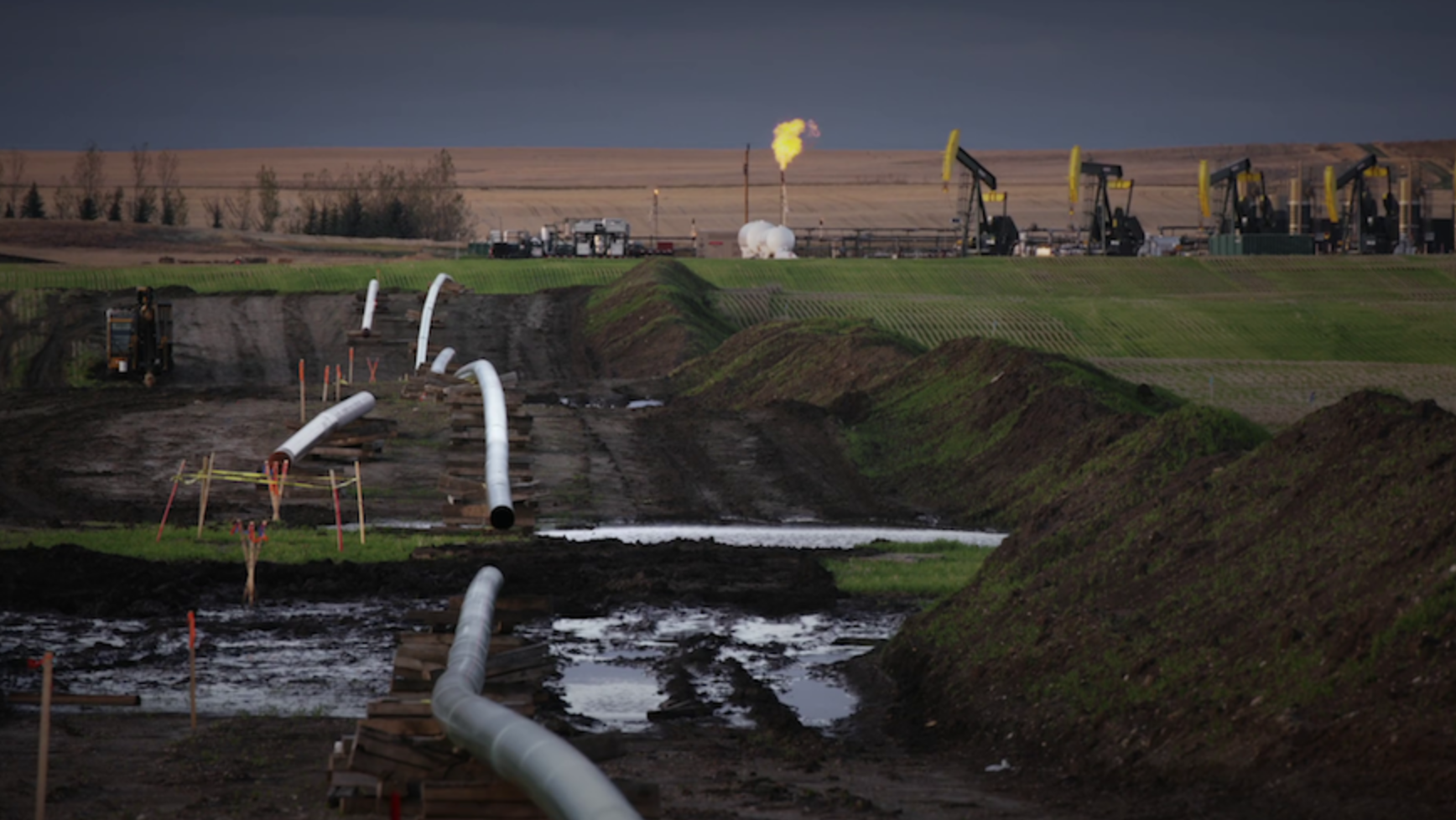
I have great news: this morning, District Court Judge James Boasberg ordered the Dakota Access Pipeline (DAPL) to be shut down within 30 days! In this momentous ruling, Judge Boasberg found that the Army Corps of Engineers failed to fully consider the environmental impacts of Energy Transfer’s crude oil pipeline, and that there were too many safety concerns to allow its continued operation. While this order only shuts DAPL down for 13 months while the Army Corps completes additional environmental assessments and safety planning, there is a good chance that when the oil is drained in 30 days, that oil will never flow again!
Shares in DAPL’s parent company—Energy Transfer Partners—dropped 7% today.
We commend the Standing Rock Sioux Tribe, the Cheyenne River Sioux Tribe, and their legal team at EarthJustice for years of dedication and persistence in this struggle to defang the Black Snake. And we are proud of the amicus brief that our legal team submitted in the lead up to this decision. We’re also elated that Judge Boasberg cited many of the questions we and our allies have raised since the beginning of the NoDAPL struggle. First, that it’s simply wrong to conduct an environmental assessment of a pipeline after it’s already been built. Second, that DAPL’s leak detection abilities are so poor it could be leaking more than 6,000 barrels of oil every day without detection, and Energy Transfer’s abysmal pipeline safety record raises that risk even further. Third, that there is no proper cleanup plan for a wintertime spill, when freezing Dakota winters make response the most difficult. Boasberg even went one step further, concluding that the drop in oil demand due to the COVID-19 pandemic makes shutting down the pipeline now less harmful to North Dakota’s economy.
So what comes next? First, Energy Transfer has to drain and shut down DAPL by August 6th. The Army Corps of Engineers then has 13 months to further study potential pipeline leaks and the dangers they pose. This ruling could still be appealed in the Federal District Court of D.C., but our analysis tells us that such an appeal is unlikely to succeed.
Thank you to each and every one of you for your tireless support, and for staying with us throughout this journey.
Wopila tanka — Thank you for standing with us to protect our water, our land, and our families!
Madonna Thunder Hawk
Cheyenne River Organizer
The Lakota People’s Law Project
P.S. This has truly been a week of good news: just yesterday the Atlantic Coast Pipeline, slated to run from West Virginia to North Carolina, was canceled. In a joint statement, Dominion Energy and Duke Energy cited ongoing delays, expected cost increases, and legal challenges from environmental and other groups as threats to the project’s viability. The trend away from fossil fuels is becoming stronger with each passing day, thanks to your activism and the support of so many others like you.
Great Plains Tribes Win Important Legal Fight to Protect Tribal Water and Treaty Resources
The Great Plains Tribal Chairmen’s Association (GPTCA), the Native American Rights Fund (NARF), and the National Congress of American Indians Fund (NCAI Fund) applaud the D.C. District Court’s decision today to vacate the U.S. Army Corps of Engineers’ Lake Oahe easement for the Dakota Access Pipeline, and to require the removal of all oil flowing through the pipeline by August 5, 2020. This decision ensures that the treaty-reserved rights of the plaintiff tribes – the Standing Rock Sioux Tribe, the Cheyenne River Sioux Tribe, the Yankton Sioux Tribe, and the Oglala Sioux Tribe – are adequately addressed, along with any other land and natural resource considerations, in a full-fledged and well-documented environmental review process.
GPTCA, NARF, and NCAI Fund participated in a coalition of Native organizations submitting an amicus brief in support of the plaintiff tribes during the latest proceedings in the D.C. District Court and are encouraged by this outcome. We hope that this decision helps pave the way for full and proper environmental impact studies as well as meaningful consultation with tribal nations that have direct or indirect stewardship over the lands under review. Our organizations will continue to work to ensure that every time tribal lands and resources are at stake, the environmental review processes meet all legal standards and respect the federal government’s trust obligations to tribes set forth in federal laws.
###
About the Great Plains Tribal Chairman’s Association:
Great Plains Tribal Chairman’s Association is made up of the 16 Tribal Chairmen, Presidents, and Chairpersons in the states of North Dakota, South Dakota, and Nebraska. Their purpose is to provide a forum for sharing information on matters of interest to its member Tribes, develop consensus on matters of mutual importance, assist member Tribes in their governmental and programmatic development consistent with their goals for self-determination, and self-sufficiency and provide for effective public relations and education program with non-Indian communities. For more information, please visit http://gptca.net/index.html
About the National Congress of American Indians:
Founded in 1944, the National Congress of American Indians is the oldest, largest and most representative American Indian and Alaska Native organization in the country. NCAI advocates on behalf of tribal governments and communities, promoting strong tribal-federal government-to-government policies, and promoting a better understanding among the general public regarding American Indian and Alaska Native governments, people and rights. For more information, visit www.ncai.org.
About the Native American Rights Fund:
Founded in 1970, NARF is the oldest and largest non-profit dedicated to asserting and defending the rights of Indian tribes, tribal organizations, and individual Indians nationwide. For the past 50 years, NARF has represented over 275 Tribes in 31 states in such areas as tribal jurisdiction, federal recognition, land claims, hunting and fishing rights, religious liberties, and voting rights. For more information, visit www.narf.org.
Protesters gather in 2017 at the Virginia Department of Environmental Quality Harrisonburg office in Harrisonburg, Virginia, to speak out against the Atlantic Coast and Mountain Valley pipelines.Daniel Lin/AP
For indispensable reporting on the coronavirus crisis and more, subscribe to Mother Jones’ newsletters.
The Atlantic Coast Pipeline has been canceled, energy companies leading the project announced Sunday, citing “litigation risk” and uncertainty about the financial viability of the project.
The decision to abandon the pipeline is a win for Native American groups and environmentalists, who argued in a Supreme Court case last month that the pipeline was moving forward under an invalid permit issued by the US Forest Service, in addition to presenting a threat to the ecosystem and scenery. The proposed, 600-mile pipeline would have crossed the 2,200-mile Appalachian Trail, which runs through 14 states between Georgia and Maine. Ultimately, the court ruled in favor of the pipeline companies last month, upholding the permit.
On Twitter, Bill McKibben, founder of environmental group 350.org called Sunday’s announcement “enormous” and thanked the “powerful organizing by tens of thousands of great activists” who opposed the project. Former Vice President Al Gore, who also opposed the pipeline, echoed that sentiment in a statement, saying the move was a “testament to the power that exists in frontline communities across our nation.” (Activists are still fighting the nearby Mountain Valley Pipeline.)
Energy companies Dominion Energy and Duke Energy announced the Atlantic Coast Pipeline in 2014, and although they had already invested more than $3 billion into it, according to the Wall Street Journal, it would have cost an estimated $8 billion in total had it moved forward. “This announcement reflects the increasing legal uncertainty that overhangs large-scale energy and industrial infrastructure development in the United States,” Dominion CEO Thomas Farrell II and Duke Energy CEO Lynn Good said in a statement Sunday. “Until these issues are resolved, the ability to satisfy the country’s energy needs will be significantly challenged.”
We’re in a state of emergency. For months, the Trump administration withheld our COVID relief funding, and now they’re threatening to replace tribal police with federal cops at Cheyenne River, forcing a lawsuit from the tribe. To add insult to injury, the president will descend upon our homelands this Friday, under the guise of celebrating freedom and independence at Mount Rushmore.
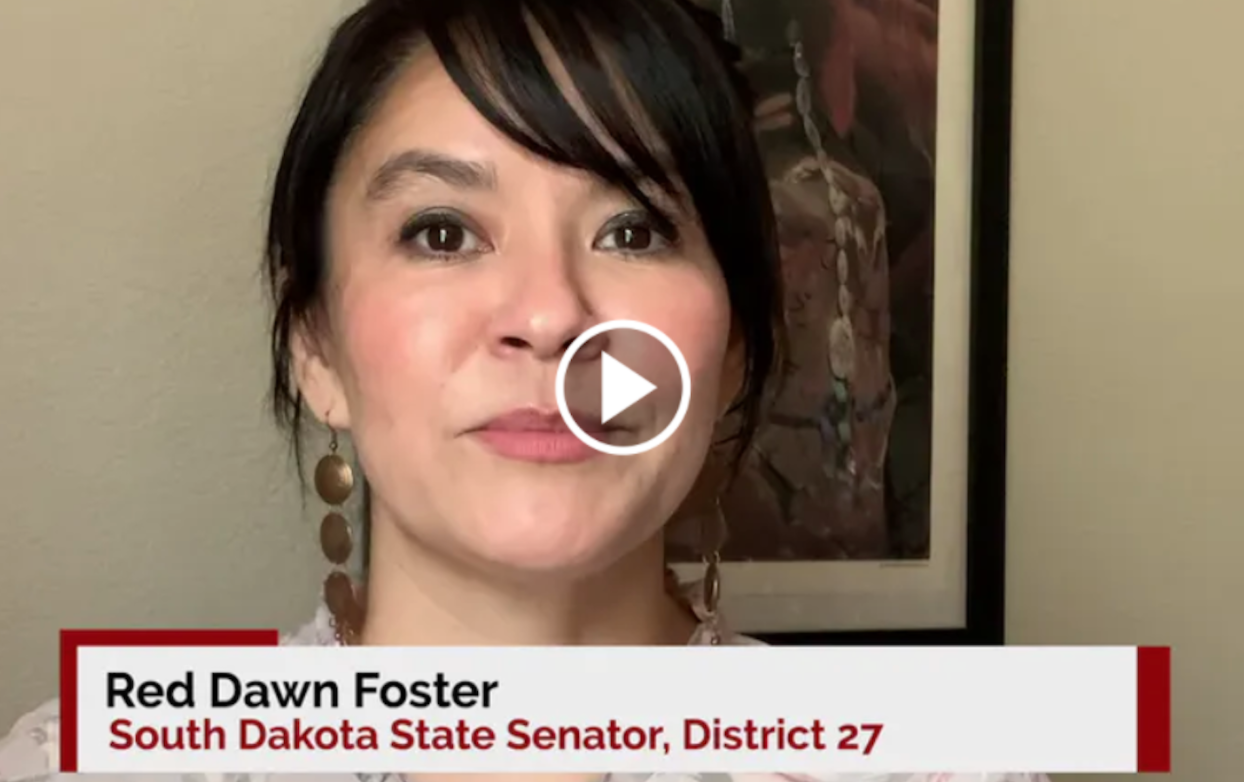
In our new video, South Dakota State Senator Red Dawn Foster joins me to talk about our showdowns with the Trump administration.
As you know, even when the virus hit South Dakota hard, Governor Kristi Noem failed to institute common sense protective policies. Then she challenged our tribes over the checkpoints, eventually calling on her friend, Donald Trump, for help. That help is arriving.
The Treasury Department has already bullied tribal nations by failing to disburse our CARES Act funds on time. Now, with the pandemic exploding across the Midwest, infecting around 100 people at Pine Ridge, and devastating the Navajo Nation, administration officials are threatening to withdraw our funding for law enforcement and replace our police force with feds if we don’t remove the checkpoints.
And this week, as we close in on Independence Day, President Trump plans to further desecrate our sacred Black Hills with a dangerous fireworks display, literally illuminating Mount Rushmore — the boldest monument there is to Native subjugation. What about our independence? What about our sovereignty? What about our right to live without tyranny in this “land of the free?”
Governor Noem even went out of her way to say there will be no requirements for masks or social distancing at the event, further jeopardizing South Dakota’s 72,000 Native Americans. So I promise you, we will remain vigilant here on the front lines. We will not remove our checkpoints. We will not stand aside or stand down. Will you stand with us?
Wopila tanka — Our sincere thanks for your friendship and your support,
Chase Iron Eyes
Lead Counsel
Via The Lakota People’s Law Project












 Water is Life