Someone out there in the great E-universe, how can I match up this company and their technology with the Navajo nation that so desperately needs a green source of clean water? https://air2watersolutions.com/about-us/
Today contacted the company.
Tomorrow begin a GoFundMe page.
Wednesday begin calling around for assistance to make something happen.
‘We have to be able to lift each other up; that’s the only way we’re going to make it out of this together’McKenzie Allen-Charmley Luce Foundation: Southwest Stories Fellowship
PHOENIX – By now, you’ve probably heard it more times than you can count: One of the simplest ways to reduce the risk of COVID-19 infection is to wash your hands.
But for the nearly one in three Navajo Nation households without indoor plumbing, that’s easier said than done.
“People (here) call it a luxury to be able to have running water,” said Yolanda Tso, a Navajo Nation member and community advocate. “I don’t really believe that should be considered a luxury in this day and age, especially in this country.”
Tso founded WATERED – Water Acquisition Team for Every Resident & Every Diné – to help fill gaps in water access on the reservation, which this summer eclipsed New York in per-capita coronavirus infection rates, according to CNN. She started raising funds to purchase hand-washing stations for families in need in April and began deliveries in June.
Yolanda Tso, founder of the WATERED, demonstrates how to use the hand-washing stations that the organization had provided to more than 110 households on the Navajo reservation by early this summer. (Photo courtesy of Yolanda Tso)
Tso said she knows her small-scale, donation-dependent operation can’t fix the broader infrastructure problems on Navajo land. In 2018, the Indian Health Service told Congress the tribe had more than $450 million in unfunded water needs.
But she hopes it can help even the playing field for a population infectious disease specialists say has a higher-than-average risk of contracting COVID-19.
“At this moment, it’s going to help people be able to accomplish those goals of protecting themselves,” Tso said.
Impact of federal relief funding unclear
As of Aug. 4, the Navajo Health Department had reported 9,156 confirmed cases of COVID-19 in a population of about 175,000 – more infections per 100,000 residents than any state in the country, according to data from Johns Hopkins University.
Navajo officials have proposed spending about $300 million of the $714 million they’ve received in federal CARES Act funding on water infrastructure to help slow the spread of COVID-19, according to a release from Navajo Nation President Jonathan Nez’s office.
But restrictions require officials to spend CARES Act funds by the end of the calendar year, and Navajo officials say it likely would take at least two years to get a substantial water infrastructure project off the ground.
Even if the federal government grants the spending extension Navajo leaders have requested, the extra time would not address the immediate needs of families without running water.
That’s where Tso and other Navajo volunteers come in.
WATERED’s team has delivered hand-washing stations to more than 110 households on the 27,000-square-mile reservation as a stopgap measure, Tso said.
Yolanda Tso (left, in blue) and volunteers unload hand-washing stations for Navajo Nation residents from a delivery truck donated by the moving company State 48. (Photo courtesy of Yolanda Tso)
The stations include reusable 5-gallon jugs and 5-gallon buckets for catching used water, and WATERED provides liquid hand soap, toilet paper, paper towels and disinfectant.
The group relies on donations to cover supply and travel costs, Tso said, and some local companies have made in-kind contributions to increase WATERED’s efficiency and reach. The Glendale moving company State 48, for instance, provided a delivery truck to transport of the stations.
These families “don’t have the ability to get a main source of stopping the spread of COVID as easily as most other communities,” State 48 owner Amanda Lindsey said.
Pandemic prompts ‘important’ access conversation
Annie Lascoe of DigDeep, a nonprofit that works to address water needs on the reservation and elsewhere, described water access as a “deeply entrenched racial justice issue.”
White households are 19 times as likely as Native households to have running water, according to a 2019 report from DigDeep and the Water Alliance that argued rural and tribal community members “understand the historical barriers to access better than outsiders.”
“When we’re looking at Indigenous peoples’ rights, Indigenous communities around the world are the ones that are preserving all of our natural resources,” Lascoe said, citing the Navajo philosophy of “tó éí ííná” – “water is life.”
Yet Native populations are “the No. 1 communities that are also deeply impacted by entrenched systems that have robbed them of access to those resources,” she said.
Indeed, the U.S. government has repeatedly left tribal officials out of key water-policy negotiations, despite the 1908 Winters Doctrine promising federally reserved water rights to Indigenous communities.
Navajo leaders in recent years have pursued water settlements at the state level in Arizona, Utah and New Mexico, but the Navajo Department of Water Resources continues to point to a “lack of adequate domestic and municipal water” as one of the nation’s biggest challenges.
Tso said she would “would never choose a pandemic to have these conversations,” but “it’s so important for people to understand that even though we live in 2020 and we think of America as this superpower, we still have people who are living in conditions that are subpar.”
“We have to be able to lift each other up,” she said. “That’s the only way we’re going to make it out of this together.”
This story is made possible through a partnership between the Walter Cronkite School of Journalism and the Center for the Study of Religion and Conflict at Arizona State University, with the support of the Henry Luce Foundation.
It appears that we’re in for a long, hot summer. People are rising up. Colonizer statues and racist mascots are coming down. And finally, winds of change are making their way to the D.C. courts. As you know, a federal judge ordered the Dakota Access pipeline (DAPL) shut down by Aug. 5, pending environmental review.
Unfortunately, a D.C. court of appeals has granted DAPL operators short term, temporary relief on that order, extending the deadline for the pipeline to be emptied. The verdict, though, maintains the authority to halt operations at any time. In the interim, we’re releasing footage from our Chase Iron Eyes trial archive to illustrate what makes DAPL so dangerous in the first place and why we must keep pushing for it to be shut down for good. You can take a look at our new video about DAPL’s deficient leak detection system, and we hope you will watch and share it with your networks.
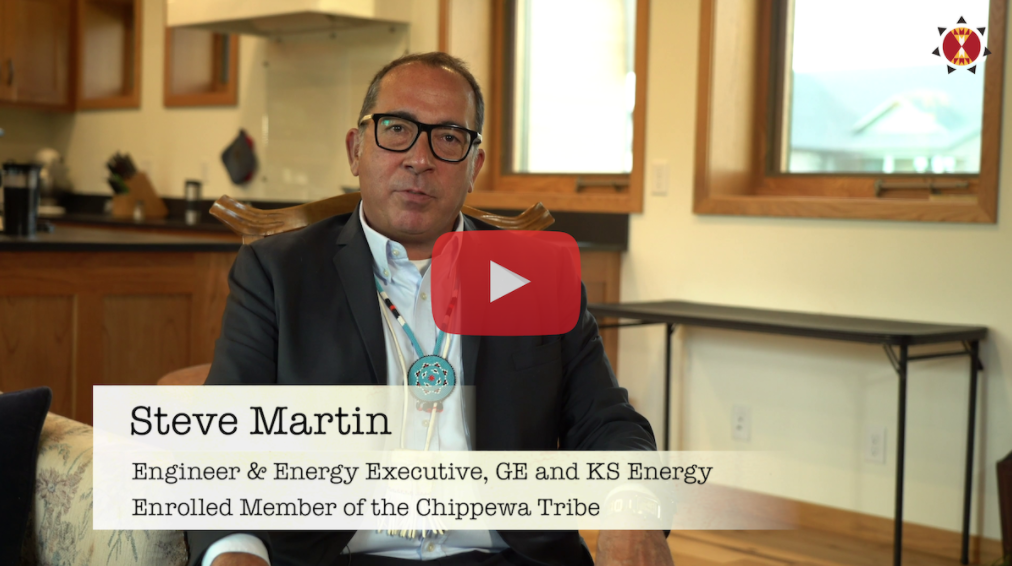
Energy expert Steve Martin of the Chippewa Nation and attorney Peter Capossela explain the constant risks posed by Dakota Access.
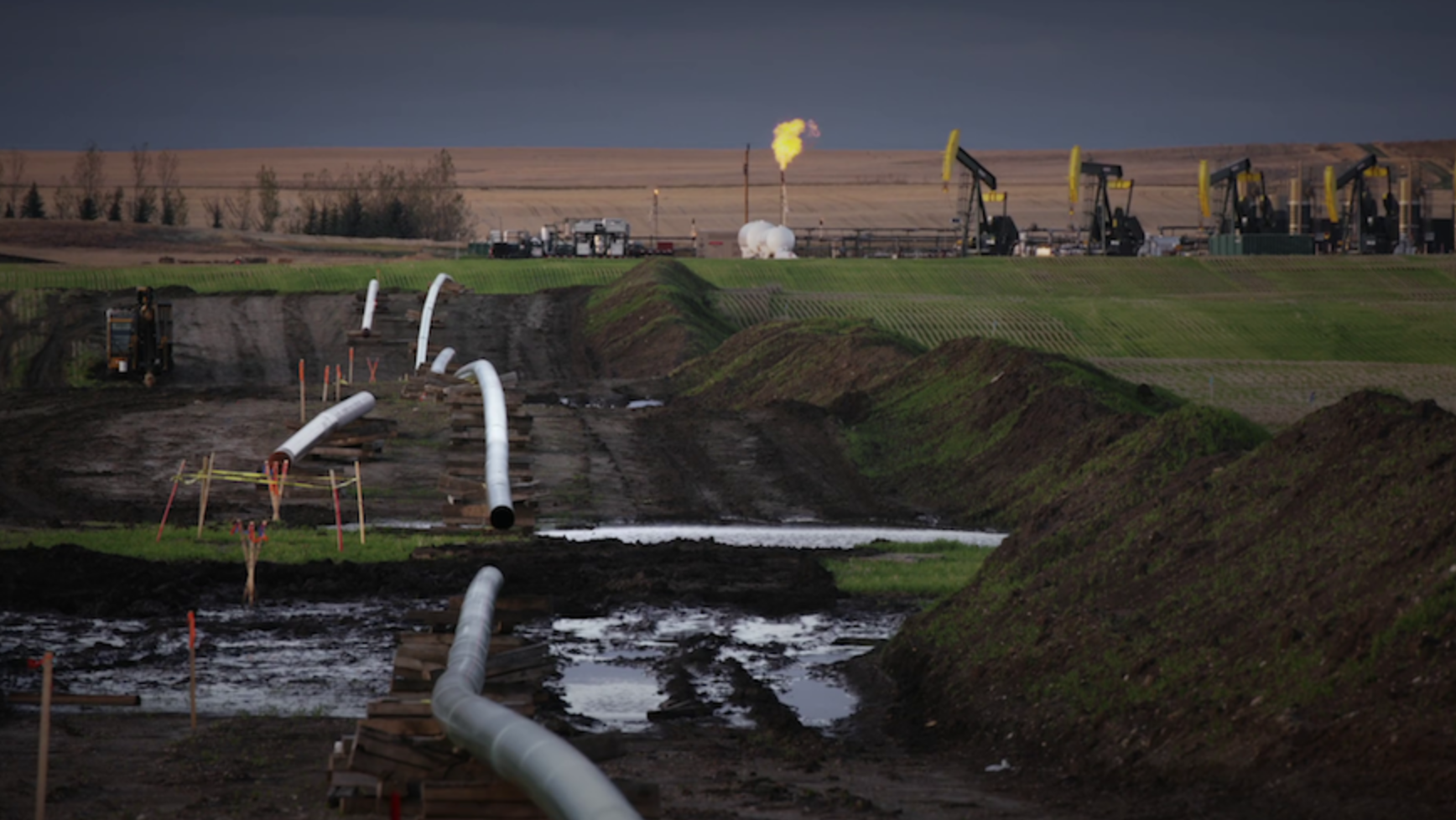
Getting down to brass tacks, DAPL’s leak detection system is criminally inadequate. Actually, at the most critical area of stress for the existing pipeline, there isn’t even a detection apparatus in place. So, if and when DAPL springs a leak, oil could seep into the groundwater and rise to the surface before pipeline officials or local residents have any idea something is wrong.
A leak of this type could take place over the course of months, contaminating the water used to grow food and raise children on the nearby Standing Rock Sioux Tribe reservation.
As Indigenous energy executive Steve Martin points out in our video, it’s outrageous that water — the source of all life — isn’t regarded as more sacred. Why do we allow these dangerous pipelines to jeopardize our children’s future? Why is the money made from a barrel of oil more important than my community’s right to clean water and safe food? Not to mention the impacts on climate.
If you’d like to explore the issue further, we’ve also written an in-depth blog on the topic of DAPL’s leak detection system.
We’re in the midst of a great shift. While it didn’t begin with NoDAPL, I know from living at Oceti Sakowin camp for eight months — through police raids, surveillance, and blizzards — that embers from our sacred fires continue to find their way into the current moment. Let’s keep Trump and his oil cronies on the run. Hold the faith. Even bigger change is coming.
Wopila tanka — Thank you for standing with us to protect our water, our land, and our families!
Madonna Thunder Hawk
Cheyenne River Organizer
The Lakota People’s Law Project
Madonna Thunder Hawk, Lakota Law (info@lakotalaw.org)To:youDetails
Inconceivable! Energy Transfer Partners (ETP)—the parent company to the Dakota Access Pipeline—just announced that they will ignore Judge James Boasberg’s order to shut down oil flow through the pipeline by August 5th. An ETP spokesperson said in a statement yesterday: “We are not shutting down the line. We believe Judge Boasberg has exceeded his authority and does not have jurisdiction to shut down the pipeline.” Outrageous!
Perhaps they’re taking their inspiration from the father of the Trail of Tears, Andrew Jackson. In response to the 1832 Supreme Court decision that established tribal sovereignty in the U.S. — Worcester vs. Georgia — President Jackson declared: “[Chief Justice] John Marshall has made his decision. Now let him enforce it.”
But this is not 1832. And no matter how much Trump may want to do his best Andrew Jackson impersonation, we will not let him. We will not let this corporation, this pipeline, or this President trample on our sovereignty. It’s time to keep Indigenous voices as strong as possible in our collective defense of Mother Earth.
In 2016-17, more than ten thousand people of conscience traveled to Standing Rock to exercise grassroots power over commercial disregard for basic rights. We will stand again like this if we have to. And the Lakota Law legal team will explore options for submitting more amicus briefs to support Standing Rock and EarthJustice in court. One way or another, we won’t permit ETP to unilaterally disregard judicial decisions designed to protect Native health and sovereignty on treaty land. We will go toe to toe with Big Oil, and this time we will have the Constitution — not just Natural Law — clearly behind us.
Wopila — I thank you for your solidarity!
Madonna Thunder Hawk
Cheyenne River Organizer
The Lakota People’s Law Project
Prime Minister Justin Trudeau’s government approved Trans Mountain in 2016 and was so determined to see it built that it bought the pipelineRob Gillies
Associated Press
TORONTO — The Supreme Court of Canada on Thursday dismissed an appeal from British Columbia First Nations against the Trans Mountain pipeline expansion that would nearly triple the flow of oil from the Alberta oil sands to the Pacific Coast
The court dismissed the appeal from the Squamish Nation, Tsleil-Waututh Nation, the Ts’elxweyeqw Tribes and Coldwater Indian Band, effectively ending the years long legal battle over the project.
The pipeline would end at a terminal outside Vancouver, resulting in a sevenfold increase in the number of tankers in the shared waters between Canada and Washington state.
Some First Nations successfully halted federal approval of the project in 2018 when the Federal Court of Appeal said Ottawa had failed to properly consult affected First Nations, which argued that the project would damage their lands and waters.
Tsleil-Waututh Chief Leah George-Wilson and Syeta’xtn of the Squamish Nation will be hosting a virtual news conference later Thursday.
But in February the same court dismissed another challenge by the same groups against the government’s June 2019 decision to approve the project a second time after another round of Indigenous consultation.
As usual, the Supreme Court gave no reasons for Thursday’s ruling.
Prime Minister Justin Trudeau’s government approved Trans Mountain in 2016 and was so determined to see it built that it bought the pipeline.
It still faces stiff environmental opposition from British Columbia’s provincial government but construction is underway. Natural Resource Minister Seamus O’Regan said consultations will continue as construction continues.
“To those who are disappointed with today’s SCC decision — we see and hear you,” O’Regan said in a statement. “The Government of Canada is committed to a renewed relationship with Indigenous people and understands that consultations on major projects have a critical role in building that renewed relationship.”
The pipeline would allow Canada to diversify oil markets and vastly increase exports to Asia, where it could command a higher price. About 99 percent of Canada’s exports now go to refiners in the U.S., where limits on pipeline and refinery capacity mean Canadian oil sells at a discount.
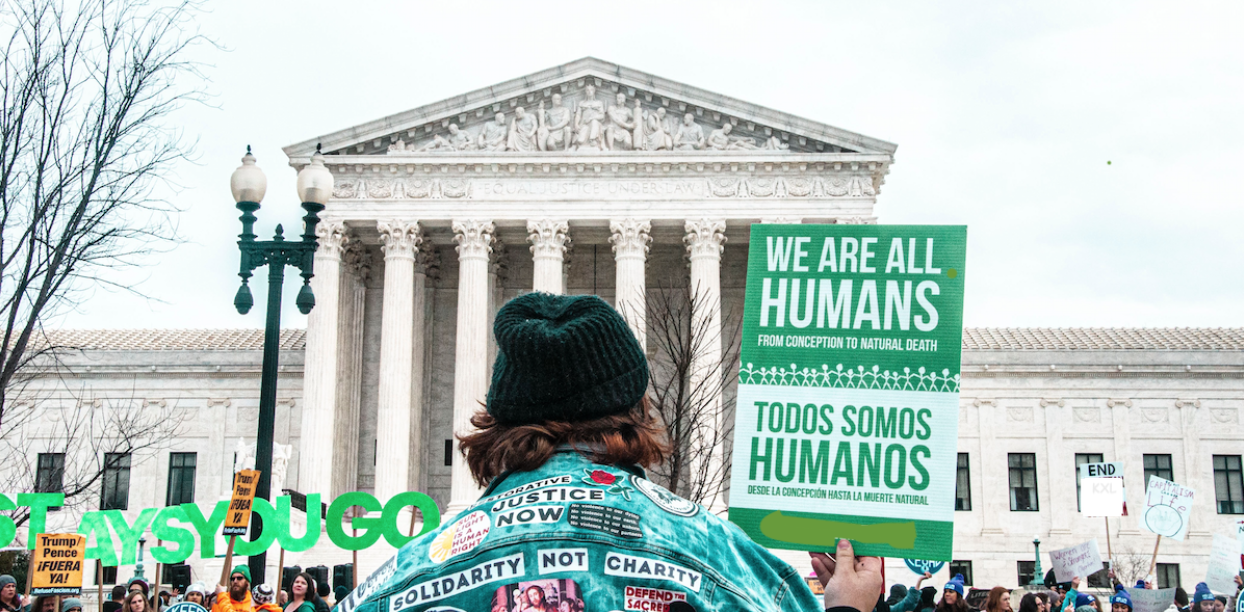
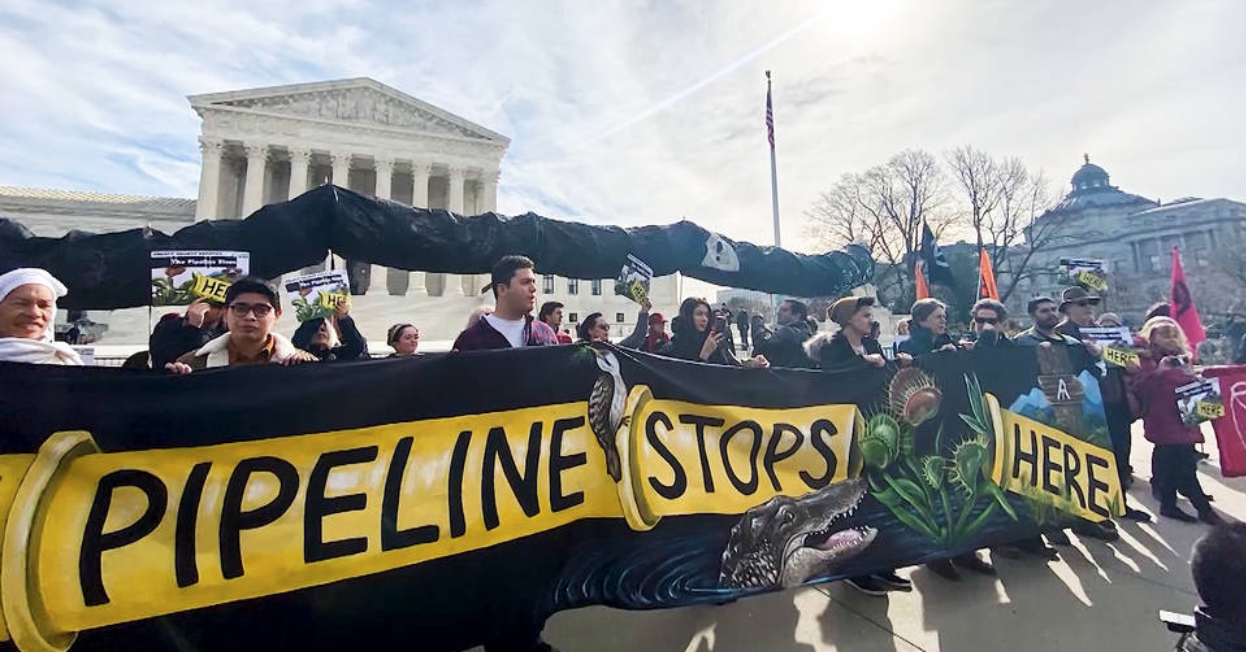
It’s time to celebrate for a second day in a row, because we have amazing news from the U.S. Supreme Court. Yesterday late in the day, SCOTUS announced its ruling effectively halting construction of the Keystone XL pipeline (KXL)! Based on the Endangered Species Act, the Supremes upheld a lower court ruling preventing the pipeline from crossing domestic waterways. This is on top of Monday’s court decision to shut down oil flow through DAPL, making yesterday a truly good day for the environment and Indigenous sovereignty.
Let’s be clear: TC Energy, the pipeline’s operator, is not going to take this lying down. This is not KXL’s death-knell. So, we need to remain vigilant. For now, the Supreme Court has simply let stand U.S. District Court Judge Brian Morris’ injunction against construction while the 9th Circuit Court of Appeals reviews the pipeline company’s appeal.
It’s likely there will be further legal wrangling and attempts by TC Energy to circumvent proper environmental review. We can expect the same from the Trump administration, should Trump be re-elected in November. On the other hand, Joe Biden has publicly pledged that his administration will cancel KXL, should he win the presidency.
For now, we can be thankful. Construction of KXL will remain stopped — a win for Unci Maka, our Grandmother Earth, and for our Lakota families here on the front line. We can be grateful that our people will retain access to clean water and a measure of safety from man camps, which might otherwise have spread COVID-19 and contributed to our epidemic of missing and murdered Indigenous women and girls.
I thank you for standing with us against KXL so far. We’ll keep you informed of all developments going forward — and I hope I can count on you to stay with us, come rain or shine.
Wopila tanka — My sincere gratitude for your spirit and resolve!
Chase Iron Eyes
Lead Counsel
Via The Lakota People’s Law Project
I have great news: this morning, District Court Judge James Boasberg ordered the Dakota Access Pipeline (DAPL) to be shut down within 30 days! In this momentous ruling, Judge Boasberg found that the Army Corps of Engineers failed to fully consider the environmental impacts of Energy Transfer’s crude oil pipeline, and that there were too many safety concerns to allow its continued operation. While this order only shuts DAPL down for 13 months while the Army Corps completes additional environmental assessments and safety planning, there is a good chance that when the oil is drained in 30 days, that oil will never flow again!
Shares in DAPL’s parent company—Energy Transfer Partners—dropped 7% today.
We commend the Standing Rock Sioux Tribe, the Cheyenne River Sioux Tribe, and their legal team at EarthJustice for years of dedication and persistence in this struggle to defang the Black Snake. And we are proud of the amicus brief that our legal team submitted in the lead up to this decision. We’re also elated that Judge Boasberg cited many of the questions we and our allies have raised since the beginning of the NoDAPL struggle. First, that it’s simply wrong to conduct an environmental assessment of a pipeline after it’s already been built. Second, that DAPL’s leak detection abilities are so poor it could be leaking more than 6,000 barrels of oil every day without detection, and Energy Transfer’s abysmal pipeline safety record raises that risk even further. Third, that there is no proper cleanup plan for a wintertime spill, when freezing Dakota winters make response the most difficult. Boasberg even went one step further, concluding that the drop in oil demand due to the COVID-19 pandemic makes shutting down the pipeline now less harmful to North Dakota’s economy.
So what comes next? First, Energy Transfer has to drain and shut down DAPL by August 6th. The Army Corps of Engineers then has 13 months to further study potential pipeline leaks and the dangers they pose. This ruling could still be appealed in the Federal District Court of D.C., but our analysis tells us that such an appeal is unlikely to succeed.
Thank you to each and every one of you for your tireless support, and for staying with us throughout this journey.
Wopila tanka — Thank you for standing with us to protect our water, our land, and our families!
Madonna Thunder Hawk
Cheyenne River Organizer
The Lakota People’s Law Project
P.S. This has truly been a week of good news: just yesterday the Atlantic Coast Pipeline, slated to run from West Virginia to North Carolina, was canceled. In a joint statement, Dominion Energy and Duke Energy cited ongoing delays, expected cost increases, and legal challenges from environmental and other groups as threats to the project’s viability. The trend away from fossil fuels is becoming stronger with each passing day, thanks to your activism and the support of so many others like you.
Great Plains Tribes Win Important Legal Fight to Protect Tribal Water and Treaty Resources
The Great Plains Tribal Chairmen’s Association (GPTCA), the Native American Rights Fund (NARF), and the National Congress of American Indians Fund (NCAI Fund) applaud the D.C. District Court’s decision today to vacate the U.S. Army Corps of Engineers’ Lake Oahe easement for the Dakota Access Pipeline, and to require the removal of all oil flowing through the pipeline by August 5, 2020. This decision ensures that the treaty-reserved rights of the plaintiff tribes – the Standing Rock Sioux Tribe, the Cheyenne River Sioux Tribe, the Yankton Sioux Tribe, and the Oglala Sioux Tribe – are adequately addressed, along with any other land and natural resource considerations, in a full-fledged and well-documented environmental review process.
GPTCA, NARF, and NCAI Fund participated in a coalition of Native organizations submitting an amicus brief in support of the plaintiff tribes during the latest proceedings in the D.C. District Court and are encouraged by this outcome. We hope that this decision helps pave the way for full and proper environmental impact studies as well as meaningful consultation with tribal nations that have direct or indirect stewardship over the lands under review. Our organizations will continue to work to ensure that every time tribal lands and resources are at stake, the environmental review processes meet all legal standards and respect the federal government’s trust obligations to tribes set forth in federal laws.
###
About the Great Plains Tribal Chairman’s Association:
Great Plains Tribal Chairman’s Association is made up of the 16 Tribal Chairmen, Presidents, and Chairpersons in the states of North Dakota, South Dakota, and Nebraska. Their purpose is to provide a forum for sharing information on matters of interest to its member Tribes, develop consensus on matters of mutual importance, assist member Tribes in their governmental and programmatic development consistent with their goals for self-determination, and self-sufficiency and provide for effective public relations and education program with non-Indian communities. For more information, please visit http://gptca.net/index.html
About the National Congress of American Indians:
Founded in 1944, the National Congress of American Indians is the oldest, largest and most representative American Indian and Alaska Native organization in the country. NCAI advocates on behalf of tribal governments and communities, promoting strong tribal-federal government-to-government policies, and promoting a better understanding among the general public regarding American Indian and Alaska Native governments, people and rights. For more information, visit www.ncai.org.
About the Native American Rights Fund:
Founded in 1970, NARF is the oldest and largest non-profit dedicated to asserting and defending the rights of Indian tribes, tribal organizations, and individual Indians nationwide. For the past 50 years, NARF has represented over 275 Tribes in 31 states in such areas as tribal jurisdiction, federal recognition, land claims, hunting and fishing rights, religious liberties, and voting rights. For more information, visit www.narf.org.
Protesters gather in 2017 at the Virginia Department of Environmental Quality Harrisonburg office in Harrisonburg, Virginia, to speak out against the Atlantic Coast and Mountain Valley pipelines.Daniel Lin/AP
For indispensable reporting on the coronavirus crisis and more, subscribe to Mother Jones’ newsletters.
The Atlantic Coast Pipeline has been canceled, energy companies leading the project announced Sunday, citing “litigation risk” and uncertainty about the financial viability of the project.
The decision to abandon the pipeline is a win for Native American groups and environmentalists, who argued in a Supreme Court case last month that the pipeline was moving forward under an invalid permit issued by the US Forest Service, in addition to presenting a threat to the ecosystem and scenery. The proposed, 600-mile pipeline would have crossed the 2,200-mile Appalachian Trail, which runs through 14 states between Georgia and Maine. Ultimately, the court ruled in favor of the pipeline companies last month, upholding the permit.
On Twitter, Bill McKibben, founder of environmental group 350.org called Sunday’s announcement “enormous” and thanked the “powerful organizing by tens of thousands of great activists” who opposed the project. Former Vice President Al Gore, who also opposed the pipeline, echoed that sentiment in a statement, saying the move was a “testament to the power that exists in frontline communities across our nation.” (Activists are still fighting the nearby Mountain Valley Pipeline.)
Energy companies Dominion Energy and Duke Energy announced the Atlantic Coast Pipeline in 2014, and although they had already invested more than $3 billion into it, according to the Wall Street Journal, it would have cost an estimated $8 billion in total had it moved forward. “This announcement reflects the increasing legal uncertainty that overhangs large-scale energy and industrial infrastructure development in the United States,” Dominion CEO Thomas Farrell II and Duke Energy CEO Lynn Good said in a statement Sunday. “Until these issues are resolved, the ability to satisfy the country’s energy needs will be significantly challenged.”
An April decision by U.S. District Judge Brian Morris of Montana invoked the Endangered Species Act to limit KXL crossing domestic waterways. That ruling, thankfully, put the pipeline behind schedule and kept my people safer during the COVID-19 pandemic, but everything could change as soon as next week.
Photo credit: Julia Peter
Despite recent, somewhat surprising decisions upholding rights for the LGTBQ and immigrant communities, the Court can’t be relied upon to continue ruling in favor of the people — or the environment — with its current conservative majority.
We expect a ruling from SCOTUS before it leaves session — at the latest, in early July. Justice Elena Kagan, who oversees the 9th District, set today as the deadline for submission of all legal arguments. Without her diligent oversight, the Court might already have given the green light. Now, the environmental groups who brought the suit at least have a fighting chance.
But the reality is, we can’t bank on a third pleasant surprise. As I wrote to you earlier this week, oil companies are adept at finding every end-run available to circumvent proper pipeline procedures. That includes tapping their friends in the Trump administration and Bill Barr’s Department of Justice to try calling in last-ditch favors from the highest court in the land.
As you probably remember, KXL will bring two-man camps — temporary housing for oil workers — near to our reservation borders. These destructive dens of machismo endanger our families by exacerbating the epidemic of missing and murdered Indigenous women and girls. In the age of the coronavirus, contact with pipeline workers could bring even more peril, a key reason why we set up health and safety checkpoints on roads entering our reservations.
So, we prepare again to fight. We’ll maintain our checkpoints at all costs. And, of course, we’ll keep engaging allies from other environmental groups and tribal nations (for instance, we’re already working with a Blackfoot activist in Montana to survey ongoing construction near the Canadian border). We remain vigilant, and I ask that you stay ready to assist us in the likely event that SCOTUS reverts to its troubling pattern of enabling this corrupt, racist White House.
Wopila tanka — Thank you for standing with us to protect our water, our land, and our families!
Madonna Thunder Hawk
Cheyenne River Organizer
The Lakota People’s Law Project
Court rules to cancel energy lease on land sacred to Blackfeet
The Associated Press
‘The Badger-Two Medicine is more than just land; it’s an entire way of life’Associated Press
HELENA, Mont. — A federal appeals court ruled Tuesday to cancel a long-disputed oil and gas lease on land in northwestern Montana considered sacred to tribes in the U.S. and Canada.
The three-judge panel of the U.S. Court of Appeals for the District of Columbia Circuit overruled a judge’s 2018 decision that had allowed a Louisiana company to keep its lease within the Badger Two-Medicine area of Lewis and Clark National Forest.
That area near Glacier National Park is the site of the creation story of the Blackfoot tribes of southern Canada and Montana’s Blackfeet Nation.
John Murray, the Blackfeet’s tribal historic preservation officer, said the court’s decision will close a “long and painful chapter in the history of our people.”
“These leases should never have been issued in the first place,” Murray said. “Today’s ruling shows that these companies and their lawyers were not just on the wrong side of history but were also on the wrong side of the law when they waged their 40-year crusade to drill our ancestral land.”
“Our traditional practices and traditional lands are the firm ground underfoot that we need to push off into the future,” said Tyson Running Wolf. Running Wolf is a Montana state legislator, former Blackfeet Tribal Business Council member, hunting outfitter and leader among Blackfeet traditionalists. “This is how we heal ourselves, how we heal our communities, how we move forward into success. The Badger-Two Medicine is more than just land; it’s an entire way of life.”
Tim Preso, Earthjustice attorney, argued the case on behalf of intervenors including Blackfeet Headwaters Alliance, Pikuni Traditionalist Association, Glacier-Two Medicine Alliance, Montana Wilderness Association, National Parks Conservation Association and The Wilderness Society. These organizations have since joined the Blackfeet Nation in calling for permanent protection of the Badger-Two Medicine.
The lease owned by Solenex LLC was the last active exploratory lease of about 45 issued in the Badger-Two Medicine area since the 1980s.
“We’re obviously very disappointed in the panel’s decision today, particularly their refusal to engage with any of the arguments we raised on appeal,” said David McDonald, attorney for Solenex, which is owned by Sidney Longwell. “We fully intend on continuing to fight for Solenex and the Longwell family, and we’re currently considering all available avenues to do so.”
The company has held the lease for more than 30 years. It had not yet drilled because of bureaucratic delays within the U.S. departments of Interior and Agriculture, prompting the company to sue in 2013.
The U.S. government canceled the lease in 2016, saying a proper environmental analysis had not been conducted, a decision Solenex challenged. A federal judge sided with the company in 2018, saying the long amount of time between the lease being issued and canceled violated federal law.
The three-judge appellate panel ruled the judge’s findings were wrong and that the the government had considered Solenex’s interests.
“Delay by itself is not enough to render the lease cancellation arbitrary or capricious,” the ruling said.









 Water is Life